The traditional Cante Alentejano, a polyphonic singing style recognised as UNESCO Intangible Cultural Heritage in 2014, deeply rooted in the rural life of Alentejo, often reflects themes of love, labour, and the region’s vast landscapes.“That of Évora I am remembering/Passing the Tagus River the waves/They are taking me”“Oh Alentejo”, often associated with artists like Aryo Silva or featured in compilations of Saias do Alentejo.
The lyrics, often sung without instruments by choral groups, resonate with the slow-paced, heartfelt rhythm of Alentejo’s rural culture. The song “Oh Alentejo”, often associated with artists like Aryo Silva or featured in compilations of Saias do Alentejo goes:
The visit
Begin your journey in Évora, a UNESCO World Heritage Site, where the Roman Temple of Diana stands as a striking landmark. Its ancient columns invite exploration, while the nearby Évora Cathedral, with its Gothic cloister and rooftop views, offers a glimpse into medieval architecture. The Chapel of Bones, adorned with human skulls, provides a unique historical perspective.
Alentejo’s countryside beckons nature lovers. The Serra de São Mamede Natural Park features hiking trails through oak forests and granite hills, with opportunities to spot eagles and wild boar. The Guadiana River offers kayaking and fishing, while cycling routes around Monsaraz provide scenic paths past vineyards and olive groves.
History enthusiasts will enjoy Elvas, where star-shaped fortifications and the Amoreira Aqueduct showcase military engineering. The town’s museum and cobbled streets add to its charm. In Beja, the 13th-century castle and its keep tower reward climbers with panoramic views of the plains.
Food lovers will savour Alentejo’s cuisine. Restaurants in Évora, like Taberna Típica Quarta-Feira, serve regional dishes such as migas with pork and açorda, a garlic and bread soup. Local markets offer alentejano cheeses and cured hams. Wineries in Reguengos de Monsaraz provide tastings of robust reds and crisp whites, often paired with local almonds.
Coastal Alentejo offers serene beaches. Porto Covo’s Praia Grande is ideal for swimming, with gentle waves and golden sands. For a quieter retreat, Praia de São Torpes near Sines provides calm waters and scenic cliffs. Families can enjoy Comporta’s beaches, with shallow shores and nearby cafés.
Cultural exploration continues in Mértola, where the Islamic Museum and hilltop castle reveal the region’s Moorish past. Families will find Alentejo welcoming, with free attractions like Évora’s Public Garden and budget-friendly visits to the Megalithic Monuments of Alcalar, showcasing prehistoric stone circles.
Outdoor pursuits extend to the Rota Vicentina, a coastal trail offering stunning ocean views and paths through wildflower meadows. Evening walks through Évora’s historic centre, followed by dinner at a family-run tavern, create a warm and inviting end to the day.
Alentejo in the summer of 2026 promises a mix of history, natural beauty, and culinary richness. Whether wandering Roman ruins, hiking scenic trails, or enjoying local wines, visitors will find this Portuguese region a rewarding destination.
Alentejo Guide
The Alentejo, Portugal’s largest region, spans the southern heartland between Lisbon and the Algarve, offering a serene escape defined by rolling plains, medieval towns, and a wild coastline. Known for its slow-paced lifestyle, rich cultural heritage, and authentic experiences, it’s often compared to a less touristy Tuscany.
Natural Attractions and Outdoor Activities
- Inland Plains: The Alentejo’s “Montado” landscape features golden wheat fields, cork oak forests (producing nearly half the world’s cork), olive groves, and vineyards. The region’s vast, open plains are ideal for leisurely drives or photography, especially at sunset when hills glow purple.
- Alqueva Lake: Europe’s largest artificial lake (250 sq km) near Monsaraz offers serene views, houseboat rentals, watersports (kayaking, paddleboarding), and stargazing in one of Europe’s darkest sky reserves.
- Costa Vicentina and Alentejana Coast: The western coastline, part of the Sudoeste Alentejano and Costa Vicentina Natural Park, boasts dramatic cliffs, deserted beaches, and surfing hotspots. Key spots include Vila Nova de Milfontes, Porto Covo, and Zambujeira do Mar, far less crowded than the Algarve. The Tróia Peninsula and Comporta offer pristine beaches and turquoise waters, popular with Europe’s elite for their seclusion.
Outdoor Adventures:
- Hiking and Cycling: The Rota Vicentina, a long-distance coastal path from Santiago do Cacém to Cape St Vincent, offers moderate clifftop trails (8.5–14.5 miles daily) through beaches and medieval towns like Aljezur. New self-guided e-biking tours explore the region’s rivers and historic cities like Coimbra and Aveiro.
- Birdwatching: The Sado Estuary, Castro Verde, and São Mamede Park are prime spots for spotting flamingos, herons, and the Great Bustard in a protected pseudo-steppe habitat.
- Surfing and Watersports: The Costa Vicentina’s beaches, like those near Zambujeira do Mar, are renowned for surfing and bodyboarding, attracting locals over tourists.
Historic Towns and Villages:
- Évora: The UNESCO World Heritage capital of Alto Alentejo is a “museum-city” with Roman ruins (Temple of Diana), the eerie Capela dos Ossos (Chapel of Bones), and a 16th-century university infusing youthful energy. Its cobbled streets, Moorish architecture, and Praça do Giraldo square are perfect for wandering.
- Elvas: A UNESCO-listed border town with star-shaped fortifications, including the 6km Amoreira Aqueduct and forts like Forte da Graça. Its military heritage reflects centuries of defense against Spanish invasions.
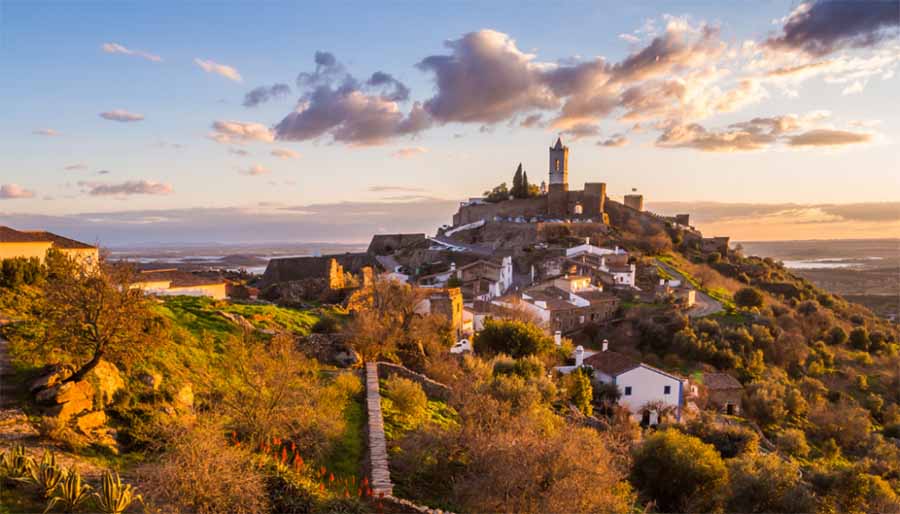
- Monsaraz: A medieval hilltop village overlooking Alqueva Lake, voted one of Portugal’s “Seven Wonders” in 2017. Its whitewashed houses, schist walls, and castle offer a timeless charm.
- Marvão: A fortified village near Spain with panoramic views, a 13th-century castle, and narrow streets exuding history.
- Estremoz: Known as the “white city” for its marble architecture (90% of Portugal’s marble production), it features a 13th-century castle and vibrant Saturday markets.
Cultural Heritage:
- Medieval and Roman Sites: Beyond Évora’s Roman Temple, visitors can explore Almendres Cromlech (a Neolithic stone circle 17km from Évora, dubbed Portugal’s Stonehenge) and Roman ruins in Mértola.
- Traditional Crafts: Redondo is famed for Roman-style pottery, while Arraiolos is renowned for handwoven rugs displayed during festivals. São Pedro do Corval hosts Portugal’s largest concentration of artisanal potteries.
- Alentejano Singing: Haunting male-voice choirs, a UNESCO-recognized tradition, sing about rural life and can be heard in villages during festivals or at estates.
Culinary Experiences
- Dishes: Alentejo’s hearty cuisine includes açorda (bread-based soup with herbs and egg or seafood), carne de porco à alentejana (pork with clams), ensopado de borrego (lamb stew), and porco preto (acorn-fed black Iberian pork). Pão Alentejano, a wood-fired wheat bread with a crunchy crust, is a staple, best with local olive oil.
- Desserts: Sericaia, a cinnamon-flavored egg cake served with Elvas plums, is a regional specialty.
- Restaurants: Standouts include Restaurante Fialho in Évora for traditional fare like pata negra ham and Origens for farm-to-table dining. Eight restaurants earned Michelin Guide listings in 2026 for their sustainable, local-ingredient focus.
Wine and Enotourism:
- Alentejo is a global wine powerhouse, ranking among the top 10 producers. Its red blends (syrah, cabernet sauvignon) and whites (antão vaz, roupeiro) are celebrated. Unique wines include Ervideira’s Vinho Invisível (white from red grape tears) and Conde D’Ervideira Vinho da Água (aged underwater in Alqueva Lake).
- Wineries like Herdade do Esporão, Cartuxa, and Quinta da Plansel offer tours, tastings, and picnics amid vineyards. The Alentejo Wine Route connects sub-regions like Borba, Redondo, and Vidigueira.
Sustainable and Authentic Tourism
- Slow Travel: Alentejo’s sparse population (7% of Portugal despite covering 30% of its land) and minimal tourism ensure an uncrowded experience. Its “land that time forgot” vibe appeals to those seeking authenticity over commercialised destinations.
- Eco-Friendly Stays: Estates like São Lourenço do Barrocal and Herdade dos Grous blend luxury with farm-to-table dining, offering activities like horseback riding, kayaking, and wine tastings. Many properties, such as the restored 1930s O Val farmhouse, emphasize sustainability.
Practical Information:
- Getting There: Lisbon Airport (1.5–2 hours by car to Évora) is the main gateway. Trains and buses connect Lisbon to Évora and Beja, but a rental car is essential for exploring smaller villages.
- Weather: Summers are scorching (up to 48°C in Amareleja), with mild springs (20–25°C) and rainy winters (around 10°C). Spring (March–June) and fall (September–October) are ideal.
- Accommodation: Options range from historic convents turned hotels (e.g., Convento do Espinheiro) to boutique eco-resorts in Comporta and design-forward L’AND Vineyards. Book early for peak seasons.
What’s New for 2026 in the Alentejo
- Val Farmhouse (Estremoz–Monforte): This restored 1930s farmhouse, reopened as a holiday rental and retreat venue, offers five double bedrooms, a pool, and a hilltop studio for creative workshops (textiles, ceramics, cooking). It’s surrounded by olive groves and cork oaks, emphasizing eco-luxury. Rates start at €830/night for 10 guests.
- Boutique Wine Hotel (Vidigueira): Developed by Dieter Morszeck, this 23-room eco-hotel, built from existing ruins, maintains traditional Alentejo architecture. Located near a winery, it offers private plane transfers and dining by chef José Júlio Vintém. Opened in 2022 but gaining traction in 2026.
- Tourism Growth: Alentejo’s rising popularity is reflected in its growing tourism sector, with new jobs in hospitality and ecotourism at properties like São Lourenço do Barrocal. The region’s focus on quality wine and olive oil exports also supports visitor experiences like vineyard tours.
Cultural Events and Festivals
- Alter do Chão Fair (Apri, Alto Alentejo): This fair blends tradition with modern culture, showcasing horses, handicrafts, and regional products, with concerts by Portuguese artists like Os Quatro e Meia.
- Arraiolos Rug Festival (June 2026, Arraiolos): “The Rug is on the Street” transforms Arraiolos into a tapestry gallery, displaying handwoven rugs across streets and squares. Expect evening concerts and local food stalls.
- Beja Roman Festival (June 2026, Beja): Celebrating Beja’s Pax Iulia heritage, this event features street entertainment, markets, and music, immersing visitors in Roman-era history.
- Redondo Festival (August 2026, Redondo): Held biennially, this event decorates Redondo’s historic center with paper flowers and sculptures, accompanied by national music acts.
- Elvas Fair (September–October, Elvas): The largest fair in Alentejo, attracting 200,000 visitors, features music, markets, and religious celebrations at Parque da Piedade.
New Activities and Tours:
- E-Biking Tours: Responsible Travel launched two new e-biking trips for 2026: a seven-night self-guided tour through the Douro Valley (including Alentejo stops) and an eight-night guided Atlantic Ring tour, cycling along the Mondego, Dão, and Vouga rivers with stops in Coimbra and Aveiro.
- Creative Retreats at O Val: The farmhouse’s hilltop studio will host 2026 workshops in textiles, ceramics, and cooking, with dates to be announced.
- Michelin-Recognized Dining: Eight Alentejo restaurants, listed in the 2026 Michelin Guide, emphasize sustainability with local, seasonal ingredients, elevating the region’s culinary profile.
Travel Sentiment:
- Alentejo appeals to families, pairing Lisbon’s urban thrills with rural adventures like nature spotting and stargazing. The region’s “new Tuscany” reputation grows, with its authentic, crowd-free vibe drawing attention.
- Plan for Mobility: Rent a car to explore remote villages and beaches, as public transport is limited outside Évora and Beja. Roads are well-maintained, and driving is scenic.
- Book Early: Boutique hotels and estates like São Lourenço do Barrocal fill quickly, especially in spring and fall. Reserve festival accommodations in advance for events like the Elvas Fair.
- Embrace the Pace: Alentejo’s slow rhythm is its charm. Allow time for leisurely meals, winery visits, and unplanned stops in villages.
- Pack for Weather: Bring light clothing for warm days, layers for cooler evenings, and sunscreen for summer. A pool is a must for July–August stays due to intense heat.
- Engage Locally: Attend weekly markets (e.g., Estremoz’s Saturday market) for local produce, cheeses, and crafts. Chat with artisans in Redondo or Arraiolos for cultural insights.
A 2026 visit to the Alentejo promises an authentic immersion in Portugal’s rural heartland, where time seems to stand still. Visitors can expect sweeping landscapes of cork forests and vineyards, historic gems like Évora and Monsaraz, and a wild coastline with pristine beaches. The region’s cuisine, from porco preto to sericaia, and its world-class wines add depth to the experience. New for 2026, eco-luxury accommodations like O Val and the Vidigueira Boutique Wine Hotel, along with vibrant festivals and expanded biking tours, enhance Alentejo’s appeal. Whether hiking the Rota Vicentina, tasting wines at Ervideira, or wandering Marvão’s castle, travelers will find a tranquil, crowd-free destination that captures Portugal’s soul.
Off-the-Beaten-Track Locations and Attractions in the Alentejo
The Alentejo, Portugal’s sprawling southern heartland, is celebrated for its rolling plains, historic towns, and wild coastline, but beyond well-known destinations like Évora and Monsaraz, it hides a wealth of off-the-beaten-track locations and attractions. These lesser-visited spots offer travelers a chance to experience the region’s authentic rural charm, untouched landscapes, and cultural heritage without the crowds.
- Alto Alentejo (Northern Alentejo): Flor da Rosa Village and Monastery (Crato): Tucked near Crato, the tiny village of Flor da Rosa is home to the 14th-century Flor da Rosa Monastery, a fortified Gothic structure blending military and religious architecture. Now a pousada (historic hotel), it’s surrounded by quiet olive groves and fields. Far from Évora’s tourist trail, this serene spot offers a glimpse into medieval Alentejo life. The monastery’s austere beauty and the village’s sleepy charm feel like stepping back in time. Tour the monastery’s cloisters and chapel, stay overnight at Pousada Mosteiro do Crato for a unique experience, or wander the village’s cobbled lanes. Nearby, explore the Anta de Flor da Rosa, a Neolithic dolmen. A 30-minute drive from Portalegre or 1 hour from Évora. A car is essential, as public transport is sparse.
- Serra de São Mamede Natural Park (Near Marvão and Castelo de Vide): This rugged, under-visited park spans the hills near the Spanish border, with granite peaks, chestnut forests, and medieval hamlets like Galegos. It’s a haven for wildlife, including deer, wild boar, and rare birds like the Bonelli’s eagle. Unlike the busier plains, São Mamede offers solitude and unspoiled nature. Its trails reveal hidden waterfalls, ancient mills, and panoramic views over Spain, yet it sees few tourists. Hike the 7 km PR1 trail from Marvão to Galegos, visit the Reguengo watermill, or birdwatch near the Sever River. Combine with a stop in Castelo de Vide for its medieval synagogue and fountain-lined streets. A 15-minute drive from Marvão. Rent a car; trails are well-marked but remote.
- Baixo Alentejo (Southern Alentejo): Mértola and the Guadiana Valley Natural Park: Mértola, a fortified village on the Guadiana River, is often called an “open-air museum” for its Roman, Visigothic, and Moorish ruins. The surrounding Guadiana Valley Natural Park features rolling hills, riverbanks, and the isolated Pulo do Lobo waterfall, a narrow gorge where the river roars. Mértola’s blend of cultures, evident in its mosque-turned-church and Roman bridge, feels worlds apart from modern Portugal. The park’s trails and river kayaking routes are rarely crowded, offering a raw, adventurous escape. Explore Mértola’s castle and archaeological museum, kayak the Guadiana River, or hike to Pulo do Lobo (a 20-minute trail from the N122 road). Visit the annual Islamic Festival (held biennially, next in May 2026) for music and souk-style markets. A 1-hour drive from Beja or 2 hours from Faro. A car is recommended; guided tours are available for kayaking.
- Castro Verde and the Great Bustard Steppe: Castro Verde, a small town in the Campo Branco region, sits in a UNESCO Biosphere Reserve known for its pseudo-steppe landscape. It’s one of Europe’s best spots to see the Great Bustard, a rare bird, alongside storks and steppe eagles. The nearby LPN Environmental Education Centre offers insights into conservation. This flat, open terrain feels like a Portuguese Serengeti, far from coastal or urban crowds. The town’s 16th-century Royal Basilica, with its vibrant azulejo tiles, is a hidden cultural gem. Join a guided birdwatching tour via the LPN Centre (book ahead), visit the basilica, or explore the 6 km PR2 trail through the steppe. Spring (March–May) is ideal for bird sightings. A 40-minute drive from Beja. A car is necessary; contact the LPN Centre for tour schedules.
- Alentejo Litoral (Coastal Alentejo): Porto Covo and Ilha do Pessegueiro: Porto Covo, a fishing village in the Sudoeste Alentejano and Costa Vicentina Natural Park, has whitewashed houses and a tranquil harbor. Offshore, Ilha do Pessegueiro (Peach Tree Island) features a 16th-century fort and Roman fish-salting ruins, accessible by boat or kayak. Less frequented than nearby Vila Nova de Milfontes, Porto Covo offers pristine beaches like Praia da Samoqueira and a rugged coastal trail. The island’s history and solitude make it a unique detour. Kayak to Ilha do Pessegueiro (local operators like Rota Vicentina offer rentals), hike the 12 km Fishermen’s Trail to Praia dos Aivados, or enjoy fresh seafood at Restaurante O Marafado. A 20-minute drive from Sines or 1.5 hours from Lisbon. A car is ideal; boat trips depend on weather.
- Lagoa de Santo André and Sado Estuary: Near Santiago do Cacém, Lagoa de Santo André is a coastal lagoon within a nature reserve, connected to the Atlantic by a seasonal channel. The nearby Sado Estuary, closer to Alcácer do Sal, is a wetland teeming with flamingos, dolphins, and otters. These ecosystems are quieter alternatives to the Costa Vicentina’s beaches, offering serene walks and wildlife spotting. The estuary’s traditional salt pans and rice fields add cultural depth. Walk the 8 km Lagoa de Santo André trail, take a dolphin-watching boat tour in the Sado Estuary (book via Troia-based operators), or visit the salt pans near Alcácer do Sal. Spring and fall are best for birdwatching. A 30-minute drive from Sines for the lagoon; 1 hour from Lisbon for the estuary. A car is essential; guided tours are available.
- Central Alentejo: Vila Nova da Baronia and Herdade da Maroteira: This small village near Alvito is a gateway to Herdade da Maroteira, a 540-hectare cork oak estate offering immersive agro-tourism. The estate produces cork, wine, and porco preto ham, with tours through ancient forests and vineyards. Unlike the busier wineries of Reguengos, Maroteira provides a personal, hands-on experience of Alentejo’s Montado ecosystem. The village’s quiet charm and 16th-century church add to the appeal. Book a cork harvest tour (June–August), taste Syrah wines, or join a porco preto tasting. Explore Vila Nova da Baronia’s historic center on foot. A 30-minute drive from Beja. Contact Herdade da Maroteira directly for tour bookings; a car is needed.
- Alcáçovas and the Royal Palace: Alcáçovas, a village near Viana do Alentejo, is home to a 14th-century royal palace where the 1479 Treaty of Alcáçovas was signed, ending the War of the Castilian Succession. The village is also known for its traditional cowbell craftsmanship. Rarely visited, Alcáçovas offers a deep dive into Alentejo’s history and artisanal traditions. The palace, now partially restored, and the cowbell workshops feel like hidden treasures. Visit the Paço dos Henriques (palace), tour a cowbell workshop (Chocalhos Pardalinho is renowned), or sample local sweets like gadanha pastries. The annual Feira da Caça (October 2026) showcases regional culture. A 25-minute drive from Évora. A car is recommended; palace visits may require prior arrangement.
Tips for Exploring
- Transportation: A rental car is essential, as public buses rarely serve these remote areas. Roads are quiet and scenic, but GPS or offline maps (e.g., Maps.me) are useful for rural navigation.
- Preparation: Pack hiking boots, sunscreen, and water, as many sites lack facilities. Check trail conditions on the Rota Vicentina website (www.rotavicentina.com) or Turismo do Alentejo (www.visitalentejo.pt) for updates.
- Guides and Locals: For activities like kayaking in Mértola or birdwatching in Castro Verde, book guided tours through operators like Sunvil or local centers (e.g., LPN in Castro Verde). Locals in villages like Alcáçovas are welcoming and often share tips.
- Sustainability: Respect the fragile ecosystems of places like the Guadiana Valley or São Mamede by sticking to trails and avoiding litter. Support local artisans by purchasing crafts like cowbells or pottery.
- Timing: Spring (March–June) and fall (September–October) offer mild weather (20–25°C) and vibrant landscapes. Summer is hot (up to 40°C), so plan outdoor activities for early morning or late afternoon.
- Connectivity: Remote areas like Mértola or São Mamede may have spotty cell service. Inform someone of your plans and carry a physical map.
These off-the-beaten-track spots capture the Alentejo’s essence: a land of vast skies, ancient traditions, and untouched beauty. From the medieval serenity of Flor da Rosa to the wild Guadiana Valley and the cork forests of Maroteira, they offer solitude and authenticity. Unlike Évora’s busy streets or Comporta’s chic resorts, these locations reward explorers with intimate encounters, whether spotting a Great Bustard, kayaking to a deserted island, or uncovering a village’s forgotten history. They embody Alentejo’s “land that time forgot” allure, perfect for travelers seeking a deeper connection to Portugal’s rural soul.
Portugal region by region
Açores – Alentejo – Algarve – Centro de Portugal – Lisboa – Madeira – Oeste e Vale do Tejo – Península de Setúbal – Porto e Norte
Spain region by region
Almería – Andalusia – Aragón – Asturias – Basque Country – Cádiz – Cantabria – Catalonia – Córdoba – Extremadura – Fuerteventura – Galicia – Gran Canaria – Granada – Huelva – Ibiza – Jaén – La Mancha – La Rioja – Lanzarote – León – Madrid – Majorca – Málaga – Menorca – Murcia – Navarra – Seville – Tenerife – Valencia –