Airlines process nearly €920bn in payment value annually, with 80pc linked to passenger revenue, ancillary services, government taxes and airport charges totalling €83.72bn. This volume equates to twobn transactions per year. Airlines bear the full cost of these payments, which third parties expect to receive on time. Any disruption in processing affects cash flow, customer experience and operational efficiency.
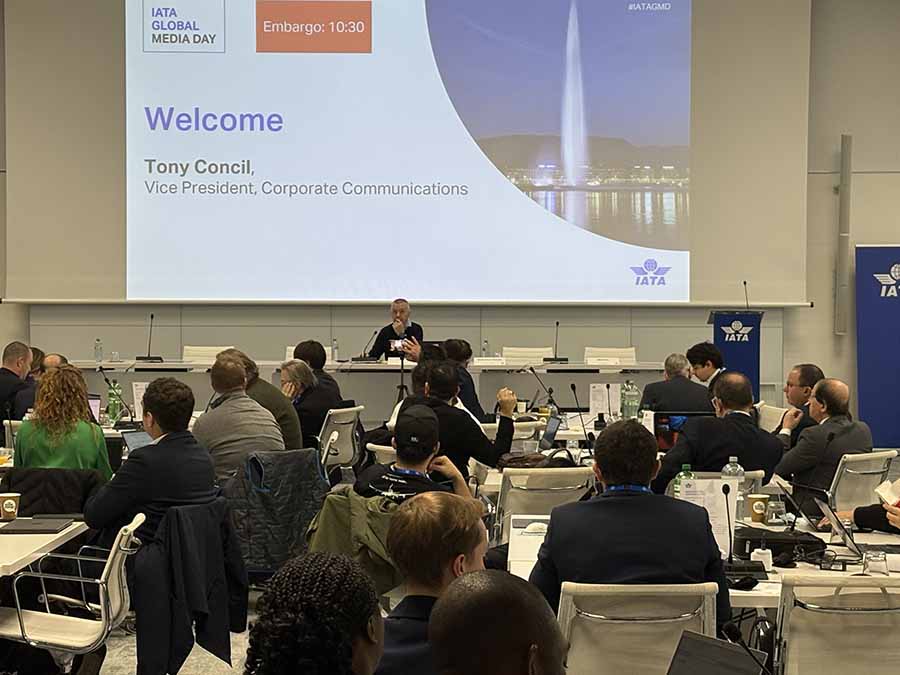
Thierry Stucker told the annual IATA Global Media Day in Geneva that airlines incur €20.24bn in annual payment costs, comprising €16.56bn in fees for processing instruments such as cards and wallets, and €3.68bn in internal expenses for systems, adapters and compliance. Consumer payments account for €13.8bn, while corporate ones total €6.44bn. Industry net profit stands at €6.44 to €7.36 per passenger, against €3.68 per passenger in payment costs. Inclusion of payments in commercial strategy could generate €12.88bn in value by 2030 through expanded customer reach, reduced friction and cost savings.
Customer surveys reveal recurring payment issues that result in dissatisfaction and revenue loss. Physical cards remain the primary method, though instant payments and digital wallets increase in use. Preferences differ by region, with cards dominant in North America and wallets in Asia. Variations occur even within families or generations, as younger users prioritise speed over security.
Standards from 1987 underpin current payment messages, but lack of maintenance has led to deviations, data truncation and translation layers that raise costs and impair authorisations. Collaboration with the Nexi association examines a newer ISO standard, implemented in 31 countries for five billion transactions, with preliminary assessments showing compatibility for airlines. Implementation of new instruments takes nine to 12 months per market, delaying adoption. IATA Pay enables instant payments in 36 countries at lower costs. Central banks drive change through initiatives like the digital yuan, Pix in Brazil and the European digital euro project. Corporate travel, costing €6.44bn, relies on outdated processes without business-to-business procurement flows, unlike other sectors that use purchase orders and bank transfers. Proof-of-concept tests with Lufthansa automate payments, with end-to-end procurement trials underway using corporate ERP systems.
Retirement of legacy standards and adoption of updated processes would improve customer experience, lower friction and cut costs for airlines and passengers.
Key takeaways from the event include the scale of payment volumes underscoring their role in airline operations; the need for innovation to balance revenue growth and expense reduction in thin-margin conditions; regional and generational shifts in preferences requiring flexible options; standardisation via ISO updates and tools like IATA Pay to shorten implementation; and automation in corporate flows to eliminate expense reports and enhance efficiency.
Thierry Stucker shared: “It’s not either or it’s both. The ultimate goal if you think about it would be the dream is that at some stage implementing a payment instrument is almost plug and play. We believe that the time has come to start retiring obviously that’s going to take time but to start retiring the old standards and to move to new and innovated both standards and processes.”