Global aviation is maintaining focus on safety through incident investigations under ICAO Annex 13 obligations, enabling learning to prevent recurrences despite tragic events in 2025. Social media images reveal passengers retrieving hand baggage during evacuations, delaying exits and endangering others. Research continues into this trend, emphasising immediate evacuation without belongings in rare emergencies.
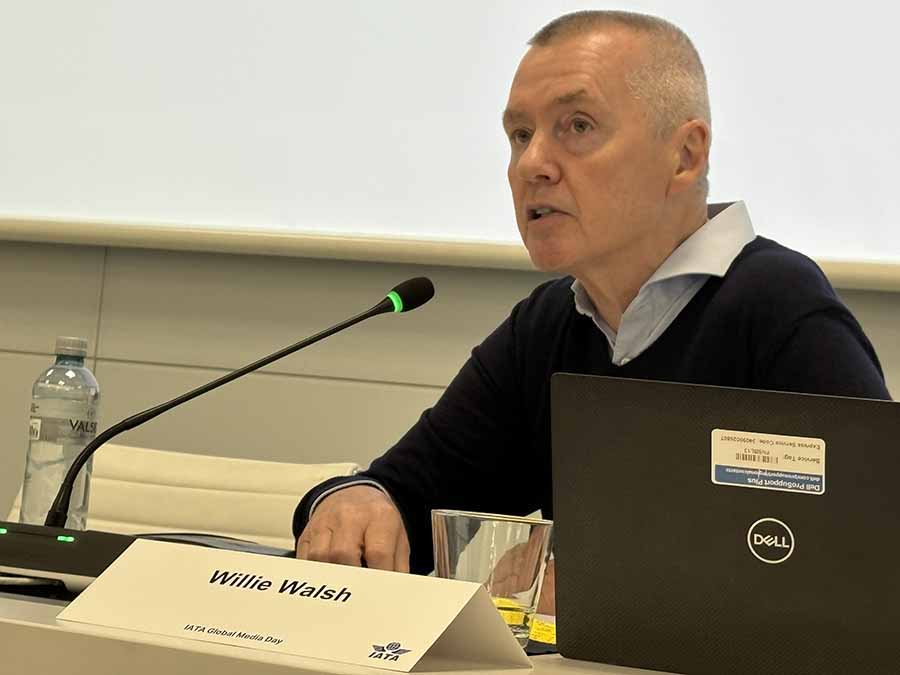
Willie Walsh told the annual IATA Global Media Day in Geneva that the 25 by 2025 gender diversity initiative yields progress, with increased female representation in senior roles and four female CEOs on the IATA board. Recruitment challenges persist in male-dominated technical fields, but awareness rises and airlines commit to visible female leadership.
Sustainable aviation fuel (SAF) production lags expectations in 2025, hindering net zero 2050 progress. Mandates, particularly in Europe, raise prices through compliance fees without boosting supply, rendering 10pc SAF targets by 2030 unattainable for most airlines due to availability shortages. Re-evaluations of commitments occur, as seen with Air New Zealand.
Aviation taxes lack environmental benefits, reducing affordability and passenger numbers while flights operate with lower load factors. Sweden abolishes its tax, Germany keeps rates flat for economic reasons, contrasting UK increases. Taxes prompt route avoidance, with calls for impact assessments to prevent leakage and prioritise connectivity.
Supply chain disruptions are imposing costs on the industry exceeding €9.37bn in 2025, from higher fuel burn on older aircraft, maintenance, spares inventories and engine leasing. Engine OEMs report operating margins around 27pc, up from prior periods, amid delays that burden airlines operating at under 7pc margins.
Supply chain disruptions are likely persist for years to come, with Airbus revising delivery targets downward due to engine shortages and coordination issues between airframe and engine manufacturers. Boeing shows improvement in meeting commitments, restoring confidence, while overall delays force airlines to retain older aircraft, extend leases and incur higher maintenance costs. Approximately 27,000 aircraft operate worldwide.
North America faces flat demand in 2026 from domestic capacity constraints at airports like New York due to ATC limitations, alongside economic pressures from sticky inflation and potential mild stagflation risks. Transatlantic traffic grows modestly at 2.6pc to October, driven more by US outbound travel.
Latin America offers growth potential but regulation, taxes and currency volatility hinder profitability, with specific ticket taxes distorting markets and generating limited revenue. Positive signals emerge in Brazil, with the 2026 IATA AGM in Rio highlighting opportunities if barriers reduce.
Safety concerns rise from passengers retrieving hand baggage during evacuations, visible on social media, delaying exits. Airlines increase pre-flight announcements urging immediate evacuation without belongings. Drone disruptions in Europe shift from individual incidents to organised interference, requiring government action.
Key takeaways from the event include ongoing supply chain frustrations elevating costs; regional variations in demand and profitability; counterproductive taxes lacking environmental benefits; evacuation protocol adherence for safety; and calls for collective industry action on supplier accountability.
Key takeaways from the eventinclude urgency of baggage-free evacuations for safety; gender diversity gains requiring sustained effort; SAF supply failures threatening decarbonisation; taxation’s counterproductive effects on demand; and inequitable cost shifts from suppliers profiting on disruptions.
Willie Walsh shared: “These problems continue to add to the financial challenge that the industry has. Airspace being closed for political reasons and clearly that’s unacceptable to us. It’s not a case of supply and demand. It’s a case of these guys are in a position because they’re monopoly suppliers to adjust the price to protect themselves.”
“There is nothing more valuable in your handbaggage than your life. 10pc of SAF in 2030 is just beyond the reach of the vast majority of airlines through no fault of their own. These guys have been using supply chain disruption to increase their prices to the airline industry.”