A poignant quote from Huelva’s most celebrated literary figure, Juan Ramón Jiménez, comes from his renowned prose work Platero y yo (1914): “Platero es pequeño, peludo, suave; tan blando por fuera, que se diría todo de algodón, que no lleva huesos” (“Platero is small, hairy, soft; so soft outside, you’d say he’s all cotton, with no bones”). This tender description of Platero, the donkey, captures Jiménez’s lyrical connection to the landscapes and simple life of his hometown, Moguer, near Huelva. The work, a cornerstone of Spanish literature, reflects the region’s rural charm and Jiménez’s deep affection for its people and animals, earning him the 1956 Nobel Prize for Literature.
The poet Manuel Machado, in his poem “Andalucía,” evokes Huelva with the line: “Huelva, la orilla de las Tres Carabelas” (“Huelva, the shore of the Three Caravels”). This reference celebrates Huelva’s historical significance as the departure point for Christopher Columbus’s first voyage to the Americas in 1492 from the nearby port of Palos de la Frontera. Machado’s poem weaves Huelva into the broader tapestry of Andalusian identity, highlighting its maritime legacy and cultural pride, a nod to the province’s pivotal role in world exploration.
The region
As summer 2026 beckons, Huelva invites travellers with a captivating blend of unspoilt beaches, historic sites, and authentic Andalusian culture. This southwestern Spanish region, bordering the Atlantic and Portugal, offers a rewarding visitor experience for those seeking relaxation, nature, and culinary treasures.
Huelva’s coastline, stretching over 120 kilometres, is a haven for beach lovers. Playa de Matalascañas boasts golden sands and gentle waves, perfect for sunbathing or family-friendly swims. For a quieter escape, Punta Umbría’s beaches offer serene shores backed by pine forests. The coastal trails of the Marismas del Odiel, a biosphere reserve, provide scenic walks with views of wetlands and flamingos, while kayaking in the area’s estuaries adds adventure.
Huelva city brims with historic charm. The Cathedral of La Merced, with its baroque façade, invites exploration of its serene interior. The Barrio Obrero, a 19th-century workers’ quarter, showcases colourful English-style houses linked to the region’s mining past. Nearby, the Muelle de las Carabelas in Palos de la Frontera displays replicas of Columbus’ ships, offering a glimpse into Spain’s Age of Exploration.
Food enthusiasts will relish Huelva’s culinary offerings. Coastal chiringuitos in Isla Cristina serve fresh seafood, from grilled cuttlefish to gambas blancas, paired with local Condado wines. Markets in Huelva city brim with Iberian ham and strawberries, a regional speciality. In the Sierra de Aracena, restaurants like Casas in Jabugo offer dishes featuring acorn-fed pork, complemented by chestnut-based desserts.
Nature lovers will find Huelva’s landscapes inviting. The Doñana National Park, a UNESCO World Heritage site, features marshes, dunes, and diverse wildlife, including lynx and migratory birds, ideal for guided walks or jeep tours. The Sierra de Aracena y Picos de Aroche Natural Park offers hiking trails through oak forests and charming villages like Almonaster la Real. For a unique experience, the Rio Tinto mines, with their red-hued waters, provide a striking backdrop for exploration.
Huelva’s warm summer climate, with temperatures around 28°C and long sunny days, ensures comfortable exploration. Efficient bus and train connections to Seville, alongside car rentals, make travel straightforward. Visitors can browse artisan markets in Ayamonte for ceramics or relax in natural pools at El Rompido.
With its mix of pristine beaches, historic landmarks, and gastronomic richness, Huelva offers a welcoming escape. Whether strolling along Matalascañas, exploring Columbus’ legacy, or savouring gambas blancas, summer 2026 in Huelva promises a memorable experience.
The visit
Huelva, in southwestern Spain, is part of Andalusia and is known for its Atlantic coastline, the Costa de la Luz, offering pristine beaches and charming fishing villages. It’s a destination where history, nature, and local culture blend, with a focus on Christopher Columbus’s legacy and natural wonders like Doñana National Park.
Huelva offers a mix of history, nature, and culture, with Columbus-related sites and pristine beaches.
- The province is less touristy, offering a quieter experience with events like the El Rocío pilgrimage.
- A range of activities are on offer, from hiking in Sierra de Aracena to kitesurfing on the coast.
- Visitors can explore sites linked to Columbus, such as the Monastery of La Rábida and Palos de la Frontera, where he set sail.
- The city of Huelva features the Monument to Colón and the Casa de Colón, reflecting its colonial and mining history.
- The Ruta Británica highlights British mining influences, and cultural events like the Pilgrimage of El Rocío attract many pilgrims.
- Doñana National Park, a UNESCO site, is a biodiversity hotspot with wetlands and wildlife like the Iberian lynx. The Sierra de Aracena offers mountainous landscapes for hiking, while the coastline boasts beaches like Punta Umbría and Isla Cristina, with options for kitesurfing and boat trips.
- Huelva is famous for “pata negra” ham, white prawns, and Condado de Huelva wines. Traditional dishes include tuna with tomato and local pastries like coca de Isla Cristina.
Unique Experiences
As the “Secret Coast,” Huelva provides a quieter, authentic experience. Visitors can take a ferry to Portugal or explore off-the-beaten-path locations like the medieval town of Niebla.
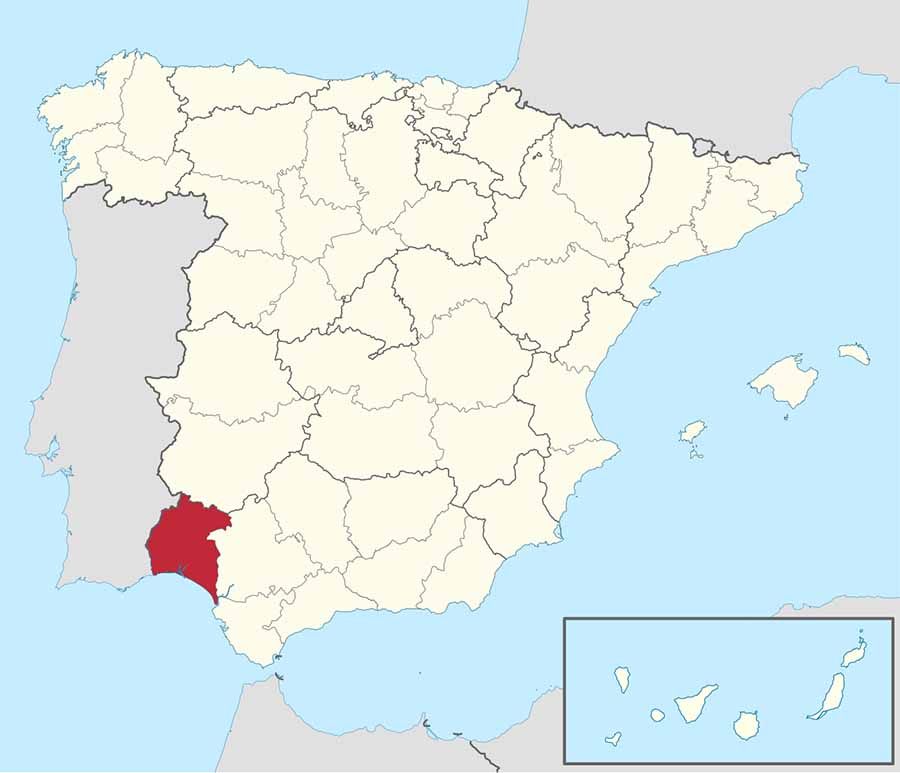
Huelva province, located in the autonomous community of Andalusia, southern Spain, is a destination renowned for its natural beauty, historical significance, and culinary delights. Situated on the Atlantic Ocean, it forms part of the Costa de la Luz and is bordered by Portugal, Seville, and Extremadura.
Huelva covers nearly 10,000 km² and is divided into mountainous, mining, agricultural, and coastal regions. The Costa de la Luz offers endless beaches with fine, white sand, backed by pine and juniper landscapes, while inland areas like Sierra de Aracena provide mountainous terrain. The climate is typically Mediterranean, with mild winters and hot summers, ideal for year-round tourism, though spring and autumn are particularly pleasant for outdoor activities.
Historical and Cultural Attractions
- Huelva’s history is deeply tied to Christopher Columbus, who set sail from Palos de la Frontera in 1492. Key sites include the Monastery of La Rábida, a 14th-century Franciscan monastery where Columbus stayed before his voyage, and the Muelle de las Carabelas, featuring replicas of the Niña, Pinta, and Santa María (Lonely Planet – Muelle de las Carabelas). The Ruta Colombina extends to Moguer, with the Casa Museo Zenobia y Juan Ramón Jiménez, home to the Nobel Laureate poet, offering free audio guides (Lonely Planet – Casa Museo Zenobia y Juan Ramón Jiménez).
- The city of Huelva features the Monument to Colón (Fe Descubridora), erected in 1929 at Punta del Sebo, a tribute to Columbus’s role, particularly beautiful at sunset (Spain.info – Huelva Destination). Other historical sites include the Cathedral of La Merced (18th century, Baroque reredoses), the Church of San Pedro (16th century, Gothic-Mudejar), and the Sanctuary of Nuestra Señora de la Cinta (15th century, Mudejar-style horseshoe arch), all showcasing the province’s architectural heritage. The Ruta Británica, linked to the British mining influence, includes the Barrio Reina Victoria (early 20th-century English-style houses) and the Mineral Wharf (1876, mouth of River Odiel, railway for Riotinto mines).
- Cultural events are a highlight, with the Pilgrimage of El Rocío, declared of International Tourist Interest, drawing nearly 1 million visitors during Pentecost weekend in May. This event, centred in the western-like village of El Rocío, features sandy streets and horseback processions, with the whitewashed chapel honoring La Virgen del Rocío (Lonely Planet – Ermita del Rocío).
- Other festivals include the Colombina Festivals, the Ibero-American Festival at La Rábida, and the Ibero-American Film Festival, with special events on October 12th, Spanish national day.
Natural Wonders and Outdoor Activities
- Huelva’s natural attractions are a major draw, with Doñana National Park, a UNESCO World Heritage site, covering 100,000 hectares of wetlands, marshes, dunes, and woodlands. It’s home to diverse wildlife, including the critically endangered Iberian lynx, avocets, spoonbills, greylag geese, herons, flamingos, and endangered ducks.
- Visitors can explore via the El Acebuche Trail or visit the Palacio del Acebrón for exhibits, with guided tours available through Cooperativa Marismas del Rocío (4-hour bus trip, €29.50pp, +34 959 430 432) or Doñana a Caballo (€30pp riding tours, +34 674 219 568) (Lonely Planet – Parque Nacional de Doñana).
- The Sierra de Aracena, part of the mountainous region, offers hiking and nature exploration, with villages like Niebla featuring the Castillo de los Guzmánes (medieval castle with 46 towers, 5 gates, and a torture museum in the dungeon) and a Roman bridge (Lonely Planet – Castillo de los Guzmánes).
- The coastline, part of the Costa de la Luz, includes beaches like Playa de la Gaviota and Playa Central in Isla Cristina, family-friendly with cream sand, lifeguards, and chiringuitos (e.g., KM6, open 15 June-15 September, Roman Chavez Marín).
- Remote options include the Duna del Asperillo (wooden walkway, over 100m dunes) and the Doñana Beach Trail (20 miles, ends at Guadalquivir).
- For water sports, kitesurfing is popular at Isla Canela, Isla Cristina, and El Portil, with operators like Isla Canela Kite el Paradise (+34 646 280 860, Isla Canela Kite) and Flecha Extreme (+34 617 000 546, Flecha Extreme, also offering paddleboarding and kayaking). Boat trips by Rutas en Barco Mazagón (+34 667 351 552, €25pp) include dolphin-spotting and estuary voyages.
Culinary and Local Delights
- Huelva’s gastronomy is a highlight, with products under Protected Designation of Origin, including “pata negra” ham, white prawns, and Condado de Huelva wines. Traditional dishes feature coastal fish and shellfish, such as tuna with tomato and onions, clams with rice, sea bass with rice, and cuttlefish with rice and broad beans. Inland sausages and strawberries, along with citrus fruits, are also notable. Pastries include coca de Isla Cristina (egg, almonds, candied pumpkin strands), hornazos, and pastelillos de Moguer. Visitors can sample these at thematic shops like Vive!, Ayamonte, at Plaza de la Laguna 14 (+34 959 320 339), offering Jabugo hams and canned fish.
Unique Experiences and Activities
- Huelva is often called the “Secret Coast,” offering a quieter, less touristy experience compared to other Spanish destinations. Visitors can take a 15-minute ferry to Vila Real de Santo António, Portugal, leaving every 30 minutes (9.30am-9pm, July-mid-September, €1.50 adult, €5.50 car, operated by Transporte Fluvial del Guadiana, +34 959 47 06 17, Rio Guadiana). Off-the-beaten-path locations include the medieval streets of Niebla, accessible by Tren Al Andalus for rail travel (Tren Al Andalus), and the village of El Rocío, with its unique sandy streets and horseback culture.
- Sports enthusiasts can visit Estadio Nuevo Colombino, home to Real Club Recreativo de Huelva, Spain’s oldest football club (founded 1889, seats over 21,000, tours available, season Aug/Sept-May, book tickets online at Recreativo Huelva). Cultural experiences include exploring Plaza de las Monjas in downtown Huelva, hosting concerts, festivals, and seasonal markets, lively during holidays.
Given the province’s vast terrain, renting a car is recommended for mobility, especially for remote areas like Doñana National Park and Sierra de Aracena. Public transport options include buses (e.g., number 6 from Huelva bus station to Santuario De Nuestra Señora de la Cinta) and ferries. The best times to visit are spring and autumn for stable temperatures, though summer (July and August) is ideal for beach activities, and winter brings cooler weather suitable for indoor cultural exploration. Accommodation options include Paradors in Ayamonte and Mazagón, offering traditional Spanish hospitality.
Huelva province offers a blend of historical depth, natural beauty, cultural richness, and culinary excellence, making it an ideal destination for travellers seeking both iconic sites and hidden gems. From the biodiversity of Doñana National Park to the historical legacy of Columbus and the unique atmosphere of El Rocío, Huelva provides a memorable and immersive experience, with the flexibility to explore both well-known attractions and lesser-known spots.
Off the beaten path
Huelva, in southwestern Spain, offers a mix of history and nature, with off-the-beaten-path spots perfect for a quieter visit. The Sierra de Aracena region stands out, known for its charming villages and local ham, while coastal areas might have hidden beaches.
- Sierra de Aracena: A picturesque mountainous region in Huelva province, Sierra de Aracena is dotted with small whitewashed towns and offers a quintessential Spanish experience. It’s ideal for hikers, food lovers, and those seeking tranquility away from tourist crowds. The area is famous for its Iberian ham production, with pigs roaming freely in dehesas (fields of cork and holm oaks), and offers numerous trails for hiking, as well as opportunities to explore local culture and cuisine. It’s often described as a real small-town Spain experience, with limited data coverage (no 3G in some areas) and shoddy radio signals from Spain and Portugal on rural routes like HU8212. Located far from the main tourist hubs, this region is less visited by international travellers but cherished by locals and those in the know. It requires a car for full exploration, adding to its secluded feel, and basic Spanish is helpful due to limited English speakers. : Hiking, visiting local ham producers, exploring charming villages, and enjoying traditional Spanish cuisine. It’s recommended to spend a night or a few nights to truly get to know the area, with June being a good time for day trips from Seville due to longer daylight hours.
- Jabugo: Known as the “capital of Iberian ham,” Jabugo is a small town with cobblestone streets and a central square, Plaza del Jamón, where visitors can learn about the production of acorn-fed Black Iberian ham. The town’s charm lies in its traditional architecture and the opportunity to taste one of Spain’s finest culinary products, with tours including all steps from seeing pigs in the dehesa to the salting process and natural cellars where ham is cured. While famous for its ham, Jabugo remains a quiet, unassuming town that doesn’t see the same level of tourism as larger cities, making it ideal for an authentic gastronomic adventure. : Visit ham production facilities, explore the town’s narrow streets, and enjoy local tastings at places like thematic shops offering Jabugo hams.
- Gruta de las Maravillas (Cave of Marvels): Located near Aracena, this natural spring cave is a geological wonder, stretching over 1 km with crystal-clear water lakes and stunning rock formations. It’s one of Spain’s most impressive caves but remains less crowded than other natural attractions, offering a serene and educational experience. Despite its beauty, it’s not as widely advertised as other caves in Spain, making it a hidden gem for nature enthusiasts. It’s accessible from Aracena, adding to its secluded appeal. : Take a guided tour through the cave to marvel at its natural beauty, as detailed on this website.
- Almonaster la Real: A serene village located between lush mountains, Almonaster la Real is rich in history and culture. Highlights include the Capilla de las Santisima Trinidad, a former mosque with panoramic views, and the Cruz del Hoyo festival, a local celebration that showcases traditional Andalusian customs. The village’s rich heritage and lush surroundings make it a peaceful retreat. Its remote location and small size keep it off the radar of most tourists, offering a quiet escape for those seeking historical and cultural immersion. : Explore historical sites, enjoy the views from the former mosque, and experience local festivals like Cruz del Hoyo.
- Castillo de Aracena: Perched on a hill overlooking Aracena, this castle is a perfect spot for watching the sunset over the town’s white houses. It’s a symbol of the region’s medieval past and offers a tranquil escape, with views that capture the essence of rural Huelva. It’s not a major tourist attraction, making it a quiet spot for reflection and photography, often overlooked in favor of more famous castles. : Visit the castle grounds and enjoy the sunset views, ideal for a romantic or contemplative moment.
- Aracena: The largest town in the Sierra de Aracena region, Aracena is a charming base for exploring the area. Its narrow streets, white houses, and proximity to the Gruta de las Maravillas make it a must-visit. The town also boasts excellent local restaurants serving traditional Andalusian dishes, including Iberian ham and fresh strawberries. While it’s a starting point for the region, it remains relatively quiet compared to larger Andalusian cities, offering a more authentic small-town experience. : Explore the town, visit the Gruta de las Maravillas, and dine at local eateries, with Aracena recommended as the best base town for overnight stays.
- Pena de Arias Montano: Located in the village of Alajar, this hilltop site features a small church and an arch, offering a spiritual and serene atmosphere. It’s a popular spot for picnics and enjoying panoramic views of the surrounding countryside, with a tranquil setting that feels far removed from tourist crowds. Its remote location and simple charm make it a lesser-known spot for those seeking peace and natural beauty, often missed by casual travellers. : Hike to the site, enjoy a picnic, and take in the views, perfect for a day of relaxation.
- Linares de la Sierra: A small, quiet village perfect for a lunch break after hiking or exploring the region. It’s known for its tranquility and is a starting point for nordic walking or bicycling trails, offering a glimpse into rural life in Huelva. Its small size and lack of major attractions keep it under the radar, making it ideal for a relaxing stop and a chance to interact with locals. : Enjoy a meal at a local restaurant, go for a hike, or rent a bike for nearby trails, with the village recommended for a break after outdoor activities.
- Given the province’s rural and hilly terrain, renting a car is recommended for mobility, especially for remote areas like Sierra de Aracena. Public transport options are limited, and a car provides greater flexibility to explore these hidden gems. The best times to visit are spring (April–June) and autumn (September–November) for stable temperatures, though summer can be very hot, ideal for coastal visits if exploring less crowded beaches. Winter brings cooler weather, suitable for indoor cultural exploration in villages.
- Culinary highlights include sampling Iberian ham, particularly in Jabugo and Aracena, along with fresh strawberries, white prawns, and wines from the Condado de Huelva region. Safety is generally good, even in rural areas, but visitors should be prepared for limited English speakers and potential mobile data issues in remote parts.
Practical tips:
- Jabugo is famous for Iberian ham, with cobblestone streets and Plaza del Jamón for tastings. Almonaster la Real offers a former mosque with views and historical sites like the Capilla de las Santisima Trinidad.
- The Gruta de las Maravillas near Aracena is a stunning cave with crystal-clear lakes, ideal for nature lovers. Castillo de Aracena provides a hilltop sunset spot, and Pena de Arias Montano in Alajar is great for picnics with panoramic views.
- A car is recommended for exploring rural areas like Sierra de Aracena. Spring and autumn are best for pleasant weather, and local cuisine, especially ham, is a highlight.
Huelva spans nearly 10,000 km², divided into mountainous, mining, agricultural, and coastal regions. The Sierra de Aracena, part of the mountainous area, is particularly noted for its rural charm and traditional villages, while the Costa de la Luz offers pristine beaches. The province’s history, shaped by Roman, Moorish, and Christian influences, is reflected in its architecture and traditions, with a focus on Christopher Columbus’s legacy and local gastronomy.
Huelva province, located in the autonomous community of Andalusia, southern Spain, is a destination renowned for its natural beauty, historical significance, and culinary delights. Situated on the Atlantic Ocean, it forms part of the Costa de la Luz and is bordered by Portugal, Seville, and Extremadura.
Huelva province offers a wealth of off-the-beaten-track locations, particularly in the Sierra de Aracena region, where visitors can experience authentic Spanish culture, stunning natural landscapes, and delicious local cuisine. From the ham-producing town of Jabugo to the serene village of Almonaster la Real and the geological wonder of Gruta de las Maravillas, these hidden gems provide a unique and memorable alternative to the province’s more famous attractions, ensuring a memorable and immersive visit.
Spain region by region
Almería – Andalusia – Aragón – Asturias – Basque Country – Cádiz – Cantabria – Catalonia – Córdoba – Extremadura – Fuerteventura – Galicia – Gran Canaria – Granada – Huelva – Ibiza – Jaén – La Mancha – La Rioja – Lanzarote – León – Madrid – Majorca – Málaga – Menorca – Murcia – Navarra – Seville – Tenerife – Valencia –