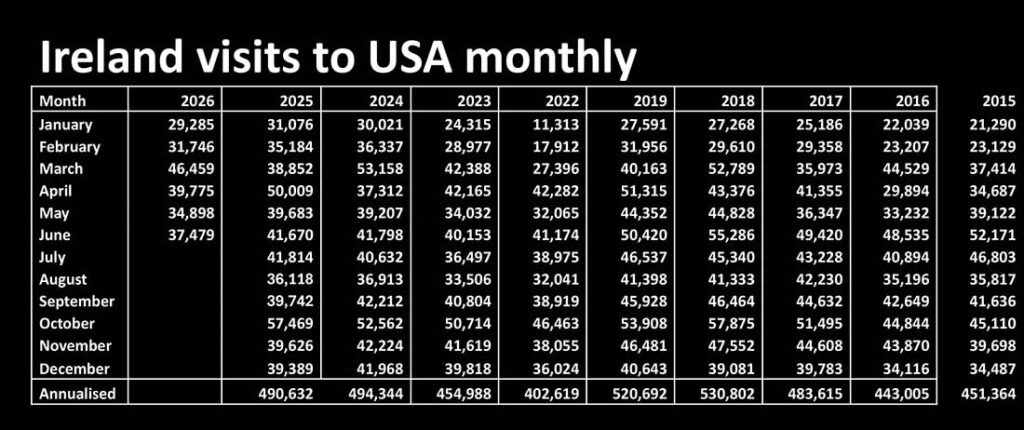
- The direct Pittsburgh to Dublin service began after an 11-year process.
- The route launched with four days per week frequency.
- Pre-clearance in Dublin allows passengers to arrive as domestic travellers in the US.
- American Airlines and Southwest provide strong onward connections from Pittsburgh.
- Pittsburgh offers cultural, sports, tech and manufacturing attractions for Irish visitors
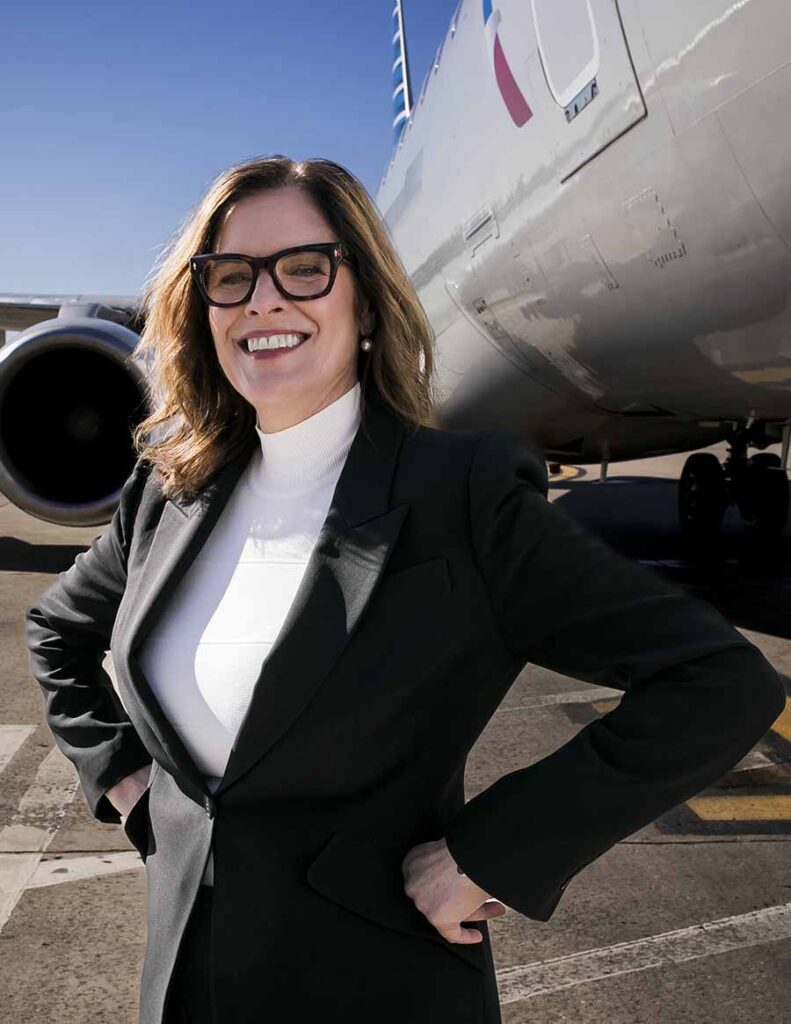
In an interview with Eoghan Corry, Christina Cassotis, CEO of Pittsburgh Airport talked about her hopes for the new Aer Lingus 4w route which commenced on May 25, 2026.The route will be supported for two years but Ms Cassotis spoke of the need for it to succeed beyond that and hoped it will be a daily rear round service by then.
Ms Cassotis explained the challenges of securing international routes for midsized cities and the importance of demonstrating long-term market viability. She noted strong cultural, heritage and business ties including tech sector links between Pittsburgh and Dublin.
The route operates four days a week with ambitions for daily year-round service. Cassotis highlighted point-to-point passenger preference and the role of modern aircraft such as the A321neo. She described Pittsburgh as a city with rich Irish heritage and diverse economic strengths.
Eoghan Corry: It’s been a long journey, Christina, to get the direct flight to Dublin.
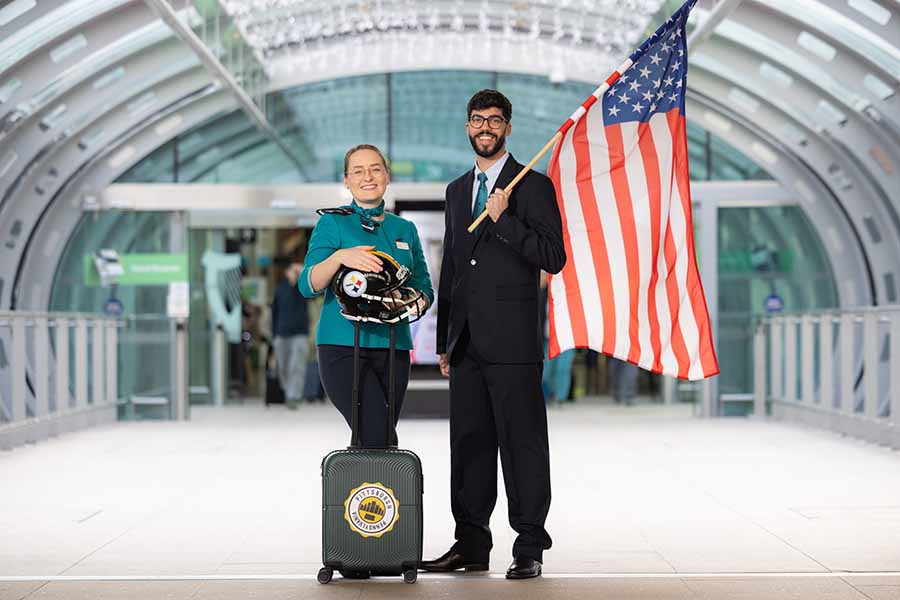
Christina Cassotis: Very long. It’s actually the very first international airline that we visited when I took the job 11 years ago. We went to Dublin and London in March 2015. It took 11 years. It was on again, off again, but when the football sponsorship kicked in, I said this is absolutely certain. The Rooney family were a big part of it. The Steelers are an amazing brand and it was incredibly personal to them. This succeeded on the heels of the home game they played in Dublin and the tremendous support the community showed by turning up in person. It was a great partnership with the Steelers.
The state of Pennsylvania also recognised the importance of this, not only the cultural but the economic ties that this would facilitate and enhance. It all came together. They say success is when preparedness meets opportunity, and I felt like everything was in place. We just needed that final push.
Eoghan Corry: Dan Rooney was beloved in Ireland when he was ambassador here. What were the obstacles, Christina, to getting a route like this? I’m not talking about Dublin specifically, but getting an international route over the line seems to be a huge task.
Christina Cassotis: It’s always a big task. One of the things we constantly focus on is that the airline has a lot of opportunities. We have an obligation, as a community and specifically as an airport, to show why they should make Pittsburgh their bet. Why should they invest that aircraft, crew time, marketing budget, and opportunity cost in Pittsburgh when there are so many other places they could go?
The challenge is always demonstrating why we, as a market, are the right place for that aircraft and why the service will succeed in the long term. We all have incentives we can offer, but the real question is whether the service will succeed after the incentives end. As an airport, we only want to invest our time and commitments in markets we know will succeed long term. Dublin has always been at the top of that list. It’s about getting the airline to understand the long-term viability of the market.
Eoghan Corry: How competitive is that market? Is it getting more expensive? I’ve heard eye-watering figures for incentives on some routes like British Airways to New Orleans.
Christina Cassotis: It’s incredibly competitive for international flights, especially for midsized cities. If you’re New York, Los Angeles or Seattle, they come to you. For medium-sized cities, the real question is whether the market is really there. The sum of the incentives has been substantial. We are very careful to make them competitive but also reasonable, so they demonstrate that we have skin in the game.
We don’t want to bring an airline in and just say good luck. We have an obligation to make sure it works long term. We demonstrate that through incentives, partnerships, and the businesses that will use the route for investment, tourism, and economic opportunities in both communities.
Eoghan Corry: How has the mood changed with the change of administration in Washington regarding international routes?
Christina Cassotis: It’s entirely a local issue. From the airport’s perspective, our job is to make sure the region gets the service it needs. The federal government does not get involved in the incentives except to set the maximum period, the FAA limits incentives to two years. That hasn’t changed.
Eoghan Corry: What’s the sweet spot for an airport of Pittsburgh’s size in terms of the domestic and international mix?
Christina Cassotis: We’re not there yet, we’re still underserved. Dublin was a really big win for us because of the cultural and heritage ties, but also because of the tremendous business that goes back and forth. We have big companies with substantial operations in Dublin, and the tech sector is very important to us.
We would love to see Dublin become daily year-round. We’re starting with four days a week and will have to prove it can work. There is more opportunity for international growth in Asia, Latin America, and Canada, as well as more domestic flying. But fuel prices, aircraft delivery backlogs, and engine reliability issues all affect an airline’s ability to commit to new markets.
Eoghan Corry: What’s the wish list, Christina?
Christina Cassotis: It’s long. I’d really like to see a lot more West Coast flying and more frequency into major markets. That will come back when fuel prices level out. Internationally, daily year-round Dublin and a little more into continental Europe, Amsterdam or Frankfurt would make sense given the heritage, cultural, and business ties. We also want more cargo, particularly connections to Mexico City and Panama. We’re big fans of Copa Airlines.
We pay attention to airlines’ management teams, quarterly earnings, and what they’re up against. We’re always playing a long game here, as you can tell by Dublin.
Eoghan Corry: Do you see a growing appetite for long-haul point-to-point service? There was a mood years ago that everyone would just go through JFK, Atlanta or Chicago.
Christina Cassotis: In my 30-plus years in this business, passengers have always preferred point-to-point. They don’t love connecting through hubs, even if they sometimes have to. Aircraft technology like the 787 and A321neo has made point-to-point possible on routes like Pittsburgh to Dublin without needing a 747.
Hubs still have a meaningful place because they make smaller markets viable. But point-to-point is always preferred, and in markets like ours it can grow the market substantially and deliver tremendous economic and social value.
Eoghan Corry: Was the US Airways merger disruptive? Was it more or less disruptive than expected?
Christina Cassotis: It wasn’t the merger that was disruptive to Pittsburgh, it was US Airways itself. The hub had already been taken down and leases cancelled before the merger. They did it all by themselves.
Eoghan Corry: How is the Pittsburgh–Dublin route performing? And what do you want the Irish consumer and business community to know about it?
Christina Cassotis: Dublin is a pre-clearance market, so it’s a great way to enter the United States. Our customs and border protection experience is quick and efficient but with Aer Lingus that is not even necessary, you arrive essentially as a domestic passenger.
The route is performing incredibly well. I’m still stopped on the street by people saying they can now go to Dublin. Once a nonstop starts, more people fly, it’s a well-documented industry fact that the local market grows substantially.
To Irish businesses and tourists: Pittsburgh is better than you have ever imagined. There is way more to do than you probably thought possible. It’s a great place to do business and a great place to visit. I discovered that when I took this job 11 years ago. My ideas about the city were outdated. I promised my husband I’d stay three years, it’s now been 11.
There is so much here, sports, culture, food, history, Americana. From a business perspective, we have a strong, diverse economy spanning traditional manufacturing to artificial intelligence, automation, and robotics. It’s one of those communities where you arrive and think, “How did I not know this?”
And yes, everyone’s from Ireland. The Irish heritage here is tremendously rich. People are so proud of this route and excited to support it and visit Ireland.
Eoghan Corry: You have aviation in the blood long before you move to Pittsburgh. Where did you grow up?
Christina Cassotis: My father was a Pan Am pilot. I grew up in southern New Hampshire, about 40 miles outside Boston. I spent my whole life in New England, consulted for airports around the world for 17 years, and was recruited to Pittsburgh in late 2014. I started in 2015. I had only been here once before.
Eoghan Corry: What was your to-do list when you arrived?
Christina Cassotis: To really understand the community and what makes it tick so I could represent it properly. At every turn I was surprised by how accomplished, robust, and exciting it was, and how humble and sometimes timid it was about talking about itself. With all the resources, history, and innovation here, I wondered why we weren’t shouting about it. But that’s who Pittsburgh is. I feel lucky to be one of the storytellers for this community.
Eoghan Corry: We’ve seen the demise of Spirit Airlines. Is that worrying from an airport perspective?
Christina Cassotis: There’s no question that what happened to Spirit is a concern for all airports. Spirit brought price discipline to many markets and helped increase flying for people who might not otherwise have travelled. The ultra-low-cost carrier sector is important for stimulating demand. We still have several here and we’re watching closely to ensure we maintain the right mix of service for all segments of the market.
Eoghan Corry: On the Pittsburgh side, what connections are you seeing being used by passengers on the Aer Lingus Dublin route?
Christina Cassotis: We don’t have full data yet, there’s about a three-month lag. But American Airlines is one of our top two carriers along with Southwest. American serves a lot of cities from Pittsburgh. You can connect to New York, Miami, Los Angeles, Dallas, Chicago, and many others. There are good onward options, though regional flying has reduced since 9/11, anything within a four-hour drive often isn’t served by air.
Eoghan Corry: What needs to go right for the rest of 2026?
Christina Cassotis: People need to continue believing that flying is something they want to do to improve their lives and livelihoods. Air travel is not a nice-to-have, it’s a must-have. It would be great to see more country-by-country support for the aviation sector. There are always headwinds, but flying always comes back, and it comes back stronger.