Like a mission to land on the moon, Apollo won the racer EasyJet. But what happens next? The options for the giant American investment group after taking the airline profit with their €6.
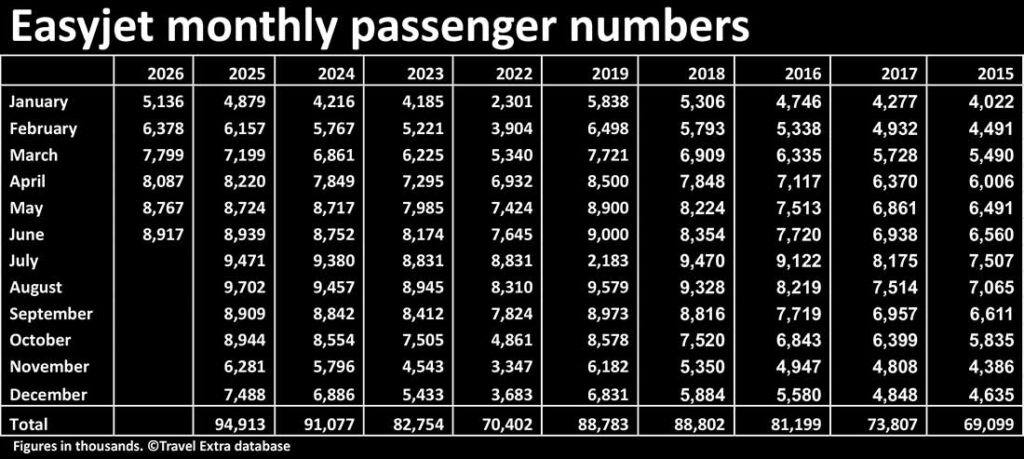
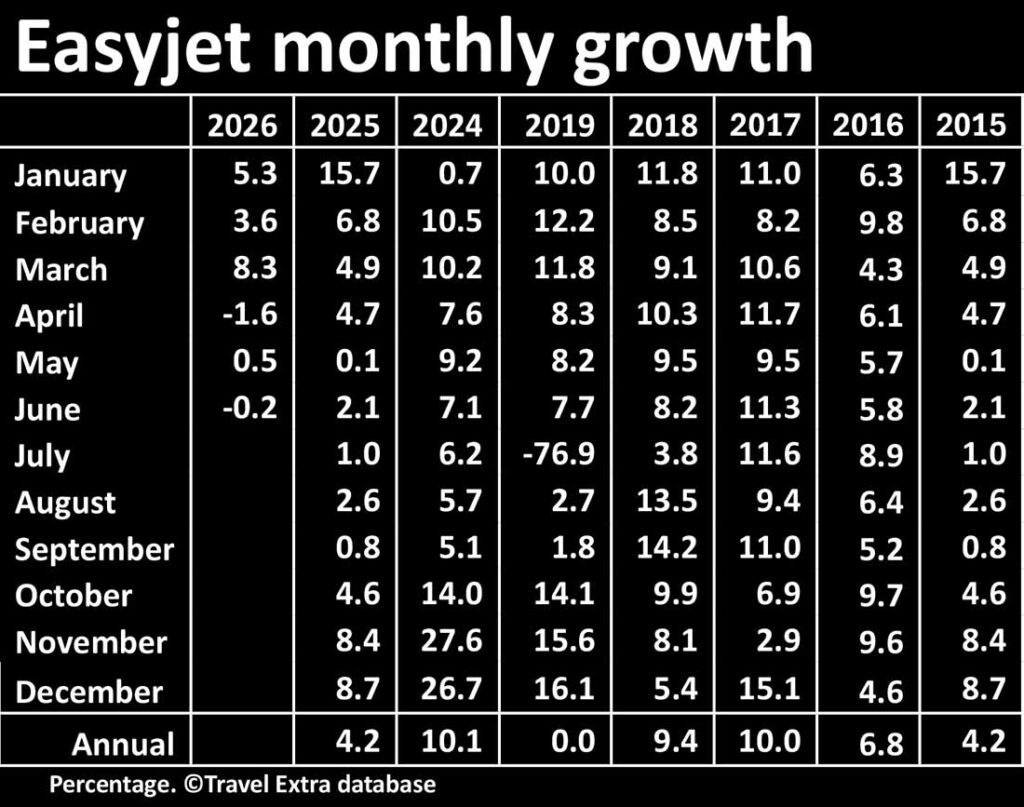
6bn acquisition are to utilise the airline’s considerable assets and restore growth, which stalled during Brexit and never recovered. First things first, it is unlikely that they will break the airline up into its constituent parts.
Apollo Global Management confirmed the recommended cash acquisition of EasyJet at €6.6bn, equivalent to the £5.7bn offer that prevailed once rival Castlelake withdrew. The structure keeps the Haji-Ioannou family and other European Union based shareholders holding between 45.1pc and 49.9pc of the purchasing vehicle, with an EU management trust taking up to fivepc and Apollo funds the remainder up to 49.9pc. This arrangement satisfies ownership rules that require majority European control for the airline’s operating certificates. The transaction values shares at £7.15 each and is expected to complete in the first quarter of 2027 subject to regulatory clearances. Alex van Hoek of Apollo shared that EasyJet holds a differentiated market position through its customer proposition, expansive network and strong brand. Kenton Jarvis, EasyJet chief executive, shared that the firm welcomes Apollo’s commitment to the business and its people and regards the buyer’s aviation experience as a strong partnership.
Recovery strategy
The assets that Apollo now controls form the foundation for any recovery strategy. EasyJet operates under three Air Operator Certificates covering England, Europe and Switzerland. By the end of 2026 the network will include 33 operational bases across nine countries, with the newest addition in Marrakesh under the European certificate. These bases account for 73pc of total seat capacity and all rank inside the top 50 airports by capacity. London Gatwick remains the largest single base, contributing 10pc of overall seat capacity, followed by Geneva and Milan Malpensa.
England concentrates 31pc of capacity across eleven bases including Newcastle and London Southend. France holds 11pc and Italy eightpc. Slot holdings at coordinated airports give EasyJet an average 16pc share of total seat capacity across Level 3 facilities, rising to 30pc inside England At Bristol the carrier controls 56pc of capacity, at London Gatwick 44pc and at London Luton 38pc. The fleet of Airbus narrow-body aircraft, the established low-cost brand recognition across Europe, and the network of short-haul routes that link secondary and primary cities constitute further tangible resources. Apollo has already indicated that no jobs will be cut in the first twelve months after completion, signalling an intention to preserve rather than dismantle these operational foundations.
Growth stalled after the 2016 referendum and the subsequent disruption to cross-Channel demand never fully reversed. Capacity expansion slowed while competitors such as Ryanair continued to add aircraft and routes. EasyJet’s focus on primary airports brought higher costs but also higher yields in good years, yet the combination of fuel price volatility, air traffic control constraints and residual post-Brexit friction limited the recovery in unit revenue. Load factors remained resilient, yet average fares failed to keep pace with cost inflation in several seasons. The winter schedules have traditionally been thinner than those of pure leisure carriers, leaving aircraft utilisation lower in the quieter months. Apollo’s stated aim of restoring growth therefore centres on higher utilisation of the existing slot portfolio, selective addition of aircraft at the strongest bases, and careful expansion into leisure markets that can fill seats year-round. The new Marrakesh base offers one template for this approach, placing capacity closer to winter-sun demand while retaining the core European short-haul model. Any increase in frequencies at Gatwick, Luton or the northern English bases would exploit the protected slots that competitors cannot easily replicate. The risk remains that regulatory scrutiny of airport congestion could limit further slot acquisition, forcing the new owners to extract more productivity from the current portfolio rather than simply adding volume.
Belfast: strength and the vulnerability
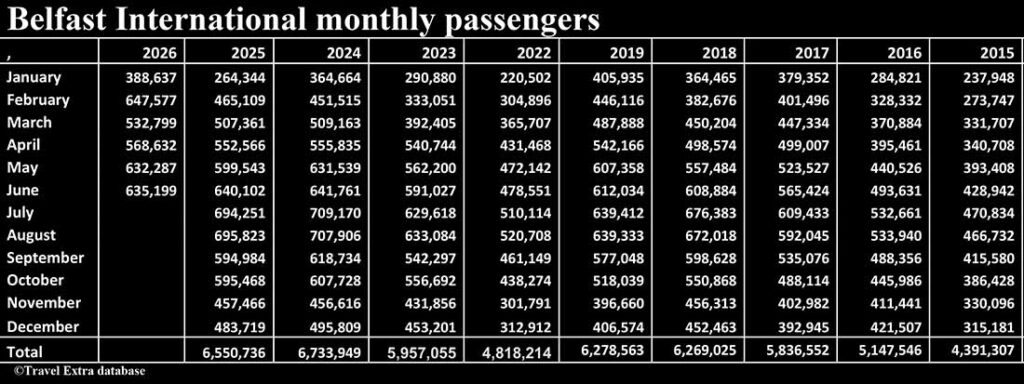
Belfast illustrates both the strength and the vulnerability of EasyJet’s regional position. The carrier holds the largest market share in the region, accounting for approximately 61pc of all commercial flights across the region’s three airports. Belfast International serves as the principal hub with multiple based aircraft, while Belfast City and City of Derry have seen progressive route additions. The Belfast to London corridor remains one of EasyJet’s highest-volume routes, carrying more than 1.6m passengers annually and commanding a 75pc market share. Additional routes to Liverpool, Edinburgh and a range of European leisure destinations reinforce the network density. Local employment stands at around 500 people, including pilots, cabin crew and engineers. Any strategic shift by Apollo that reduced capacity at the Belfast bases would therefore affect a disproportionately large share of NI’s air connectivity. Conversely, an investment programme that added aircraft or winter frequencies could consolidate the dominant position and support inbound tourism and outbound leisure travel. The dual-airport structure in Belfast already allows EasyJet to serve both business and leisure segments; further optimisation of the slot and aircraft allocation between the two airports could improve efficiency without requiring new capital intensive infrastructure.
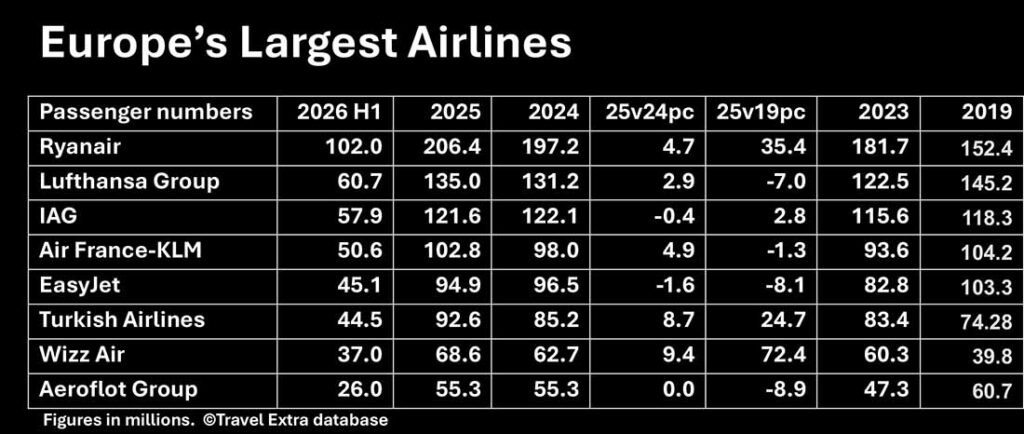
The wider European low-cost sector continues to consolidate around a small number of large carriers. Ryanair’s relentless capacity growth and Wizz Air’s expansion in Central and Eastern Europe have kept competitive pressure high on thin routes. EasyJet’s historic preference for primary airports differentiates it from the pure secondary-airport model, yet that preference also exposes the airline to higher airport charges and slot scarcity. Apollo’s ownership of complementary businesses outside aviation may create opportunities for ancillary revenue growth, but the core challenge remains the restoration of consistent profitability through higher aircraft utilisation and disciplined network management. The retention of the existing management team and the twelve-month employment guarantee suggest that the immediate priority is operational continuity rather than radical restructuring. Over a longer horizon the new owners will need to decide whether to accelerate fleet growth, pursue further base openings, or focus on yield improvement within the current footprint.
A hurdle: EU ownership rules
Regulatory approval remains the next practical hurdle. European Union ownership rules have been addressed through the shareholding structure, yet competition authorities in several jurisdictions will still examine the transaction for effects on route-level competition. Slot holdings at constrained airports such as Gatwick will attract particular attention. Provided clearances are obtained, Apollo will inherit a carrier that already possesses the scale, brand and infrastructure required for renewed expansion.
The test will be whether the American investor can reverse the post-Brexit stagnation in growth rates and convert the substantial asset base into sustained traffic increases and improved margins. Belfast’s heavy reliance on EasyJet capacity means that the outcome of that test will be felt keenly in NI’s aviation market and in the wider regional economy that depends on reliable low-fare connections.
The combination of protected slots, established bases and a recognisable brand gives Apollo a platform that few other European carriers of similar size can match. Success will depend on the disciplined deployment of those assets rather than on any abrupt change of strategy. If the new owners can lift utilisation, protect the Belfast franchise and selectively grow the winter programme, the €6.
6bn acquisition may yet deliver the recovery that has eluded EasyJet since the referendum years. The coming seasons will reveal whether Apollo can convert ownership of these resources into the sustained growth that the airline’s network and market positions still make possible.