
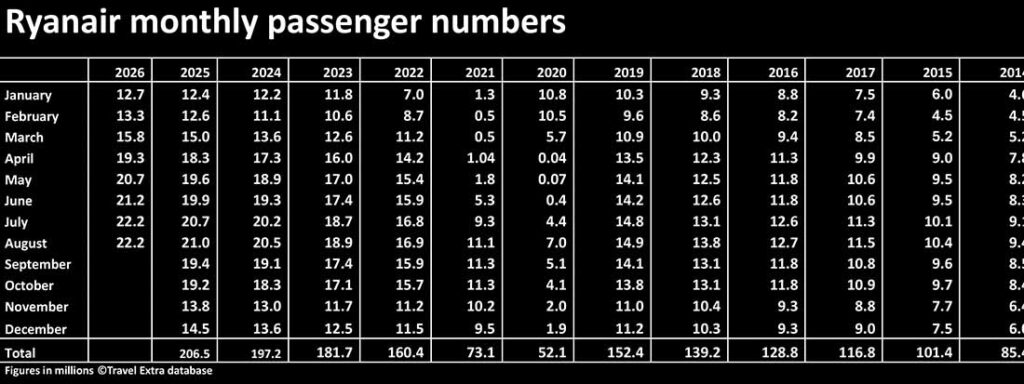
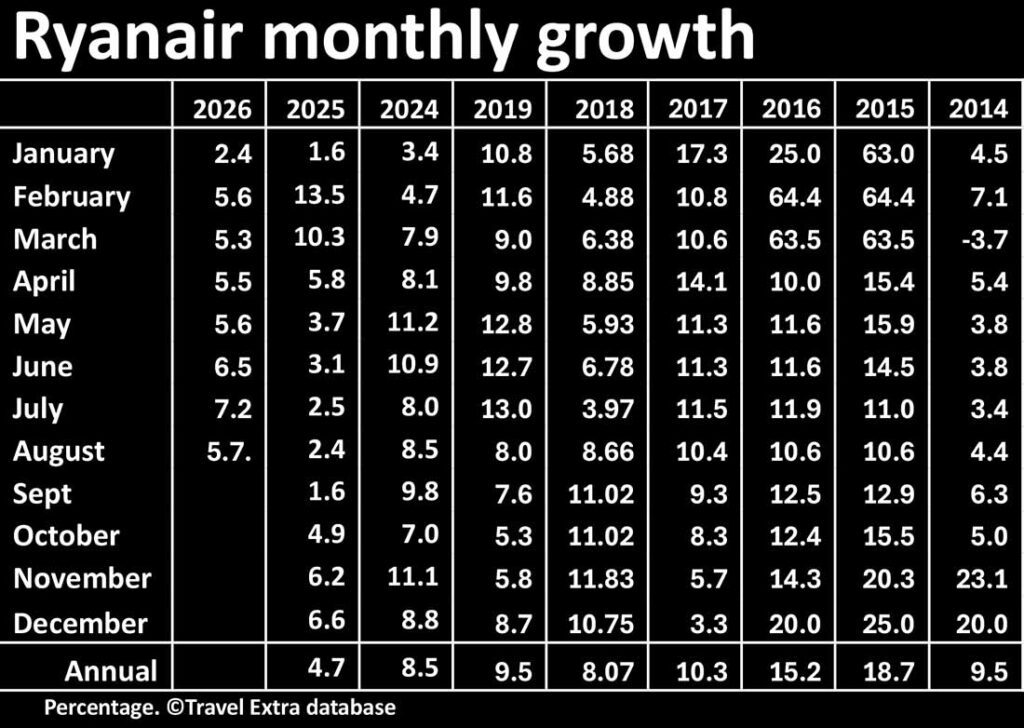
- Ryanair carried 22.2m passengers in August 2026, up 6pc
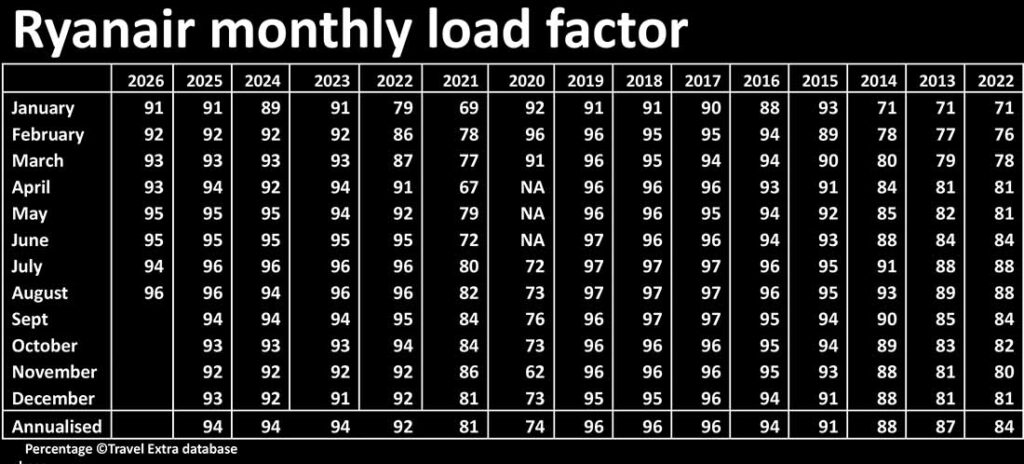
- The load factor remained at 96pc for the month
- More than 400 flights were cancelled due to Mount Etna eruptions
- FY27 traffic target has been cut from 216m to 214m
- The winter schedule cut is expected to reduce losses by €70 to €100m
Ryanair says it remains on track to grow summer traffic from April to October by over 5pc from 138m to 145m in summer 2026, with quarter two fares trending modestly down year-on-year as guided in July. The group has hedged 80pc of financial year 2027 jet fuel at approximately $67 per barrel. With jet fuel currently trading at around $140 per barrel, the group has strategically reduced its exposure during the unprofitable winter schedule from November to March.
The financial year 2027 traffic target has been cut from 216m to 214m passengers to reduce exposure to unhedged oil this winter, with traffic from November to March expected to be broadly flat year-on-year. The winter schedule cut is expected to reduce winter 2026 losses by €70m to €100m, subject to pricing and passenger demand. If high oil prices continue through summer 2027, Ryanair believes short haul airfares in Europe will increase materially to reflect higher oil prices.
Ryanair monthly passenger numbers for August reached a record 22.2m, 5.7pc ahead of August 2025 and 49pc ahead of pre-pandemic. Load factor was 96pc and rolling annual 214.4m, up 5pc on the twelve months to August 2025.
The airline operated over 120,500 flights during the month, though more than 400 services were cancelled due to Mount Etna eruptions. On a rolling twelve month basis traffic reached 214.4m guests, up fivepc, with the load factor unchanged at 94pc.
Michael O’Leary shared: “The group is well placed to record another profitable year, albeit below FY26’s record PAT with 80pc of FY27 fuel hedged. High unhedged oil prices have prompted a strategic reduction in winter capacity to reduce exposure.”
Ryanair is on track to grow its summer traffic (Apr. to Oct.) by over 5pc (from 138m) to 145m in summer 2026 with fares, guided in July, trending “modestly down” year on year. With 80pc of the year to end March 2027 jet fuel hedged at $67 a barrel, the group is well placed to record another profitable year, albeit below last year’s profit after tax. It remains too early to provide meaningful guidance on the year to end March 2027.
In light of high unhedged oil prices jet fuel currently trading at ¢140 a barrel it is sensible to strategically reduce the group’s exposure to unhedged jet fuel during the unprofitable winter schedule from November to March.
Ryanair’s traffic target for the year ending March 2027 is therefore cut from 216m to 214m passengers, to reduce our exposure to unhedged oil this winter. We expect traffic from November to March will be broadly subject to pricing and passenger demand,
Ryanair expects this one-off winter schedule cut to reduce Ryanair’s losses by €70m to €100m. If high oil prices continue through to the summer of 2027, Ryanair believes short haul airfares in Europe will increase materially to reflect higher oil prices, as some less well-hedged competitors will struggle to maintain capacity or even survive this coming winter season.
Related posts:
 Ryanair AUGUST passenger numbers: ANOTHER record month with 22.2m pax & 96pc load factor
 Birmingham airport reports record July with passenger numbers up by 2pc on 2025
 Turkish Airlines re-routes Sydney service via Singapore from October
 Westjet flights resume as cabin crew strike ends with deal and 13pc pay rise