Like the Scottish song, it is a case of taking the high road or the low road. Loganair stands at a crossroads in Scotland’s regional aviation landscape as autumn approaches and the winter schedule takes shape.
The Glasgow-based carrier, long the principal provider of air links across the Highlands and Islands, has spent the past months confronting sharp rises in operating costs while seeking to protect the thin routes that connect island communities to the mainland. Fuel prices that doubled in a single month earlier in the year, combined with higher aircraft repair bills, airport charges and route costs, forced management to take decisions that affected daily services from Inverness to Stornoway, Kirkwall and Sumburgh. From 19 July the weekday frequencies on the Inverness-Kirkwall-Sumburgh corridor were withdrawn, leaving only weekend operations, while the Inverness-Stornoway service was reduced to a single daily return.
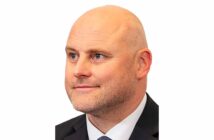
Chief executive Luke Farajallah described the step as one of the hardest the company had taken, noting that the routes had been loss-making for a sustained period and that passenger loads on some flights had fallen as low as 20pc.
The immediate pressure arose from an unresolved funding gap of around €1.5m that Loganair calculated was required to keep the existing pattern of services intact. Discussions with Highlands and Islands Airports Limited and Transport Scotland continued through the summer without an early resolution.
The airline made clear that further reductions or permanent withdrawal remained possible if the shortfall was not closed. Island communities, already familiar with ferry disruption on the west coast, voiced concern about access to healthcare appointments in Inverness, business travel and family connections.
Medical service
NHS Western Isles estimated that the altered schedule could add substantial extra costs for patient transfers and visiting specialists. Political pressure mounted at Holyrood and among local representatives, prompting calls for a formal review of regional aviation policy and examination of how other European countries support comparable lifeline routes.
By early August the Scottish Government confirmed that Highlands and Islands Airports Limited would receive more than €1.2m in additional funding, with Loganair contributing the remaining balance of approximately €280,000.
Full frequencies are scheduled to resume from 26 October and the support is intended to cover operations through to April. Farajallah welcomed the intervention, stating that a privately owned airline cannot sustain thin routes indefinitely without external assistance. The restored timetable will provide greater certainty for passengers during the months when weather often renders sea crossings less reliable.
At the same time the airline has stressed that a one-year arrangement does not constitute a long-term solution and that a broader strategy for non-commercial essential routes is required from both Scottish and English authorities.
The Dundee question
Parallel decisions illustrate the disciplined approach management is applying across the network. Loganair confirmed the closure of its operating base at Dundee Airport after 23 October. The decision left Dundee, an airport the size of Donegal, without any scheduled services.
The Dundee to London Heathrow public service obligation service, previously supported by local, Scottish and English government funding, was judged financially unsustainable despite the subsidy. Onward connections from Dundee to Kirkwall and Sumburgh will also end. The airport will retain capacity for private and charter flights but will lose scheduled commercial operations.
Staff based at Dundee are to receive support in seeking alternative roles within the company where possible. A similar review led to the decision to close the Southampton base at the end of October, with the Southampton to Manchester service already withdrawn. These changes form part of a wider strategic update that prioritises resilience and the long-term viability of the core Scottish network over marginal operations elsewhere.
Cost control is not the sole focus. Loganair has advanced plans for fleet modernisation that look beyond the immediate winter. At the Farnborough Airshow the airline signed an agreement to acquire five Beta Technologies Alia CX300 all-electric aircraft, with options for a further five.
High ambition
Ambitions are high. Operations are targeted from 2029, positioning Loganair to become the first commercial carrier in Europe to field an electric fleet. Most of its existing routes fall within the aircraft’s practical range of roughly 100 miles, and the design is compatible with current runways. Recharging times of between 20 and 40 minutes are expected to fit existing turnaround patterns.
Management projects operating cost reductions of up to 80pc on suitable sectors, an attractive prospect given the recent volatility in jet fuel prices. Successful demonstration flights earlier in the year, including cargo trials, have reinforced confidence in the technology. The move aligns with longer-term ambitions to reduce emissions while preserving the short-haul connectivity on which island economies depend.
Sustainability initiatives extend further. Loganair has entered a 15-year offtake agreement for sustainable aviation fuel and has partnered with OpenAirlines to improve fuel efficiency through advanced flight-planning software.
Community programmes such as the GreenSkies Fund continue to support local environmental projects. These steps form part of an effort to demonstrate that regional aviation can adapt to higher environmental standards without sacrificing the social role the airline has played for decades.
Cold winds ahead
The winter ahead will test whether the temporary funding arrangement and the network rationalisation deliver the intended stability. Demand on the restored Inverness island routes is expected to strengthen as ferry services face seasonal weather challenges, yet the underlying economics of low-density services remain fragile.
Load factors, fuel price movements and any further increases in maintenance or airport charges will determine whether the current package proves sufficient through to next spring. Loganair has indicated readiness to restore full services earlier than 26 October if conditions allow, but the formal restart date provides a clear planning horizon for passengers and health boards.
Structural questions persist. The absence of a comprehensive national framework for lifeline air services leaves operators and communities dependent on periodic negotiations.
Comparable European models that combine public service obligations with multi-year contracts offer potential templates, yet any Scottish equivalent would require agreement between Transport Scotland, local authorities and the airline. Loganair has already operated public service obligation routes elsewhere in its network, including services within Orkney, and has proposed that the Inverness corridors could be brought under similar arrangements to provide greater predictability.
Small base perils
Ttighter scheduling and better punctuality have marked out recent perfomrance according to company statements.
The decision to withdraw from bases that no longer cover their costs reflects the same prioritisation of core routes. By concentrating resources on the Highlands and Islands network and selected other services that remain viable, management aims to protect the connectivity that underpins island life while preparing for a lower-cost, lower-emission fleet later in the decade.
The coming months will therefore be defined by the practical execution of the restored timetable, the orderly closure of the Dundee and Southampton bases, and continued engagement with government on longer-term funding mechanisms. Success will depend on whether passenger numbers recover sufficiently on the reinstated routes, whether fuel and maintenance costs stabilise, and whether the political will exists to move beyond annual fixes toward a durable policy framework. Loganair’s stated commitment to the communities it serves remains central to its public position, yet the commercial realities of thin routes in a high-cost environment leave little margin for error.
The winter schedule, once restored, will offer the clearest evidence of whether the measures taken this summer have secured the essential links for the season ahead and beyond. Is e ’n geamhradh luath an geamhradh bua.
Related posts:
 ANALYSIS: How Europe’s hotel developers are turn to conversions rather than new-builds
 AirNav Ireland director discusses record traffic levels and future recruitment
 ANALYSIS: How river cruise companies are responding to low water levels on the Danube and Rhine
 ANALYSIS: TCS and Rolls-Royce breakthrough in hydrogen-powered aviation, is this the moment the carbon besieged planet is waiting for?