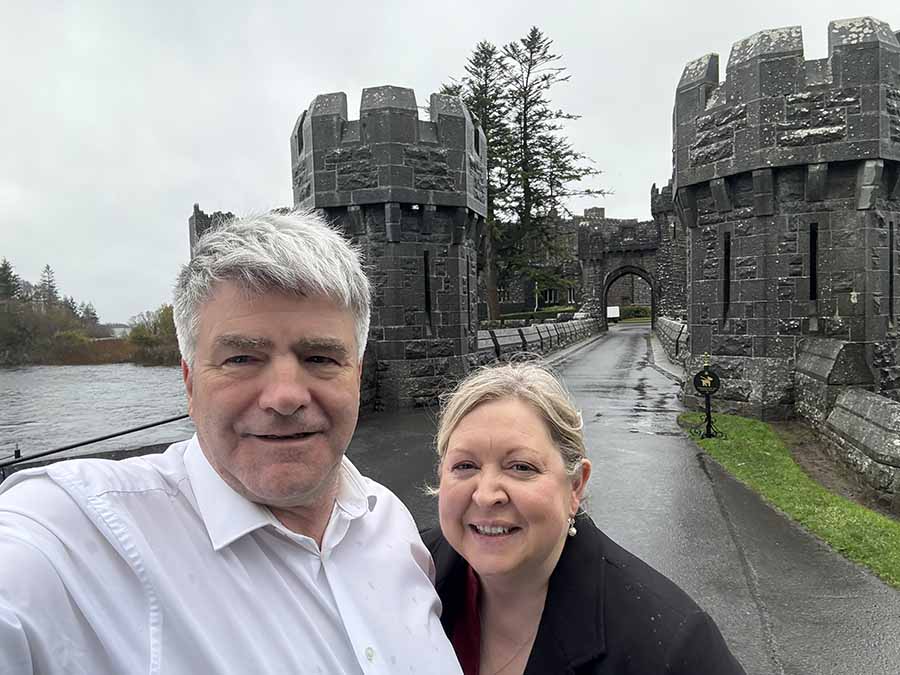
A statement entrance. The mood is set by the approach. Grandiose gates, a sweep, a golf course, a lake view, a castellated gate and a bridge over a racing river. Park between the Fwerraris and you know you have arrived. Ashford Castle, an icon of hospitality. Fit for a prince, because princes are at ease here. Or a president.
The castle reopened after a €70m restoration that blended medieval stonework with modern comforts. Visitors arrive through a tree-lined drive that opens onto 350 acres of gardens, woodlands and lakefront.
Reception areas greet arrivals with fires in stone hearths, wood-panelled walls and concierge desks ready to arrange falconry, boat trips on the lough or clay-pigeon shooting. Staff offer warm handshakes and immediate assistance with luggage.
Accommodation includes 83 rooms and suites spread across the original castle and newer wings. Many rooms overlook the water or gardens and come with four-poster beds, marble bathrooms and complimentary decanters of Irish whiskey. The Hideaway Cottage provides a private two-bedroom retreat on the estate grounds with its own garden entrance.
There are three dining options. George V Dining Room serves a five-course tasting menu with dishes such as Connemara lamb and Galway Bay seafood.
The more casual Cullen’s at the Cottage offers casual plates beside the lake and screens live sport on match days.
The Connaught Room hosts afternoon tea with finger sandwiches, scones and a selection of loose-leaf teas. The Dungeon Bar, set in the 13th-century cellar, pours pints of Guinness and stocks over 100 Irish whiskeys.
The Prince of Wales Bar, named after England’s future King George V who visited in 1905 when he was heir to the throne, mixes cocktails beneath a coffered ceiling. Billiards Bar provides a quieter corner with leather armchairs and a full-size snooker table.
That royal visit was hosted by the Guinness family, who owned Ashford for a crucial period of its history. Despite appearances, this was not a location for the House of Guinness Netflix series, for which there are no words to describe its historical inaccuracies and abominations. That was Penrhyn Castle in North Wales.
The castle was purchased and turned into a hotel by Noel Huggard (1939), bought in 1973 by Irish American entrepreneur John Mulcahy, when the major extensions were constructed in keeping with the original hunting lodge fabric of the buildings, then a series of Irish-American investors (1985), Gerry Barrett (2007), and finally Red Carnation Hotels (2013-present), owned by the Tollman family from South Africa. When the Travel Coroporation was sold by the Tollmans in 2024, they explicitly excluded Red Carnation from the deal.
Evening entertainment includes live traditional music sessions in the George V lounge most nights, led by Annette Griffin and the immensely talented John Staunton, a former session musician with Dainel O’Donnell who has an encyclopaedic knowledge of Irish music.
There are bagpipe performances at sunset on the terrace in summer months (an acquired taste, please make them go away), and a 1930s-style cinema that shows films twice weekly. Guests can join guided history tours of the castle, take the estate boat across Lough Corrib, or walk the marked trails through ancient woodland.
Hospitality features extend to a spa with nine treatment rooms, a 15-metre pool, steam room and relaxation area. The gym offers Technogym equipment and personal training sessions. Outdoor pursuits include salmon fishing on the estate beats, golf on the nine-hole course, archery and tennis courts. Children receive activity packs on arrival and can join the castle’s own kids’ club during school holidays.
Our room, 301, came with a four poster bed and views of the lake beyond. It was decorated with Persian lithographs.
Visitors leave with their selfies beside the castle walls, stories from the falconry school and. memories of dinners overlooking the water.
That is before we come to the garden walks. A neat circuit brings you to the village, with its ancient ruins (these are real, the castle is a fake, albeit a 19th century one). A statue of John Wayne and Maureen O’Hara commemorating Hollywood’ s contribution to the Ashford story. We recreated the pose for a photo. Had to be done. A statement entrance, indeed.