- Bird remains were found in the Ryanair engine after the July 10 incident.
- A passenger was partially sucked through a broken cabin window.
- The engine had four previous suspected bird strikes in 12 months.
- Metal fatigue affected 37pc of the failed fan blade surface.
- The NTSB reprimanded Ryanair CEO Michael O’Leary for public statements.
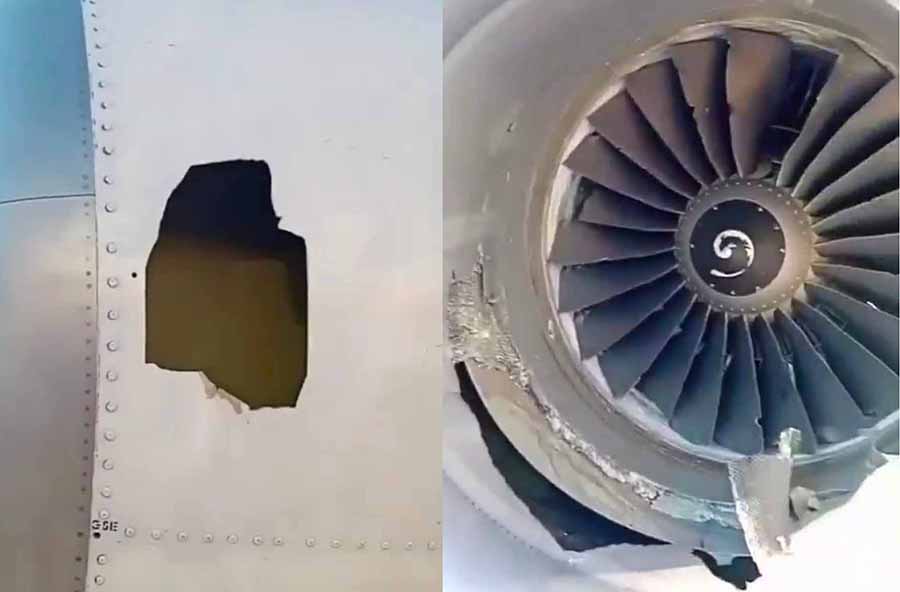
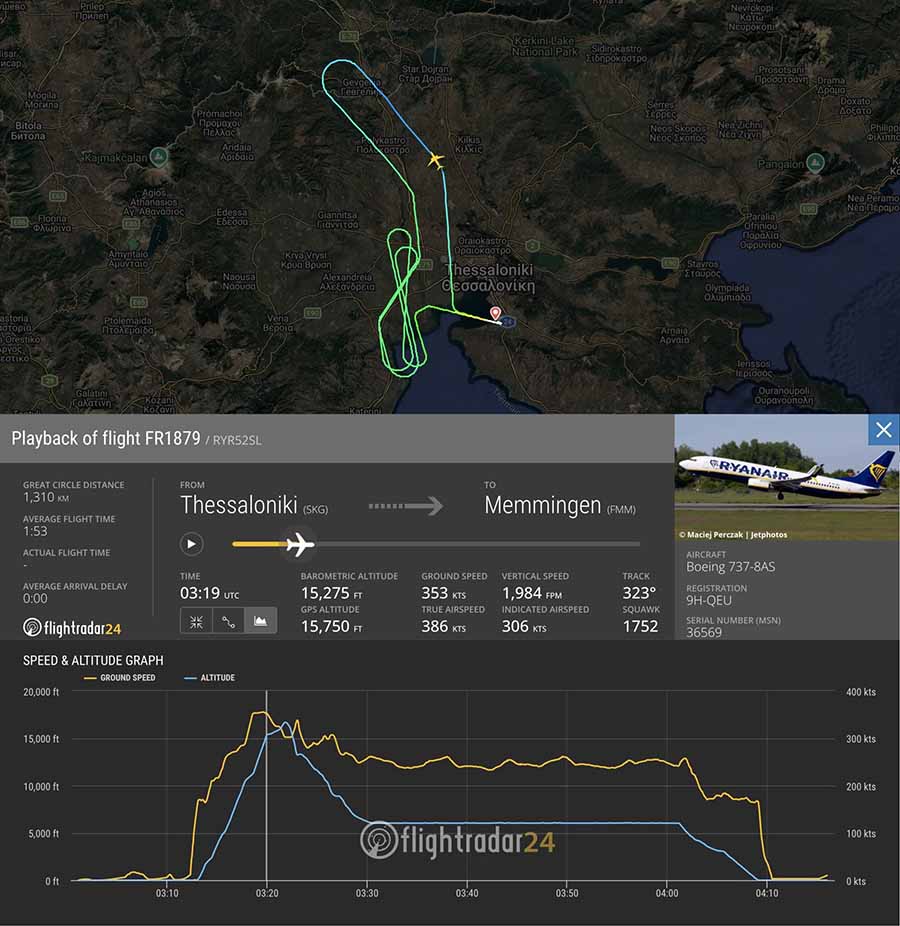
Bird remains have been found inside the right engine of a Ryanair Boeing 737-800 NG plane following a catastrophic engine failure on July 10, 2026, according to a preliminary report released by the US National Transportation Safety Board on August 13. The incident occurred just after takeoff from Thessaloniki, Greece, heading to Memmingen, Germany, when a fan blade inside the right engine broke loose and pieces of shattered metal flew out of the engine casing and smashed a cabin window at row 11. A 61-year-old Serbian passenger sitting next to the window was partially sucked head-first through the broken window, with his seatbelt and fellow passengers pulling him back inside, leaving him with neck and shoulder injuries and friction burns.
The NTSB report has confirmed that feathers and bird debris were scattered across multiple parts inside the engine, including the oil cooler, thrust reverser parts and the fan case. In the 12 months leading up to the accident, flight crews had reported four previous suspected bird strikes on this exact same engine, with bird remains found after two of those older incidents. The investigation has found that 37pc of the failed fan blade surface showed signs of metal fatigue, indicating weakening over time from stress. The engine’s fan blades had passed specialised ultrasonic safety tests in November 2025 and May 2026 with no issues detected.
The NTSB publicly reprimanded Ryanair CEO Michael O’Leary for making unauthorised public statements to investors regarding the scope and focus of the active safety inquiry. The agency has cited international rules that prohibit accredited representatives and their technical advisers from making any comments regarding the potential cause of the event or otherwise conveying potential investigative information.
The investigation continues to examine whether the incident shares similarities with a fatal 2018 Southwest Airlines accident involving a similar Boeing 737 NG engine model, which killed a passenger who was partially sucked out the window. The Federal Aviation Administration had ordered airlines in 2025 to install major structural modifications to protect planes from flying engine debris, though this specific Ryanair aircraft had not yet received those updates with the official FAA deadline set for July 2028. The NTSB preliminary report can be viewed here.
NTSB shared. “the investigative team is aware of previous events with similar engine models,”
The report shared: The inlet cowl outer barrel had a radial penetration, forward of the fan plane of rotation at the 9:30 position that measured approximately 14 inches circumferentially by 10 inches axially. A second inlet cowl tear and puncture was present forward of the fan plane of rotation at the 7 o’clock position that measured approximately 13 inches circumferentially by 10 inches axially, see figure 5. The inboard fan cowl sustained skin damage near the integrated drive generator (IDG) oil access door, and the No 1 forward fan cowl latch was found disengaged after the event. The gap between the inboard fan cowl and thrust reverser was reduced at the bottom of the interface with contact observed at the forward edge of the thrust reverser. Enhancements for fasteners and an external doubler, defined in AD 2025-04-02, had not been incorporated on this fan cowl hardware. Bird remains, including feathers, were recovered from the forward face of IDG oil cooler, one of the thrust reverser blocker door drag links, and the lower (6 o’clock position) of the engine fan case near the thrust reverser split flange. The remains, along with the samples from the fan blades were hand carried to the Smithsonian Institution Feather Identification Lab in Washington, DC, for examination.