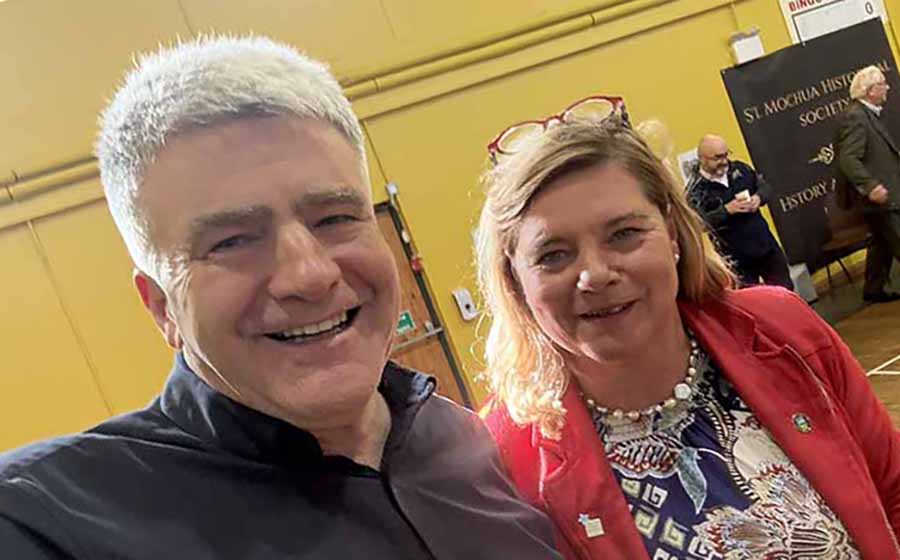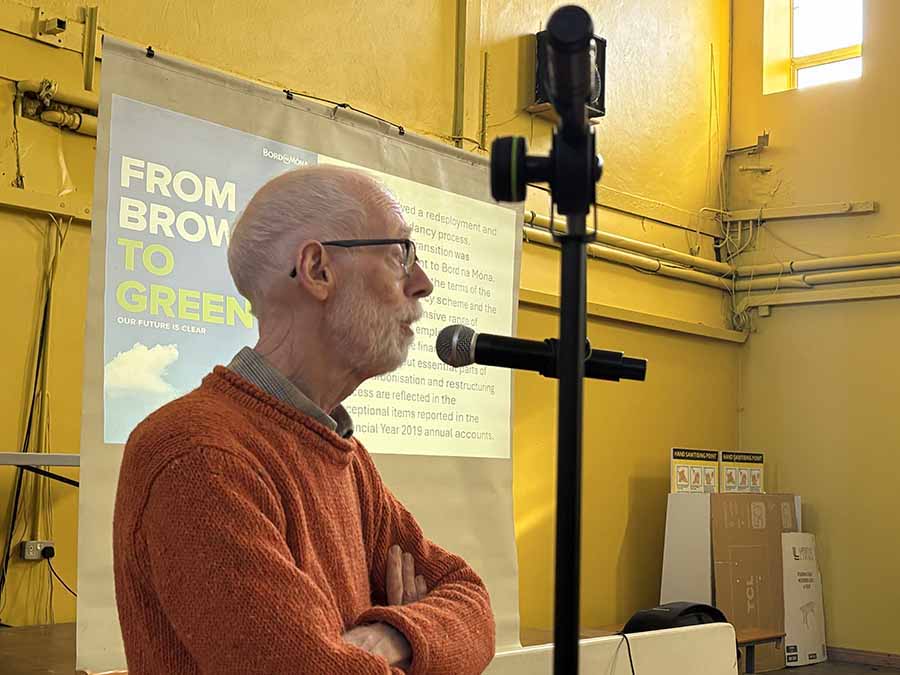
- Ciaran Mullooly spoke about the future of Ireland’s turf economy at the Boglands seminar in Coill Dubh
- Several speakers made the he case for Bord na Móna archive and heritage centre
- Mullooly discussed his childhood in Coill Dubh and the housing scheme designed by Frank Gibney
- He noted the wages his late father earned at the power station and the severe dust conditions
- He spoke about the Just Transition fund allocating €84.5m from the European Union with matching national Exchequer funding
- He stated he has established a list of up to 20 enterprises prepared to work remotely and set up in the community
The case for Bord na Móna archive and heritage centre has been made repeatedly during the course of a boglands seminar at Coill Dubh in county Kildare.
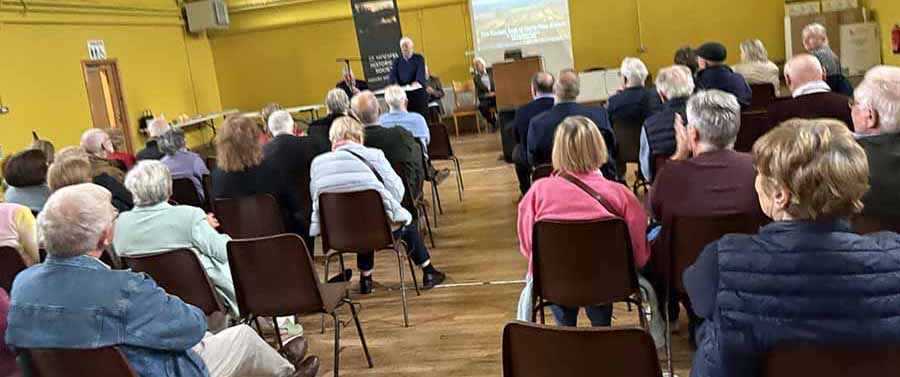
St Mochua Historical Society Timahoe hosted the one-day seminar titled North-West Kildare Boglands Past Present and Future at Coill Dubh Community Hall. The seminar celebrated the past present and future of the boglands particularly the building of Coill Dubh village by Turf Development Board. The Bog of Allen is a massive physical feature in the Irish midlands encompassing a substantial area of northwest Kildare.
Attendees included community members, historians and industry representatives. The seminar included an exhibition on the history of turf production and the Coill Dubh community.
European MP Ciaran Mullooly spoke about the future of Ireland’s turf economy at the Boglands seminar in Coill Dubh, County Kildare. The event brought together community members, historians and industry representatives to discuss the past, present and future of turf production and its associated communities. Mullooly addressed topics including community development, employment transitions and the legacy of the ESB power station at Coill Dubh.
Mullooly spoke about his childhood in Coill Dubh and the design of the housing scheme by Frank Gibney, outlining the similarities between his native Coill Dubh and Lanesboro. He stated the community was formed by men who came from the four corners of Ireland with the great wave after the Emergency. He noted the wages his late father earned for 30 years at the power station and the severe dust conditions workers experienced. He stated the community developed a culture of dependence on state wages and that entrepreneurship emerged in communities that had nothing and had to start from scratch. He spoke about his 1999 visit to Wales to look at willow tree projects for biomass and the frustration in 2019 when the ESB revealed the closure of the power station. He noted the Just Transition fund allocated €80m Irish and €160m for the six counties.
He stated EU commissioner Raffaele Fitto is holding a robust consultation and had declared “there must be a right to stay” when addressing the issue of depopulation of rural communities all across Europe. He spoke about decentralisation and the need for government cards to be moved to the regions. He stated he has established a list of up to 20 enterprises prepared to work remotely and set up in the community.
He stated the council may use funds to target property for planned relocation, the importance of community ethos and the spirit in rural places. He stated he looks forward to more people, Sean Byrne and the committee, achieving the dream of getting the enterprise project going in the next year or two.
The various topics covered included Richard Griffiths and the Bog Commissioners plan to drain the bogs in the 1810 to 1814 period, construction and immediate impact of the Bord na Móna workers camps, influx of workers and the influence on sporting and cultural development, the future development of the north-west Kildare region and the socio-economic impact of the development of Kildare bogs in the 20th century. The seminar featured leading experts on the history cultural and horticultural aspects of the boglands including Travel Extra’s Eoghan Corry, Larry Fullam, Michael Jacob, Ciaran Mullooly MEP, Seamus Cullen, Noeleen Smyth director of the National Botanic Gardens and Brendan Wyse. Ciaran Reilly of Maynooth College sent a video message.
The event was sponsored by Timahoe North solar farm and organized by Sean Byrne, Sean Flannery and the saint Mochua’s historical society committee.
Ciaran Mullooly shared “ I went to school on the green in Lanesboro and I walked through the houses designed by Frank Gibney, built in the same style as Coill Dubh, the largest fo the schemes. Frank Gibney’s contribution to Ireland is incredibly special, and we as children benefited from the design. These other villages had open green space that Frank Gibney made necessary to facilitate the paper of the day, whatever he wanted, and then the houses themselves were very small.
But he did it deliberately to ensure that these new families coming together would have active communities and recreation space. The housing scheme on the green had just over 100 houses. I think Coill Dubh was probably the largest scheme that Frank Gibney designed, about 160 houses.
He gave it an eccentric feel, with arches and maybe religious symbols as well. You’ll certainly agree when you see the arches and the church features in a lot of them. I know some of the arches mark corners and turns, but he also designed a roundabout in the shape of a road at the top of our estate. I was also very envious of the comfort and family life there. Around us it is still there today. But I suppose when you think about the past, what an extraordinary achievement it was for the government of that time and for Frank Gibney to do what they did in designing, funding and building those houses. I’m not going to talk at length about the state, but we know how difficult it is in the modern age to source funding, property and to pull it all together.
The achievement of that administration was outstanding in those days, and I think significant not just from the point of view of providing homes for families but of providing a community for new people. When I went to school, the chap next to me, his dad; the chap behind me, his dad, men from all over, and whenever there was a football game or the western matches, we had this display of colours in the town.
I was a very young boy wondering what was going on because of the sports coming every year from all corners of the country and for various final events. Because the truth is, the core of the community was formed by men who came from the four corners of Ireland with the great wave after the Emergency. I remember travelling as we see the hospitals now, we call them the accommodation blocks, they’re still there in our calls, but I think, and I see that some of the designs here, they were trying to create an atmosphere and some all-purpose space. This was their new home. And as long as families, of course we saw families established.
Nowadays when I speak in the European Parliament I talk about the jobs that bigger states have. Many do not believe me when I say the wages my late father earned for 30 years. He died, unfortunately, at the age of 46. Before he passed away he was in charge of the units which were busy involved in the heart of the station. The book was very good as it was, this song. He would talk the way it was being made, possibly for eight attendants. It started with the people involved very much. That’s 60 hours a week living. The dust was severe. But they brought home a cheque, £150 or whatever it was per week in the 1970s and 1980s, and people cannot believe it. A short period, but you could go back to the page and he has been similar.
You never have recession because in the 1950s and 60s we were building. Lots of visitors, all these were, Then we decided on the second unit. We resumed the first. In 90 days something like 400 were included. We didn’t really do that decision and the roll-up again to the 2000 period. The crash in the economy happened again. It’s a new conversation once again. Our community was effectively protected through three of the toughest periods. Coming to China and that was relative.
The downside, and this is something I spoke about recently as well and elsewhere, is that in those communities, and there were many of them, we developed a culture. So in Lanesboro I can speak for it and say that you could not get a dinner in the town in that period. The restaurants didn’t do food because they didn’t have to. Every Thursday the government cash and the state wages came in. But there was no need, no hunger if you like.
The business and a culture of dependence developed. We relied on these. And that was because at the same time many words, entrepreneurship and enterprise, I think, which had nothing, and is now one of the most progressive enterprises in the west because they didn’t touch nothing; they had to start from scratch.
I hear quite a lot recently, committees looking at enterprise in the future, and it’s very much a community that in some respects has been left behind. When I say left behind, the scale, but not necessarily in the village. It’s found in Dublin, and I find, I find communities were one exception and now they’re heading for dead. I call them the new car parks because if you go in the morning and travel you might see a car just off the walls, and these are all people who go to work in Dublin. Six of them get a lift from the park.
It is my contention that in the past many of those people were capable, and therefore we had, they not fall. And it’s a problem for every family. My nephew came home from Poland in searching for, and because of, he was driving every day, and they left to drive and they arrived, was in my sister’s house meeting and he arrived at 8:pm and he had his dinner with all of us. I said to myself, isn’t that existence? Isn’t that sustainable?
We are de-carbonising, it is essential, and the frustration for that back in the ’90s, some communities were preparing to change to alternatives.
The European Parliament has passed a resolution that any state or semi-state property that becomes available in a community affected by decarbonisation should be made available to the community. We targetted Timahoe Hall just up the road. There are buildings in this small community that could be adapted, could be changed. So I’m hopeful that in the months ahead the council, using their funds that are from, will be able to target that.
Those little houses are still a permanent reminder of Frank Gibney’s contribution, a permanent reminder of the closing, permanent big cliché media clothing, really, really tight small little houses but they looked out for each other. They still do. I’m sure there weren’t luxurious houses, you see a box room there, but they kept people together, kept a sense of allowing a sense of community and we would always change to that.