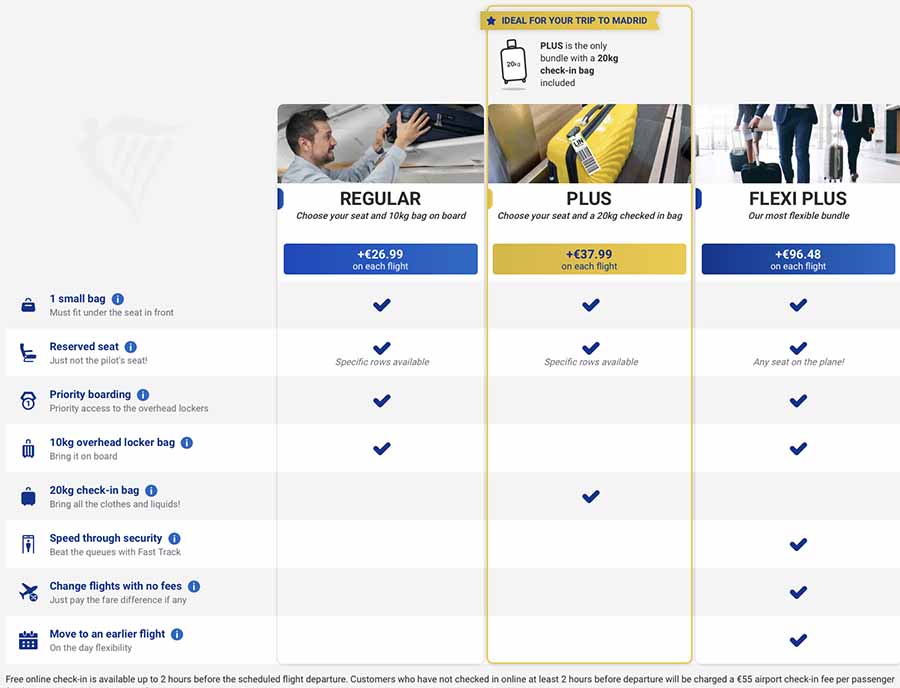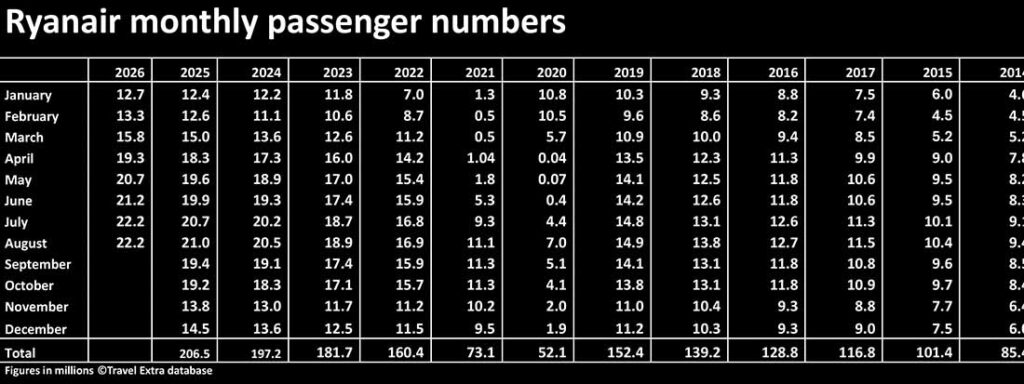
It was either change the definition of “priority boarding” or change the name of the category. Ryanair, now at the height of their powers with over 200m passengers a year, could have done either. With 40pc of their passengers on every flight purchasing ‘priority boarding’ it was clear that they had a different ides form the rest of us as to what ‘priority’ meant. Last month, they quietly decided to abandon the illusion of priority boarding Ryanair now calls the category which used to be priority boarding “regular” alongside two other categories “plus” and “flexi plus”.
This rebranding of what passengers long understood as a paid upgrade to board earlier and carry extra cabin luggage arrives without fanfare, yet the practical effects remain clear for anyone who has stood in a Ryanair queue at Stansted, Dublin or Bergamo.
The regular fare now grants a standard reserved seat together with priority boarding through the dedicated queue and permission to take two cabin bags on board: one small bag measuring 40 by 30 by 20 centimetres that must fit under the seat in front, and one larger 10 kilogram cabin bag of up to 55 by 40 by 20 centimetres destined for the overhead locker. In short, regular has absorbed the former priority product and presented it as the new baseline for those willing to pay more than the absolute cheapest option.
The plus category shifts the emphasis toward checked baggage. It still provides a standard reserved seat, but the cabin allowance shrinks to a single small bag that must sit under the seat, while adding one 20 kilogram checked bag. Passengers who booked before 14 August 2025 also receive free airport check-in under this fare.
Flexi plus sits at the top of the current hierarchy. It restores priority boarding and the two cabin bags of the regular fare, permits reserved seating in any available category including extra-legroom or front-row options, includes airport security fast track where the facility exists, and allows changes to date, time or even route without a change fee, although the passenger must still pay any difference in the underlying fare.
Day-of-travel changes on the same route are free of charge provided a seat remains available, with specific cut-off times depending on whether the new flight departs earlier or later.
Rubix cube
This rubix cube restructuring of product names coincides with a wider pattern across the industry in which carriers avoid raising the core fare displayed on comparison sites and instead extract additional revenue through ancillary charges. Almost every major carrier has raised checked bag fees and introduced fuel-related adjustments to help offset ballooning operating costs.
Fuel remains one of the largest variable expenses for any airline, typically accounting for between 20 and 30 per cent of total operating costs. When oil prices climb, as they have done in recent periods driven by geopolitical tensions and supply concerns, the industry faces an immediate margin squeeze. Rather than advertise higher base fares that would appear prominently in search results and potentially deter price-sensitive travellers, airlines prefer to adjust the prices of optional services that many passengers will still purchase once committed to a particular itinerary.
Ryanair itself has long specialised in this model. The Irish carrier has confirmed repeatedly that it will not impose formal fuel surcharges of the kind sometimes applied by full-service rivals. Its chief executive has stated that while competitors may add explicit fuel levies, Ryanair prefers to allow overall fares to adjust in response to market conditions without creating a separate line item labelled as a surcharge.
In practice this means that the headline fare for a basic ticket can remain low while the cost of priority boarding, now rebadged as regular, of a 20 kilogram checked bag under the plus fare, or of the flexibility and seating choice under flexi plus, absorbs the additional pressure. Data from the carrier’s own fee tables show that priority and two cabin bags, the service now embedded in regular, ranges from roughly €12.49 to €36 when purchased at the time of booking, rising substantially if added later. Checked bags of 20 kilograms start from around €21.49 and can reach nearly €60 depending on route and timing, with airport purchases commanding still higher rates.
Logical illogic
The same logic appears among other European and international operators. Carriers facing elevated jet-fuel prices have revealed increases in checked-bag charges of €10 or more per bag on many routes, framing the adjustments as necessary responses to operating-cost inflation rather than as general fare rises.
By keeping the advertised ticket price stable, an airline can maintain its position in price-comparison rankings while recovering revenue from those travellers who require more than a single under-seat bag. The psychological effect is well understood: a passenger searching for a flight from London to Barcelona or from Manchester to Rome sees a low base figure, books, and only later confronts the incremental cost of luggage or boarding priority. Once the itinerary is chosen, the marginal decision to pay for regular, plus or flexi plus feels less painful than selecting a more expensive all-inclusive fare from the outset.
The renaming of priority to regular performs several functions at once. First, it normalises what was previously marketed as an optional premium. By calling the product regular, Ryanair implies that two cabin bags and early boarding constitute the ordinary expectation for a reasonable journey, while the absolute cheapest fare becomes the true stripped-down alternative.
Second, the change reduces the cognitive load of deciding whether to buy an add-on; the passenger simply selects among three packaged options rather than assembling a bespoke combination of seat, bag and boarding. Third, it aligns the product architecture more closely with the language of traditional airlines that have long offered basic, standard and flexible fares, even while Ryanair continues to operate a low-cost, high-frequency model focused on secondary airports and rapid turnarounds of around 25 minutes.
Operational rationale
The operational rationale for restricting cabin bags under the cheaper fares remains strong. Limited overhead-bin space slows boarding when too many large items attempt to board at once. By channeling passengers who need a 10 kilogram cabin bag into the regular or flexi plus categories, and by giving those categories priority access to the aircraft, the carrier protects its tight ground-time targets.
Passengers on the basic fare, limited to the small under-seat bag, move more quickly through the cabin and reduce the risk of gate-checked bags that themselves create delays and additional handling costs. The fee structure reinforces this discipline: bringing a non-compliant bag to the gate without the appropriate product can cost between €46 and €75, a charge high enough to deter casual non-compliance.
From the passenger perspective the transparency of the new naming is mixed. On one hand the regular fare now explicitly includes what many travellers previously had to select separately, so the total price for a two-bag priority journey is visible earlier in the booking flow. On the other hand the language of “regular” may lead less experienced travellers to assume that priority boarding and two cabin bags form part of every ticket, only to discover later that the lowest fare excludes them. T
he plus fare, by emphasising the checked bag rather than cabin luggage, caters to those who prefer to travel with a larger suitcase and are willing to forgo the overhead locker. Flexi plus remains the product for those who value the ability to alter plans close to departure without incurring a change penalty, a feature that can prove valuable when connecting travel or last-minute schedule shifts arise.
The altar of ancillary
Industry-wide data support the observation that ancillary revenue has become central to airline profitability. Bag fees alone generate billions of euros annually across the sector. When fuel prices rise, the temptation to increase those fees rather than the base fare is strong because bag charges escape certain taxes that apply to ticket revenue in some jurisdictions and because they affect only the subset of passengers who check luggage.
Ryanair’s approach of embedding former priority features inside a renamed regular fare fits this pattern: the carrier extracts the necessary yield while preserving the appearance of low headline prices that continue to attract high volumes of bookings.
Critics of the model argue that the cumulative effect erodes the simplicity that originally made low-cost travel attractive. A passenger who once could fly with a single modest bag for a transparent price now navigates a matrix of regular, plus and flexi plus options, each with its own baggage rules, seating rules and change rules.
The matrix itself is a response to demand. Not every traveller needs a 10 kilogram cabin bag or the ability to change flights on the day of travel;