
- Irish Air Corps flew researchers 350km west of Ireland into the path of totality
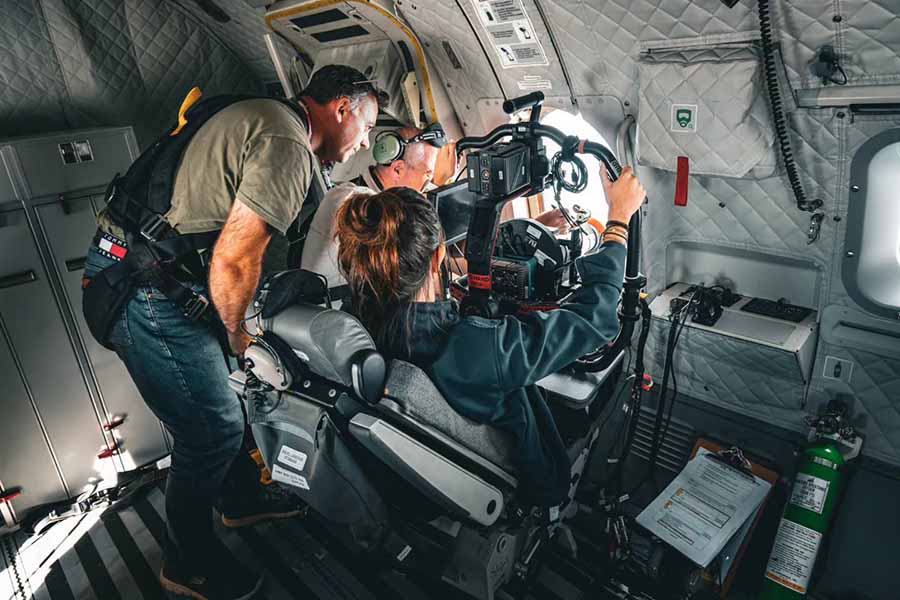
- The mission used an Airbus C295 with an open bubble observation window
- The E-CorMag telescope developed by INAF formed the core instrument
- Researchers avoided cloud cover by operating from the aircraft
- The flight echoed previous Irish Air Corps eclipse missions from March 2015
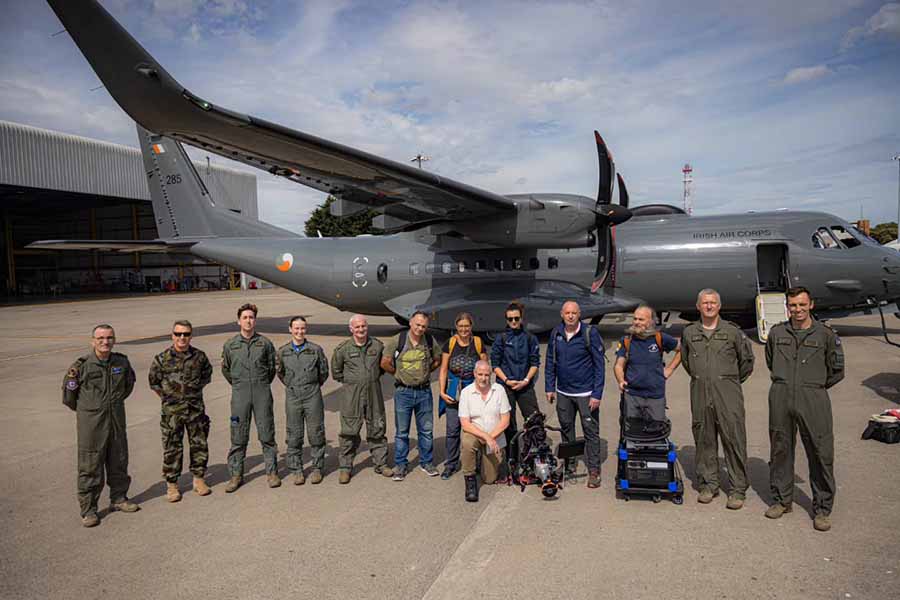
The Irish Air Corps carried a team of Irish and Italian solar physicists into the path of totality during this week’s solar eclipse over the North Atlantic. The mission transformed an Irish Air Corps Airbus C295 into a flying observatory, allowing researchers to observe the Sun’s corona from a position hundreds of kilometres west of Ireland.
The Air Corps flew researchers approximately 350km west of the coast, positioning the aircraft directly beneath the Moon’s shadow at around 10,000 feet. The scientific team included specialists from the Dublin Institute for Advanced Studies (DIAS), Trinity College Dublin, Technological University Dublin, Italy’s National Institute for Astrophysics (INAF), and personnel from the Irish Air Corps. At the heart of the mission sat the advanced E-CorMag solar telescope, developed by INAF using spare flight components from the European Space Agency’s Solar Orbiter and Proba-3 missions. Scientists hope the instrument will help answer why the corona reaches temperatures of around two million degrees Celsius despite being much farther from the Sun’s surface.
Aviation played a crucial role in maximising scientific return. By operating from the C295, researchers positioned themselves exactly where conditions were most favourable, avoiding cloud cover that affects ground-based observing in the North Atlantic region. The aircraft’s bubble observation window was opened during the mission, allowing the telescope an unobstructed view without distortion from standard aircraft windows. DIAS astrophysicist Laura Hayes described how the crew enjoyed unexpectedly clear conditions as they headed west. The operation highlighted the increasing versatility of the Air Corps’ Airbus C295 fleet, best known for maritime patrol, transport and search-and-rescue support duties.
Related posts:
 GERMANY visitor numbers to Ireland down slightly in JUNE after seven months of growth
 SPAIN & PORTUGAL visitor numbers to Ireland down 6pc in June for THIRD successive month of decline
 BRITAIN visitor numbers to Ireland up by 4pc in June as EES border regulations disrupt travel
 Balearic Islands releases guide to watching August 12 solar eclipse