The Irish Travel Agents Association (ITAA) annual conference has concluded in Alcobaça, in central Portugal, a region described as a location where history, culture, and tradition converge.
The setting, including a converted monastery near the pilgrimage site of Fátima, was chosen for its inspirational quality and its connection to Portugal’s shared bonds with Ireland, noted for hospitality and cultural appreciation. The conference theme, ‘Our People, Our Future’, was established to explore the evolution of the travel industry with a focus on technology and human expertise.

Tom Randles, President of the ITAA
Tom Randles, President of the ITAA, told the conference that the gathering represented more than business, focusing on connection with colleagues, partners, and new ideas for the sector’s future. He paid tribute to his mentor, George Butter, honouring his legacy and strong connections to Portugal. Randles framed the event as an opportunity to address challenges, share insights, and explore opportunities that will shape client journeys in the coming years.
The president outlined key topics for discussion, including the impact of artificial intelligence on operations, from streamlining processes to personalising customer service. He noted that while technology will transform the industry, the skilled Irish travel agent’s empathy, experience, and creativity will remain central. Additional sessions were set to cover strategic marketing, the landscape of mergers and acquisitions, and nurturing the next generation of travel professionals.
Randles highlighted the strengthening travel relationship between Ireland and Portugal, with increasing numbers of Irish holidaymakers visiting the country each year. He positioned travel professionals as playing a proud role in building and flourishing these international connections. The conference was presented as a platform to celebrate collective achievements and to foster confidence and enthusiasm for the road ahead.
ITAA conference aims to balance a forward-looking embrace of technological innovation with a reinforcement of the core human elements of travel consultancy. Set in a symbolic location, the event encourages collaboration and professional growth while reminding delegates of the fundamental joy and value of travel itself.
Tom Randles told delegates: “Central Portugal is a place where history, culture, and tradition come together in a way that reminds us why we fell in love with travelling in the first place. This conference is about more than just business. It is about connection, connection with colleagues, with partners, with new ideas, with the future of our industry. While technology like artificial intelligence will transform our industry, the skilled Irish travel agent’s empathy, experience, and creativity will remain essential.”
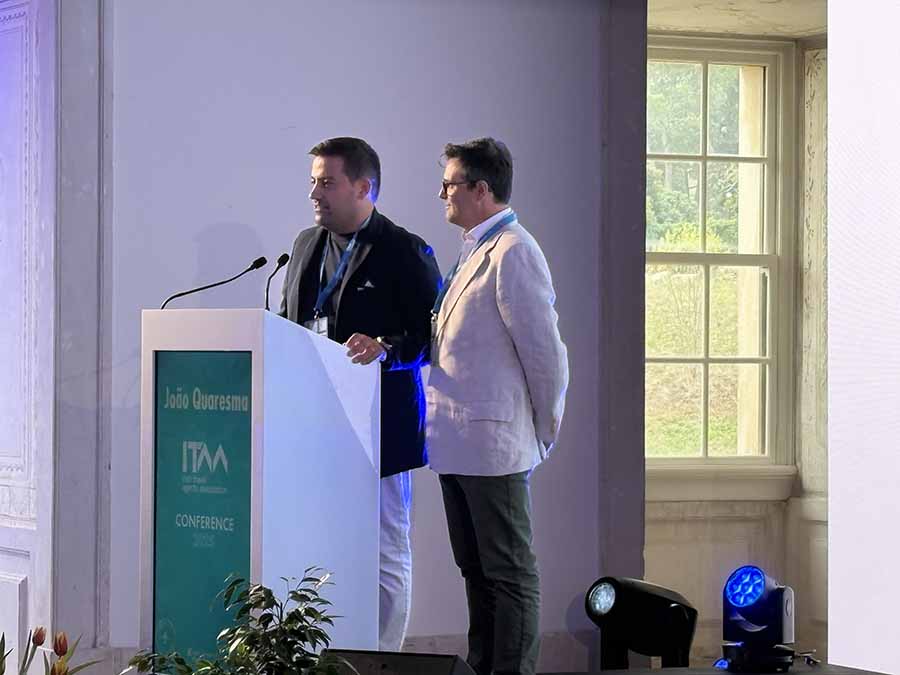
João Quaresma
The Central Portuguese Tourist Board used the opportuniity to promote the diverse offerings of the Central Portugal region, which features nearly 280 kilometres of Atlantic coastline. The area’s attractions include historical sites such as the University of Coimbra library, medieval villages, and the unique canals and traditional Cyrus boats. It is also presented as a destination for active pursuits, including major surfing events with large waves, appealing to adventure travellers.
João Quaresma of Central Portuguese Tourisn told the 2025 Worldchoice conference at Johnstown Estate in County Meath that the region contains numerous “hidden secrets” beyond its famous coastline, including distinctive gastronomy and high-quality hotels. He highlighted the historical and cultural depth of locations like Alcobaça, referencing the tragic love story of Pedro and Inês as an example of the area’s rich narrative heritage that connects with visitors.
Mr Quaresma’s presentation incorporated live traditional Portuguese music, engaging attendees directly to create an immersive cultural experience. He emphasised the strong and growing travel relationship between Portugal and Ireland, noting the importance of the Brazilian community travelling via Lisbon as a lucrative transit route. The role of TAP Air Portugal was acknowledged as a key partner in facilitating this connectivity.
The tourist board representative concluded by stressing the shared cultural values of openness and hospitality between Portugal and Ireland. He framed the conference as an opportunity for Irish travel agents to deepen their knowledge of the region’s products, from its food and wine to its historical and surf tourism, enabling them to sell more effectively to Irish holidaymakers.
The promotion centred on Central Portugal as a multifaceted destination combining beach, culture, adventure, and heritage. The strategy involved direct agent engagement through sensory experiences and storytelling, underpinned by strong air links, to encourage the development of tailored itineraries for the Irish market.
João Quaresma told the conference: “Central Portugal we have almost 280 kilometres of Atlantic coastline. And we have such an amazing other secrets to show you. We have this amazing, small hidden realities… and of course, the food. You can tell me about that. You have an amazing, amazing offer. The relationship here with the Irish was and is very strong.”
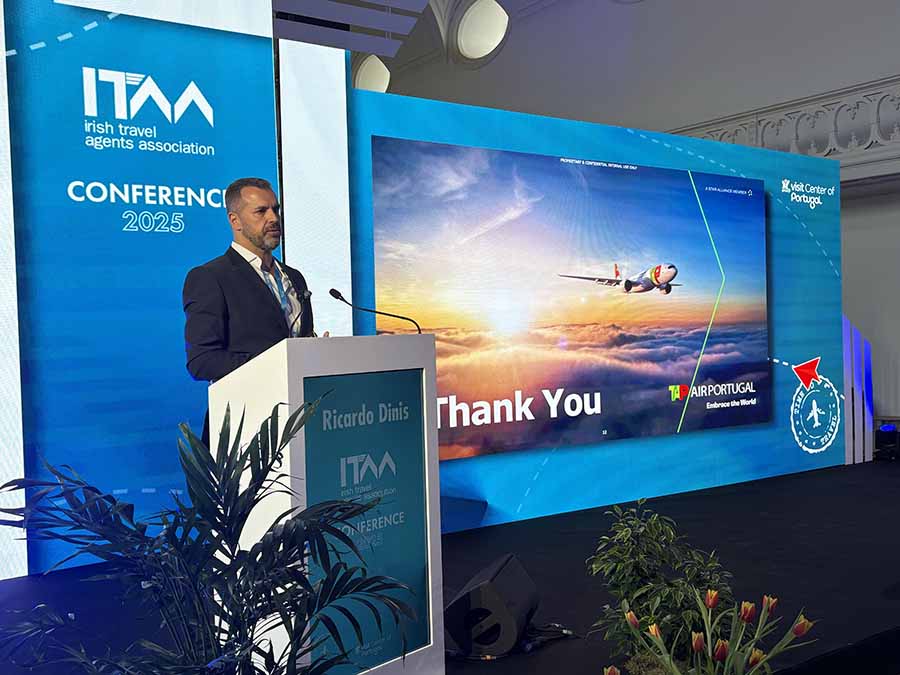
Ricardo Diniz
TAP Air Portugal operates eleven weekly flights from Dublin to its Lisbon hub, facilitating connections to destinations across its network, with Brazil identified as a particularly important market. The airline positions itself as a leading European carrier for travel to Brazil, serving three destinations there and capitalising on strong demand from both Irish and Brazilian diaspora travellers. The Lisbon hub is promoted for its operational simplicity due to the airport’s single terminal, which is designed to streamline transit for connecting passengers.
Ricardo Dinis from TAP Air Portugal told the 2025 Worldchoice conference at Johnstown Estate in County Meath that the airline offers a dedicated stopover programme in Lisbon, allowing travellers to extend their stay for up to ten days with discounted rates for local hotels and attractions. He highlighted the airline’s specialised groups department and corporate travel solutions, which include access to dedicated account managers and support teams to assist travel trade partners with bookings and operational issues.
Dinis emphasised the airline’s commitment to the travel trade, promising direct and personalised support for agents. He outlined tools and resources available to partners, including marketing materials and a trade-focused website designed to facilitate bookings and provide immediate assistance. The message centred on building a partnership where agents feel supported and can rely on TAP’s teams for help with client needs.
The presentation underscored the strategic importance of the Dublin-Lisbon route for accessing not only Portugal but also TAP’s extensive long-haul network, especially to South America. The ease of connection at Lisbon Airport was presented as a key competitive advantage for both leisure travellers and groups, reducing complexity and transit times.
In summary, TAP Air Portugal’s strategy focuses on leveraging its Lisbon hub for efficient connections, promoting Lisbon as a stopover destination, and providing robust support structures for the Irish travel trade to grow mutual business, particularly in the lucrative market for travel to Brazil.
Ricardo Diniz of TAP Portugal told the conference: “We fly eleven flights a week, connecting in our hub… Brazil is one of the most important markets for us out of Dublin apart from Portugal. You can enjoy a stopover in Lisbon… you can use up to 10 days, and we also offer discounts for hotels and attractions. The message is… anything you need, come to us. We will treat you like friends and try our best… when you’re stepping on that plane, you feel like you are home.”
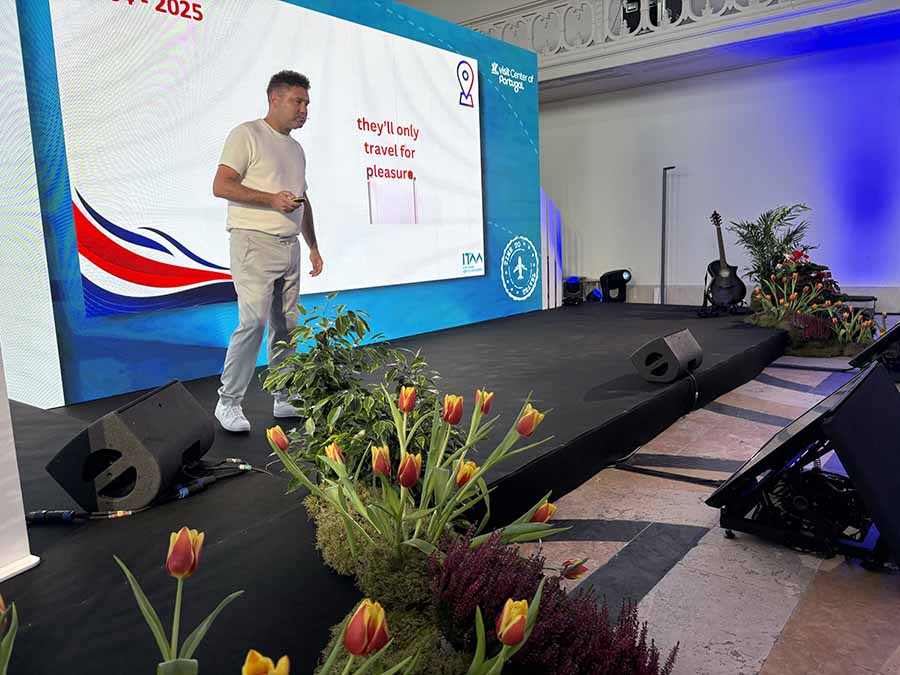
Danny Waine
Guest speaker Danny Waine of Travel Nomads outlined the transformative impact of artificial intelligence on the travel industry, comparing its potential disruption to the advent of the internet in the 1990s. Key applications identified for travel agencies and tour operators include automated content creation, building a company knowledge base, and AI powered performance evaluation tools that analyse all customer interactions. The evolution from simple AI agents to more advanced, autonomous ‘agentic AI’ systems was highlighted as a major development.
Danny Waine told the annual conference of the Irish Travel Agents Association in Alcobaca in Portugal that AI could replicate and scale many traditional agency functions. He demonstrated a tool that listens to all customer calls and emails to provide instant feedback and coaching for agents based on customised performance metrics. Waine also showcased conceptual AI travel agents capable of handling the entire customer journey from inquiry to booking and payment with minimal human intervention.
Specific real world examples were cited, including an airport customer service AI that triages passenger queries and a hotel feedback tool that proactively resolves guest issues via WhatsApp to generate positive reviews. For distribution, Waine presented a system where an AI agent could interface directly with tour operator booking platforms to source and present options to a customer, securing commission for the agency.
The speaker addressed concerns about AI reliability by explaining a method where AI systems are trained and scored against the performance of a company’s best human agents. This creates a benchmark to ensure AI outputs meet a defined quality standard before customer deployment. He stressed that the core motivation for travel remains a human desire for experience, but AI can enhance service personalisation and operational efficiency.
Waine concluded that AI integration will become standard for handling high volume inquiries and optimising internal processes, allowing human agents to focus on complex sales and relationship management. The technology’s rapid adoption curve suggests these tools will become deeply embedded in travel retail within the next few years, fundamentally changing business models.
Danny Waine shared: “The belief is that AI will revolutionise the industry in less than five years… the way that I’m trying to get this to my mind is a little bit like me when I started as an intern compared to 20 years later.”
“What sense does is it actually listens to every single interaction that comes into a business and it gives instant feedback to all of the agents.”
“The question I get at the end of this discussion is, what about when the AI gets it wrong?… What we’ve finished is we’ve actually, by using systems and training them on your humans… the AI is then evaluated in exactly the same way.”
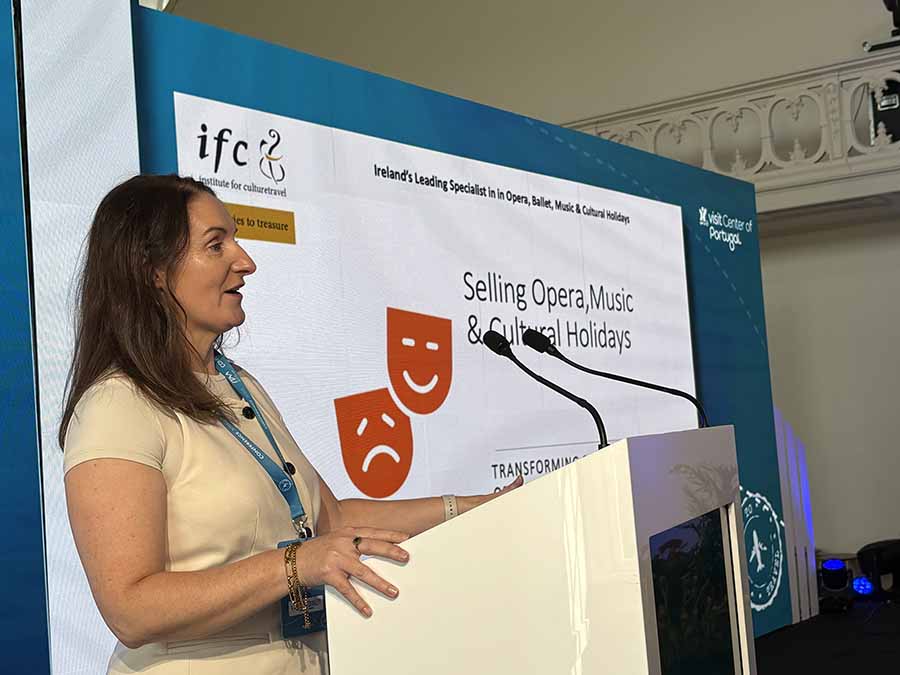
Caroline Quigley
Opera and music travel represents a niche sector targeting affluent, educated clients who plan multiple annual trips to attend performances in European venues. This form of cultural tourism includes premium experiences such as backstage tours, gala dinners, and private recitals, differentiating it from standard holiday packages. The focus for agents shifts from selling a destination to curating a specific experience, leveraging personal interaction to create bespoke itineraries for clients.
Caroline Quigley of Keith Prowse told the annual conference of the Irish Travel Agents Association in Alcobaca in Portugal that the core question for agents has changed from “where do you want to go?” to “what do you want to experience?”. She cited examples like listening to Puccini under the stars in Verona or dining on the stage of the Prague State Opera as the essence of this experiential travel. The sector benefits from repeat business, with some clients, like a family of nine, taking multiple dedicated trips.
Quigley highlighted the strength of the European market for cultural travel, noting events like the 2025 bicentenary of Johann Strauss in Vienna as major drivers of demand. Her company, the Institute for Cultural Travel, specialises in securing access to iconic venues like the Vienna State Opera and the world’s oldest working opera house in Naples. She emphasised that trade partners do not need to be opera experts but should focus on matching client interests to curated experiences.
The presentation positioned this niche as part of the broader trend towards experiential travel, where the value is derived from participation and unique access rather than simply visiting a location. Additional offerings, such as choir travel through the brand Choir Contact Ireland, were mentioned as extensions of the music themed travel concept. The speaker argued that this personal, high touch service is a key advantage for agents competing against online providers.
Quigley concluded by inviting agents to collaborate, assuring them that specialist support and knowledge for ticket acquisition and itinerary planning are readily available. The goal is to enable clients to have “fabulous holidays” centred on cultural immersion, with the agent’s role being to facilitate these meaningful, experience driven journeys.
Caroline Quigley shared; “If you close your eyes now and imagine listening to Puccini’s Aida under the stars in the Arena di Verona, that’s really the essence of opera, ballet and classical music travel.”
“For music lovers, the journey is not just about seeing the world. It’s about hearing it. And Europe is the heart of culture and music and it’s where our clients want to be.”
“The shift in how people see travel… my last line here is that it’s no longer where you go. It’s how you experience it.”
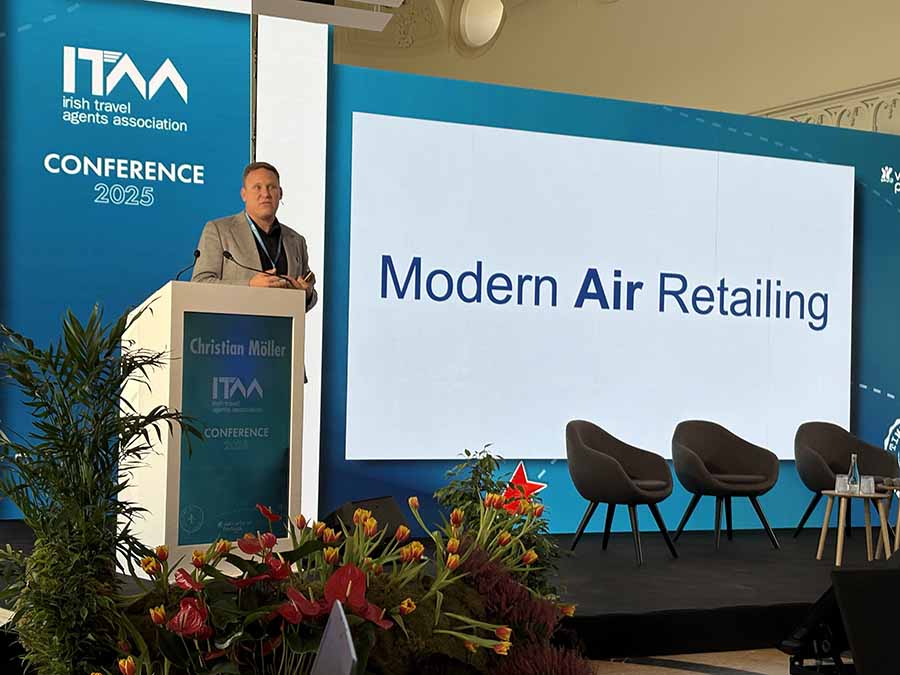
Christian Moller
A presentation by Christian Moller detailed the evolution of airline distribution from legacy Global Distribution Systems (GDS) to the current push for modern airline retailing, built on the foundation of IATA’s New Distribution Capability (NDC) standard. It traced a timeline from the first GDS in 1964 to the launch of NDC in 2012 and the recent formation of an airline consortium aiming for a critical mass of indirect sales via modern retailing by 2028. The core driver for airlines was identified as a desire for greater control over pricing, customer data, and product differentiation in the indirect channel to combat the commoditisation of air travel.
Christian Moller of ECTAA told the annual conference of the Irish Travel Agents Association in Alcobaca in Portugal that the industry must prepare for this change and not assume its adoption will be as slow as NDC’s has been. He noted that while only 21pc of global tickets are currently sold via NDC, the modern airline retailing project represents a more collaborative approach aimed at completely rethinking the retail process. This new model is based on three pillars: retailing with personalised offers, delivering with a single ‘order’ record, and implementing a traveller-managed digital identity.
Moller acknowledged the initial frustrations with NDC, including a lack of consultation, aggressive content withdrawal, and underperforming tools that damaged trust. However, he stated that NDC is now an established reality, with all major GDS heavily invested in it. He urged travel intermediaries to engage proactively with airlines and technology providers to understand their roadmaps and ensure their needs for servicing and functionality are met in the new hybrid distribution environment.
The speaker emphasised the continued value of travel intermediaries, who still fill half of all airline seats globally and possess deep customer knowledge beyond a single transaction. He argued that agents must confidently assert this expertise in discussions with airlines, framing themselves as essential retail partners rather than passive distributors. Their role will evolve, but their core functions of consultation, curation, and servicing remain vital for both customers and suppliers.
Moller concluded by urging agents to define their future role, engage with local airline forums, and utilise available resources to understand modern airline retailing. He recommended specific materials from IATA and a webinar produced with Amadeus, warning that ignoring this shift was not a viable option for a future-proof business. The ambitious industry timeline targets 2026 for the first live processing of interline ‘offers and orders’ and aims to decommission legacy standards by 2030.
Christian Moller shared: “We should not take the lesson from NDC and its slow adoption to impact our idea of what we expect for the future of modern airline retailing. It’s really important to be prepared for this ambitious timeline.”
“My message: use your expertise. I feel sometimes that travel intermediaries… are not as convinced of what they actually do as they could be, because they have a massive expertise. That’s the reason why these multi-billion airlines want to work with you.”
“Please don’t let the NDC experience make you think that modern airline retailing will progress at the slow speed that we have seen in NDC for the last 13 years… Let’s be prepared.”
Marta Alves
A presentation by Marta Alve addressed TAP Air Portugal’s strategy regarding New Distribution Capability (NDC), positioning it as a tool to offer a better product range rather than a threat to the travel trade. The airline stated it has no intention of sidelining agents, acknowledging the mutual dependency in the distribution chain where each party accesses the other’s customer base. TAP revealed it is investing heavily in NDC development, with plans to enable long-haul fare access for tour operators via NDC in the first quarter of 2026.
Marta Alves of TAP Air Portugal told the annual conference of the Irish Travel Agents Association in Alcobaca in Portugal that agents can connect to its NDC content through three primary methods: a direct API for larger agencies, a white-label platform for smaller agencies, and via major Global Distribution Systems (GDS). She noted that 60pc of its indirect business comes from travel agents, a segment it cannot service alone, and that its sales teams remain in place to support agents in adopting the new technology.
Alves addressed past industry tensions, acknowledging a previous period where TAP withdrew certain content from GDSs to compete with low-cost carriers but stated this policy has now reversed to a “full circle” approach. With NDC, the airline aims to provide full content parity across all channels. She clarified that its commercial target is not to favour one channel over another but to remove channel-specific habits and offer consistent, value-driven pricing.
On commercial benefits, the speaker explained that NDC allows TAP to merchandise ancillaries like bags, Wi-Fi, and seat selection more effectively. It also enables the creation of special promotional fares exclusive to the NDC channel. The airline confirmed it will maintain commission payments on NDC bookings, aligning with its traditional agency model. The development timeline includes working towards offering full interline capabilities via NDC in the future.
Alves concluded by reinforcing the need for collaboration, stating that airlines and agents must work together to navigate modern airline retailing. She urged agents to utilise the available tools and support to access the enhanced product set, framing NDC as an evolution that provides additional choice and capability for the trade rather than a disruptive force aimed at bypassing it.
Marta Alves shared: “From an airline perspective… it’s absolutely not taking away [from agents]. It’s offering tools to be able to offer a better airline product.”
“We are not trying to do anything against [agents]. The customers are there, and we are working together… we need you and you always need us.”
“The evolution of removing content and now having full spectrum of content through these new creations is the full circle.”
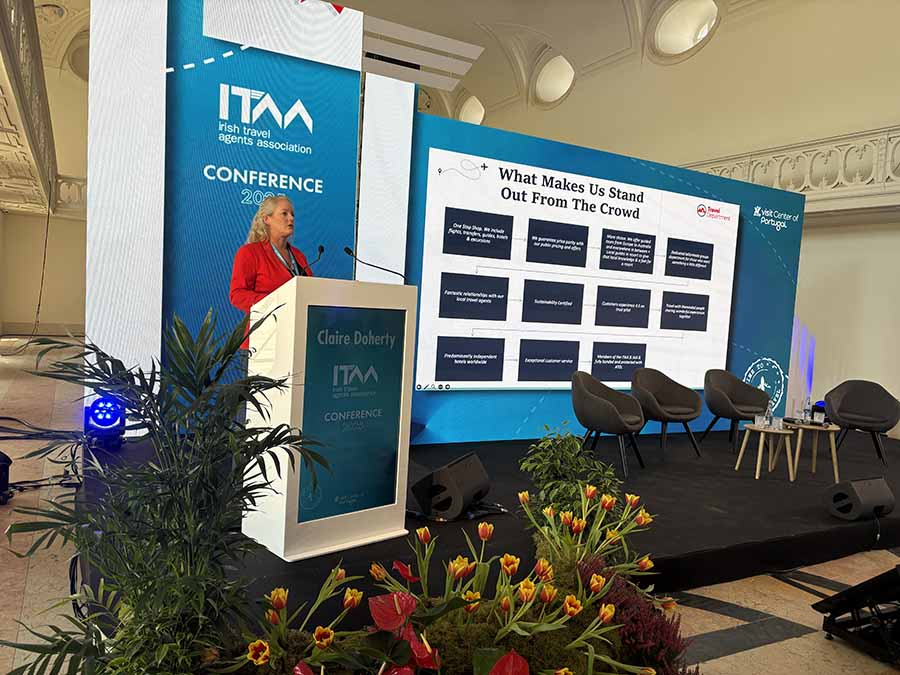
Clare Doherty
The Travel Department, a tour operator new to working with the Irish travel trade, is offering over 200 all-inclusive escorted tour itineraries worldwide, handling all logistics from flights to excursions. The company promotes its product as an easy sale for agents, assuming full operational responsibility and offering price protection. It highlighted strong customer loyalty, with 70pc repeat business and an average spend of €1,700 to €1,800 per person, including customers who have taken over 50 tours.
Clare Doherty of Travel Department told the annual conference of the Irish Travel Agents Association in Alcobaca in Portugal that the operator’s key differentiator is its customer base, which is 85pc Irish and characterised as sociable and repeat-booking. She noted the company’s recent sustainability certification and a Trustpilot score of 4.7 from 5,000 reviews. The operator also provides dedicated services for creating private group itineraries and offers solo traveller tours with no single supplements.
The product range extends beyond Europe to long-haul destinations like Colombia, Galapagos, and Asia, identified as the fastest-growing segment. Tours utilise independent hotels and local guides to provide authentic experiences, and river cruise products include a dedicated tour manager. The company’s client demographic is broadening, with a trend towards younger travellers, moving beyond a perception of an older clientele.
Doherty emphasised the commercial opportunity for agents, framing a sale as securing a long-term customer due to the high repeat rate. The operator’s business model ensures agents are not involved in operational servicing, as the company manages all customer care and problem resolution directly. A dedicated trade relationship manager, Brian Fulton, is assigned to support agency partners.
In conclusion, the presentation positioned Travel Department as a comprehensive, trade-friendly partner offering a diverse portfolio of escorted tours. The operator seeks to collaborate with agents to access its established customer base and utilise its flexible product development for groups, providing a streamlined, low-risk sales option with significant potential for repeat business.
Clare Doherty shared: “We do everything for the customers, it’s the easiest sell you’ll ever do. The flights, the inclusions, absolutely everything. You don’t have to worry about anything, and if something goes wrong, we’re the ones who look after it.”
“If you manage to get one of our customers on board, you then have a repeat customer… So it’s a nice lucrative customer to get in the door and keep in the door.”
“I’m just so grateful that we are working with the trade now. It’s really exciting for me and we really appreciate all of the support that we’ve had so far.”
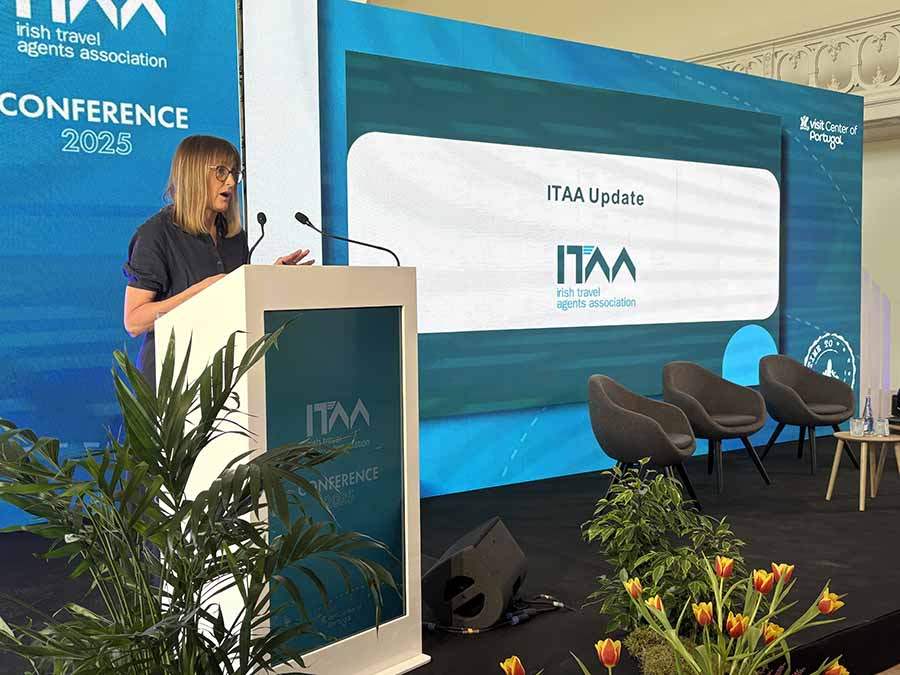
Jean Maxwell
The Irish Travel Agents Association (ITAA), founded in 1971, represents approximately 100 member companies with around 140 locations, supported by a network of 70 industry partners. It is governed by an elected board of directors and managed by a secretariat team of three, with additional support in legal, financial, and communications roles. The association’s stated mission is to support member business success, act as a trusted industry voice, advocate for travellers, and drive business to its members.
Jean Maxwell of the ITAA told the annual conference of the Irish Travel Agents Association in Alcobaca in Portugal that the organisation’s annual activities centre on four key events: the January awards ceremonies, the April travel trade shows, and the annual conference. A major focus is on member training, including a funded Leadership Excellence Programme, sessions on topics like GDPR and TikTok marketing, and plans for dedicated training days at the 2026 trade shows.
The ITAA facilitates communication between members and partners through daily media summaries, newsletters, and a member-exclusive section of its website for sharing special offers. It also operates several member-led subcommittees covering areas such as airline funding, events, membership engagement, and sustainability, which provide further specialised forums for industry issues.
The association’s Leadership Excellence Programme, developed with funding from Positive to Work Skillnet, has run successful pilots with plans for future iterations. The programme requires a time and financial commitment from participants, and the ITAA expressed willingness to adjust scheduling to accommodate delegate availability. Additional recent training has included webinars on cybersecurity and pension auto-enrolment.
The ITAA functions as a central support and advocacy body for Irish travel agents, providing business development training, industry networking events, and a structured platform for member collaboration and representation on key sector issues.
Jean Maxwell shared: “Our mission is to support and inspire our members to achieve success in their businesses, to be a strong and trusted industry voice, which promotes the Irish travel industry, advocates for the travel public and drives business to ITAA members.”
“The Leadership Excellence programme is for ITAA members… It is a commitment… It’s been really successful. People have got a lot out of it.”
“If there’s anything in particular that you want in-person training in, please just send me an email and we’ll organise that for you.”
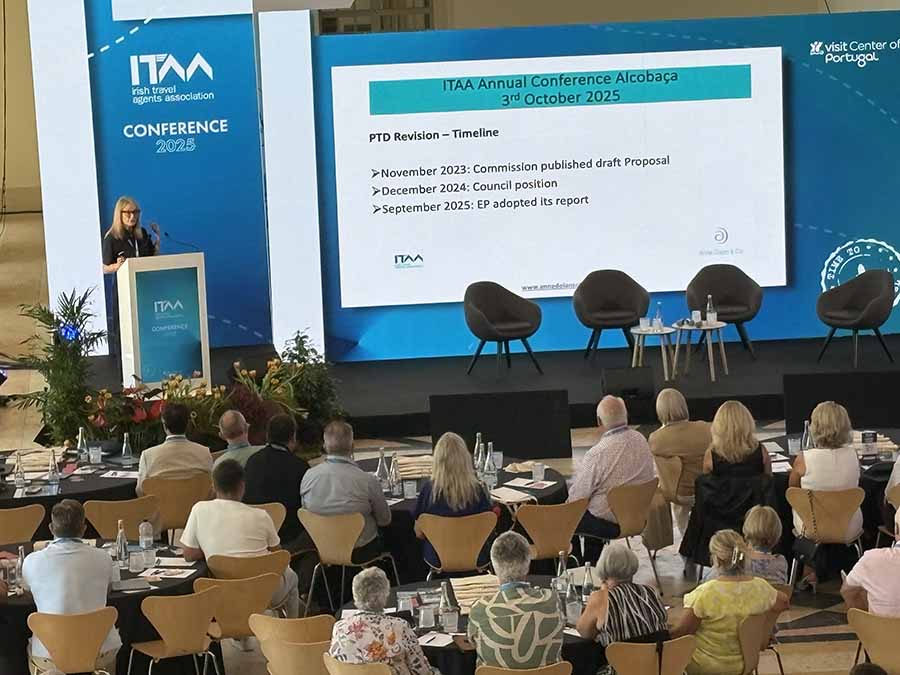
Ann Dolan
Two major pieces of EU legislation are now under revision: the Package Travel Directive and Passenger Rights Regulation 261/2004, with both processes currently in the negotiation phase between EU institutions. Key proposed changes to the Package Travel Directive include a potential cap on customer prepayments, the formalisation of refund credit notes, strengthened organiser redress against suppliers, and the possible removal of Linked Travel Arrangements. The revisions are informed by industry experiences during the collapse of Thomas Cook and the COVID-19 pandemic.
Ann Dolan, Legal Officer of the ITAA, told the annual conference of the Irish Travel Agents Association in Alcobaca in Portugal that the EU Council opposes a cap on prepayments, while the European Parliament favours letting member states decide individually, a position the ITAA opposes to avoid market fragmentation. She noted the legislative process has moved to the ‘trilogue’ negotiation stage, with a final directive possible by late 2026, followed by a standard 24-month transposition period for national implementation.
Regarding Passenger Rights Regulation 261, the update includes a parallel ‘Enforcement Regulation’ and a new Multimodal Travel proposal covering journeys using multiple transport modes under a single contract. Proposed enhancements include bans on hand luggage fees, stricter rules for delays, and improved reimbursement processes. Dolan indicated that reaching agreement on passenger rights is more complex and may take longer than finalising the Package Travel Directive.
Dolan detailed the day-to-day function of the ITAA’s legal information service, which assists members with a wide range of issues. These include disputes over cancellation charges, missed connections, Small Claims Court cases, employment law matters like contract drafting and dismissals, and ensuring compliance with terms and conditions. The service also provides templates and advice on incorporating supplier terms into customer contracts.
The legal officer concluded by stressing the importance of alignment between the two legislative revisions to ensure new consumer protections are sustainable and deliverable for the travel industry. She acknowledged the critical lobbying role of ECTAA in Brussels and warned of a busy period ahead as these laws progress, emphasising the need for regulations that support rather than hinder the sector’s operation.
Ann Dolan shared: “The headline issue… was a proposal introduced by the Commission, seeking to limit the level of prepayments that could be collected at the time of booking.”
“It’s really very important that any of the changes that happen in one are reflected in the other and that there’s a consistency and an alignment.”
“It’s vital that… enhancing rights to consumers… must be in a way that is sustainable and deliverable for the travel industry themselves.”
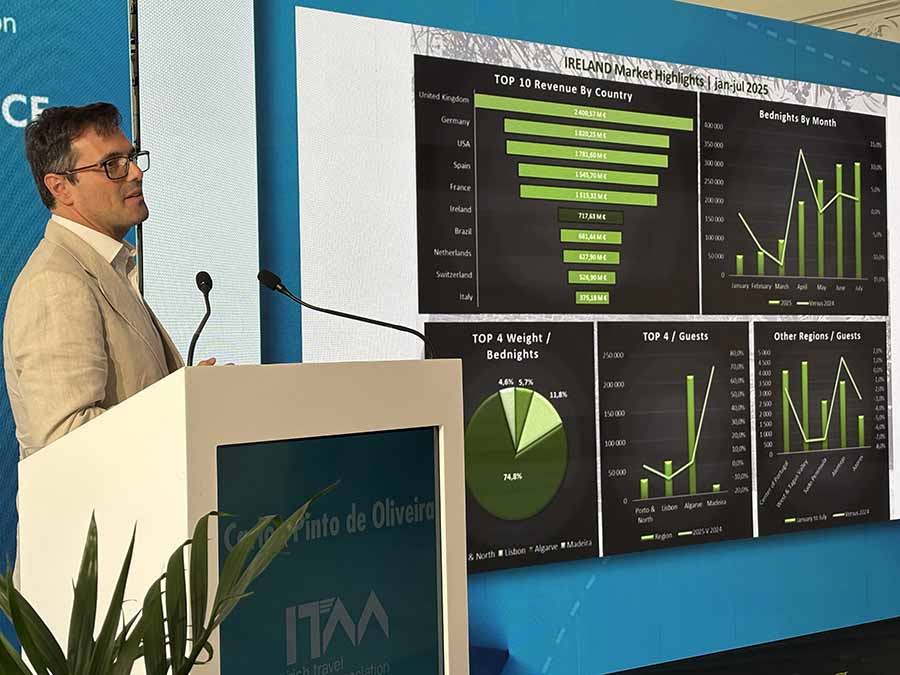
Carlos de Oliveira
Turismo de Portugal used the opportunity of the ITAA conference to promote the diverse tourism offerings of Portugal beyond its primary Irish markets of the Algarve, Lisbon, and Porto, which collectively account for over 90pc of Irish visitor bed nights. It highlighted lesser-known regions like Central Portugal, the north, and the islands, emphasising geographical and cultural diversity, distinct wine regions, and a wealth of UNESCO World Heritage sites and historical villages. The speaker positioned this variety as an opportunity for creating multi-destination touring itineraries along routes like the national EN2 road.
Carlos Oiviera of Turismo de Portugal told the annual conference of the Irish Travel Agents Association in Alcobaca in Portugal that the country’s rich wine culture, with producing regions nationwide, offers high-end wine tourism experiences including spa treatments. He also showcased Portugal’s thermal spa tradition, rooted in historic therapeutic spring waters, and its growing appeal for literary tourism, walking, cycling, and surfing due to varied coastlines suitable for all skill levels.
The presentation outlined a calendar of local festivals, popular saints’ celebrations, and Christmas markets in villages and cities, offering a warmer alternative to Northern European destinations. It noted Ireland’s established role as the primary market for weddings in the Algarve and extended the proposition to unique venues like vineyards in other regions. Financial support for meetings and events was mentioned, with higher incentives available for choosing lesser-known regions over Lisbon.
Carlos Oiviera encouraged agents to bundle these cultural, active, and gastronomic elements to create enriched itineraries, moving beyond standard sun and beach packages. The underlying strategy is to increase visitor dispersal, dwell time, and seasonal spread by promoting Portugal’s depth as a year-round destination with strong themes of heritage, wellness, and active adventure.
In conclusion, the regional tourist board representative positioned himrself as a direct contact for trade partners seeking local information, contacts, or support in developing niche product offerings. The core message was an invitation to explore and sell the breadth of Portugal’s regions and experiences to meet evolving consumer demand for authentic and varied travel.
Carlos Oiviera shared: “I think that for me, one of the beauties of Portugal is that we are actually quite a diverse country… I think that richness… you can actually experience so many different things.”
“It’s not that you’re going to promote this in isolation. I think everything comes together… you can do the culture and have a wine tasting or go and visit one of the wine regions.”
“If you need anything, if you need any contacts, if you want to ask me any questions, I’m there to support you. So that’s my role.”
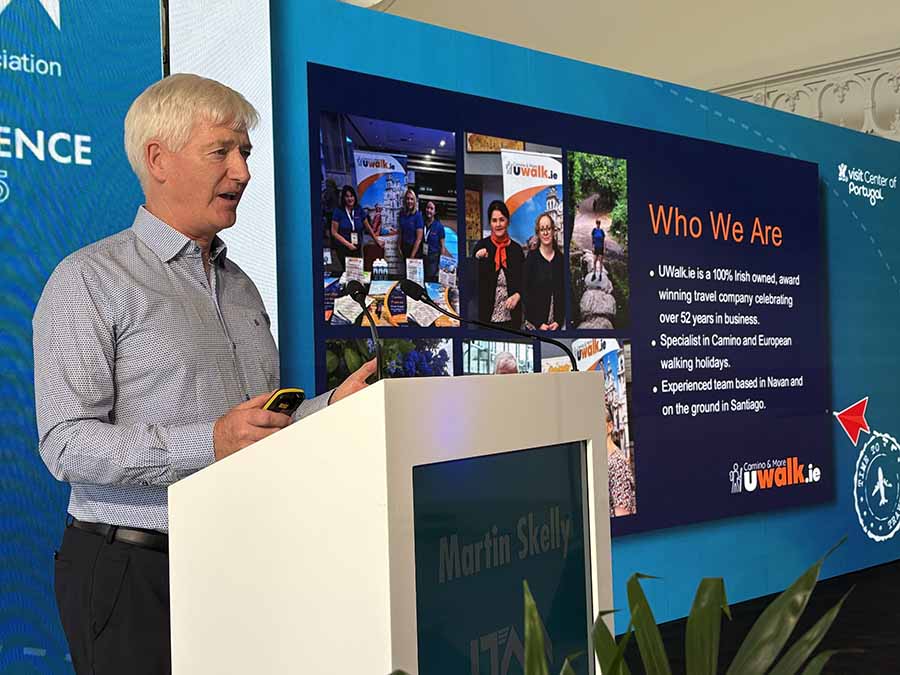
Martin Skelly
UWalk showcased their business as an operator specialising in self-guided walking holidays on the Camino de Santiago routes across Portugal and Spain. The company, with over 50 years of background in Irish retail travel, curates packages that include hand-picked accommodation, daily luggage transfers, and 24-hour support from local teams. Its product is tailored for individuals, couples, and groups seeking the experience for reasons ranging from personal challenge to spirituality, rather than strictly religious pilgrimage.
Martin Skelly of UWalk told the annual conference of the Irish Travel Agents Association in Alcobaca in Portugal that its packages are structured to begin upon arrival in Iberia, providing agents with commercial scope to add flights and transfers. He emphasised the trade-friendly model, which allows agents to build a commissionable package holiday. Accommodation is selected from two and three-star hotels located directly on the trail, often run by local owners.
Skelly detailed the operational support, including a pre-departure Camino passport and on-the-ground assistance from teams based in Navarra and Santiago de Compostela. The typical itinerary involves walking approximately 100 kilometres over five days, with customers able to start from various points like Porto in Portugal or Sarria in Spain. The service is designed to handle logistics so walkers can focus on the journey.
The operator’s expertise is underscored by the fact that all office staff have personally walked the Camino, providing detailed product knowledge and personal connections with hoteliers and restaurateurs along the routes. This is presented as a key advantage for agents seeking a reliable, knowledgeable partner for clients wanting an active, immersive experience in rural Iberia.
In summary, UWalk positions itself as a facilitator for a transformative travel experience, offering a streamlined, supported product that agents can easily integrate and sell. The focus is on delivering the essential elements—accommodation, baggage handling, and support—while allowing walkers the autonomy and peace central to the Camino’s appeal.
Martin Skelly shared: “We offer a choice of routes for individuals… we work with the trade, so we can tailor for anybody to start the Camino at any particular point.”
“Our packages start when you arrive in Spain, [which]gives scope, commercial scope for agents to put together packages with their own flights… and to get a commission on the package holiday.”
“Everybody in the office has been on the Camino. We know the hoteliers and we know the owners by their names… We’re just a vehicle to make that [experience]happen for everybody.”
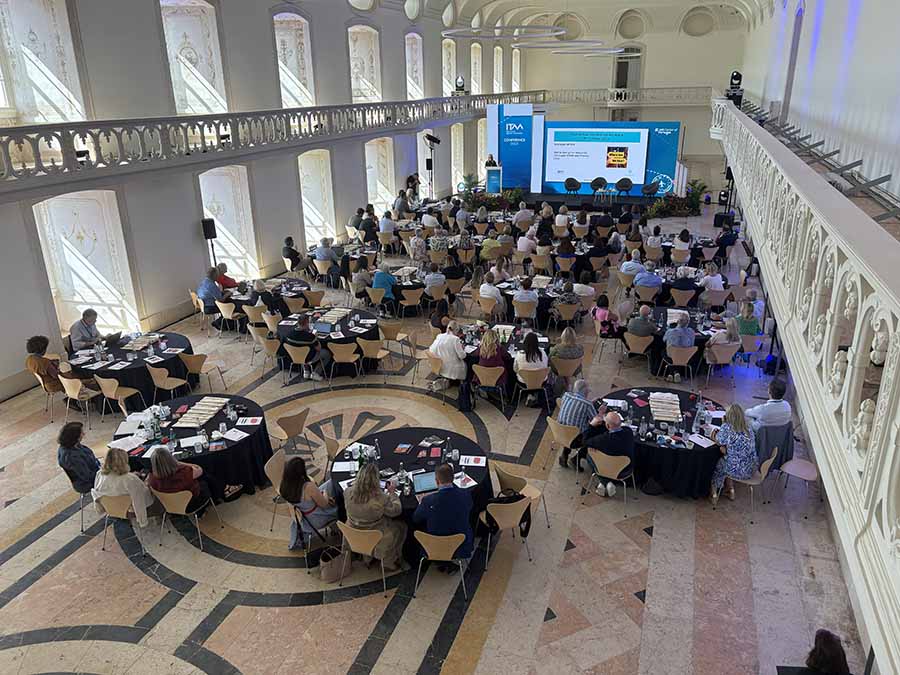
Membership committee
The ITAA has formed a new Membership and Engagement Committee to improve communication and knowledge sharing among travel agent members. The committee, comprising Caroline Quigley, Ciara Rooney, and Michelle O’Neill, began its work by conducting phone calls with numerous agents to identify common concerns and ideas. Initial feedback highlighted a need for clearer understanding of regulations like the Package Travel Directive and EC 261, as well as practical discussions on HR, IT systems, and client follow-up processes.
Caroline Quigley told the annual conference of the Irish Travel Agents Association in Alcobaca in Portugal that the committee held its first networking session the previous Friday, which validated the issues raised in the initial consultations. The session revealed that agents seek forums to discuss both complex regulatory topics and fundamental business operations. The plan is to host a series of focused networking events aimed at creating a learning-driven community.
The committee’s strategy centres on fostering a network where members can share best practices and strengthen relationships between owner-managers, frontline staff, and ITAA industry partners. The goal is to move beyond general meetings to structured, topic-specific discussions that address the tangible daily challenges faced by agencies. This peer-to-peer learning model is designed to bolster collective expertise and operational resilience.
The presentation emphasised the committee’s role in bridging communication gaps within the wider membership, many of whom have been part of the association for over two decades. By facilitating direct dialogue, the initiative aims to make the ITAA’s support more responsive to the practical needs of its diverse agent base, from small independents to larger agencies.
The Membership and Engagement Committee represents a proactive effort to revitalise member interaction through practical, issue-focused networking. The initiative seeks to harness the collective experience within the Irish travel trade to navigate common business and regulatory challenges, strengthening the sector’s internal support structures.
Caroline Quigley shared: “We started to pick the phone up, to try and speak to as many of the travel agents as we could… and we had some very meaningful and lengthy conversations with some agents and some really excellent ideas came out of that.”
“There’s lots of issues that the travel agents would like to discuss among themselves… such as fully understanding things like EC 261 and the package travel directive.”
“The plan is now we’re going to try and hold a series of networking sessions, each with a focus point, with the aim of trying to create a learning driven network among ourselves.”
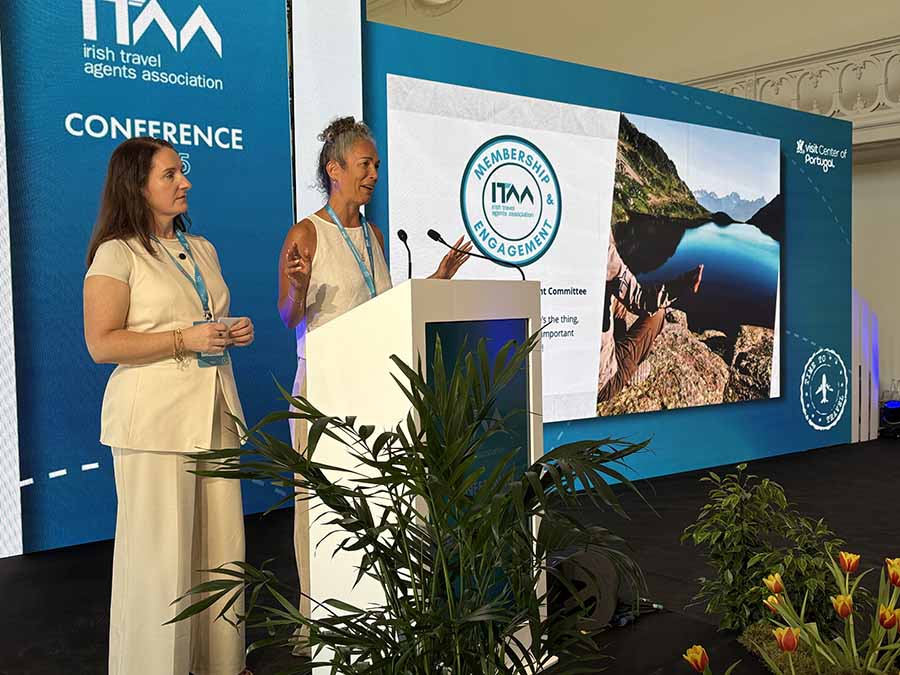
Ciara Mooney
Peer networking and support is a vital and often neglected support mechanism within the travel agent community, the conference was told, using a personal narrative of business crisis and recovery as a central theme. It argued that agents often operate in isolation, which can prevent them from seeking or receiving help during difficult periods until it is too late. The core proposal was for stronger, proactive relationships among members to create a safety net and a knowledge-sharing resource.
Ciara Mooney of Freedom Travel told the annual conference of the Irish Travel Agents Association in Alcobaca in Portugal that she expanded too quickly, opening three agencies in three years before facing a near-collapse in the fourth. She credited a frank phone call from another agent at a funeral, who warned her to close two offices to save the business, as a pivotal intervention that demonstrated the power of direct peer connections.
The speaker framed the newly formed Membership and Engagement Committee as a mechanism to formalise these vital connections, enabling agents to know each other well enough to recognise and respond to signs of struggle. She compared an isolated agent to someone drowning in the ocean while appearing to have fun, emphasising the need for a community built on constancy and perseverance where members learn from each other’s mistakes.
Mooney invited all agents and suppliers, regardless of their business size, to participate in the committee’s upcoming networking session on 28 November. She positioned the initiative as inclusive and essential for collective resilience, drawing on her own experience of rebuilding a successful career with community support.
Thepresentation was a call to action for greater openness and collaboration within the trade, highlighting that shared experience and honest communication are critical tools for navigating the industry’s inherent challenges and sustaining long-term business health.
Ciara Mooney shared:”I remember a call from another very close agent friend of mine… He picked up the phone and said, you’re either going to have to close two of them offices, or you’re going to lose your business.”
“It’s like seeing somebody out in the ocean and they’re flapping around. It looks like they’re having great fun. They could be drowning.”
“The relationships that we’re trying to form are to get to know each other and to be able to pick up the phone, we are here to learn from each other.”
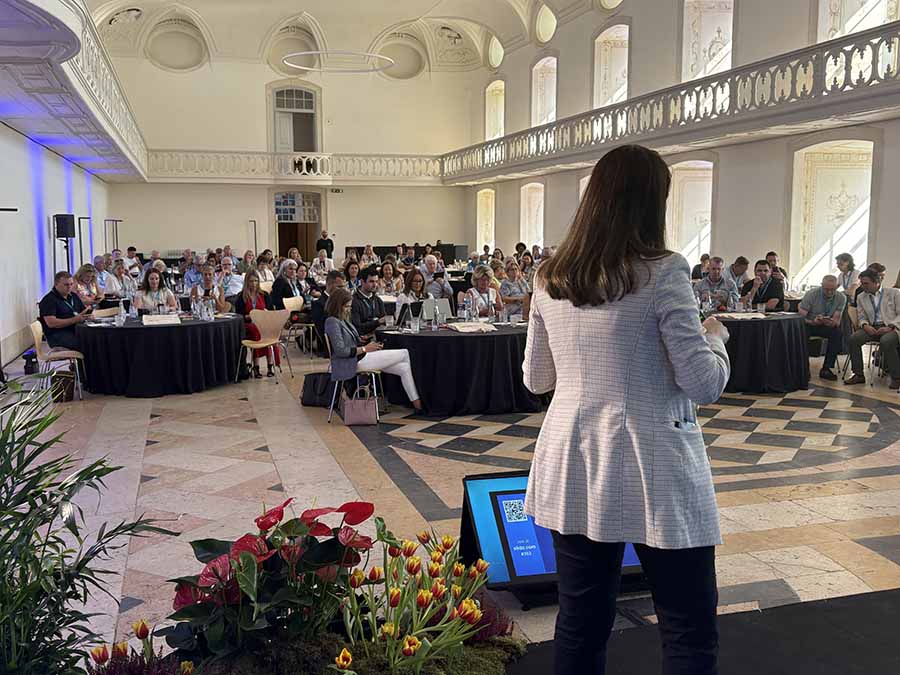
ITAA Benevolent Fund
The ITAA Benevolent Fund provides financial assistance to travel agents and former travel agents who face hardship. Applications receive consideration in complete confidentiality with no questions asked about circumstances. The fund relies on current members to spread awareness, especially to staff who have left the industry and may no longer receive direct communications.
Clare Doherty told the annual conference of the Irish Travel Agents Association in Alcobaca in Portugal that the fund trustees process every request as a committee. Several trustees attended the conference and invited members to approach them directly with queries or claims.
The fund maintains a website and Facebook page for information and updates. Members renew ITAA membership each year with an option to add a voluntary donation, and the trustees expressed gratitude for all contributions received through this channel.
A separate group of volunteers serves on the ITAA board without payment or expenses. Conference delegates acknowledged the work of board members present, including President Tom, Vice President Paul, Past President Angela, and others who contribute time throughout the year on behalf of the membership.
Key takeaways include the availability of confidential financial help for travel agents in need, the importance of member donations during renewal, and recognition of the voluntary efforts of both Benevolent Fund trustees and ITAA board members.
The conference was told: “We aren’t here to help any travel agents or ITAA members past or present, who might find themselves in financial need… Everything is done in the strictest of confidentiality. We really do rely on you guys to just communicate that to your staff. There’s always that opportunity to make a donation towards the fund… we really, really do appreciate everybody that does that.”
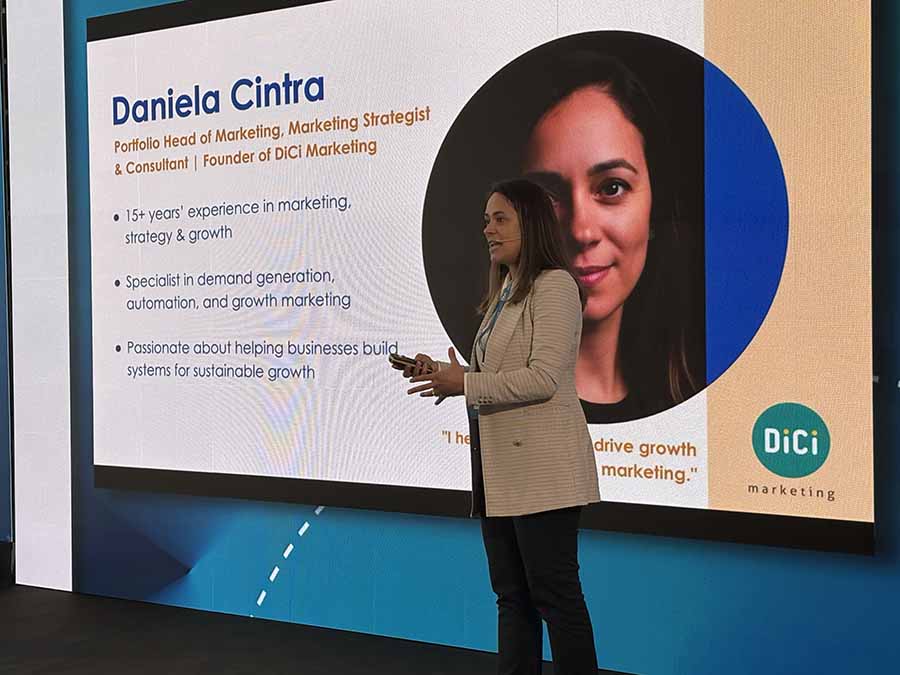
Daniela Cintra
Travel agents face increasing competition from online platforms and direct bookings, yet personal service remains the core advantage. Agencies must shift from broad advertising to targeted, relationship-based marketing that builds trust over months. Customers now research destinations independently before contacting an agent, meaning the first interaction often occurs when a client already possesses detailed knowledge.
Daniela Cintra told the annual conference of the Irish Travel Agents Association in Alcobaca in Portugal that success in 2026 depends on collecting client data early, segmenting audiences, and delivering personalised content through email, WhatsApp, and social media. She demonstrated how one agency turned a casual follower into a high-value booking through consistent, relevant contact over several months rather than immediate sales pressure.
Agencies achieve higher conversion rates by focusing on niche markets and creating specific offers for defined client types rather than general promotions. Regular communication via newsletters, targeted social media posts, and direct messaging keeps the agency visible without overwhelming potential clients. Cintra stressed that staff training in digital tools and data management represents a low-cost route to growth.
Internal influencers within agencies can become the public face of the business on social platforms, building authentic connections at minimal expense. Automation tools handle routine follow-ups while staff concentrate on relationship building. Agencies that combine systematic data collection with personalised outreach report booking increases of 40pc or more.
Key takeaways include the shift from mass marketing to individual client journeys, the importance of patience in nurturing leads over three to six months, and the opportunity for every agency to develop its own micro-influencer from existing staff.
Jeanette Taylor
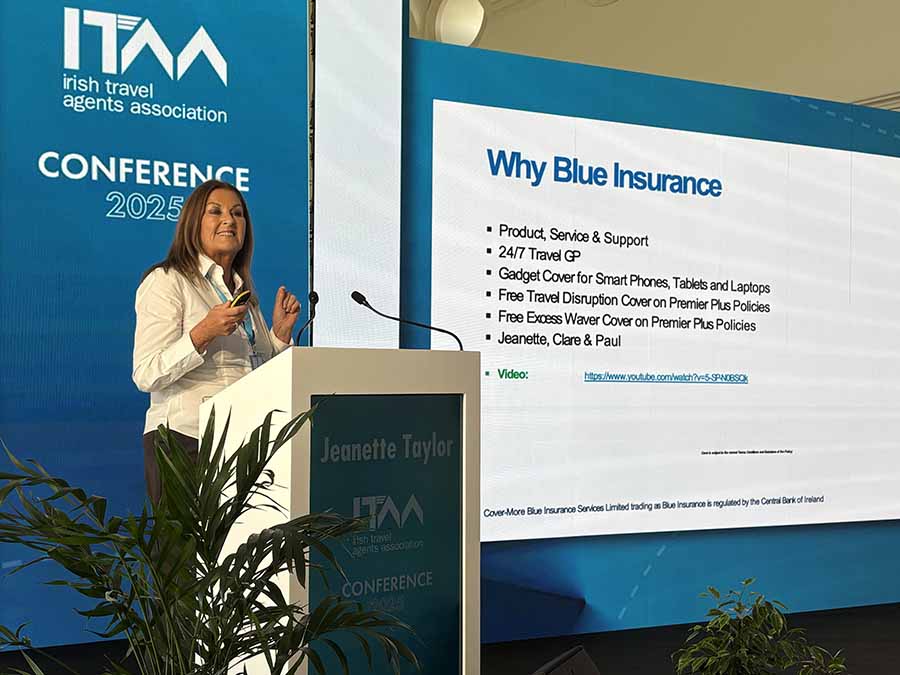
Travel insurance provides financial protection against medical emergencies, trip cancellations, lost baggage, delays, and personal liability claims. Customers value this cover more as living costs rise and holidays represent larger investments. Policies now include access to 24/7 online GP consultations, a service launched in 2025 that received positive feedback during periods of high summer temperatures in Mediterranean destinations.
Jeanette Taylor told the annual conference of the Irish Travel Agents Association in Alcobaca in Portugal that Blue Insurance offers optional gadget cover for smartphones, tablets, and laptops, with claims often exceeding €1,000 for items left on aircraft during Lapland trips. Premier Plus policies include free cancellation cover for scheduled airline failure and free excess waiver.
The company operates a 24/7 emergency assistance line and processes claims through a dedicated travel trade team. Delegates at the conference received complimentary general insurance cover provided by Blue Insurance. Free scheduled airline failure protection and excess waiver feature on higher-tier policies, addressing risks from air traffic control disruption and carrier insolvency.
Agents received a reminder to sell travel insurance at the point of booking the holiday rather than later. This practice ensures immediate cover for cancellation and avoids gaps if customers face issues before departure.
Key takeaways include the growing customer demand for medical and cancellation protection, the value of add-on gadget cover for family trips, and the importance of purchasing insurance at booking stage.
“It offers protection if you accidentally cause injury or damage to others while travelling. We’ve had great feedback on… our 24/7 GP… they were able to pick up their phone and… we were able to direct them to an online doctor straight away. The importance of booking travel insurance at the time of booking.”
Dave O’Brien
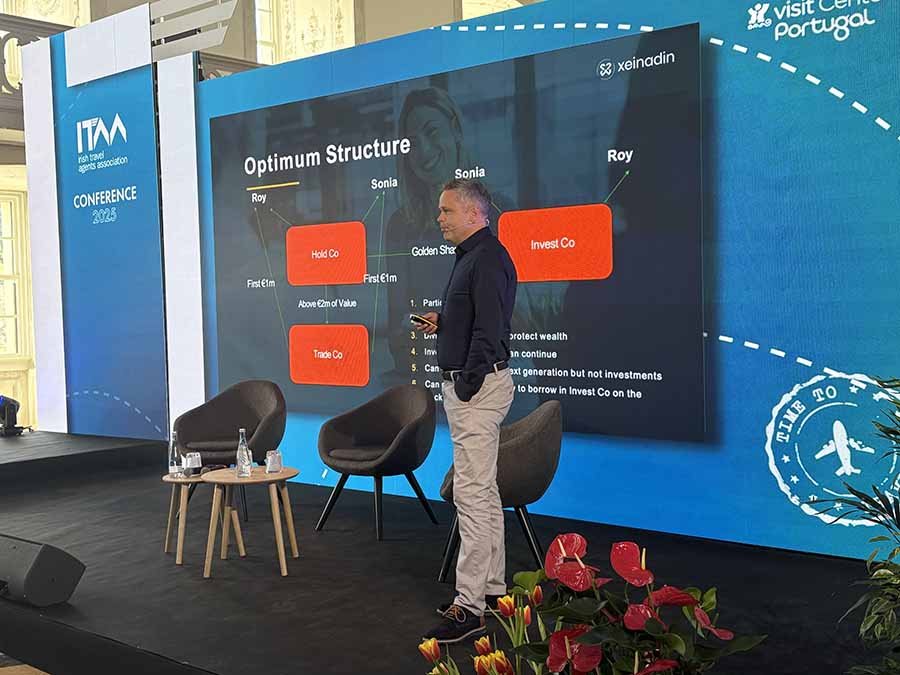
Irish travel agencies face consolidation as larger groups acquire smaller operators and owners approach retirement. Many businesses now require preparation for sale, succession to family or management, or orderly wind-up. Tax rules offer significant reliefs that reduce or eliminate capital gains tax on exit, but qualification conditions apply and planning must start years in advance.
Dave O’Brien told the annual conference of the Irish Travel Agents Association in Alcobaca in Portugal that agencies valued below €2-3 million generally need only a simple trading company structure owned directly by the shareholders. Above that level a holding company becomes useful to move sale proceeds tax-free before eventual extraction. He outlined four main exit routes: transfer to family, management buy-out, third-party sale, or planned liquidation.
Entrepreneur relief taxes the first €1 million of lifetime gains at 10 percent provided shares have been held for three years. Retirement relief can deliver proceeds up to €750,000 completely tax-free (or €3 million in certain family transfers) if the owner is over 55 and has worked in the business for ten years. Liquidation or management buy-out using cash on the balance sheet can also extract substantial sums tax-free when structured correctly.
Agencies planning any exit should review customer concentration, debtor days, management strength, and owner involvement at least five years ahead. Buyers favour businesses with recurring revenue, low staff turnover, and owners who have already stepped back from daily operations. Early professional valuation helps decide whether to build for sale, maximise cash for wind-up, or prepare for internal succession.
Key takeaways include the availability of 0-10 percent effective tax rates on exit for qualifying owners, the need for multi-year preparation regardless of route chosen, and the importance of simple structures for smaller agencies versus holding companies for larger ones.
“If you’re less than that the vast majority of businesses are going to be less than that, then you’re fine with just having your trading company owned by the shareholders and ignore any noise that people will talk to you over holding companies. Your first one million could be taxed at 10pc. So it’s €1 million in proceeds would be taxed at 10pc, up to 1 million. If it’s less than €750,000 value, you’re paying 0pc tax on those proceeds.”
Exit strategy
Irish travel agency owners face increasing pressure to plan an exit strategy as consolidation accelerates and many reach retirement age. Personal experiences shared at the ITAA conference highlighted the emotional and financial complexity of selling or passing on a business built over decades. Speakers emphasised that leaving decisions until the last moment often results in lost value or forced closure.
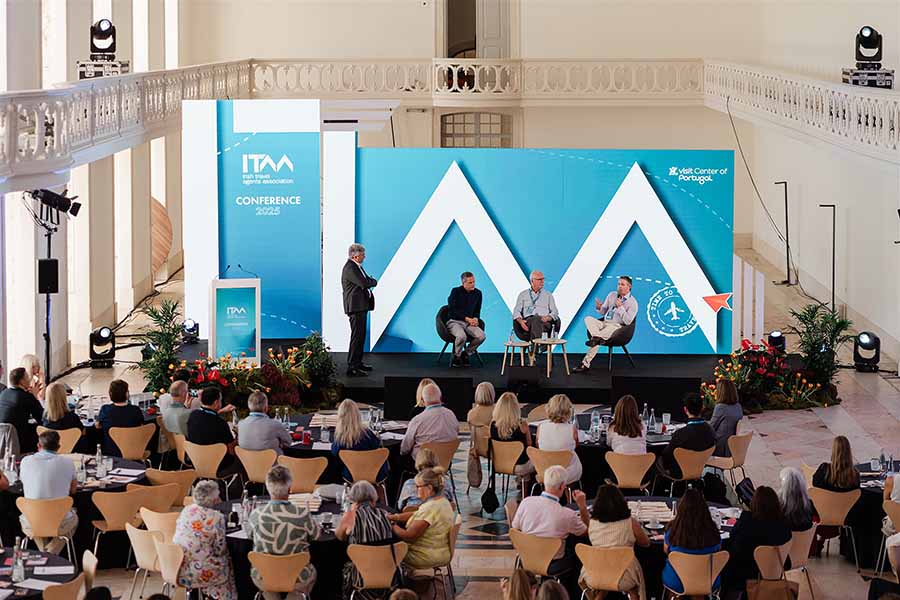
John Galligan and Paul Sexton told the annual conference of the Irish Travel Agents Association in Alcobaca in Portugal that agency owners frequently identify so closely with their businesses that separation feels like losing part of themselves.
Both men described the process as involving grief, identity crisis, and the need to redefine purpose after decades where the business and the person became inseparable. They stressed starting succession planning five to ten years in advance.
Tax-efficient exit routes exist but require early preparation. Owners who delay risk discovering their business has little marketable value once staff loyalty, customer relationships, and personal reputation are stripped away.
Buyers seek recurring revenue, strong management teams, and owners who have already reduced day-to-day involvement. Many agencies acquired in recent years were purchased only after original owners left planning too late.
The industry offers low barriers to entry compared with retail or manufacturing, with startup costs around €25,000 historically possible. Younger entrepreneurs can still build profitable lifestyle businesses combining good income with enjoyment of the work. However, consolidation means smaller agencies must actively cultivate value through niche focus, digital marketing, and professional management to remain attractive for sale or succession.
Key takeaways include the necessity of separating personal identity from the business, the advantage of planning exits years ahead to access tax reliefs and maximise value, and the continuing opportunity for new entrants despite industry maturity.
John Galligan shared: “I was John Galligan and Travel was me, that identity was one, not two. Who am I without my business?”
Marian Benton shared: “Think of it in terms of selling your house… their money is in your bank, and you drive past them on the day and there’s your brand new kitchen at the skip. Drive on.”