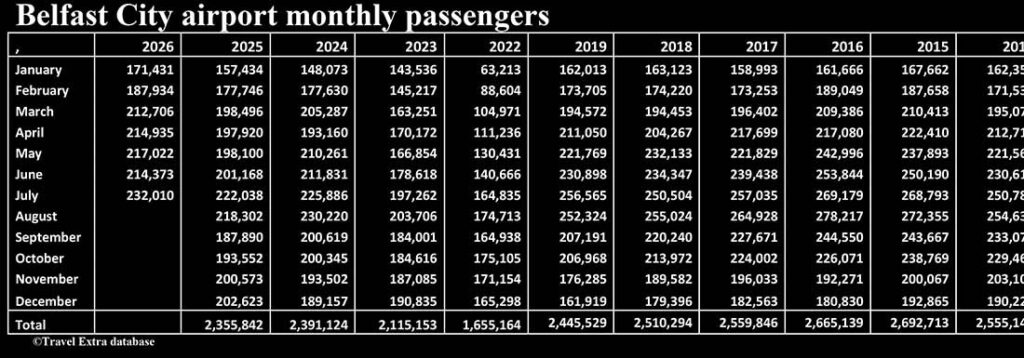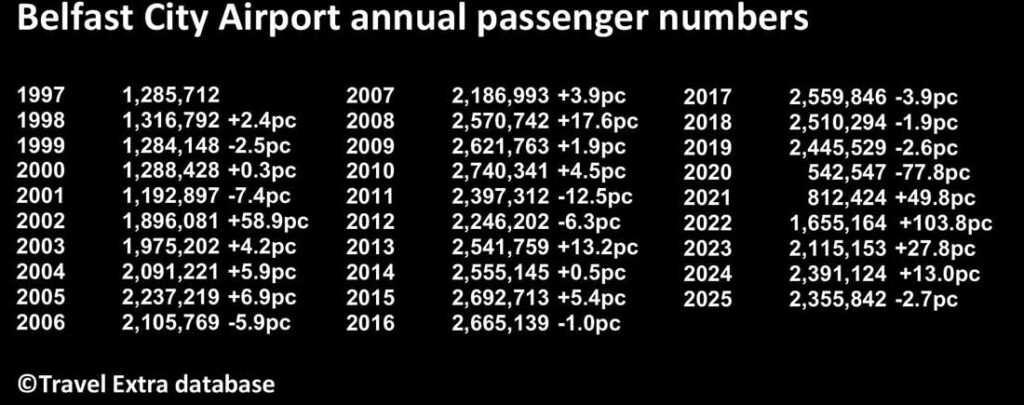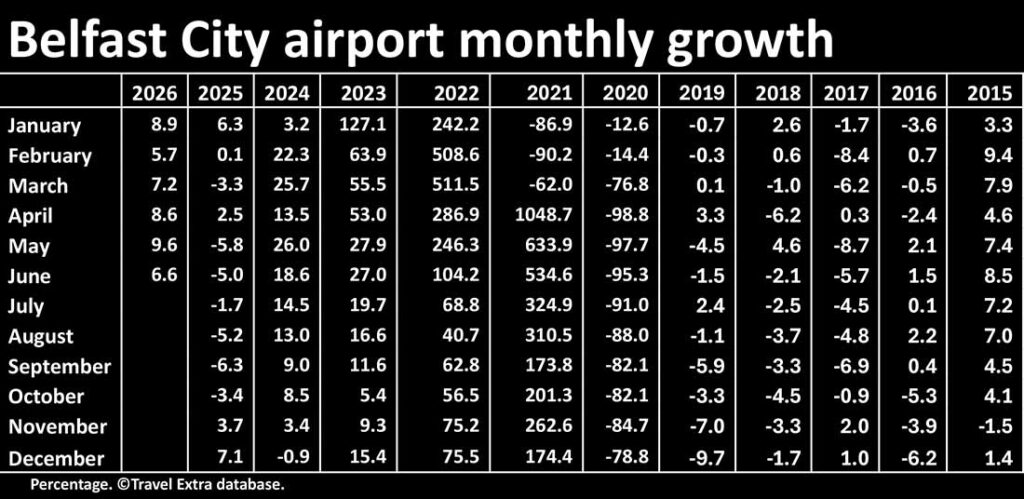
Belfast city airport handled 232,010 passengers in July up 4.5pc on 2025 and down 9.6pc on pre-pandemic. Rolling annual was 2,453,351, up 3.6pc on the twelve months to July 2025.
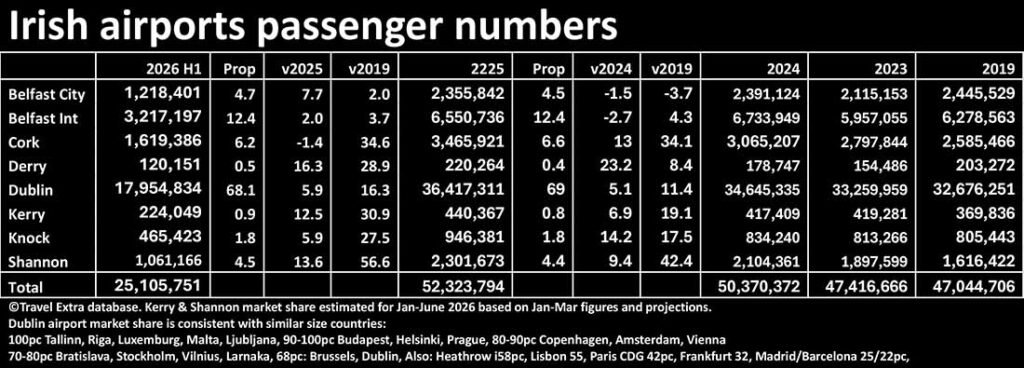
The two Belfast airports handled a total of 925,455 passengers in July, up marginally 1pc on July 2025 and up 3.3pc on pre-pandemic. Rolling annually was 8,631,385, down 5.2pc on the twelve months to July 2025.
George Best Belfast City Airport (BHD) is undergoing a massive £200m transformation under its newly finalised Master Plan 2040. This blueprint aims to expand passenger capacity from 2.4 million to 7 million passengers annually by 2040 while boosting key domestic and international flight options.
The airport connects directly to over 20 destinations. Aer Lingus Regional serves Birmingham, Manchester, Edinburgh, Leeds Bradford, Southampton, Glasgow, Exeter, East Midlands, and Newquay. EasyJet flies to London Gatwick, London Luton, Bristol, Liverpool, Edinburgh, Glasgow, Manchester, and a seasonal holiday route to Palma de Mallorca.
British Airways operates frequent daily connections to London Heathrow and London City. KLM connects Belfast directly to its major European hub in Amsterdam. Loganair connects passengers to Aberdeen and Inverness. EasyJet is expanding its London network by launching a new direct route to London Southend starting October 25, 2026.
Aer Lingus Regional boosted its overall seat capacity out of Belfast City by 25pc year-over-year. Regional (operated by Emerald Airlines) expanded its schedule by adding 8 weekly flights to Southampton. This includes specific mid-morning and early afternoon weekend slots tailored around cruise ship schedules.
The Belfast City Airport Master Plan 2040 features an expanded main terminal building alongside upgraded security processing and baggage screening technologies. A new two-story pier will also be constructed. The airport will raise the annual cap on flights from 48,000 to 61,000 movements. To support this, it is building new aircraft stands (growing to 21 total), larger aprons, and upgraded taxiways.
The airport is actively collaborating with Translink to establish a dedicated, direct rail halt linking passengers right to the terminal building. If built, it will be the first airport on the island of Ireland with a direct terminal train link Ground access features a redesigned multi-modal forecourt prioritizing public transit, cycling, and walking paths. The surrounding property plans include a brand-new airport hotel and a large electric vehicle (EV) fast-charging forecourt.