Fomhar. Autumn. Autumn. The dying will start differently in different territories, but it always means the same. The leaves turn yellow and brown.
The weather turns. The frogs go into hibernation. The swallows go to the southern world, an domhan theas, as Padraic Pearse described it.
And out of that comes a tradition that goes back millennia, across cultures and religions, of remembrance of the dead. The remembrance of the saints in the Christian era, a franchise taken on pagan festivals. The Day of the Dead in Mexico. Toussaint in France. Samhain in Ireland. And, oddly, from Germanic languages, the name we call it today. The eve of the day of all saints, All Hallows, Hallow Eve, or Hallow evening, shortened to Hallowe’en.
Folklore places great emphasis on Oiche Shamhna (Halloween) as a time when ghosts are abroad and fairies are moving from their summer to their winter quarters. The dead ancestors were of great importance in Irish custom and belief, and this was the date of the festival of Tara, traditionally the ritual centre of kingship itself.
Due to the Church festivals of All Saints and _All Souls on the first two days of November, much of the solemnity has gone from the attitude towards Halloween itself. There is, however, a clear remnant of native belief in the tradition – which survived until recently – of leaving the fire lighting and going to bed early on All Souls’ Night, so that the family kitchen or parlour would be left to the dead ancestors who would again congregate there on that night.
The festival was likely already old when it was first referenced in the manuscripts. Handwritten as they were, most of them go back only to the 300 years or so before printing was invented. They came from older sources. But how old?
An entire mythology has been founded on the evidence from pre-Christian Ireland that Samhain is an ancient festival. But how ancient? And how can we rely on something that was written down 700 years after the arrival of Christianity, which is when the Psalter of Cormac, Saltair Caisil, was compiled?
It is as if the Christian world, in the Eusebian tradition, was inventing and imagining pre-Christian Ireland rather than recording it, because 700 years is a long time in anybody’s chronology.
Irish fairies are different
If you think fairies come with pretty dresses and wings, flying around Peter Pan’s head, think again. The Irish fairies are different.
The otherworld community which, according to Irish folklore, inhabits the countryside side by side with, but usually invisible to, the human race, goes by the name sí, earlier rendered as sidh. This term originally meant a mound, and the early literature contains several references to otherworld dwellers in the tumuli and cairns which dot the Irish countryside.
One ultimate source of the Irish tradition of fairies, therefore, was the idea of the community of the dead living on in their burial chambers, and it is noticeable that lore of the dead still tends to become confused with that of the fairies in living oral narrative. In a more basic sense, there are some indications that the concept of the living dead was one of the fountain-heads of the ancient Celtic pantheon of mythic beings, especially as seen in the figure of Donn.
These mythic beings were also understood to be a kind of spiritual community whose nature was on a different plane to that of the human race. As such, they were called by the literati the Tuatha Dé Danann and were described as living in a timeless realm, from which they could appear to people at will and provide glittering visions of their existence. The evidence indicates that, at some stage in antiquity, Irish versions of widespread beliefs about otherworld communities were assimilated to lore of the living dead, and that from this evolved the sí people of general Irish tradition.
The Tuatha Dé were portrayed as patrons and bestowers of things involving social prestige, such as arts and skills, and even kingship itself. That the fairies of folklore are indebted to them is obvious from the special intensity with which this motif is found in Irish folk legend. Many such legendary accounts tell of how poets and other people with powers of magic got their skills as gifts from the fairies.
The occasions and methods of communication with the fairies in such cases prove enlightening. Usually the person who is to receive the gift falls asleep at some location not ordinarily frequented by humans and therefore regarded as otherworldly. It may be a fairy rath, an ancient tumulus or relic of an earthenwork fort, a riverside, water being anciently associated with Celtic deities, or a cairn on a hill-top. The fact that the sleep parallels shamanic rites, and that the locations are the same as those involved in ancient seer-craft, as seen in traditions of Find, makes it clear that this aspect of fairy legend is a survival from native rituals.
Alive in the air
The fairies are said to live in the air and in the sea as well as on land, and thus all folklore concerning communal otherworld beings can be classified under this general heading. Among the aspects of fairy lore to which a pre-mediaeval origin can be attributed are the numerous traditions concerning otherworld animals, especially cattle and horses, which come from raths or lakes or the sea and mingle with animals of this world.
Similarly, the fairies sometimes take animals away into their world, a form of economic thieving which probably owes its origin to ancient animal-sacrifice. The fairy-dwellings, when a human gains access to them, are beautiful places, decorated with precious metals and with sumptuous food and drink and melodious music, and therefore can be seen to preserve the standard traits of the realm inhabited by the Tuatha Dé.
The mediaeval literature concerning the seer-hero Fionn mac Cumhaill has many references to visits to Tuatha Dé strongholds which, like the dwellings of the fairies in the late folklore, are often situated within cairns and raths.
As in folklore, Fionn is given gifts in these residences, for example a marvellous knife or goblet. Gift-items of a similar nature are also brought from the otherworld in texts which situate it in a marvellous land overseas, as in the stories of Bran mac Feabhail and Cormac mac Airt, and it is therefore clear that we are dealing with one continuous tradition which derives ultimately from the divine realm of mythology.
Otherworld dwellings
It is likely also that the folk belief that great battles are sometimes fought between different fairy communities is a reflection of ancient lore,
for instance the mythic battle described in the literature between the Tuatha Dé and the Fomhóire. In line with this battle imagery, folk belief holds that the most dangerous type of encounter is with the slua sí, the trooping fairies, a kind of battalion of shock-troops which are sometimes abroad at night and which lay low anybody who gets in their way.
There was a strong folk assumption that one should never refer to the fairies by their name, whether sí, or the diminutive and somewhat disparaging síóga, or the English fairies, and so such circumlocutions as na daoine maithe, the good people, or na daoine uaisle, the noble people, were used. This also is redolent of early belief and there can be little doubt that similar caution was employed in connection with mythical and quasi-mythical beings in ancient Ireland.
The survival of early Irish myth in folklore is amply illustrated by the portrayal of several individual personages as functionaries in the landscape, for example Áine, Clíona, Donn, Fionnbheara, and it is noticeable that these are usually assimilated to the fairies in the living lore.
There is an interesting duality in the folk attitude to these personages and to the fairies themselves. On the one hand they are exalted beings who can be good patrons; but on the other hand they are understood to be on a parallel with humans and even in competition with us, engaged in their own agricultural pursuits and wishing to keep their own sections of the landscape as their special property.
This tendency to regard the otherworld community as a parallel to the human one could well be as old as Celtic myth itself, and it is evidenced at all stages of Irish literature. For instance, otherworld women could become the lovers or even wives of mortal men, an idea which is at least as ancient as the theme of the goddess of sovereignty, symbolising kingship, who is mate to the reigning king.
Such alliances occur again and again in the literature, as seen under Aonghus, Art, Bran mac Feabhail, Conaire, Cormac mac Airt, Criomhthann Nia Náir, Cú Chulainn, Diarmaid mac Aodha Sláine, Éadaoin, Fionn mac Cumhaill, Laoghaire mac Criomhthainn, Muircheartach mac Earca, Niall Naoi-ghiallach, and Oisín.
Otherworld wife
The 9th-century account of Macha as an otherworld wife is found in a new form in later Munster folklore. We are told that a certain Earl of Inchiquin, of the Uí Bhriain, the O’Brien family of Co Clare, was one day walking by the side of Lake Inchiquin when he met and fell in love with a beautiful maiden. She became his wife, but laid one condition on him, that he was never to bring any of his friends to the house to see her.
They lived happily together, until one day he went to horse-racing, and brought a friend home with him to show him the beautiful wife. Heartbroken at how the Earl had disregarded the prohibition, the lady returned to the lake and was never afterwards seen. This legend parallels that of Melusine in mediaeval French lore, but is so different in detail that it is obviously not borrowed directly from that source.
There was a fashion for mediaeval families on the Continent to claim an otherworld ancestress, and it is likely that the O’Briens adopted it from some such heraldic source prior to the 15th century. In doing this, they were probably following the fashion set in Ireland by the FitzGeralds, who borrowed for themselves the Continental legend of a swan-maiden. The Macha story had been an earlier Irish prototype, and because of the identity of plot it exerted an influence on the imagery of the Inchiquin legend, such as the detail of horse-racing.
The Macha story seems to have been itself an early Irish adoption of the plot to the context of this Ulster horse-goddess, and it seems sensible to suggest that there was in circulation in ancient Ireland some account of a man marrying a spirit-woman and she leaving him when a ritual taboo was broken.
The likelihood is that this was an offshoot of the idea that the sacred and much-tabooed office of kingship involved taking the land-goddess as mate. A legend found in the folklore of coastal areas of western Ireland sprang from a specific application of the account to the marine context in mediaeval times. We are told that a man once saw a beautiful maiden on a rock by the shore.
She had laid aside her cloak, and when he seized this she was in his power. She therefore went home with him and married him. They had several children, and all the time the husband kept the cloak hidden from her. Then one day she discovered the cloak and returned to the sea. Certain families are said to be descendants of this mermaid, and as proof of their origin these families were said to have webbed feet. The legend, some versions of which describe the lady as a seal-maiden rather than a mermaid, spread to Scotland and to Iceland, probably in the late Middle Ages.
Influence on Europe
All of this raises the much-debated issue of Celtic influence on the romantic literature of mediaeval Europe, especially in so far as fairy lore is concerned. It seems likely, for instance, that the French legend of Melusine was based on a Celtic, or even an Irish, source; and, whatever the reality behind the problem of the Breton lays in mediaeval French, there was undoubtedly a great Celtic influence on the way in which the fairy realm was portrayed in the Arthurian cycle and its related lore.
Continental romance in turn had a marked influence on Irish literature of the late Middle Ages, but little of that influence is mirrored in the folk tradition. The mediaeval Irish attitude to the otherworld underwent a profound change due to one external influence, that of Christianity.
The monks who committed the ancient lore to writing had, from the beginning, been somewhat uncomfortable theologically when describing the otherworld of pre-Christian belief. At times, these writers regarded it as a simple realm of story, at other times they felt compelled to reduce its characters to the plane of ancient history, but when its mythical and spiritual nature became too awkward to handle they resorted to demonising it.
Theologians on the Continent were less tolerant, tending to opt exclusively for the latter approach when faced with surviving otherworld beliefs, and they developed a rationale in Biblical terms for the spiritual communities which were popularly believed to live on beside the human one. So the fairies were claimed to have been remnants of the fallen angels who had been driven out of heaven by God after the revolt of Lucifer.
Fallen angels
This idea spread to Ireland and was adopted into the lore of the Irish sí, probably towards the end of the Middle Ages. It is referred to in a text of the early 15th century, which identifies the fairies with the Tuatha Dé Danann. Describing them as dwellers in mounds and under water, the writer comments that some say that they were demons of a different grade who came with the exiled band of Lucifer from heaven.
They assume airy bodies for the purpose of destroying and tempting the descendants of Adam. Irish folklore developed this portrayal, claiming that as the fairies fell from heaven, God relented somewhat and said that where they are, may they stay there.
Thus the fairies came to inhabit air, land, and water. In order to fill the seats left in heaven by their expulsion, God created the human race with the distinctive trait of having red blood in their bodies, whereas that of the fairies is white. Any whitish coloured liquid seen on the ground in the early morning might accordingly be explained as blood spilt when two hostile groups of fairies clashed and fought a battle during the night.
Having lost their places in heaven, the fairies were believed to be anxious to regain them, and to underline the situation a special Irish folk legend was developed and became very popular.
We are told that a priest, while travelling at night, was met by a group of fairies who asked him would they ever gain salvation, and when he answered in the negative they began to wail pitifully. A variant of this has the fairies asking a man to put the question to the priest as he consecrates the Host at Mass. The priest again gives the negative answer, and warns the man that when he goes to tell this to the fairies they will be very angry and he must dig a hole in the ground, enter it, and place a shovel and spade in the form of a cross over himself as protection.
Competing with humans
The notion that fairies are in contention with humans for places in heaven was further developed as a rationale for why the fairies sometimes abducted people. Thus we are told that they wished to assimilate and intermarry with humans so that their race would gain more red blood, the qualifying trait for the lost seats. Belief in abduction by otherworld beings must be quite ancient in Ireland.
The mediaeval literature has several instances of young men and young women being enticed away by the Tuatha Dé, as in the cases of Cormac mac Airt and Cú Chulainn, and, apart from the context of courtship, such abduction would be a natural explanation for sudden death or unexplained deterioration in health.
Fairy-lore mostly concentrates on children and young mothers being taken away. The emphasis on children reflects the function of the fairies as a means of warning children to stay safely near their home, while the vulnerability of the health of young women who have just given birth would have given rise to the belief in their abduction. The need for explanation by way of narrative meant that the young mothers would be abducted due to the death of a fairy mother and the resultant need for a wetnurse.
Narrative explanations for the abduction of young children were more involved. Boys were said to be especially vulnerable, not only because they were reputedly more able workers but also because of the traditional idea that the male gives more of its properties to offspring and thus more human blood to the fairy race. The popular name Síofra, in its relatively recent folkloric form, translates as “changeling.” Which explains a lot.
The stolen child
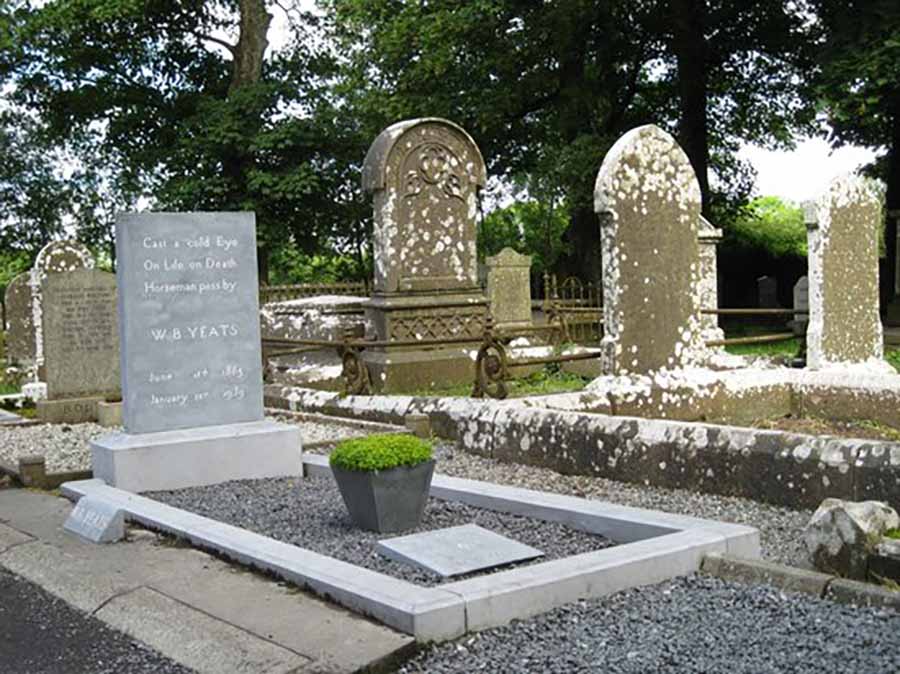
Regarding the abduction of children, a legend which spread throughout western Europe became very popular in Ireland, famously reflected in Yeats’ poem the Stolen Child and the Waterboys version from the 1980s, narrated by Tomás Mac Eoin.
This describes how parents leave their child, who is pining and causing them great worry, in the care of a baby-sitter, usually a tailor. Much to the astonishment of the baby-sitter, the child begins to act like an intelligent adult. He stands up in the cradle and begins to speak of events long ago, perhaps also asking for a drink of liquor or even playing fine music on a set of pipes.
Realising what he is, the tailor reddens his pin or some other metal implement in the fire and approaches the child while wielding it. At that the child jumps from the cradle and races screaming out through the door.
The baby-sitter warns the departing changeling to send the stolen child back, and soon afterwards the real child, for which the strange creature had been substituted, is returned. A popular formulation of the legend has the baby-sitter applying a special test to the changeling: he heats a drink for it in an eggshell and, on seeing this, the child laughs and says it has never seen such a silly thing in its long life, thus betraying its real nature.
Another legend, also found throughout Ireland, describes an attempted abduction of a young woman by three strange old women who come on each of three nights to help her at her spinning. Growing suspicious, the young woman on the third night goes to the door and shouts out that the top of the nearby hill is on fire. Duped by this, the three old women race from the house and up the hill to save their otherworld residence from the supposed flames.
This legend was inspired by two international folktales, one of which tells of how an impish little man tries to inveigle her child from a young woman by helping her at spinning, and the other telling of how three old women help a girl to spin an impossible amount in one night and thus become the bride of a prince. Particularly developed recensions of the legend state that the three fairy women lived on Slievenamon in Co Tipperary.
The name of that eminence, Sliabh na mBan, means literally the mountain of the women, and it has a cairn on its top long associated with the otherworld. It may well be that this Irish folk legend originated in that area.
Sua sí
The slua sí can sometimes be understood as a fairy cavalcade abroad at night seeking to take some human away with them for no apparent reason. This appears to be an indigenous Irish theme, in which they are synonymous with the otherworld of the dead, and there are even accounts given of fairy funerals seen at the time of the death of some local person.
A legend told in several parts of the country describes how a recently deceased young woman appears to her husband as he sleeps one night and asks him to be in a certain place on the following night, when she will be riding with the fairy host.
When the cavalcade comes by, he must watch for the grey horse on which she will be mounted, and if he grabs her without delay she will be returned to him. He goes to the place as directed and sees the cavalcade passing. Among them he recognises several people of his acquaintance who have died. When he rushes to grab his wife, the grey horse shies and bolts, and the cavalcade immediately disappears, leaving him alone.
The idea upon which this legend was constructed, that of a man recovering his wife from the otherworld, can be traced back in Irish tradition to the 10th century at least, as it occurs in the story of Éadaoin.
Common in different parts of Ireland also was a northwest European legend which tells of how a midwife was once called out to tend to a fairy woman who was giving birth. When the child was born, she was given some ointment to rub on it, and by accident rubbed her own eye with the ointment. She was then brought back to her own house safe and well.
Some time later she was at a market and recognised one of the men there who had been in the fairy dwelling. She spoke to him, and he realised that she could see him because of the ointment which she had rubbed to her eye. Angered at being thus visible to her, he put his finger in her eye and blinded it.
The idea that the fairies are resentful of human intrusion into their world is common. For instance if a house is, either advertently or inadvertently, built over a pathway used by them, great tumult will be heard and items will get flung about.
One of the fairies may appear and explain that the dwellers in that house will have no peace until the situation is corrected, either by demolishing the house completely or by removing whatever part of it is blocking the path.
Benevolent fairies
The fairies can be quite benevolent to people in some ways. They might confer gifts or skills on people, and they might even come to the rescue of an individual who badly needed help. Several individuals, especially those with special powers of healing, were said to be in the fairies and to travel the countryside with them at night, gaining all types of information in the process.
Another Continental legend was adopted to illustrate this notion of quick magical travel, and versions of it were common throughout the country. It concerns a man who meets the fairy host one night, and they invite him to come with them. They give him a special cap and tell him to mount a ragwort-weed as if it were a horse.
When he does so he finds himself brought into the air and, travelling thus with the fairy host, comes to a wine-cellar in a foreign country. There he drinks his fill, but when morning comes he finds himself alone and is arrested for breaking into the cellar. He is sentenced to be hanged, and is placed on the gallows with a rope around his neck. He manages somehow to draw the fairy cap from his pocket, and when he puts it on his head he is raised into the air. Soon he finds himself back home, standing beside the ragwort in the very place that he met the fairies.
The Irish fairies were not imagined as being very different in form or appearance to the human race, except that they might be somewhat paler in hue and might be dressed in clothing of silk and satin. The idea that they were smaller in size than humans was not general in Ireland.
Similarly, a wide range of activities paralleling those of the human community were attributed to them. They were believed to be ruled by kings and queens, inside their dwellings there were many chambers and great assembly halls, and they often held great feasts.
It was usually said that a human visitor who partook of their food could not return to the ordinary world. The fairies engaged in farming, went incognito to the humans’ markets to buy and sell stock, and could appear at will to seek the loan of some implement from a farmer or his wife. They often rewarded those who assisted them in some way.
In sport and entertainment, too, their tastes resembled those of humans. Their music, often heard at night, was exceedingly beautiful, and they were much given to hunting and to playing hurling. On the hill of Lyons in north Kildare, they enticed a young man into their fort to a hurling match and kept him there for 300 years. In modern times Ardclough, the local club, have won thirteen Kildare senior hurling championships. Coincidence?
A story told in many parts of the country concerns a great hurler who was taken away at night to play for a team of fairies in a match against another such team in a field beside a rath. The hurler scores, following which the vision of the match suddenly disappears and he finds himself at home in bed.
Hostile fairies
The hostile aspect of the fairies included their supposed propensity to shoot tiny darts at fine cattle or fine horses and thus cause them to pine away and belong to them. A ribbon or other piece of cloth of red colour was believed to be an effective protection against them, and various religious amulets were used for that purpose also. Another means of protection arose from the fact that the fairies themselves were very fastidious and disliked anything which was dirty.
Therefore, it was believed to be a good thing to keep the foot-water in the house, and in some places it was customary to sprinkle a drop of urine on children before they left the house, so as to keep fairy abducters at bay.
Their dwellings may be of many types, all relatively remote from human concourse and all with a certain aura of mystery. The oldest attributions must have been to tumuli and cairns, but in late mediaeval times the no longer understood earthenwork forts, popularly called raths, lisses and moats, were added. Further variety of location was provided by stone circles, hills, and even invisible caverns in mountainsides, not to mention fanciful underwater palaces.
If any person damaged a place believed to be a fairy-dwelling, misfortune or even death would befall him, a belief which was indeed instrumental in preserving many archaeological sites in the countryside. A solitary bush or tree was often regarded as belonging especially to the fairies, and if it were cut down they would similarly exact vengeance.
Although such beliefs in a parallel otherworld community may never have been unanimously held in Ireland, they were widely held at all stages of history, so strongly indeed that stories and superstitions have become intertwined in each other with many kinds of permutations.
Rather spontaneous beliefs, too, could spring up. For instance, strange lights seen at night were believed to be the fairies trying to send a benighted traveller astray, and a heavy mist was believed to be caused by them with a similar intent.
Otherworld diplomacy: don’t mess with the fairies
It was thought necessary to be diplomatic towards the fairies in ordinary human nourishment, for instance the first drops of milk from a cow, or of newly-distilled whiskey, should be thrown into the air for them.
The belief that a whirlwind is caused by fairies as they pass by is of a kind likely to be quite ancient, but it must have been reinforced by the similarity in sound of its title sí gaoithe, originally sidhe gaoithe and literally meaning thrust of wind, with the word sí, originally sidh, for the fairies themselves.
The persistence of these traditions through Christianisation, manuscript transmission and oral continuity reveals a cultural mechanism that absorbs external frameworks while retaining indigenous structures of time, place and reciprocity.
Samhain remains the seasonal hinge at which the boundaries thin, and the sí continue to occupy the conceptual space between the living and the remembered dead.
The modern commercialisation of Halloween draws upon this reservoir without always acknowledging the depth of the Irish material that underpins it. The manuscripts of the early mediaeval period, the folklore collections of the nineteenth and twentieth centuries, and the landscape features still protected by residual caution together form a continuous archive.
That archive demonstrates how a society negotiates the invisible parallel community across centuries of change. Ireland’s claim as the source of the festival rests less on Instagram assertion than on this layered textual and oral evidence of otherworld encounter at the autumn turning of the year.
Samhain lore has been let out of the stable a long time, and has created an entire codex of literature, a culture of Celtic mysticism, and even a religion. It is an overwhelming presence in the new-age religions of North America. The manuscripts were first translated in the 1830s and were widely referenced in Yeats’s time.
There was little of value elsewhere to inform those generations: no built heritage, no DNA, no pollen records. While these are great at showing us genetic and climate history, they shed no light into the belief systems of ancient Ireland. In the circumstances, the smattering of new-age religion, fantasy literature, old translations of even older manuscripts, and tourism marketing is as good as we can hope for. Ireland is the home of Halloween.
If it is on Instagram, it must be true.
And we can thank our unique fairies for that.
- Six Halloween locations in Ireland
- WATCH (because it’s Halloween): Here is the grave of the vampire from county Derry that inspired Bram Stoker
- Samhain, Day of the Dead & All Saints Day around the world
- Samhain out of the suitcase: where the festival its celebrated in the USA