It was not the easiest eclipse to see to an international tourist, but it has proven the most successful ever. The path was narrow. Much of it traversed remote coastlines and countries with little or no tourist tradition. The time frame to lock was shorter than most casual sky-watchers would like. That did not matter in the end. The clear pattern being seen by tour operators, tourism boards, and online travel agencies suggest this eclipse cycle is rewriting some of the assumptions about eclipse tourism based on the precedents of 1999, 2017 and 2024. What changed the game? Spain changed the game.
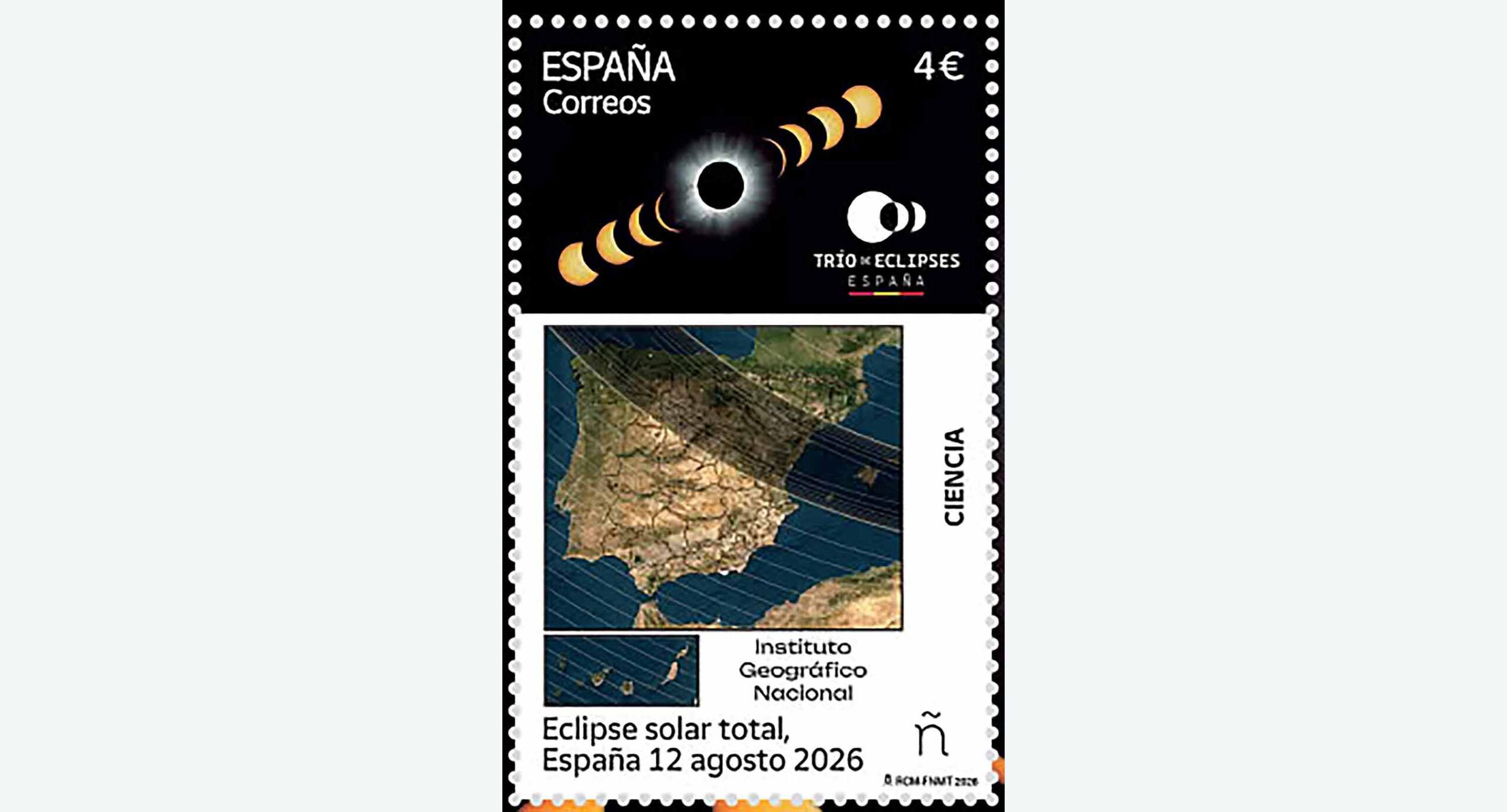
By a clear margin Spain delivered the largest tourism boost and the biggest viewing crowds for the total solar eclipse of 12 August 2026. Iceland registered a major but more constrained surge accompanied by mixed weather. Portugal experienced a localised rural boost. Greenland remained mainly high-end cruise-based with very limited land access. The path of totality crossed eastern Greenland, western Iceland, a tiny northeastern corner of Portugal, and a broad band of northern and central Spain including the Balearics before ending over the Mediterranean. Totality lasted up to 2 minutes 18 seconds near Iceland and was shorter in Spain and Portugal, often between 30 seconds and 1.5 minutes and frequently near sunset.
Volume and economic impact
Spain produced the greatest volume and economic impact through a combination of population density, accessibility, established infrastructure and comparatively favourable weather odds. Official Spanish Ministry of Economy estimates projected 446700 additional visitors for the week of 10 to 16 August, roughly 164000 foreign and 282000 domestic, generating a net economic impact of €347 million to €348 million, the larger share coming from foreign spending of €247 million.
Other assessments pointed to potential rural spending around €362 million and wider expectations of up to 6 million people moving into the path when local residents were included. Hotel bookings surged sharply. Amadeus data showed Bilbao up 366 per cent, Asturias up 292 per cent and Valencia up 137 per cent year on year. Occupancy rose 16 per cent and average daily rates 36 per cent across key areas when considered together with Iceland.
Flight bookings to airports along the path increased 25 per cent. Rural districts of what is sometimes called empty Spain together with northern cities such as A Coruña, Bilbao, Zaragoza, León, Burgos and the Balearics absorbed the greatest share of arrivals. Social media recorded gatherings at 660 official viewing sites.
Clear skies favoured Spain for many of the best views available in mainland Europe. Millions assembled in cities, towns and rural locations. Reports indicated around 450000 tourists arriving, a large proportion from overseas including the United States, Japan, Canada and Australia, with hundreds of thousands heading into rural villages. Crowds formed in places such as Medinaceli, San Asensio and Castrillo de la Reina as well as at designated official sites. One rural area alone anticipated 5000 people. Authorities deployed between 24000 and 33500 police officers in response to traffic pressures, with up to 1.5 million extra car journeys forecast and wildfire risks present amid the heat. The event was widely judged successful under mostly favourable weather, producing dramatic sunset eclipse conditions in many locations.
Challenging weather
Iceland faced more challenging weather, with cloudy and rainy conditions for large numbers of observers, although social media showed intermittent breaks that permitted views of the corona or periods of dramatic darkening during which birds reacted and temperatures fell. Infrastructure in remote districts came under strain and traffic management together with access limits applied in areas such as the Westfjords. Demand remained strong within an already busy peak season. One analysis recorded 75000 foreign visitors plus heavy cruise traffic.
Hotels in Reykjavík and along the path in the Westfjords, Snæfellsnes, Reykjanes and the capital area sold out months or even years in advance, with rates often doubling or climbing into four figures. Occupancy in the path rose to 80 per cent from 61 per cent the previous year. Flight searches to Reykjavík more than doubled. A record 31 cruise ships carried 53000 passengers and crew off the western coast.
Crowds gathered in Reykjavík, which experienced about one minute of totality and marked the first total eclipse visible from Iceland since 1954 and from Reykjavík itself since 1433. Longer durations of up to 2 minutes 13 or 14 seconds occurred in the Westfjords at sites such as Látrabjarg, while Snæfellsnes and other coastal spots also drew numbers. Festivals and events in locations including Hellissandur on Snæfellsnes attracted thousands more.
Portugal’s smaller crowds
Portugal offered only 26 seconds of totality within a tiny zone, the first such event since 1912 and the next not due until 2144. Attendance ranged from hundreds to a few thousand in the park and villages of the northeast.
One local estimate spoke of some hundreds after earlier plans for 2000. The GNR deployed 150 personnel. Narrow roads required careful crowd management. Most of the country saw a strong partial eclipse. The zone of totality was confined to a narrow strip in the Montesinho Natural Park and Bragança area near the Spanish border, including villages such as Rio de Onor and Guadramil. Accommodation in the region sold out months ahead. One university estimate suggested a possible €25 million injection into Trás-os-Montes over the weekend through lodging, food and related spending. Broader Portugal recorded deep partial coverage and hundreds of science and viewing events nationwide.
Greenland’s eclipse tourism remained expedition and cruise focused because of the extremely limited land population in the path. The Scoresby Sound area experienced between 1 minute 45 seconds and 2 minutes of totality. Dozens of ships sailed the broader Iceland to Greenland corridor. Specialised Arctic expedition cruises charged high prices, often €8000 to €30000 or more per person for multi-day voyages.
A lesson that appears to have taken firm hold after the 2017 and 2024 eclipses is that totality is everything and every second counts. In earlier cycles many travellers booked lodging inside the path but not on the centreline, reasoning that a partial phase would suffice. Operators now report a changed conversation. More eclipse chasers specifically request centreline positioning and dismiss locations offering 30 or 45 seconds when the regional maximum approaches two minutes.
In practical terms a hotel in Reykjavík, which sat near the edge of the path and recordsed roughly one minute of totality according to NASA timings, is being passed over by serious observers in favour of the western coast near Látrabjarg where the centreline delivers closer to two minutes. In Spain the same logic is shifting demand away from Valencia and toward a narrow band of small towns in Castile and León. Centreline lodging within Spain’s totality band was already booking out more than a year ahead. Waiting until spring 2026 to seek a room along the path became a gamble that frequently failed to pay off.
Greenland and Iceland: a cautionary tale
Greenland and Iceland offered longer totality but their capacity remained tiny. Greenland’s east coast possesses almost no road access or hotel inventory. Iceland’s west coast has greater infrastructure, yet Reykjavík lies on the edge of the path and the number of rooms in small towns along the centreline such as Patreksfjörður or Bíldudalur is measured in the dozens rather than the hundreds.
Spain, by contrast, presents hundreds of kilometres of totality track crossing well-connected mainland regions from Galicia through Castile and León to the Mediterranean coast, plus the Balearic Islands. The national tourism board prepared actively and popular destinations such as Bilbao and A Coruña sit squarely in the path.
The result is a funnel. Early planners compete for Iceland’s scarce centreline inventory while the broader wave of travellers arriving later concentrates almost entirely on Spain. Spain therefore offered the best chance of finding a viable room or tour slot for those whose planning began less than a year out. Even there the strip of totality is narrow and a village that appears close on a map may lie entirely outside the path.
In Spain and the Balearic Islands totality arrived near sunset and low on the horizon. That altered the photographic brief. Instead of a high-sun eclipse with the corona stark against a dark sky, photographers composed for a low, partially eclipsed solar disk sitting in warm evening light over a landscape or seascape. The Balearic Islands in particular supplied a composition available nowhere else on the path: the eclipsed sun setting over the Mediterranean.
Guides and tour operators who cater to astrophotographers increasingly designed itineraries around that photography-first framing rather than treating the eclipse as a single checklist moment within a wider sightseeing tour. Emphasis fell on scouting foregrounds, planning for low-sun angles and building in contingency relocation time should coastal haze arrive.
When photography is the priority the choice between Iceland’s high-sun two-minute window and Spain’s low-sun one-minute window is therefore not solely about duration. It concerns the image the traveller wishes to take away.
Roll on next August
The August 12 2026 eclipse was not the only one on the near horizon. A second total solar eclipse followed on 2 August 2027 crossing North Africa, the Arabian Peninsula and southern Europe. That proximity of less than a full calendar year created a small but observable subset of travellers booking both events.
Operators in the tailor-made segment reported more itinerary requests that asked about combining the two or at least planning 2026 with an eye toward 2027 logistics. It is a pattern that barely existed in the long gap between 2017 and 2024. The availability of two accessible totalities in consecutive years pulled in travellers who might otherwise have sat out one or the other. Those with 2027 also on the radar found it useful to consider budget, leave days and gear amortisation across both events rather than treating each as a standalone outlay.
Group bus tours remain the volume option because they pool logistics costs and keep per-person pricing lower. Anecdotally more eclipse travellers are requesting private itineraries that incorporate weather-contingency flexibility, particularly given the remote terrain of the 2026 path.
A group coach with a fixed schedule cannot readily relocate 200 kilometres at short notice if the cloud forecast shifts. A smaller private setup with a dedicated vehicle and guide can. That trade-off between flexibility and fixed cost is not new, but the 2026 path amplified it because so much of the totality track runs through regions with microclimates that change rapidly: Iceland’s west coast, Spain’s mountainous north and the Mediterranean islands.
Operators such as JNP Travel constructed total solar eclipse 2026 tour itineraries around that logic, positioning small groups along the Greenland, Iceland and Spain corridor with mobility built into the plan rather than a single fixed viewing site. For comparison a packaged group tour in Iceland for a multi-day itinerary might range from €2760 to €5520 per person. A private tailor-made itinerary across the same route typically runs higher, yet the value proposition shifts toward weather-chasing capability and photographic pacing.
Expeditioin cruises
Cruise itineraries that position a ship along the totality path, particularly in the North Atlantic between Iceland and Greenland or off the Spanish coast, have decisively carvedf out a separate category of eclipse tourism.
The appeal is straightforward: a ship can reposition in response to cloud forecasts in a way that land-based lodging cannot. The trade-off is that viewing from a moving platform introduces its own stability challenges for photography and long-lens work. Several cruise lines confirmed 2026 eclipse sailings and the category appears to be attracting travellers who might not otherwise book a cruise, drawn by the mobility advantage. It is a development worth watching because it alters the supply-demand balance for land-based rooms in small port towns that are already stretched thin.
A cruise solves the mobility problem but introduces other constraints, particularly for photographers who require a stable tripod on a solid surface. Two different kinds of eclipse chaser are emerging and they are booking different products.
A quiet but relevant undercurrent is the state of Solar Cycle 25, which peaked in late 2024 and remains in a declining but elevated phase through 2026. For travellers adding aurora nights to an eclipse trip, Iceland in late August still sits inside the northern lights season window, although the nights are shorter than in deep winter. Free prediction tools such as aurora.
photospots.ai can help gauge whether a given night is worth the drive by pairing KP forecasts with location-based shooting guidance. Iceland’s ring road is generally passable in August, making a combined eclipse-and-aurora trip logistically easier than in the darker and icier months.
Centreline preference
The centreline preference is here to stay. Once a traveller experiences totality the difference between one minute and two feels substantial and that knowledge spreads through word of mouth more rapidly than any marketing campaign. The sunset-totality photography focus may prove more specific to the geography of this eclipse and less transferable to the 2027 event where the sun will stand higher. The back-to-back 2026 to 2027 booking pattern is a product of the calendar rather than a permanent shift.
The move toward flexibility, toward mobile weather-responsive eclipse chasing rather than fixed-viewpoint bus tours, looks like a deeper structural change in how a growing segment of eclipse travellers approaches the single opportunity they obtain at totality. Hotel prices spiked everywhere along the path, flights rose and the event brought renewed attention to astrotourism while testing local logistics including traffic, safety and wildfire risks in Spain.
Exact final attendance and spending figures were still being refined immediately after the event on 13 August, but pre-event projections and on-the-day reports consistently showed large-scale movement, especially in Spain. The precedents of 1999, 2017 and 2024 no longer fully describe the market that has taken shape. Spain’s combination of scale, infrastructure and weather probability has rewritten the practical map of eclipse tourism for this cycle and, in all probability, for those that follow.