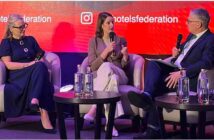
- IMEX America 2026 took place at the Mandalay Bay Convention Center in Las Vegas
- More than 17,000 global professionals attended
- The percentage expecting incentive travel to increase fell from 60pc to 25pc
- Average spend per person increased 7.8pc to $5,500
- AI should serve a human purpose according to educational sessions
The key takeaways from IMEX America 2026 in Las Vegas focus heavily on a shift from pandemic-era hyper-optimism to tactical realism, with a massive emphasis on purposeful event design, human-centric AI, and next-level ROI scrutiny. The industry’s largest trade show brought more than 17,000 global professionals to the Mandalay Bay Convention Center. The defining trends from the event include:
- From “Optimistic” to “Realisti: The overarching mood moved toward balanced reality. Data from the Incentive Travel Index 2026 showed that the percentage of industry professionals expecting incentive travel to increase fell sharply from 60pc in 2025 to 25pc in 2026. While 93pc of professionals maintain a generally positive outlook, they are actively planning around geopolitical uncertainty, climate disruptions, and rising costs.
- Next-Level ROI and “Intentional” Spending; Stakeholders are no longer just justifying the act of travel; they are demanding clear proof of business return. Premium is Prioritised: Even with tighter scrutiny, average spend per person increased 7.8pc to $5,500.
- Quality Over Quantity: Corporations are choosing to invest heavily in top-tier premium experiences, premium hotels, upgraded air travel, and highly inclusive experiences rather than cutting corners across a generic itinerary.
- AI as a Tool for Human Connection: A primary theme across educational sessions was that AI should serve a human purpose. The industry is moving away from using AI purely for automated gimmicks. Instead, organizers are leveraging AI to automate fragmented logistics, booking data, and scheduling. By offloading back-end workflows to technology, planners gain more time to focus on what humans do best: building authentic relationships, personalizing content, and designing immersive event experiences.
- Safety and Trust Over CostWhen choosing destinations, safety, political stability, and the feeling of being genuinely welcomed have begun to outweigh baseline costs. Surveyed planners noted that if a destination experiences high-profile instability, they may wait three to five years before considering it again. Transparent, on-the-ground data from local tourism boards has become vital for contingency planning.
- Shift in Younger Attendee Expectations: New research presented by Freeman highlighted changing behaviors among younger generations. While younger attendees are the most rapid adopters of AI tools, they also display the highest skepticism toward generic AI-generated content. To capture their attention, event marketers must heavily lean into advanced communication, content segmentation, and hyper-personalized experiences.