- Airlines posted a record net profit of $41bn in 2026 on revenues of $1.053 trillion.
- Net margin remained at 3.9pc with $7.90 profit per passenger.
- Passenger numbers reached 5.2bn while load factor hit 83.8pc.
- SAF incremental costs rose to €4.1bn in 2026.
- Return on invested capital stayed below the cost of capital at 6.8pc.
The International Air Transport Association forecasted a landmark $41bn net profit for global airlines in 2026, edging up from 2025’s $39.5bn tally, with revenues swelling to $1.053 trillion and passenger volumes touching 5.2bn.
Operating margins inch to 6.9pc, yet persistent aerospace supply snarls—exacerbated by backlogs exceeding 17,000 aircraft—threaten to cap expansion and inflate costs.
Air cargo has prevented trade contraction and supported better-than-expected economic performance worldwide, a global gathering of aviation journalists has been told.
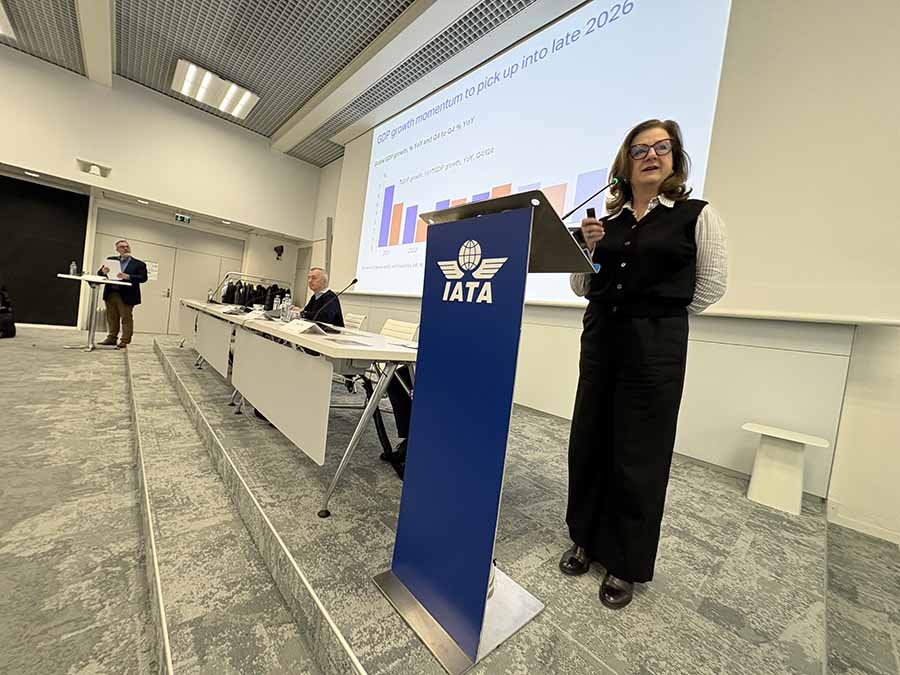
IATA chief economist Marie Owens told the IATA Global Media Day in Geneva that this agility of supply chains and the speed of air freight had again rescued the global economy in 2025, just as it did during the Covid pandemic.
Media delegates at the event were told that international airlines expected to transport 5.2bn passengers in 2026, up from 4.98bn for 2025. Carriers forecast higher profits of €33.94bn for 2025 and projected profits industry wide at €35.26bn for 2026.
Passenger demand remained robust, pushing the industry towards a projected record load factor of 83.8% in 2026. Cargo tonnage growth stayed positive even as overall trade growth approached zero, demonstrating the unique role of air freight in the tariff environment. Capacity constraints affected freighters as well as passenger aircraft, with low new-build deliveries offset by continued high utilisation of existing fleets and conversions from passenger to cargo configuration.
IATA forecasts total industry net profit of €38 billion in 2026, equivalent to a 3.9pc net margin. For the first time, European carriers are expected to generate higher absolute profits than North American airlines, although Middle Eastern operators will retain the highest net margins with an anticipated net profit per passenger of €24.59. African carriers continue to record the lowest profitability, burdened by fragmented policies and fuel costs around 20% above the global average.
Revenue from ancillary services is expanding rapidly and will soon match cargo revenue, though both remain far behind passenger ticket income. Fuel accounts for just under 26% of total costs and labour 28%, helped by lower oil prices and a weaker dollar. Profit per passenger averages €7.30 across the industry, with Middle Eastern airlines achieving the highest figure and African carriers barely €1.
Global GDP growth held steady at around 3% in 2025, matching the long-term average. The year began with fears of trade disruption from new tariffs, but front-loading of imports ahead of tariff deadlines triggered an unexpected surge in air cargo volumes. Chinese exporters and global importers redirected shipments through alternative routes, enabling world trade to expand despite restrictions between China and the United States.
Key takeaways include the decisive role of air cargo in offsetting 2025 trade restrictions, the approach to record passenger load factors, the continued low profitability of the sector at under 4% net margin, and the growing importance of ancillary revenue.
Marie Owens shared: “It wouldn’t have happened without air cargo because the ships would’ve been too slow to get the goods into the right harbour in time ahead of tariff fighting. We’re looking at $41 billion for the whole industry… a large oil company can on their own realise this type of profit in a single quarter and this is our annual profit for the whole industry. The profit that a cover of your Apple phone generates for Apple is about even higher… than the €7.9 that our activity generates per passenger.”
IATA director general Willie Walsh shared “airlines have successfully built shock-absorbing resilience into their businesses that is delivering stable profitability. The resilience in air cargo has been particularly impressive.”
“We’re still an industry operating with net margins less than 4pc. These guys have been using supply chain disruption to increase their prices to the airline industry. making massive margins at the same time as doing a shit job producing the product. Taxation doesn’t reduce CO2, taxation reduces the number of people who are able to travel.”