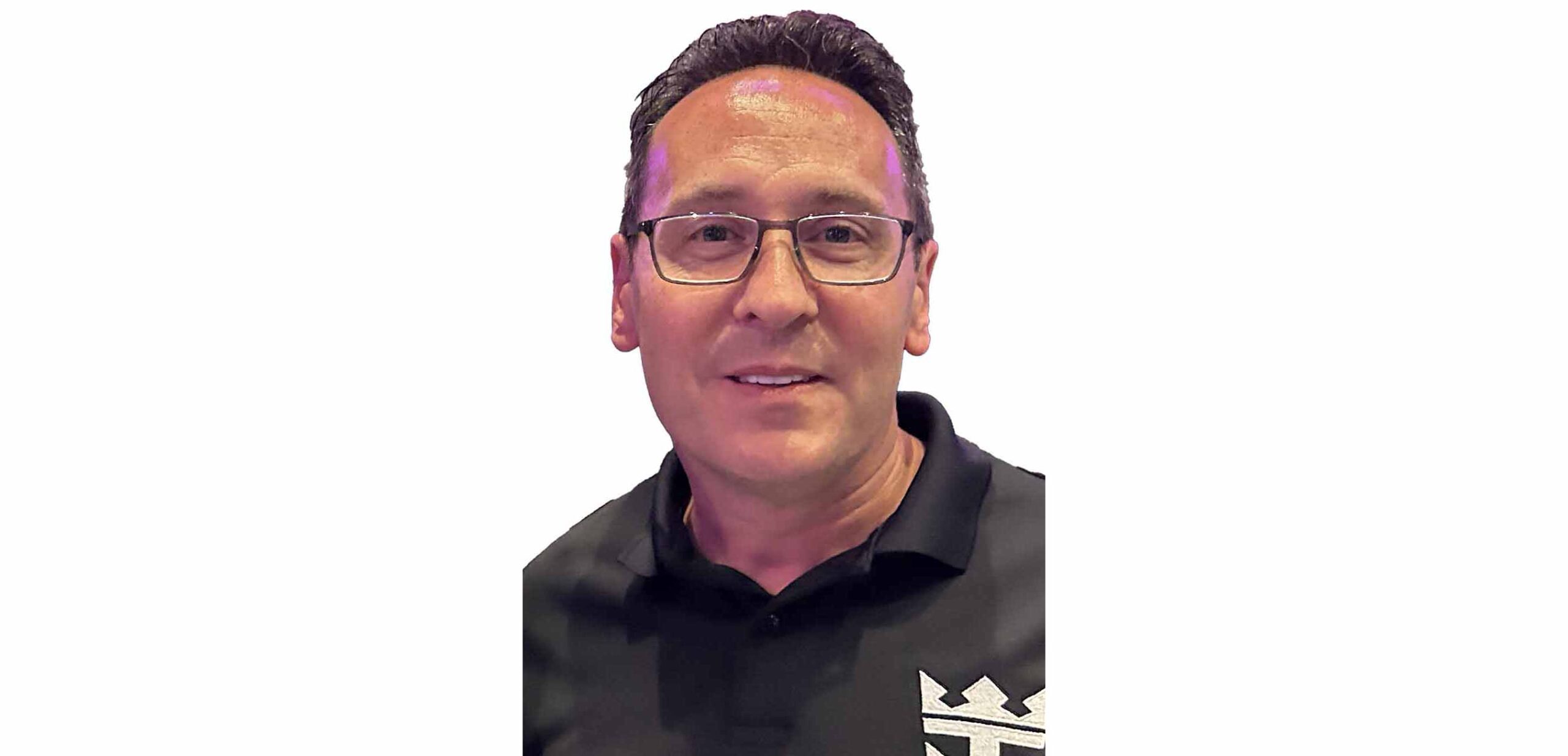
At the WorldChoice Conference 2026 in Johnstown Estate, Carol Anne O’Neill sat down with Gerard Nolan, Vice President and Managing Director for Europe, Middle East and Africa at Royal Caribbean, for a wide-ranging conversation that captured a company in full transformation. Nolan, who oversees commercial sales and marketing across the region, spoke with the energy of someone who has watched the brand evolve dramatically since his own school days in the mid-1990s.
“Royal Caribbean is unapologetically a family brand,” Nolan told the audience. Premium, innovative and relentlessly guest-focused, the line has launched roughly 30 ships in the past three decades. What began as a cruise company is deliberately becoming something larger: a full holiday company. Private destinations such as Perfect Day at CocoCay and the newly opened Royal Beach Club Santorini, together with the recent move into hotels through the Sandals connection, signal a strategic broadening of the ecosystem. Far from abandoning the family market, Nolan noted that 30 to 40 per cent of Royal Caribbean guests already overlap with Sandals customers. The partnership expands choice rather than dilutes identity.
At the heart of everything remains the guest. Net Promoter Score is the guiding star. Feedback from passengers and travel agents is continuously mined to refine product and operations. End-of-season reviews, such as the recent analysis of the Southampton season on Liberty of the Seas, directly shape plans for the next vessel. “The guest is the North Star,” Nolan said. “If the guest is enjoying it, that’s what we’re all about.”
Technology, in Nolan’s view, exists to remove friction so that people can deliver the magic. The Royal Caribbean app is heavily promoted because the holiday begins at the moment of booking, not when guests step on board. A key internal metric, “car-to-bar,” aims to move passengers from terminal to first drink in 15 to 20 minutes. For agents and first-time guests, the AI-powered Royal Genie tool simplifies the complex product offering, making it easier to understand and sell the scale and variety of a Royal Caribbean holiday.
Onboard, technology reaches another level. On the newly launched Legend of the Seas, the Royal Railway experience places guests inside a motion-theatre carriage that feels like the Wild West at sea. Behind such concepts sits a 250-strong product development team based largely in Miami. Their workplace includes “the Cave,” a facility where virtual reality and physical mock-ups allow designers to test sightlines, chair placements and guest flow before steel is cut. The company is now bringing similar VR experiences to travel agents so they can “walk” ships such as Legend of the Seas before ever setting foot on board.
Looking ahead, the pipeline is full. More Icon Class ships are coming, along with another Oasis Class vessel and an entirely new Discovery Class. Two Discovery Class ships are already on order, scheduled for delivery in 2029 and 2032. Destination experiences will form a larger part of their DNA. Details will begin to emerge later this year, roughly 18 to 24 months before the first ship goes on sale. Meanwhile, passenger numbers are set to rise from around eight million a year to more than ten million as new capacity comes online. The average Royal Caribbean guest is already younger than many assume—around 40 or 41—helping challenge the lingering stigma that cruising is only for an older demographic.
Nolan also highlighted the strategic importance of airlift and closer ties with the Irish market, including potential future homeporting opportunities. Across the wider Royal Caribbean Group—Royal Caribbean, Celebrity Cruises and Silversea, now complemented by Sandals—the company is building a multi-brand, multi-generational holiday platform that can keep families together or allow them to choose different experiences under one trusted umbrella.
The conversation left little doubt about the direction of travel. Royal Caribbean is not standing still. It is innovating at pace, expanding capacity, investing heavily in technology and private destinations, and, he says, listening obsessively to its guests.