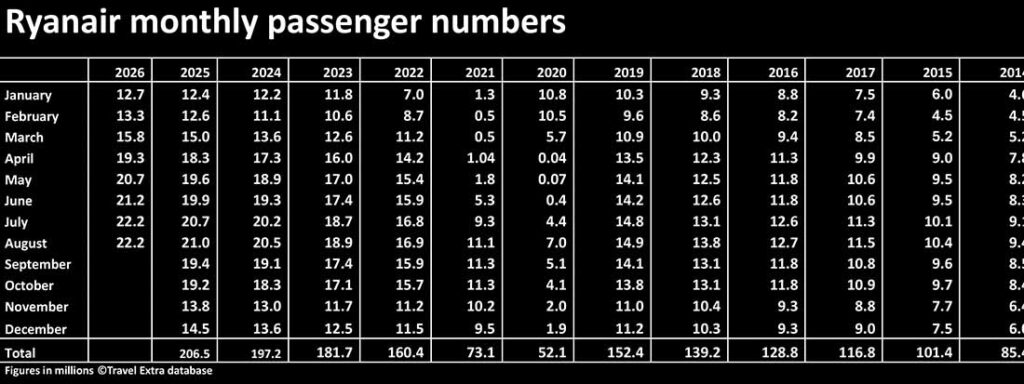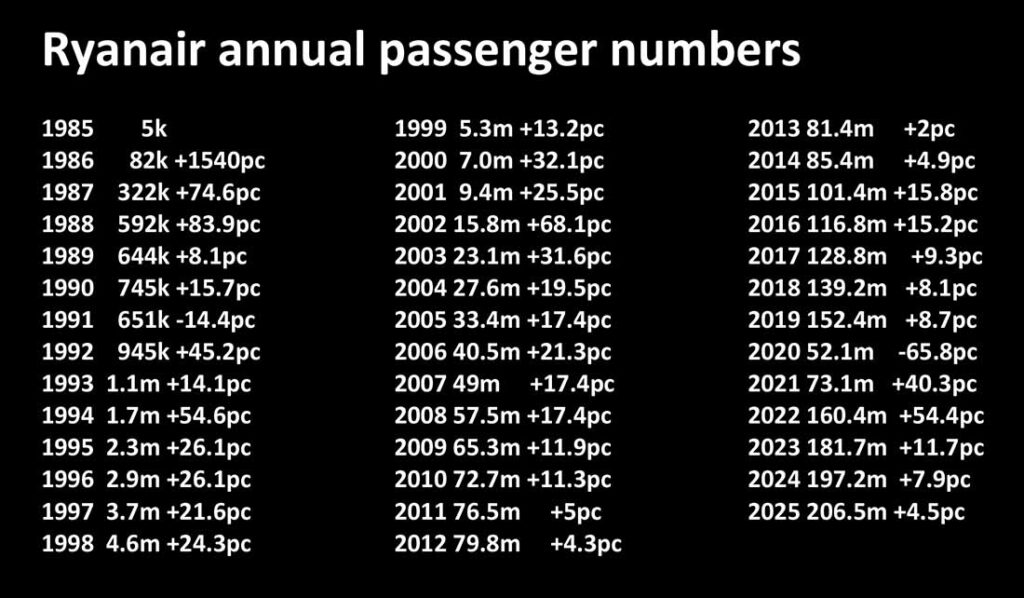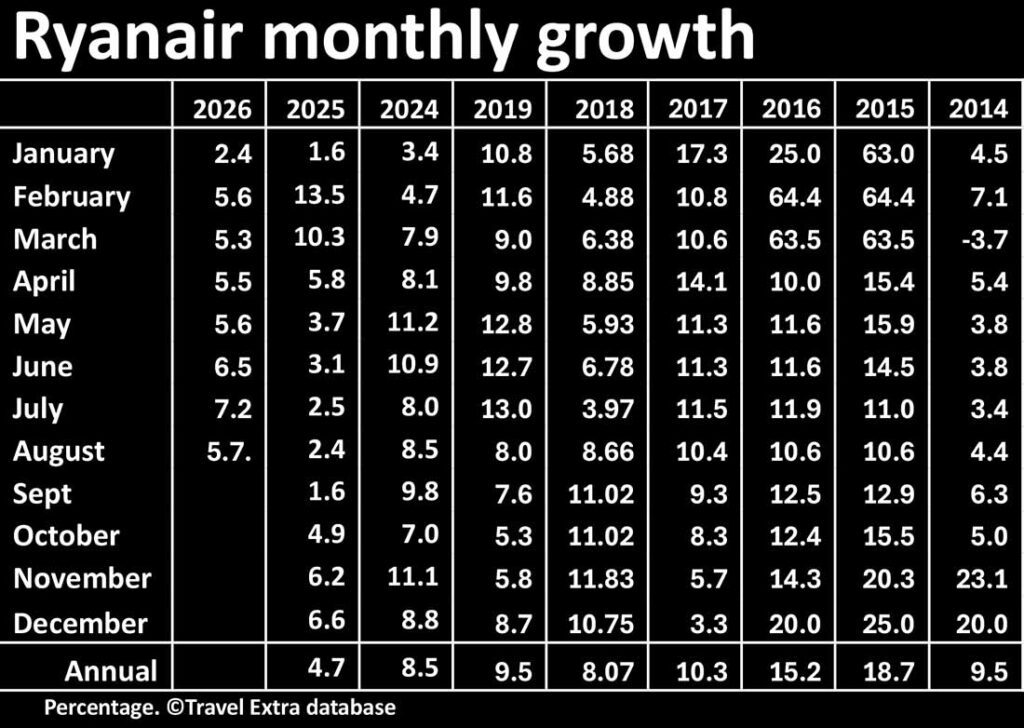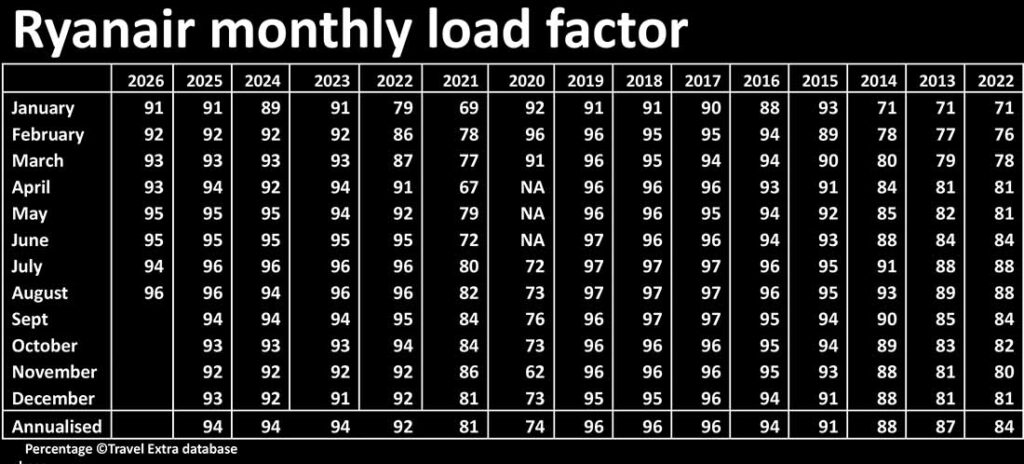
Ryanair’s approach to service has long been the subject of debate among investors: is it good for business or bad for business? The share price has swung both ways. When it comes to performance rankings, on the other hand, Ryanair tends to do well but its market va;ue has been one of Europe’s weakest. Share price is down almost a fifth this year.
Ryanair’s shares declined by 7pc on Monday’s announcement that late booking patterns, often within two weeks of departure, higher fuel costs and weaker fares will lead to a rare shortfall of profit.
Ryanair is not alone. Wizz and EasyJet, subject of a takeover attempt, are also down by a fifth. Investors see low cost airlines, where fuel costs are a higher proportion of overall costs, as particularly vulnerable to the current volatility in the oil market. But the other side of that story is that investors underestimate how balance sheet strength might be a differentiating factor in what happens next.
The low cost carrier sector has built its success on ruthless efficiency and high load factors that deliver economies of scale few legacy carriers can match. Ryanair confirmed this model works in normal times by carrying record numbers of passengers while keeping unit costs among the lowest in the industry. Yet the model faces tests when external shocks such as oil price spikes combine with softer demand signals. The profit warning revealed the limits of flexibility when bookings shift later and fares come under pressure.
Chief Executive Michael O’Leary has built a reputation for straight talking that investors once rewarded with premium valuations. The airline revealed plans to trim capacity growth and focus on cost control in response to the weaker environment. This pragmatic shift confirms the management team’s willingness to adapt rather than cling to ambitious expansion targets that could strain the balance sheet.
Fuel if you think its over
Fuel remains the largest variable cost for low cost carriers. With oil prices elevated because of geopolitical tensions and supply concerns, airlines with strong cash reserves hold an advantage. Ryanair’s net cash position and low debt levels give it options that weaker peers lack. The company can absorb higher fuel bills without immediate recourse to expensive financing or aggressive hedging that locks in losses if prices fall.
EasyJet on Tuesday confirmed similar pressures in recent updates, with fuel costs rising faster than ticket prices could offset. The airline faces additional challenges from a takeover approach that has added uncertainty to its strategic planning. Investors question whether the bidder values the route network and brand enough to justify a premium while absorbing integration risks in a high cost environment.
Wizz Air has expanded aggressively into new markets but revealed vulnerability to currency fluctuations and regional demand shifts. Its share price decline reflects concerns that rapid growth has left the balance sheet more exposed than Ryanair’s conservative approach.
The Hungarian carrier’s higher leverage ratio compared with Ryanair limits its ability to weather prolonged periods of weak fares. Industry analysts note that Ryanair’s fleet strategy provides another buffer.
The airline’s large order book with Boeing allows it to benefit from economies of scale in maintenance and training while modern aircraft deliver better fuel efficiency. This technological edge becomes more valuable when oil prices rise and confirmed the carrier’s long term commitment to fleet renewal even during cyclical downturns.
Defensive gfrwoth stocks
These profit warning has prompted some investors to reconsider exposure to the sector. Those who viewed low cost airlines as defensive growth stocks now see greater cyclical risk. Late booking patterns, once a strength that allowed dynamic pricing, have become a weakness when consumers delay decisions amid economic uncertainty.
Ryanair’s response revealed a focus on yield management and selective capacity cuts on less profitable routes. This measured approach contrasts with more reactive capacity dumping by some competitors that can depress fares across the board. The airline’s strong brand and dominant position at many regional airports provide pricing power that smaller players cannot match. Passengers have mixed views on the no frills model.
Critics point to ancillary fees for everything from seat selection to checked bags as evidence of poor service. Supporters argue that the low base fares make air travel accessible and that optional extras allow customers to pay only for what they use. The debate influences investor sentiment because service perception affects brand loyalty and long term revenue stability.
Data from independent surveys shows Ryanair often ranks high in punctuality and completion rates despite the volume of flights operated. This operational excellence confirms the effectiveness of strict turnaround times and standardised procedures. However, customer satisfaction scores lag behind full service carriers that offer more inclusive products. The trade off between cost and comfort remains at the heart of the business model.
European aviation faces broader challenges that affect all carriers. Airport congestion, air traffic control strikes, and regulatory changes on emissions add costs that low cost models must absorb or pass on. Ryanair’s scale allows it to negotiate better terms with airports and suppliers, but smaller rivals struggle with the same pressures. The summer season, traditionally a peak period, has shown signs of softening in some leisure markets. Late bookings are an indicator of consumer caution amid higher living costs and economic headlines. This shift forces airlines to adjust forecasts and protect margins through capacity discipline rather than aggressive price cuts. Coming back to Ryanair’s balance sheet strength, revealed in recent reports, it includes substantial cash reserves that provide flexibility for share buybacks, dividends or opportunistic aircraft purchases.
Lower debt, higher load factor
This financial discipline contrasts with peers that have higher debt loads and greater reliance on capital markets. Investors who focus only on short term profit warnings may overlook this strategic advantage. The airline industry has always been capital intensive and sensitive to external shocks. Past cycles showed that carriers with strong liquidity survive downturns better and emerge stronger when demand recovers. Ryanair’s track record of navigating previous challenges, including the pandemic, confirms management’s ability to protect shareholder value over the long term.
Competition in the European market remains intense. Legacy carriers have improved efficiency and adopted some low cost practices while maintaining premium offerings. This hybrid approach challenges pure low cost players on certain routes. Ryanair’s response has been to defend core markets and expand selectively where it can achieve dominant positions. Fuel hedging strategies vary across the sector. Some airlines lock in prices for extended periods while others take a more opportunistic approach. Ryanair’s policy of limited hedging allows it to benefit from price falls but exposes it to rises in the short term. The current environment tests this philosophy but the strong balance sheet mitigates the risk. Investor sentiment towards the sector has shifted from growth optimism to caution.
The decline in share price reflects concerns about margin compression and demand volatility. However, valuations for Ryanair remain attractive relative to historical averages for investors who take a longer view.
The airline’s market leadership and cost advantage position it well for eventual recovery. European economies face mixed signals with some regions showing resilience while others contend with higher inflation and slower growth. Travel demand tends to hold up better than many expect during mild slowdowns because consumers prioritise experiences. Late booking patterns may reflect this behaviour rather than outright weakness.
Protecting the load factor
Ryanair has confirmed plans to maintain its schedule on key routes while trimming less profitable capacity. This selective approach protects load factors and yields better than blanket reductions. The strategy revealed confidence in the core network and willingness to adapt to market conditions.
Ancillary revenue streams have become crucial for low cost carriers. Fees for priority boarding, extra legroom and onboard sales provide buffers against fare pressure. Ryanair leads the industry in this area through innovative products and high uptake rates.
The model rewards frequent travellers who understand the pricing structure. Environmental regulations add another layer of cost. Carbon pricing schemes and sustainable aviation fuel mandates increase expenses that must be managed carefully. Ryanair’s investment in newer aircraft helps reduce emissions per passenger but the transition requires capital and time. The balance sheet strength allows the airline to fund these investments without compromising financial stability.
The profit warning served as a reminder that even the most efficient operators face external pressures. Markets reacted negatively in the short term but longer term investors may view the update as an opportunity to reassess fundamentals.
Ryanair’s history of delivering strong returns over cycles supports a case for patience. Competition from high speed rail on some routes presents another challenge. Improved rail services in parts of Europe offer alternatives for shorter journeys where speed and convenience matter.
Airlines must differentiate through price and frequency to maintain market share. Ryanair’s large presence at secondary airports gives it cost advantages and stimulates regional economies. This model has proven resilient and contributed to the carrier’s growth. Critics argue it shifts costs to passengers through longer transfer times but the overall value proposition remains compelling for price sensitive travellers.
Prepare to pivot
The aviation sector’s recovery from previous disruptions showed the importance of adaptable business models. Low cost carriers led the rebound because of their ability to stimulate demand with low fares. The current environment tests this formula but does not invalidate it. Investors who focus on balance sheet metrics alongside operational performance gain a clearer picture of relative strength.
Ryanair’s conservative financial management provides a margin of safety that peers lack. This differentiation becomes more valuable during periods of uncertainty. The share price decline this year reflects broader market concerns rather than company specific failures. When oil prices stabilise and booking patterns normalise the airline’s strengths should reassert themselves. Management’s track record supports confidence in eventual recovery.
European tourism remains a key driver for the sector. Destinations in southern Europe continue to attract visitors despite higher costs. Ryanair’s extensive route network positions it to capture this demand effectively. The airline’s focus on leisure markets aligns with long term growth trends in travel. Regulatory developments on consumer rights and environmental standards require ongoing attention.
Airlines that engage constructively with authorities tend to fare better than those who resist change. Ryanair’s pragmatic approach to compliance helps minimise disruptions. The profit warning confirmed the need for vigilance in cost management and revenue protection. It does not signal structural weakness but rather a cyclical adjustment. Investors who distinguish between temporary pressures and fundamental issues will identify opportunities in the current valuation.
Keep it simple, keep it efficient
Ryanair’s model has evolved over decades while retaining core principles of efficiency and simplicity. This consistency provides clarity for customers and discipline for operations. The current challenges test the model but also highlight its resilience when supported by strong finances.
The low cost sector’s future depends on balancing growth with profitability and sustainability. Ryanair’s leadership in this space gives it influence over industry standards and practices. The airline’s responses to current conditions will shape perceptions of the model’s durability.
Shareholders who endured previous volatility have often been rewarded when conditions normalised. The present environment requires similar patience and focus on long term fundamentals rather than short term noise. Ryanair’s balance sheet strength and operational track record support a positive case for patient capital.
The debate over service quality versus price will continue but the market has shown that millions of passengers choose the low cost option each year. This demand validates the model even as critics highlight its limitations. Ryanair’s ability to deliver consistent performance confirms the effectiveness of its approach for the mass market.
The current pressures on low cost airlines reflect a combination of fuel costs, demand patterns and economic signals. Ryanair’s strong financial position provides advantages that should become more apparent as the cycle turns. Investors who look beyond the immediate profit warning may find value in a proven operator with clear strategic direction.
Michael O’Leary has learned something long ago that the entire aviation industry would be well advised to heed. Balance sheet strength is king, not the share price. And certainly not the customer.