The new Shannon to Toronto route is part of a much bigger picture for Air Canada. Air Canada is pursuing a significant overseas expansion by adding seven new routes across Europe and Asia for next summer.
From a strategic standpoint, the initiative reflects a deliberate shift toward positioning the airline as a fully international carrier. Chief commercial officer Mark Galardo frames the goal as reducing reliance on purely domestic demand and increasing capture of higher-yield international travelers. Galardo describes the plan as a continuation of Air Canada’s transformation into a “true global airline,” with emphasis on strengthening its long-haul network rather than focusing solely on Canadian mobility.
The timing of the expansion is also notable given industry headwinds. Air Canada and other carriers face margin pressure from sustained fuel-cost volatility associated with the Iran conflict, a protracted decline in Canadian demand for U.S travel, and the long-standing closure of Russian airspace to Western airlines.
The airspace ban is particularly consequential for North America–Asia travel because it forces aircraft to avoid Siberian overflight corridors that would otherwise reduce route length. In response, Air Canada intends to introduce additional international services to five cities, including Guangzhou (China).
Growth constrained
New routes are designed to avoid Russian airspace, while other destinations include Oslo (Norway) and Dubrovnik (Croatia). Management links these moves to maintaining and reinforcing Air Canada’s standing as the second-largest North American airline by number of international overseas destinations.
A central theme in Galardo’s comments is the commercial advantage of Canada’s geography. He argues that Canada is well positioned to function as a transit hub between the Americas and Europe, which he identifies as a key revenue source. While Canada’s population is about 42 million, he contends that Air Canada’s geographic location enables it to address a substantially larger travel market when considering intercontinental connecting demand via major hubs in Toronto, Montreal, and Vancouver.
From an operational capacity perspective, the network build-out is supported by new long-range aircraft: Airbus A321 single-aisle models and Boeing 787 wide-bodies. However, delivery setbacks have constrained the pace of fleet rollout. Galardo notes that the first of roughly 30 expected A321XLR aircraft arrived in April, with a substantial delivery batch planned for 2027 and final completion targeted for 2029.
For the 787s, Air Canada reduced its earlier order from 18 787-10s to 14 units due to production delays; the first aircraft is expected later this year and should enter service in 2027. In summarizing the aircraft timing, Galardo’s “better late than never” remark underscores the tension between intended expansion and manufacturing lead times. Looking ahead to next summer, Air Canada expects to operate more than 125 international routes to 85-plus destinations outside the US, representing an estimated eight percent increase in overseas flight volumes compared with summer 2026.
It starts in county Clare
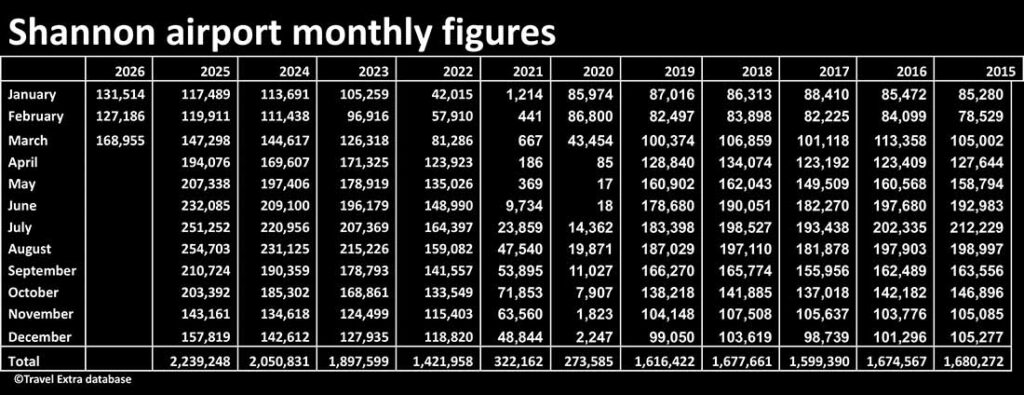
The addition of Shannon to Toronto fits within this broader recalibration of network priorities. Shannon Airport in Ireland has long served as a western gateway for transatlantic traffic, and the new link positions Air Canada to draw passengers from western Ireland and surrounding regions who previously relied on more circuitous connections through larger European hubs. By establishing a direct service, the carrier gains greater control over schedule reliability and product consistency on a route that can feed its larger Toronto hub operations.
Toronto Pearson remains the primary North American transfer point for many of these journeys, allowing onward travel across Canada and into the United States and Latin America. The commercial logic rests on the premise that a modest volume of high-yield passengers on the Shannon sector can improve overall network contribution once connections are taken into account.
Strategic analysis of the European and Asian additions reveals a calculated response to external constraints rather than pure growth for its own sake. The Iran-related fuel cost pressures have raised the variable cost of long-haul flying across the industry, while the persistent weakness in Canadian leisure demand for United States destinations has reduced the profitability of short-haul cross-border flying. At the same time, the continued closure of Russian airspace lengthens many Asia-bound flights originating in North America, increasing block times and fuel burn.
Air Canada’s decision to serve Guangzhou with a routing that deliberately circumnavigates Russian territory demonstrates operational pragmatism. Oslo and Dubrovnik extend the European footprint into markets that have shown resilience in both business and leisure segments. Oslo offers exposure to the Norwegian energy and maritime sectors, while Dubrovnik provides seasonal access to Adriatic tourism flows that can be paired with Canadian outbound demand in the summer months.
Better late than never
Galardo’s insistence on Canada’s geographic utility as a transit point between the Americas and Europe merits close examination. With a domestic population of approximately 42 million, pure point-to-point traffic within Canada cannot alone sustain an extensive long-haul network. The hubs at Toronto, Montreal and Vancouver therefore depend on sixth-freedom traffic, in which passengers connect through Canada while travelling between continents.
This model has historically delivered higher yields than pure domestic flying because connecting itineraries often involve longer stage lengths and less price-sensitive travellers. The new Shannon service strengthens the eastern Atlantic feed into Toronto, while the Asian routes, once fully operational, will expand the carrier’s ability to offer one-stop options between North America and mainland China without reliance on Russian overflight rights.
Fleet planning remains the practical constraint on the speed of this transformation. The Airbus A321XLR is central to the single-aisle long-range strategy because it can operate thinner routes that would not justify a wide-body aircraft.
Arrival of the first unit in April marked the beginning of a multi-year induction programme, with the bulk of the roughly 30 aircraft expected in 2027 and the remainder by 2029. On the wide-body side, the reduction of the Boeing 787-10 order from 18 to 14 aircraft reflects the reality of production delays at the manufacturer.
The first 787 is anticipated later this year and is scheduled to enter commercial service in 2027. These timelines mean that the network expansion planned for next summer will still rely heavily on the existing fleet, with the newer aircraft providing incremental capacity rather than wholesale replacement. The phrase “better late than never,” attributed to Galardo, captures the acceptance of deferred capability while the carrier proceeds with route launches on current assets.
Capacity growth of 8pc
Capacity growth of 8pct in overseas flight volumes next summer, measured against summer 2026, will take the international network beyond 125 routes serving more than 85 destinations outside the United States. T
his scale places Air Canada firmly among the larger North American long-haul operators and supports management’s claim to second position by number of international overseas destinations. The commercial risk lies in the simultaneous presence of elevated fuel costs and the need to stimulate demand on newly launched routes. Load factors and yields on the Shannon–Toronto service, the Guangzhou routing, and the Scandinavian and Croatian services will therefore serve as early indicators of whether the geographic hub thesis continues to generate adequate returns.
Beyond the immediate schedule, the expansion invites consideration of competitive responses. European carriers already operate substantial capacity into Canada, and Asian airlines maintain strong positions on Pacific routes. Air Canada’s advantage rests on the density of its North American feed and the ability to offer seamless connections under a single brand and loyalty programme. The Shannon link in particular may attract passengers who value a shorter surface journey to their departure airport in Ireland, provided the schedule is timed to allow efficient connections in Toronto. Success will depend on consistent operational performance, competitive fare levels relative to one-stop alternatives, and the continued willingness of Canadian and overseas travellers to route through Canadian hubs rather than traditional European or Middle Eastern gateways.
Fuel cost volatility linked to the Iran conflict remains an exogenous variable that management cannot fully control. Hedging programmes and fuel-efficient aircraft can mitigate but not eliminate the exposure. The decline in Canadian demand for United States travel has already prompted capacity adjustments on transborder routes, freeing some aircraft and crew resources for redeployment onto the new international services. The Russian airspace restriction, now a multi-year reality, has forced a permanent redesign of Asia schedules for all Western carriers; Air Canada’s choice of Guangzhou as a destination that can be reached without Siberian overflight rights is a direct adaptation to that constraint.
In operational terms, the A321XLR will allow the airline to open or thicken routes that previously sat below the economic threshold for wide-body deployment. The aircraft’s range and seat capacity suit markets such as secondary European cities or thinner Asian city pairs, while the remaining 787-10 deliveries will reinforce the core long-haul network once they arrive. The multi-year delivery profile, stretching to 2029 for the A321XLR fleet, means that the full strategic benefit of the fleet modernisation will accrue gradually rather than in a single step-change. Management therefore faces the task of sequencing route launches to match available metal, avoiding over-extension in the early years of the programme.
Geographic advantages: Canada & Ireland
The commercial narrative presented by Galardo centres on the conversion of Canada’s geographic position into a durable competitive asset. By treating Toronto, Montreal and Vancouver as natural transfer points between the Americas and Europe or Asia, the carrier seeks to monetise connecting flows that originate outside its home market. The Shannon–Toronto route contributes to this architecture by adding a western European entry point that can capture traffic from Ireland and potentially the western United Kingdom. Parallel additions in Norway, Croatia and China broaden the set of origin and destination pairs that can be sold over the Canadian hubs. Whether the resulting network economics prove robust will be tested by the actual traffic and revenue performance once the services begin next summer.
Industry observers will watch closely for evidence that higher-yield international travellers are indeed displacing lower-yielding domestic and transborder passengers in the overall mix. Margin pressure from fuel costs makes this shift particularly important. An eight percent rise in overseas flight volumes provides the volume base, but unit revenue and cost control will determine profitability. The airline’s ability to maintain schedule integrity on the new longer routings, especially those avoiding Russian airspace, will also influence customer preference and loyalty programme engagement.
Coherent and constrained
Taken together, the Shannon service and the accompanying European and Asian routes represent a coherent, if constrained, attempt to accelerate Air Canada’s evolution into a more globally oriented carrier.
The plan acknowledges the limits imposed by aircraft delivery schedules, fuel market conditions and airspace restrictions, while seeking to exploit Canada’s location as a bridge between continents. Execution over the coming summer season and the subsequent years of fleet induction will reveal the practical strength of that strategic logic.