The legislation has been passed, President Connolly has signed it into law, but the saga of Dublin airport passenger cap is far from over. Having been parked by a previous Minister for Transport into the equivalent of Dante’s descent into hell, the planning process, the next chapter of the Dantesque inferno is about to be enflamed on three fronts, the highly anticipated high-stakes judicial reviews and the uncertainty of the environmental assessment mandate, and the likelihood of US retaliation against a highly vulnerable and wounded Aer Lingus.
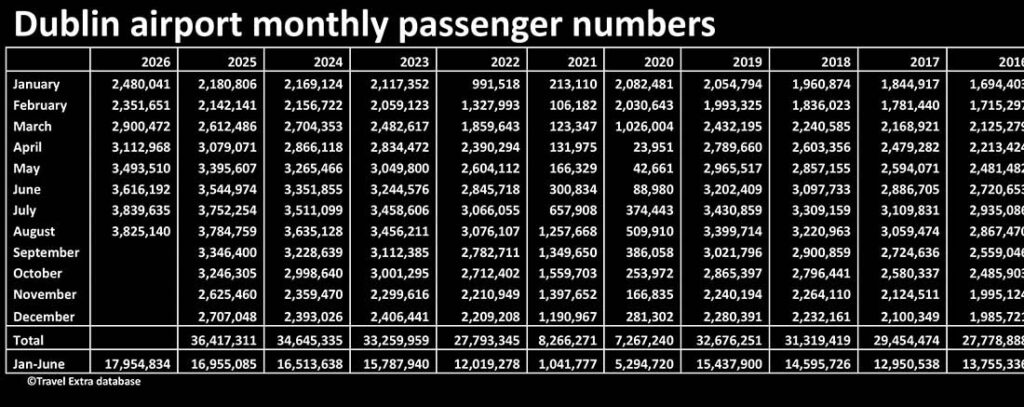
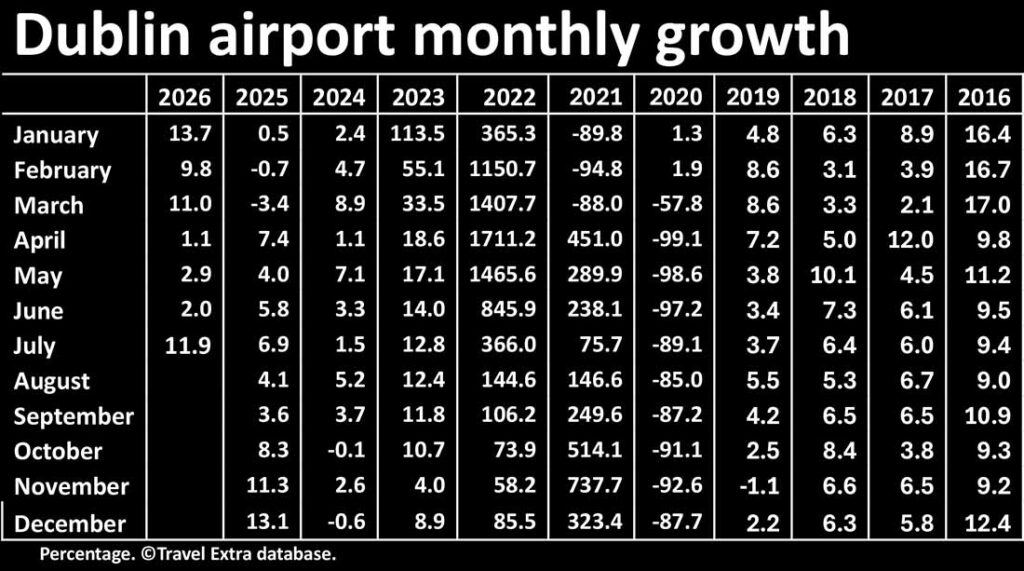
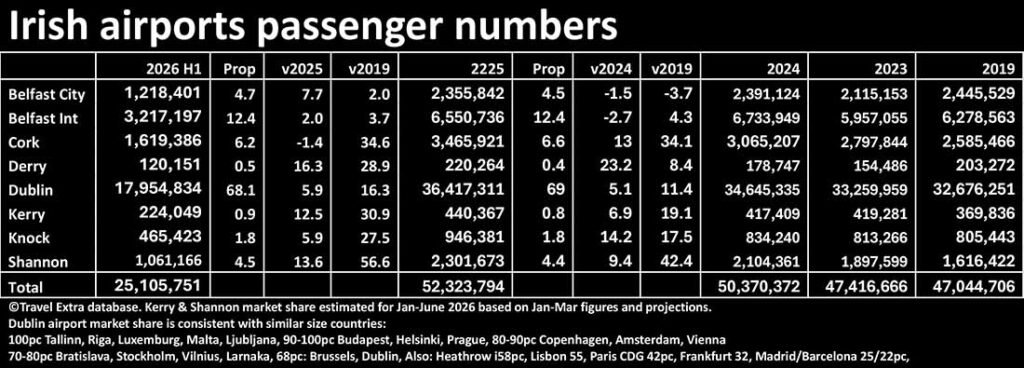
Following an accelerated passage through the Oireachtas, the bill was passed by the Seanad and officially signed by President Catherine Connolly. However, despite the legislation being enacted, the final removal of the cap will not happen immediately due to mandated environmental assessments and highly anticipated high-stakes judicial reviews In he meantime Dublin airport passenger n umbers have surged to 37.4m in the twelve months to June 2026.
The government must follow a mandated, multi-stage process before the cap is lifted, designed to satisfy environmental and legal requirements: An Coimisiún Pleanála has been instructed to conduct required environmental and appropriate assessments. A public consultation process will take place, with a mandatory maximum timeframe of 28 weeks. Following the assessment, the Minister will sign an order to officially amend or remove the planning condition. This wil be followed by an eight-week window will open for legal challenges, allowing for judicial reviews against the decision.
Final Resolution (Early 2027): Assuming no major legal injunctions, the cap is expected to be formally lifted by early 2027.
If that is not complicated enough, the removal of the cap faces significant litigation risks from multiple, conflicting sides. Legal challenges are expected from pressure groups concerned that the clauses which allow the Minister to bypass certain climate obligations, fails to adequately address environmental impacts. Local lobby groups are preparing High Court challenges to fight the potential increase in noise pollution, traffic, and night flights.
On the other side, international carriers continue to push for the cap’s removal to avoid strict enforcement of capacity limits by the EU Court of Justice. From the consumer side, restricting passenger slot allocation naturally limits the supply of seats, causing flight ticket prices to surge significantly for Irish consumers. Delays in passing legislation will force immediate flight capacity cuts on heavily used European and transatlantic holiday routes.
The United States Department of Transportation (DOT) has extended its regulatory review following complaints from major U.S. carriers. If Ireland fails to scrap the cap, the U.S. could retaliate by restricting or suspending Irish airlines’ rights to land in New York or other U.S. cities. Estimates show that forcing Dublin Airport to turn passengers away would cost billions in tourism spending and tax revenue, threatening thousands of national jobs.
The Irish Government aims to completely legislate the passenger cap away. However, aviation groups like Aer Lingus and the International Air Transport Association (IATA) urge that the speed of passing this bill is critical. If the laws are delayed, standard slot planning schedules mean summer airline operations will face devastating cuts long before the legislative changes take effect.
Outdated concerns
The Dublin Airport (Passenger Capacity) Act 2026 grants the Minister for Transport the power to revoke or amend the long standing 32m passenger annual limit that has constrained growth at Ireland’s principal gateway since its imposition under planning conditions in 2007. That limit, rooted in outdated concerns over road traffic around the airport, imposed when the M50 had a lifting barrier at the toll gate and just two lanes in each direction, has long been viewed by airlines as an unlawful barrier to the economic contribution of aviation. Passenger numbers at Dublin Airport reached 36.4m in 2025, already exceeding the capped figure, and the High Court suspension of the limit while referring questions to the Court of Justice of the European Union provided temporary relief. The new Act seeks to place the matter beyond the reach of local planning authorities and to prevent future caps. Implementation, however, remains contingent on further steps that carry substantial legal and commercial risk.
Judicial reviews form the first and most immediate front. Airlines including Ryanair, Aer Lingus and representatives of North American carriers initiated proceedings that led to the High Court referral. Those proceedings have not been extinguished by the passage of legislation. Opponents of unrestricted growth, particularly residents’ groups in Fingal and environmental organisations, retain standing to challenge the Minister’s eventual order. Any order to lift or raise the cap must navigate the requirements of EU environmental law, including the need for proper assessment under the Environmental Impact Assessment Directive and the Habitats Directive. Failure to satisfy those requirements would expose the order to quashing in the High Court or further reference to Luxembourg. The timing of such challenges is critical. Airlines plan capacity for the following summer season many months in advance. Aer Lingus has already confirmed to the Minister that any delay in delivering certainty increases the risk of forced capacity reductions and higher fares for passengers next summer. Officials within the airline have raised parallel concerns about the pace of infrastructure delivery, including new piers and aircraft stands required to accommodate growth once the numerical limit is removed.
No climate dimension
The environmental assessment mandate constitutes the second front. The Act requires that environmental assessments be completed within strict timetables before the Minister can act. An Coimisiún Pleanála and other bodies must evaluate the cumulative effects of increased aircraft movements on noise, air quality, climate and biodiversity.
Climate obligations under national and EU law add further complexity. There is no climate dimension to the cap, no airline is going to park an aircraft in a hangar because Dublin turns them away, but activists are likely to cite Ireland’s binding targets for emissions reduction create tension with aviation growth, even though aviation remains outside the Effort Sharing Regulation and is addressed through the EU Emissions Trading System and the forthcoming Sustainable Aviation Fuel mandates.
7,786 noise complaints from one person
The number of residents who issue noise complaints is small but the number o complaints large. Planning records show that one airport lobbyist has made 7,786 complaints about noise in one year, a daily average of 21, including 4,554 in one month when he lodged an average of 147 complaints each day. Another individual filed 3,435 noise complaints.
Those living under flight paths will argue that higher passenger volumes translate directly into more night movements and greater disturbance. The Voluntary Dwelling Purchase Scheme operated by DAA addresses some of these impacts, yet the scheme itself has deadlines and eligibility criteria that may not satisfy all affected parties. Any perceived shortfall in the assessment process will fuel further litigation and political pressure.
The third front involves the real possibility of United States retaliation directed at Aer Lingus. United States carriers and their trade association Airlines for America have maintained a formal complaint before the Department of Transportation concerning the passenger cap. They contend that the restriction discriminates against transatlantic services and violates the EU US Open Skies Agreement. The Department of Transportation has repeatedly deferred decisions while retaining the threat of countermeasures. Even after the Irish legislation received presidential assent, the American authorities indicated that their posture remains unchanged pending full implementation. Aer Lingus operates a substantial network of North American routes from Dublin and is code share partner to several United States airlines. Retaliatory measures could take the form of restrictions on landing rights, increased scrutiny of code share arrangements or limitations on access to United States airports. Such steps would inflict commercial harm on an airline already navigating higher fuel costs, industrial relations pressures and the need to restore profitability after pandemic losses. Irish officials have been reminded that the Open Skies framework rests on reciprocity. Any perception that Ireland is failing to honour its side of the bargain invites reciprocal action that would damage connectivity, tourism receipts and the broader economy.
Ryanair pauses growth at Dublin
The commercial stakes extend beyond Aer Lingus. Ryanair, the largest operator at Dublin by passenger volume, has repeatedly confirmed that permanent removal of the cap is essential before it will base additional aircraft or open new routes. The airline has already adjusted capacity at regional Irish airports in response to higher airport charges and has directed growth toward markets offering lower costs and clearer regulatory frameworks. daa, the state owned operator of Dublin and Cork airports, has set out multi billion euro investment plans to expand terminal and airside capacity toward 45m passengers annually. Those plans assume the removal of the numerical limit. Uncertainty over the timing of the Minister’s order freezes capital decisions and delays the creation of construction and operational jobs. Tourism Ireland and the Irish Tourism Industry Confederation have quantified the contribution of air connectivity to visitor numbers and expenditure. A prolonged period of constrained capacity at Dublin would redirect long haul traffic to competing European hubs and reduce Ireland’s share of the high yield North American market.
Political dimensions compound the legal and commercial pressures. The Minister for Transport has stated that the environmental assessments will proceed within the statutory timelines and that the cap will be addressed as soon as possible. Local representatives in the Fingal constituency face competing demands from residents seeking protection against noise and from business interests seeking expansion. The Government’s programme committed to abolishing the cap. Delivery of that commitment now rests on the quality of the environmental work and the resilience of the resulting ministerial order against judicial scrutiny. Delay beyond the autumn planning cycle for summer 2027 schedules would force airlines to finalise their programmes under the existing suspended regime, perpetuating the very uncertainty the Act was designed to end.
The historical trajectory of the cap illustrates the difficulty of disentangling aviation policy from land use planning. The original 2007 condition reflected concerns of the time about surface access. Subsequent construction of the second runway, improved motorway links and public transport options have altered the factual matrix.
Concerns about growth
The High Court and the Court of Justice of the European Union have already examined aspects of the slot allocation regime that flowed from the cap. The new legislation attempts to sever the passenger limit from the planning code, yet environmental and climate law continue to supply independent grounds for challenge. Airlines argue that Ireland cannot simultaneously pursue ambitious tourism and foreign direct investment targets while restricting the principal airport that serves those sectors. Opponents respond that unconstrained growth imposes externalities that must be assessed and mitigated before any numerical ceiling is lifted.
Aer Lingus occupies a particularly exposed position. As the flag carrier it depends on Dublin as its main base and on transatlantic routes for a large share of its revenue. Any reduction in available slots or any retaliatory restriction by United States authorities would reduce utilisation of its fleet and weaken its competitive position relative to carriers operating from unrestricted hubs. The airline has confirmed that timing and certainty are critical for network planning. Infrastructure lag, whether in piers, stands or surface access, would compound the difficulty of absorbing additional traffic even after the formal cap is removed. DAA has projected that passenger numbers could reach 40m by 2030 and higher thereafter, but only if planning and regulatory certainty is delivered.
No gain for Shannon
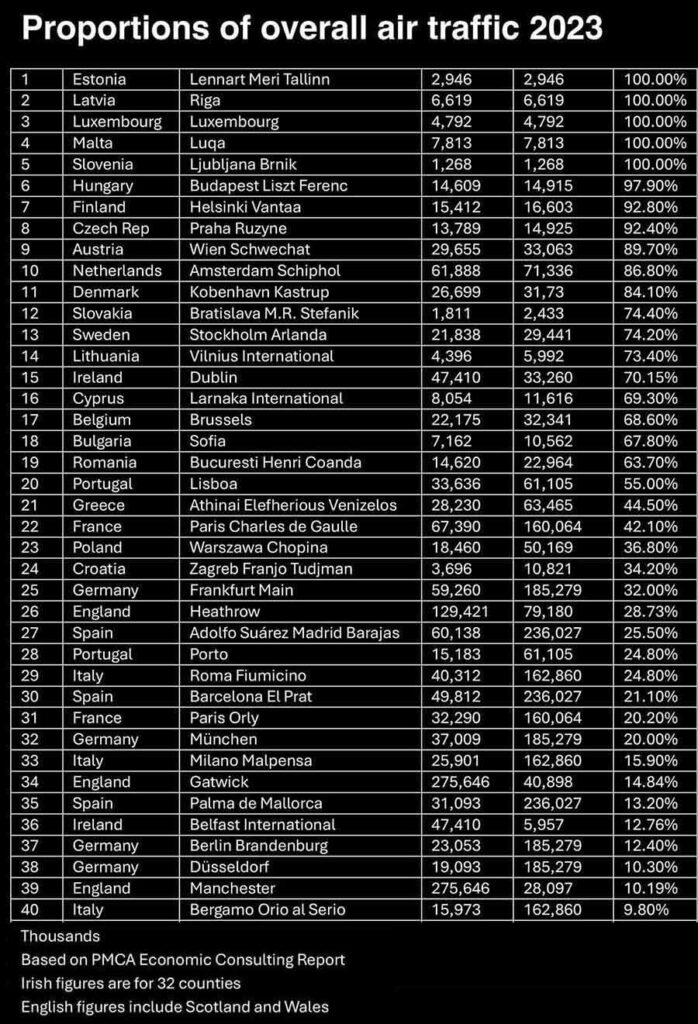
The broader aviation market in Ireland remains sensitive to regulatory signals. Regional airports such as Shannon and Cork have sought to attract additional services and some even saw the cap as an opportunity to do so, or at least platform their local offering, yet the concentration of long haul capacity at Dublin means that constraints at the main hub affect the entire island. The only extra flights to go to Shanno were rugby charters form Paris of fans who were then bussed to Dublin. The scheduled services turned away form Dublin went to Manchester instead. Routes that were forced away or delayed include Rio de Janeiro, Delhi and Cape Town.
United States carriers have indicated that their ability to expand frequencies or introduce new routes depends on the availability of slots and terminal capacity. Any perception that Ireland is an unreliable partner under Open Skies arrangements risks diverting growth to other European gateways. Tourism data already show the importance of North American visitors for higher average spend and longer stays. A contraction in that segment would reduce revenue for hotels, attractions and transport operators across the country.
Residual challenges
What do do? Resolution of the three fronts will determine whether the Act achieves its stated purpose. Judicial review proceedings must be managed so that any residual challenges are determined swiftly. The environmental assessment must be comprehensive enough to withstand scrutiny while remaining within the statutory timetable. Diplomatic engagement with United States authorities must demonstrate that the legislative change will be followed by practical implementation free of further artificial constraints. Until those conditions are met the passenger cap, although formally placed under ministerial control, continues to cast a shadow over capacity planning, investment decisions and international aviation relations. The legislation has removed one layer of the problem. The remaining layers of legal process, environmental process and international reciprocity still require careful navigation if Dublin Airport is to realise the growth that airlines, tourism bodies and the Government itself have identified as essential to Ireland’s economic performance.
The Irish Government aims to completely legislate the passenger cap away. However, aviation groups like Aer Lingus and the International Air Transport Association (IATA) urge that the speed of passing this bill is critical. If the laws are delayed, standard slot planning schedules mean summer airline operations will face devastating cuts long before the legislative changes take effect
Dante would recognise the scenario. Et inde exivimus ad videndum denuo sidera.