- Ireland has 4,988 remaining active pubs
- Drinks Industry Group of Ireland shows that 2,205 pubs closed since 2005
- Loss equates to one in four
- Average 110 closures each year
Miltown Malbay is a mid-sized town along the wild Atlantic Way, one of hundreds of similar size and demographic. It explodes into life every year on the second week of July for the World renowned Willie Clancy music festival. The place is strong and hospitality is something that needs to be cute far.
And therein lies the problem. Miltown Malbay tourist season, in times gone by at least, was just ten days, not even the six or seven weeks common along the western seaboard of Ireland’s beautiful, and well touristed but fatally confined by seasonal locations.
In tiny Murrihy’s, run by an affable retired school teacher, there was barely enough room for a man to fall flat on his face between the wall and the counter. Many of these pubs still had the old sign indicating they were a licensed grocer. Some still sold tea and packets of Jacob’s Marietta biscuits. All but a tiny number of them were doomed.
When the festival was established in 1973, there were 42 pubs in Miltown Malbay, one for every 16 residents in the town. They were full of music during the summer, and full of character in the winter. Some of the names are over the door, such as Jimmy Marrinan’s, the singing pub during Willie Week. There were six on the Ennis road and, through the town, four called Cleary’s, including the Blonde’s, famous for its sessions and known by no other name among the musical fraternity. Proper to the global financial recession 22 were still in operation. Now there are eleven, not bad for a population of 921: still under family names Clancy., Cleary (The Blonde’s), Cogan, Friel, Hillery, Michael A (McAtee), Mitchel and O’Loughlin.
How the licenses in Ireland were dispensed back in 1833 is still a bit of a mystery. Small provincial towns ended up with a considerable over supply on public houses, some of the larger cities less so.
The licensing laws were eccentric. A market town or a dock district in a major city such as Limerick, Waterford, and Dublin had early houses that opened at 7 am for the workers coming off the night shift. The law still applies, even when the docks were passed their cell by date.
Saint Patrick’s Day was a no-no from 1902 until 1963, Good Friday from 1927 to 2018. To get urban workers back to their offices and factories, urban pubs were obliged to close for an hour after lunch, still recalled in popular culture as “holy hour,” a system that operated from 1927 until 1988 for weekdays, and a Sunday afternoon variation lasted until 2000.
The ring of pubs around a city once had special status as bona fide pubs, which could stay open later for an hour for genuine (bona fide) travellers who could produce evidence, like an ESB bill to an address five miles distant. It meant that professional dinkers of whom there were many in the media, would transport themselves to a bona fide pub for an extra hour of imbibery. This madcap system operated from 1878 until 1960,, Many are still referenced as “bona fides,” the Boot Inn, Lamb Doyle’s, the Deadman’s, the Red Cow.
Bacchanalian tapestry
All of this had the combined effect of creating a bacchanalian tapestry of public houses throughout Ireland, each with its own character, which served as hospitality venues, places to meet and socialise, places to sit on a barstool and read a book, and often places to make music and merriment, by volunteer unpaid musicians who gathered to swap tunes.
This is the cultural cornucopia that has been inherited by the hospitality sector in Ireland, as the pub is closed and the rush to dispensers of caffeine rather than alcohol, takes over our rural towns, the unique culture menagerie described by James Joyce through sensory, hyper-realistic details, blending mundane domestic actions of the barman with tactile impressions of food, wood, and drink: “spaton sawdust, sweetish warmish cigarettesmoke, reek of plug, spilt beer, men’s beery piss, the stale of ferment.” And now they are closing in droves.
It is of more than passing into interest to the drinks industry, who have commissioned a series of reports on the demise of the rural pub. The latest shows a decline of 25pc since 2005. There is nothing surprising in the data, the bigger question is what impact this is having on the fabric of Irish Society.
Drinking alcohol is bad for individuals, for social order, and puts immense pressure on our overburden health system. From that perspective the closure of pubs is a good idea. From the other perspective, pubs are an inherent part of our culture, and a nursery for creativity, in music, poetry, and other art forms.
Collapsing numbers
The collapse in the number of public houses across Ireland stands as a measurable outcome of prolonged economic and fiscal pressures on the on-trade sector.
Data compiled by Anthony Foley, Associate Professor Emeritus of Economics at Dublin City University Business School, for the Drinks Industry Group of Ireland shows that 2,205 premises ceased trading between 2005 and the most recent available period, equating to one in four of the public houses operating at the start of that interval. Publican licences declined from 8,617 to approximately 6,412, representing an average of 110 closures each year. All twenty-six counties recorded decreases, with the steepest proportional falls concentrated in rural areas.
Limerick registered the highest rate of decline at 37pc, followed by Offaly at 34pc, Cork at 33pc, Roscommon at 32pc, Tipperary at 32pc, Laois at 31pc, Longford at 30pc and Westmeath at 30pc. Dublin experienced the lowest reduction at 1pc, with Wicklow at 9pc and Meath at 11pc.
Closures in the most recent year numbered 86, rising from 65 in the preceding year but remaining below the 117 recorded two years earlier. These figures derive from analysis of the Revenue Commissioners register of alcohol licences and confirm a consistent pattern of contraction that has persisted through successive economic cycles.
DIGI’s dilemma
The Drinks Industry Group of Ireland has identified high excise duty as a primary contributor to the commercial difficulties facing publicans. Ireland maintains the second-highest overall alcohol excise rates in the European Union and the United Kingdom combined.
Excise on a pint of beer purchased in a public house stands at 55 cent, compared with 5 cent in Spain and Germany. A 70 cl bottle of whiskey carries €11.92 in excise, more than half the typical retail price, against €2.69 in Spain and €3.65 in Germany. Wine attracts the second-highest duty across the EU and UK, while beer and spirits rank third. France levies just 1 cent on a standard glass of wine. Foley observed that the results demonstrate Ireland’s elevated level of alcohol excise tax relative to the large majority of other countries in 2026.
This fiscal burden operates alongside rising operational costs including energy, insurance, wages and supplier prices. Public houses function on narrow margins, and the cumulative effect of state-imposed costs has reduced viability, particularly for smaller family-owned premises that form the core of rural community life.
Alcohol consumption in Ireland has fallen ffromm the worryingly high levels of the Celtic Tiger to average European Union levels and continues to trend downward, removing any residual public-health justification for maintaining rates so far above those of peer states.
Reduction remedy: 10pc
The Drinks Industry Group of Ireland has therefore called for a 10pc reduction in excise duty in the forthcoming Budget as an immediate measure to improve commercial sustainability.
Reactions from representative bodies reinforce this assessment. The Vintners Federation of Ireland, which represents publicans outside the greater Dublin area, confirmed that more than 2,200 premises have closed since 2005 and warned that further losses remain probable without targeted intervention.
The Federation has proposed an On-Trade Sustainability Scheme delivering a tax credit linked to verified purchases of draught products, capped at €20,000 per public house per annum, at an estimated annual cost of €75m.
Such a measure would return a portion of excise on draught beer and cider directly to on-trade operators and concentrate support on smaller traditional premises.
The Licensed Vintners Association, representing the Dublin region and acting as secretariat for the Drinks Industry Group of Ireland, has similarly stressed that more than 100 public houses close each year in large part because of costs imposed by the State. Without action, up to 1,000 further closures are projected over the coming decade.
Four phases of failure
Foley’s analysis divides the two-decade span into distinct phases. Average annual closures reached 200 between 2005 and 2010, fell to 87 between 2010 and 2015, dropped further to 11 between 2015 and 2019, then rose again to 128 between 2019 and 2024.
The recent acceleration coincides with post-pandemic cost inflation and shifting consumer patterns, including greater demand for low-alcohol and alcohol-free products and altered socialising habits. Rural counties have absorbed the greater share of losses because lower population densities limit the customer base available to offset fixed costs.
Once a public house closes it rarely reopens, permanently removing a local employer, a venue for community events and an element of the tourism offering that Ireland markets internationally.
The economic contribution of the wider hospitality sector provides additional context. Pubs, restaurants and hotels together employ more than 207,000 people, equivalent to 8.3pc of total employment.
Many of these businesses operate as small and medium enterprises that rely on local trade and seasonal visitor numbers. Reduced inbound tourism and external trade uncertainties compound the pressure. The high excise regime also affects associated industries including breweries, distilleries and off-licences by elevating the final consumer price and constraining volume growth.
Comparative European data illustrate the competitive disadvantage. Consumers in Ireland pay eleven times more duty on a pint of beer than counterparts in Spain or Germany.
This differential feeds directly into the price of a drink on the premises and influences both local patronage and the attractiveness of Ireland as a destination for visitors seeking traditional public-house experiences. The Drinks Industry Group of Ireland argues that the Government must accept responsibility for the consequences of this policy stance and adjust rates to levels more consistent with European norms and with observed domestic consumption trends.
Policy responses to date have focused primarily on temporary VAT adjustments for food-led operations, leaving traditional wet-trade public houses without equivalent relief. The Vintners Federation of Ireland has described such measures as insufficient for the segment of the trade most exposed to volume declines.
A draught rebate scheme would, according to the Federation, deliver modest but meaningful support: a typical rural public house selling around 245 kegs annually could receive approximately €4,700, helping to offset wage and utility increases while sustaining opening hours. Implementation through the existing VAT system would minimise administrative complexity.
600 more closures on the way
Looking forward, Foley projects that an optimistic scenario without policy change would still produce about 600 additional closures over the next decade, while more adverse conditions could raise the figure to 1,000.
These projections rest on continuation of current cost structures, demographic patterns and consumption trends. Rural communities face the greatest risk of losing their last remaining public house, with attendant effects on social cohesion, local employment and the character of small towns and villages.
The analytical evidence assembled by Foley and endorsed by the Drinks Industry Group of Ireland, the Vintners Federation of Ireland and the Licensed Vintners Association points to excise duty as a controllable lever available to Government. A calibrated reduction would lower the cost base for operators, improve price competitiveness for consumers and tourists, and provide breathing space for family-owned businesses to adapt to longer-term shifts in demand. Retention of the present high rates, by contrast, is projected to accelerate the established pattern of permanent closures already quantified over the twenty-year period.
The full study by Anthony Foley supplies county-level detail and longitudinal series that permit precise tracking of the decline. Its findings have been accepted by industry representatives as an objective foundation for policy discussion.
The reaction from the Vintners Federation of Ireland and the Licensed Vintners Association centres on the practical consequences for members and the communities they serve. Both organisations maintain that the combination of elevated excise, rising input costs and falling volumes has pushed a substantial proportion of the traditional public-house stock beyond the threshold of commercial viability.
The data leave little room for alternative interpretations of the scale of the contraction or of the contribution made by fiscal policy to that outcome.
Last orders for many
One of the most eccentric of the Miltown Malbay pubs still, thankfully, plies its trade successfully. As if it was born of the trend across America for creating wannabe speakeasies. with secret doors and often with passcodes that are available only on social media, it is as incognito as a character in a spy novel.
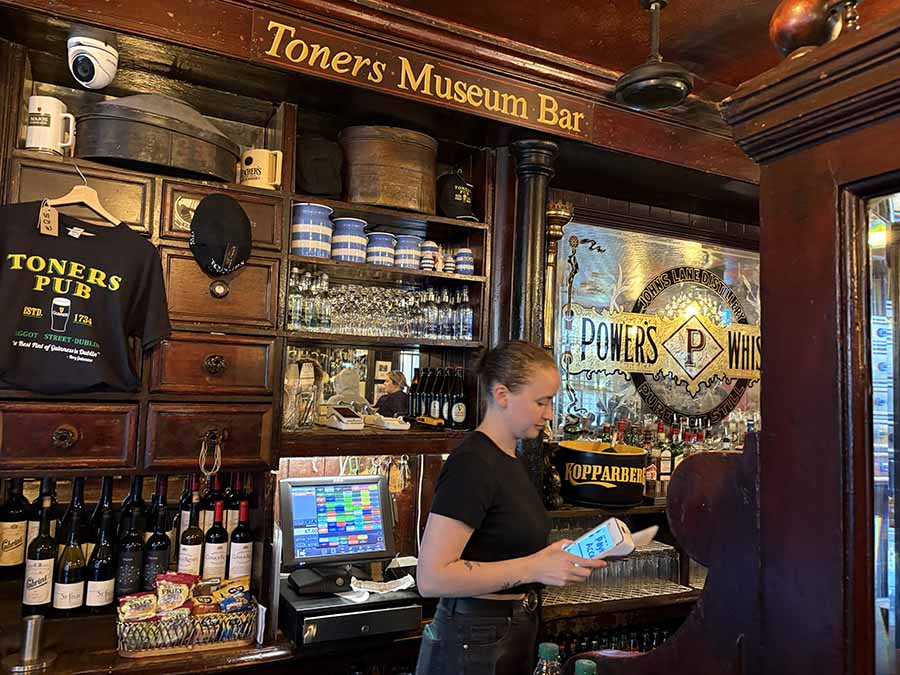
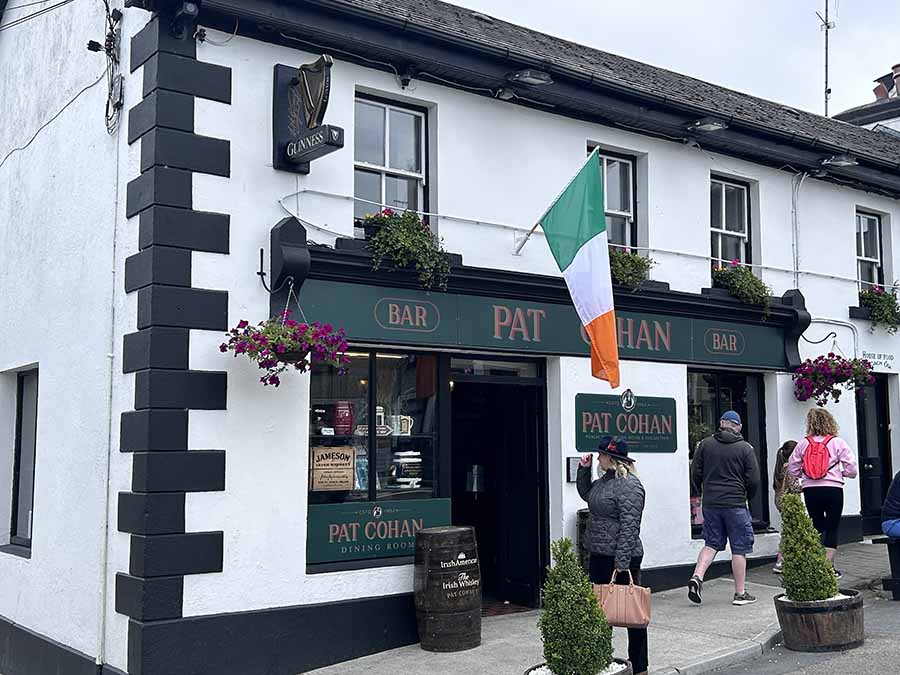
Friels’ does not have its own name over the door, The name board says Lynch’s, from three generations ago a Friel married into the Lynch family. Inside the picture-postcard doorway is one of the most famous music venues and one of the most authentic experiences that an international are local tourist could ever wish for. If Fáilte Ireland was to devise a visitor attraction something like this, it would take a couple of years of consultancy studies and several million euro in grants. It is everything that the Irish public house is famous far, worthy of Pat Cohan’s Bar in the Quiet Man amongst dozens of old movies (the famous pub scene in Sergio Leone’s 1971 spaghetti western A Fistful of Dynamite was filmed in another authentic relic, Toner’s of Baggot Street), or a visit from Amy Adams.
The great architectural historian Marice Craig once wrote that the country pub and licensed Grocer is one of only three Irish contributions to the canon of distinctive world architectural creations (the others, seeing as you asked, are the round tower and the handball alley).
We need to cherish this dying heritage, even if it means defiance of the bureaucrats, before it is lost forever.