A Michael O’Leary apology is a rare event. For four decades he has been unfazed by criticism, outrage and even a pie attack. So why now?There are those who say that his remarks comparing his high fare competitors to rapists went too far. The world in which he dwells, a locker-room turned boardroom, does not pay any heed to insults like that. His competitors, Sean Doyle, Ben Smith and Carsten Spohr were clearly never going to sue him for being described as rapists, because it was just Michael.
But it was not only just Michael this time. The remarks, made to journalists outside Ryanair’s annual general meeting in Dublin earlier this month, referred to Aer Lingus, Deutsche Lufthansa and British Airways as high-fare rapists. Passengers, he said, would abandon those carriers for Ryanair’s lower prices. When pressed on whether the language was appropriate, he confirmed it was absolutely so. He further revealed that he would happily offend those airlines on a regular basis.
The Dublin Rape Crisis Centre responded at once, confirming that its helpline had received calls from survivors left upset and distressed. Irish Taoiseach Micheál Martin and others added their voices. O’Leary initially rejected any notion that he had trivialised the crime, writing that rape was a heinous offence and that his words could not possibly diminish it. He declined training offered by the centre. Ten days later the position shifted. In a video on 18 September 2026 he confirmed conversations with family and friends inside and outside the company had led him to realise the word used so carelessly had caused considerable upset and offence, especially to victims and survivors. He apologised sincerely and unreservedly, stating it would not happen again and that he would try to learn from the mistake.
The O’Leary approach, like his remarks about rape, has itself been trivialised. At its height it was regarded as crude attention seeking or even outrage seeking. He characterised it as much itself in an interview with Travel Extra in 2009: “My dog and pony show, which irritates twice as many people as it amuses, generates lots of noise. Noise spells publicity. I don’t have to spend money on advertising. Free seats. Take out the seats. They will stand. Charge for the toilets. One pilot aircraft. We make our living from it.”
Charging for toilets
The success of this strategy could be measured in the number of news articles generated by his comments:
- Feb 25 2009: Closing check-in desks 5,000
- June 1 2009: Charging for the toilet 3,800
- July 27 2009: Bad news turned to good news 4,500
- Dec 14 2009: Being order cancelled 3,700
- Feb 8 2009: Maintenance in Prestwick 3,200
They included gems such as: if drones are good enough for the US military they are good enough for us, that a third of accidents are down to pilot error and that statistically it is best not to have them.
or
The second pilot is only there to make sure the first fella does not fall asleep and knock over one of the computer controls. In 25 years with over about 10m flights, the airline had one pilot who suffered a heart attack in flight and he landed the plane. On shorter trips flight attendants could do the job as the computer does most of the flying now.
There was an entire book of Mick quotes compiled by a Dublin writer and Travel Extra contributor Paul Kilduff. They included an extraordinary sexualised reference at a press conference in Dusseldorf. In those days he got away with it. Not any more.
Bookings dividend
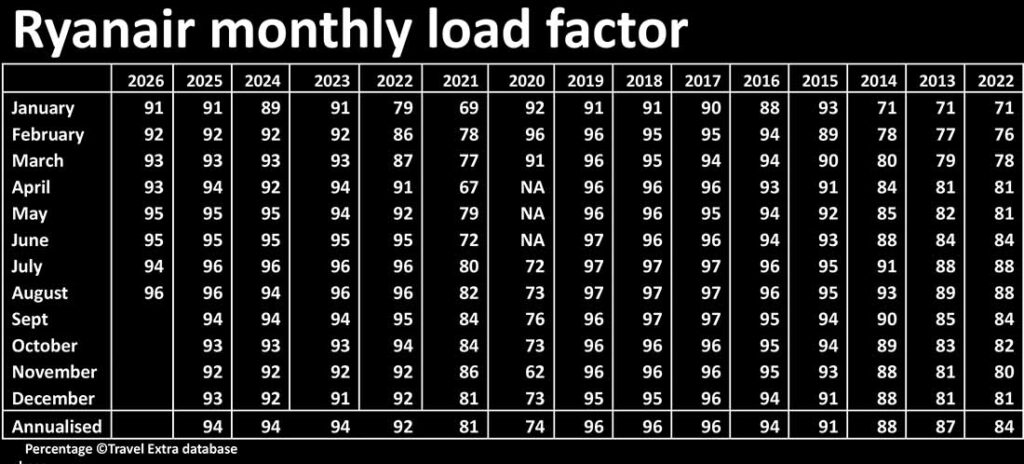
Beyond the flippancy, it was always about the deal. The pattern was consistent across years of expansion. Provocation produced free coverage that substituted for paid advertising. The more extreme the suggestion the greater the volume of column inches. Standing-room only cabins, coin-operated toilets, single-pilot operations and the removal of seats all entered the public conversation because O’Leary placed them there. Regulators and competitors complained. Passengers booked seats. The airline grew through successive crises. After the events of 11 September 2001 capacity was added while others retrenched.
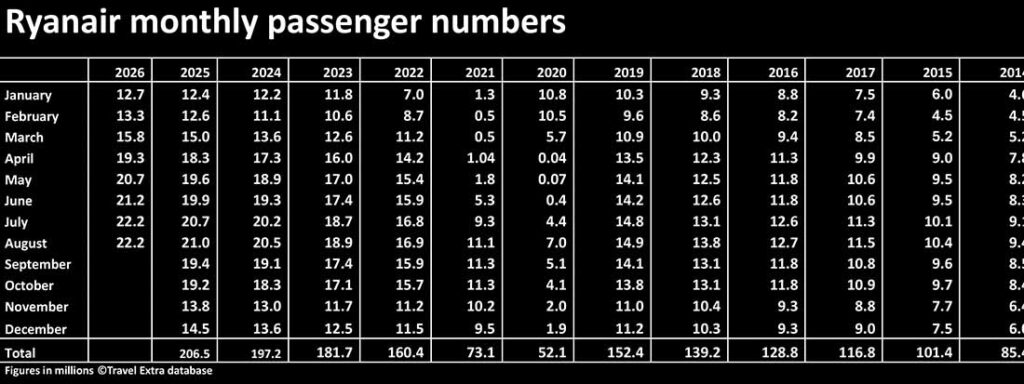
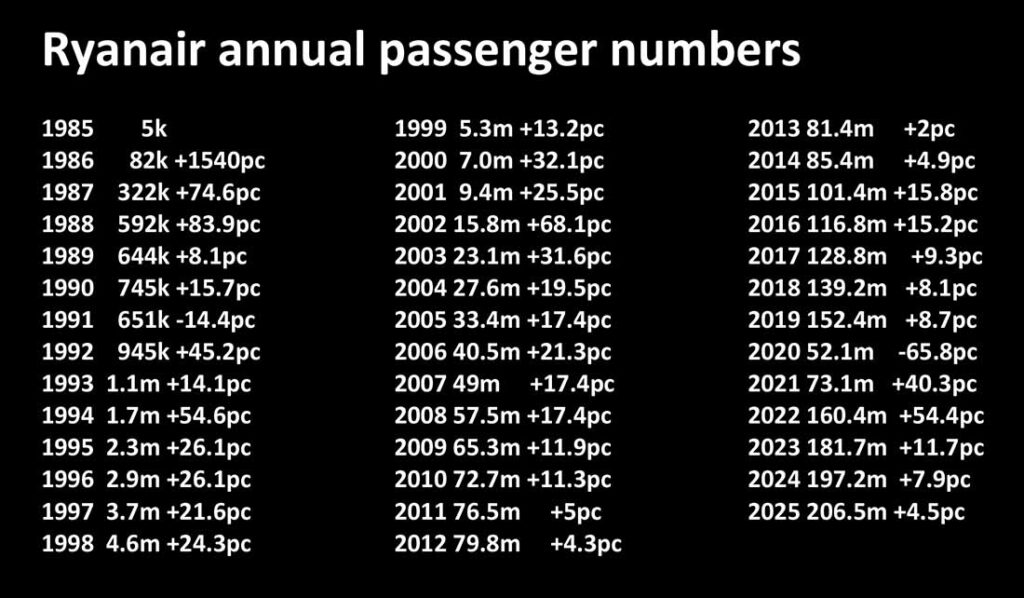
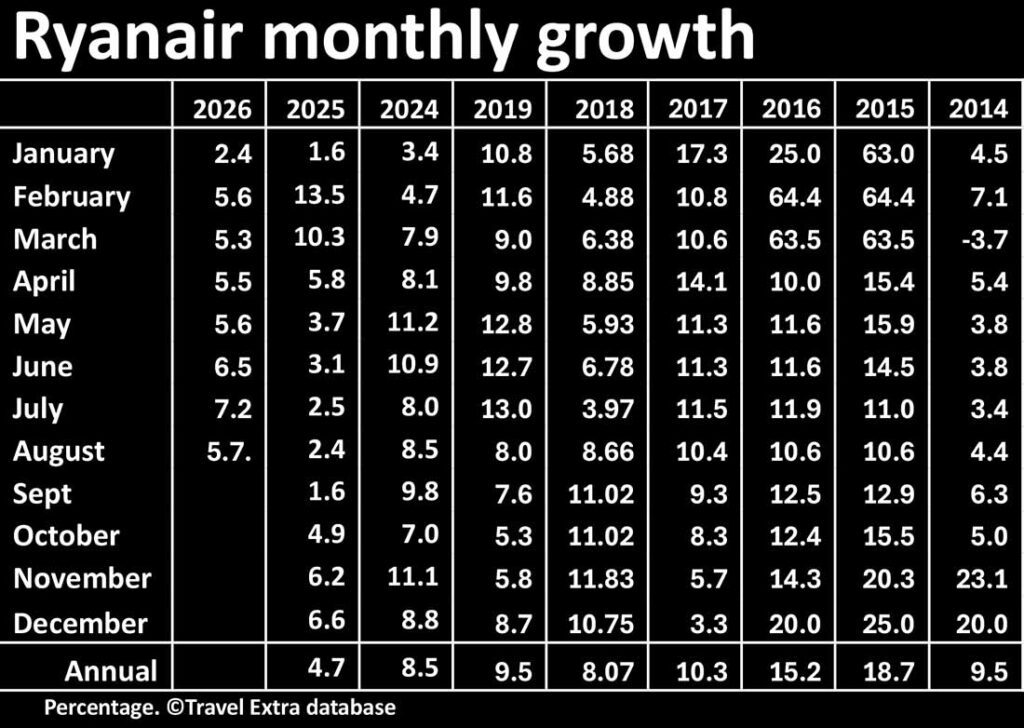
During the global financial recession the same pattern held. In the pandemic years growth continued by factors of 30pc to 100pc in successive periods. Each time the publicity machine kept Ryanair in the public mind as the low-fare alternative. The cost of the strategy was measured in temporary irritation rather than lasting damage to brand or regulation. That calculus has changed in 2026.
Opportunity knocks
Michael O’Leary has another reason to be contrite. By his reckoning the opportunity about to be presented to Ryanair may be the biggest in its recent history, as big as 9-11, or the Global Financial Recession, or pandemic, all of which crises he used to grow the airline by factors between 30pc and 100pc.
A failure by AirBaltic and a wobble by Wizz or a combination of the two will bring him back into the battlefields of Eastern Europe, with consumers, media, and, most important of all, regulators to deal with. The end of the Ukraine war brings more opportunities. Michael has to be on his behaviour to see the deal through. And, from where he is looking, it is all about the deal.
A lot changed in the week between the remark and the apology. AirBaltic filed for Chapter 11 protection in the United States on 14 September 2026. The Latvian carrier secured a commitment for €350m in debtor-in-possession financing and set an expected completion around June 2027. Its fleet is scheduled to shrink by one third, from 54 aircraft to 36 by the end of 2026. Ryanair moved within days.
On 17 September the airline confirmed a conditional five-year investment plan across Estonia, Latvia and Lithuania valued at approximately €1.45bn. The proposal would raise annual seats to 11m, increase based aircraft from seven to 16 and create thousands of jobs.
Capacity in Estonia and Lithuania is being cut by 25pc this winter, removing 550,000 seats, while Latvia receives growth of 6pc or 40,000 additional seats with two based aircraft and 16 routes. The contrast is deliberate. Lower airport charges in Latvia produce expansion; higher charges elsewhere produce contraction.
Low costs, high rewards
The message to governments and airport operators is clear. Competitive costs attract aircraft, routes, passengers and employment. Excessive costs drive them away.
Wizz Air has confirmed limited interest in the AirBaltic situation. Its chief executive stated that Latvia sits at the periphery of the European Union with a Russian border and that current geopolitics limit any concept of expansion there. Other carriers face pressure from high fuel prices linked to wider regional tensions including the Iran conflict.
Ryanair, hedged more favourably in some periods, positions itself to fill gaps. Eastern European markets in Poland, Hungary, Albania and the wider region already form core growth territories for both Ryanair and Wizz. Any sustained wobble by the latter would open further slots, bases and traffic rights. The end of hostilities in Ukraine would reopen routes, airports and demand across a corridor long constrained by conflict.
Reconstruction traffic, tourism and business travel would follow. Ryanair’s long-term target of 300m annual passengers by 2034, supported by the arrival of Boeing 737 MAX 10 aircraft from 2027, requires precisely such incremental capacity. The Baltic proposal forms one piece of that larger architecture.
In previous crises the publicity strategy operated without friction against the regulatory environment. Authorities focused on safety, slots and competition while the noise generated free awareness. The present environment differs. Consumer protection bodies, equality and human rights commissions, and national governments now respond more rapidly to language that causes offence. Media cycles move faster. Social platforms amplify survivor voices.
An apology that once would have been dismissed as weakness now functions as damage limitation required to keep political and regulatory channels open. Airport charge negotiations in the Baltics depend on goodwill from national administrations. Traffic rights and base approvals elsewhere require the same. A prolonged dispute over tone risks complicating those discussions. The deal, as O’Leary sees it, takes priority.
Provoke and win
The record shows that provocation equates to opportunity. When growth was constrained the volume of comments rose. When expansion routes opened the same comments continued but the underlying commercial logic remained dominant.
The current apology coincides with a concrete commercial opening of a scale comparable to earlier systemic shocks. The language that once substituted for advertising expenditure now carries a potential cost in regulatory friction precisely when regulatory cooperation is most useful. Consumers in Eastern Europe respond to price. Media still report the conflict. Regulators hold the keys to airport access and route authority. Balancing those three constituencies requires a different calibration of public statements than the one that served Ryanair through the first two decades of the century.
O’Leary’s career has been defined by a readiness to test the boundaries of acceptable speech in service of commercial ends.
Publicity equalled free seats sold. Free seats sold equalled market share taken from higher-cost rivals. The rape comparison of September 2026 followed the same logic until external pressure and internal counsel altered the calculation. The speed of the reversal, ten days from defiant letter to video apology, indicates that the commercial stakes in the Baltic region and beyond outweighed the short-term cost of appearing to retreat.
The Dublin Rape Crisis Centre welcomed the apology while expressing the hope that it would promote greater public understanding of the impact language can have. That hope sits alongside Ryanair’s operational reality. Aircraft must be based, slots secured and charges negotiated. Behaviour that complicates those processes is now more expensive than it once was.
Contested space
Eastern Europe remains a contested space for low-cost carriers. AirBaltic’s restructuring creates immediate capacity gaps that Ryanair is prepared to fill on condition that access costs fall. Wizz Air’s caution about the Russian border leaves room for a competitor willing to accept higher political risk in return for growth. The end of the Ukraine war, whenever it arrives, would multiply those opportunities across secondary airports and secondary cities.
Ryanair’s fleet plan, with hundreds of new MAX aircraft arriving from 2027, is sized for exactly that expansion.
The apology of 18 September 2026 clears one potential obstacle from the path. Whether it marks a lasting change in the public style of the chief executive or a tactical pause remains to be tested by the next opportunity for headline-generating remarks. For the moment the priority is the deal.
A Michael O’Leary apology is a rare event. For four decades he has been unfazed by criticism, outrage and even a pie attack. So why now?There are those who say that his remarks comparing his high fare competitors to rapists went too far. The world in which he dwells, a locker-room turned boardroom, does not pay any heed to insults like that. His competitors, Sean Doyle, Ben Smith and Carsten Spohr were clearly never going to sue him for being described as rapists, because it was just Michael.
But it was not only just Michael this time. The remarks, made to journalists outside Ryanair’s annual general meeting in Dublin earlier this month, referred to Aer Lingus, Deutsche Lufthansa and British Airways as high-fare rapists. Passengers, he said, would abandon those carriers for Ryanair’s lower prices. When pressed on whether the language was appropriate, he confirmed it was absolutely so. He further revealed that he would happily offend those airlines on a regular basis.
The Dublin Rape Crisis Centre responded at once, confirming that its helpline had received calls from survivors left upset and distressed. Irish Taoiseach Micheál Martin and others added their voices. O’Leary initially rejected any notion that he had trivialised the crime, writing that rape was a heinous offence and that his words could not possibly diminish it.
He declined training offered by the centre. Ten days later the position shifted. In a video on 18 September 2026 he confirmed conversations with family and friends inside and outside the company had led him to realise the word used so carelessly had caused considerable upset and offence, especially to victims and survivors. He apologised sincerely and unreservedly, stating it would not happen again and that he would try to learn from the mistake.
The serious side
The O’Leary approach, like his remarks about rape, have themselves been trivialised. At its height it was regarded as crude attention seeking or even outrage seeking. He characterised it as much itself in an interview with Travel Extra in 2009: My dog and pony show, which irritates twice as many people as it amuses, generates lots of noise. Noise spells publicity. I don’t have to spend money on advertising. Free seats. Take out the seats. They will stand. Charge for the toilets. One pilot aircraft. We make our living from it.
The success of this strategy could be measured in the number of news articles generated by his comments on 25 February 2009 regarding closing check-in desks which reached 5,000, on 1 June 2009 concerning charging for the toilet which reached 3,800, on 27 July 2009 about bad news turned to good news which reached 4,500, on 14 December 2009 about being order cancelled which reached 3,700 and on 8 February 2009 regarding maintenance in Prestwick which reached 3,200. They included gems such as the observation that if drones are good enough for the US military they are good enough for us and that a third of accidents are down to pilot error so statistically it is best not to have them.
The second pilot is only there to make sure the first fella does not fall asleep and knock over one of the computer controls. In 25 years with over about 10m flights the airline had one pilot who suffered a heart attack in flight and he landed the plane. On shorter trips flight attendants could do the job as the computer does most of the flying now. There was an entire book of Mick quotes compiled by a Dublin writer and Travel Extra contributor Paul Kilduff. They included an extraordinary sexualised reference at a press conference in Dusseldorf. In those days he got away with it. Not any more.
The pattern held across successive cycles of expansion. Provocation produced free coverage that substituted for paid advertising. Extreme suggestions generated greater volumes of column inches. Standing-room only cabins, coin-operated toilets, single-pilot operations and the removal of seats all entered the public conversation because O’Leary placed them there. Regulators and competitors complained while passengers booked seats.
The airline grew through successive crises. After the events of 11 September 2001 capacity was added while others retrenched. During the global financial recession the same pattern held. In the pandemic years growth continued by factors of 30pc to 100pc in successive periods. Each time the publicity machine kept Ryanair in the public mind as the low-fare alternative. The cost of the strategy was measured in temporary irritation rather than lasting damage to brand or regulation. That calculus has changed in 2026.
Act of contrition
Michael O’Leary has another reason to be contrite. By his reckoning the opportunity about to be presented to Ryanair may be the biggest in its recent history, as big as 9-11, or the Global Financial Recession, or pandemic, all of which crises he used to grow the airline by factors between 30pc and 100pc. A failure by AirBaltic and a wobble by Wizz or a combination of the two will bring him back into the battlefields of Eastern Europe, with consumers, media, and, most important of all, regulators to deal with. The end of the Ukraine war brings more opportunities. Michael has to be on his behaviour to see the deal through. And, from where he is looking, it is all about the deal.
AirBaltic filed for Chapter 11 protection in the United States on 14 September 2026. The Latvian carrier secured a commitment for €350m in debtor-in-possession financing and set an expected completion around June 2027. Its fleet is scheduled to shrink by one third from 54 aircraft to 36 by the end of 2026. Ryanair moved within days. On 17 September the airline confirmed a conditional five-year investment plan across Estonia, Latvia and Lithuania valued at approximately €1.
45bn. The proposal would raise annual seats to 11m, increase based aircraft from seven to 16 and create thousands of jobs. Capacity in Estonia and Lithuania is being cut by 25pc this winter, removing 550,000 seats, while Latvia receives growth of 6pc or 40,000 additional seats with two based aircraft and 16 routes.
The contrast is deliberate. Lower airport charges in Latvia produce expansion while higher charges elsewhere produce contraction. The message to governments and airport operators is clear. Competitive costs attract aircraft, routes, passengers and employment. Excessive costs drive them away.
Wizz wobble
Wizz Air has confirmed limited interest in the AirBaltic situation. Its chief executive stated that Latvia sits at the periphery of the European Union with a Russian border and that current geopolitics limit any concept of expansion there. Other carriers face pressure from high fuel prices linked to wider regional tensions. Ryanair positions itself to fill gaps.
Eastern European markets in Poland, Hungary, Albania and the wider region already form core growth territories for both Ryanair and Wizz. Any sustained wobble by the latter would open further slots, bases and traffic rights.
The end of hostilities in Ukraine would reopen routes, airports and demand across a corridor long constrained by conflict. Reconstruction traffic, tourism and business travel would follow. Ryanair’s long-term target of 300m annual passengers by 2034, supported by the arrival of Boeing 737 MAX 10 aircraft from 2027, requires precisely such incremental capacity. The Baltic proposal forms one piece of that larger architecture.
In previous crises the publicity strategy operated without friction against the regulatory environment. Authorities focused on safety, slots and competition while