
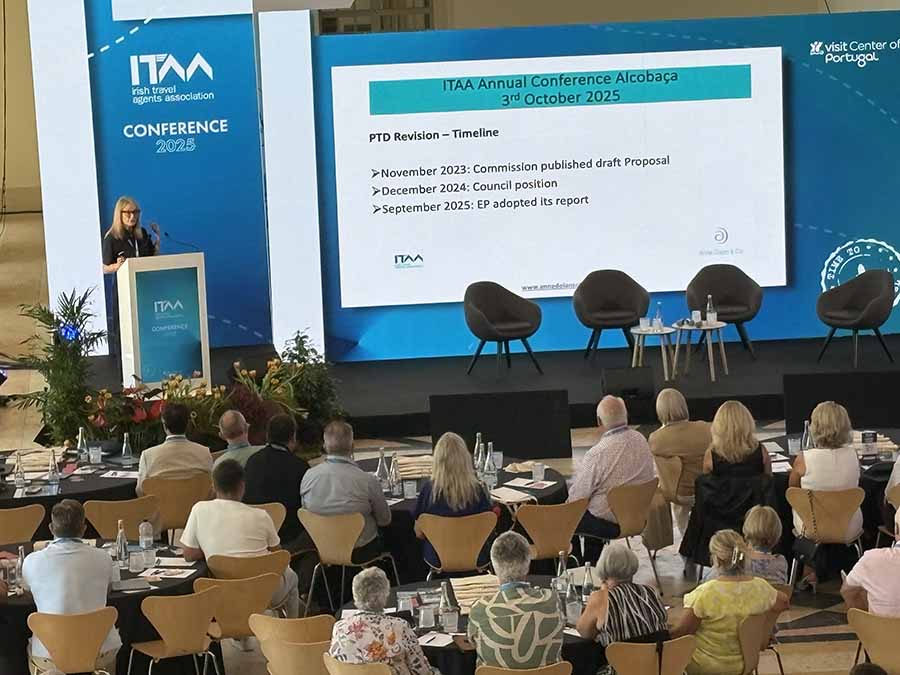
Ann Dolan
Two major pieces of EU legislation are now under revision: the Package Travel Directive and Passenger Rights Regulation 261/2004, with both processes currently in the negotiation phase between EU institutions. Key proposed changes to the Package Travel Directive include a potential cap on customer prepayments, the formalisation of refund credit notes, strengthened organiser redress against suppliers, and the possible removal of Linked Travel Arrangements. The revisions are informed by industry experiences during the collapse of Thomas Cook and the COVID-19 pandemic.
Ann Dolan, Legal Officer of the ITAA, told the annual conference of the Irish Travel Agents Association in Alcobaca in Portugal that the EU Council opposes a cap on prepayments, while the European Parliament favours letting member states decide individually, a position the ITAA opposes to avoid market fragmentation. She noted the legislative process has moved to the ‘trilogue’ negotiation stage, with a final directive possible by late 2026, followed by a standard 24-month transposition period for national implementation.
Regarding Passenger Rights Regulation 261, the update includes a parallel ‘Enforcement Regulation’ and a new Multimodal Travel proposal covering journeys using multiple transport modes under a single contract. Proposed enhancements include bans on hand luggage fees, stricter rules for delays, and improved reimbursement processes. Dolan indicated that reaching agreement on passenger rights is more complex and may take longer than finalising the Package Travel Directive.
Dolan detailed the day-to-day function of the ITAA’s legal information service, which assists members with a wide range of issues. These include disputes over cancellation charges, missed connections, Small Claims Court cases, employment law matters like contract drafting and dismissals, and ensuring compliance with terms and conditions. The service also provides templates and advice on incorporating supplier terms into customer contracts.
The legal officer concluded by stressing the importance of alignment between the two legislative revisions to ensure new consumer protections are sustainable and deliverable for the travel industry. She acknowledged the critical lobbying role of ECTAA in Brussels and warned of a busy period ahead as these laws progress, emphasising the need for regulations that support rather than hinder the sector’s operation.
Ann Dolan shared: “The headline issue… was a proposal introduced by the Commission, seeking to limit the level of prepayments that could be collected at the time of booking.”
“It’s really very important that any of the changes that happen in one are reflected in the other and that there’s a consistency and an alignment.”
“It’s vital that… enhancing rights to consumers… must be in a way that is sustainable and deliverable for the travel industry themselves.”