There is no missing it every July, with its huge viewing figures, the spectacular golden cornfield and sunflowers, the white mountains and green valleys, Van Gogh villages with ancient churches and castles, stone bridges and, most of all, a party atmosphere, cheering crowds and banners and happiness spilling from every stage. Tourism hinges on rural life. Most of the imagery designed to get people moving is of the rural and the countryside, the rugged and the romantic. Nothing portrays the rural, countryside, rugged and romantic nature of France than the Tour de France.
BEAUTY on a bike: the locations in this year’s Tour de France
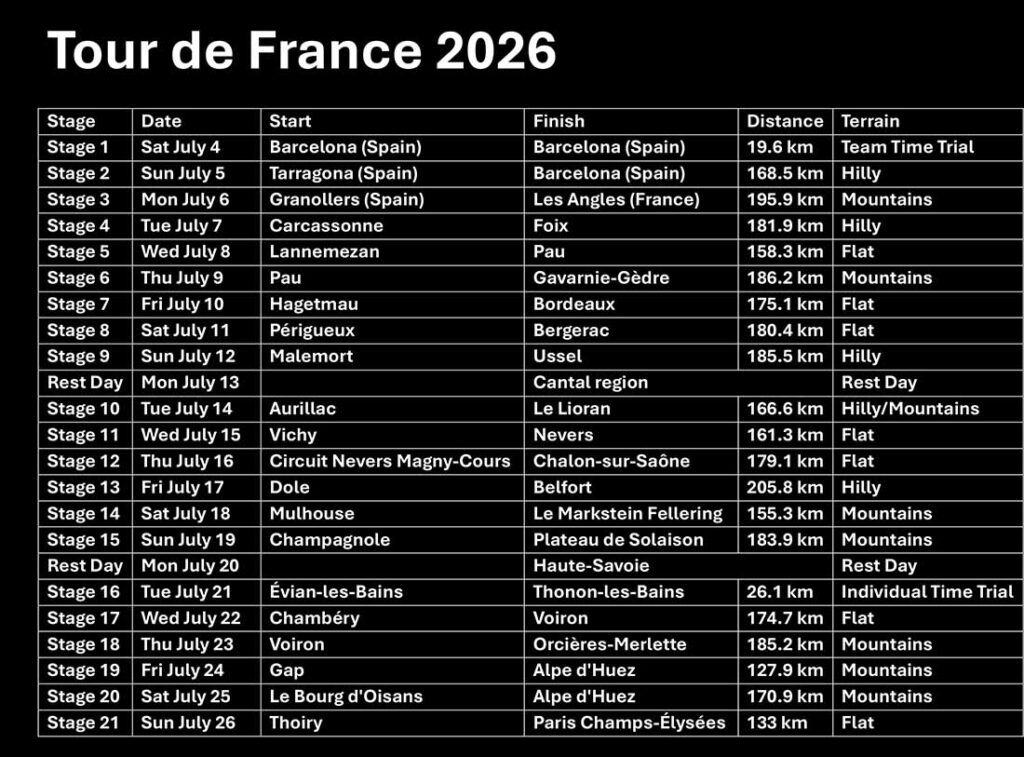
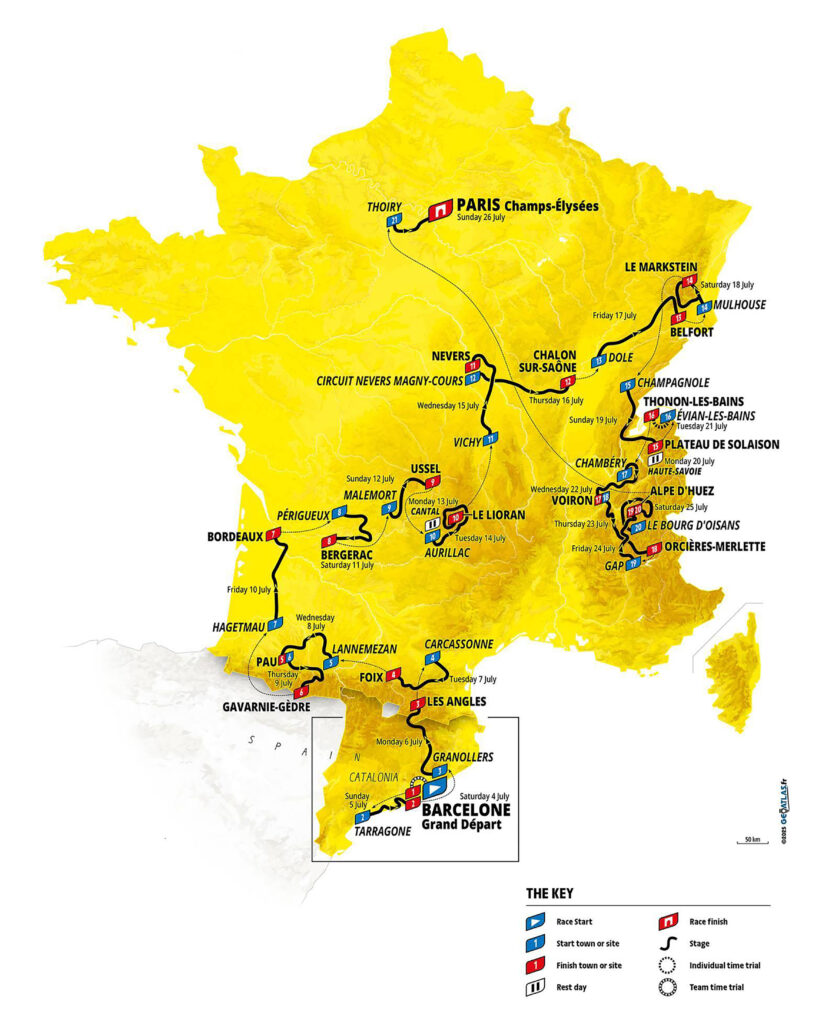
The 2026 edition revealed the power of this annual event once more as it started in Barcelona on 4 July before it crossed into France and wound its way through 21 stages that finished in Paris on 26 July. The route took in a series of locations that draw visitors year after year. Barcelona provided the Grand Départ with its architectural landmarks and urban energy that set an international tone. The race then moved to Tarragona with its Roman ruins and coastal appeal before it headed to the Pyrenees. Carcassonne confirmed its status with the medieval citadel that rises above the landscape and attracts history enthusiasts. Foix added its castle perched on a rock outcrop while Pau offered views of the mountains and elegant streets.
Gavarnie-Gèdre delivered one of the most dramatic summit finishes with the UNESCO listed Cirque de Gavarnie and its towering rock walls and waterfalls. This high mountain arena brought visitors to remote areas that benefit from the exposure. Bordeaux featured with its wine heritage and riverside architecture while the Dordogne region around Périgueux and Bergerac showed prehistoric caves and châteaux that define French countryside appeal. The Massif Central stages around Aurillac and Le Lioran took the race through volcanic landscapes and rural communities that receive fewer visitors outside the summer months.
The route continued into eastern France with stops in Belfort and the Vosges before it reached the Alps. Locations such as Le Markstein, Plateau de Solaison, Orcières-Merlette, Gap and Alpe d’Huez confirmed their place in cycling lore. Alpe d’Huez hosted two summit finishes in the final week with its 21 hairpin bends that draw cycling fans and tourists who ride the climb. These mountain venues spread economic activity to high altitude resorts and valleys that rely on seasonal income. The individual time trial between Évian-les-Bains and Thonon-les-Bains on Lake Geneva added lakeside scenery while Chambéry and Voiron connected the route through the Alpine foothills.
Many of these locations continue to feature in the schedule across decades. Alpe d’Huez first appeared in 1952 and it returned regularly because it tests riders and captivates audiences with its drama. The Pyrenees passes and the roads around Carcassonne appeared in early editions and they return because they combine sporting challenge with visual splendour. This repetition builds familiarity that encourages repeat visits from international tourists who plan holidays around the race calendar. The 2026 route with its five summit finishes including Gavarnie-Gèdre and Plateau de Solaison for the first time still maintained the balance of familiar and new elements that sustains interest.
At a time when dispersal and seasonality matter to French tourism planners the Tour de France spreads visitors across regions and months. The race takes place in July but it generates interest that extends into the shoulder seasons as people book trips to ride the routes or explore the areas shown on television. Rural France benefits particularly as the peloton passes through villages and small towns that gain global exposure for a few hours each day. This visibility helps family-run hotels, restaurants and local producers who depend on tourism income. The event encourages travellers to move beyond the main cities and discover areas that otherwise receive limited international attention.
It is not just that the Tour de France contributes to and sustains France’s position as the most visited international tourist destination on the globe. The spread of tourism through rural France receives a boost from the daily stages that link remote mountain climbs with historic towns. Stages in the Pyrenees and Alps bring hikers and cyclists to trails and passes while the flatter sections in the west highlight wine regions and river valleys. This movement distributes spending across departments that need support to maintain services and preserve heritage. Local businesses report increased bookings in the weeks after the race passes as viewers convert their armchair interest into actual travel plans. The Tour therefore functions as a mobile advertisement for the diversity of the French landscape and culture.
The iconic finish in Paris on the Champs-Élysées confirms that city’s appeal in world tourism. The final stage on 26 July brings the peloton into the heart of the capital with the Arc de Triomphe and Eiffel Tower as backdrops. This urban climax balances the rural emphasis of earlier stages and reminds audiences of France’s blend of countryside charm and metropolitan sophistication. Paris receives millions of visitors each year and the Tour reinforces its status as a must-see destination while it showcases the journey through the rest of the country.
The yellow jersey gets passed around as the tour progresses. This year, as in most recent years, it will be either Slovenia or Denmark on the podium.
But in tourism terms, every year the result is the same. La Belle France dans le maillot jaune.