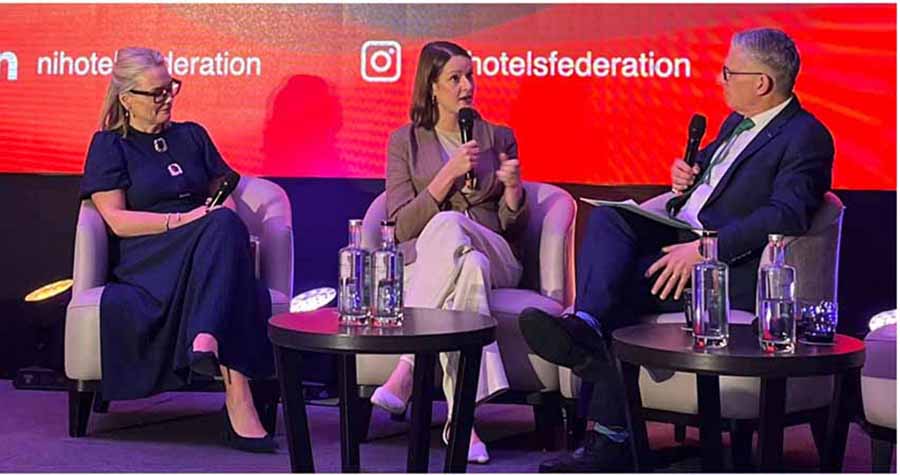
The key takeaways from Hospitality Exchange 2026 in Belfast centered on how the sector is balancing rapid capacity growth with macroeconomic pressures and cutting-edge technology:
- The Room Boom vs. Evolving Occupancy:cThe hotel sectorin ther six counties is undergoing a massive growth spurt, with the room supply climbing past 10,100 active hotel bedrooms While expanded capacity has slightly diluted percentage occupancy rates (flattening from 71.9pc in 2025 to around 70pc in 2026), the industry is actually selling 1,000 additional bedrooms every week. Growth isn’t slowing down; roughly 600 more bedrooms are under construction to open by the end of 2027, driven by major brands like Premier Inn, Yotel, and Staycity.
- “Does AI Know Your Business?” Technology and automation took center stage, with clear guidance on how operators must adapt to data-driven discovery.
- Digital experts highlighted that AI is fundamentally altering how guests find accommodations. A major focus was placed on optimization—ensuring that generative AI search engines correctly read, categorize, and actively recommend local hotel and restaurant properties.
- Augmentation over Replacement: Leadership panels from Radisson speakers emphasised that hotels must embrace AI data to mitigate rising operational costs, but the technology must serve as a backend “help” rather than a frontend hindrance to the guest experience.
- The “F-Word” (Friendliness) as a Competitive Edge Despite the heavy emphasis on digital transformation, human connection was championed as the industry’s primary differentiator. Industry analysts stressed that basic “Friendliness” remains Northern Ireland’s greatest competitive advantage on the global stage. In a rapidly consolidating and automated travel market, businesses that double down on warmth, empathy, and personal connection are proving more resilient to market shifts.
- A key element of the economic briefings focused on operational survival amid high inflation and shifting schedules.
- Discussions led by hospitality strategists examined “rethinking the morning market,” noting that changing corporate habits, fluctuating guest expectations, and the strict economics of food waste mean traditional hotel breakfast setups are being radically redesigned for efficiency.
- Leaders from Tourism NI outlined strategic responses to rising overheads, climate-related shifts in seasonal weather patterns, and the ongoing push to aggressively market the region to overseas visitors to offset local cost pressures.
- Sustaining the industry means solving the hospitality sector’s historic talent shortages.
- Keynotes from culinary leaders like Michelin-starred chef Spencer Metzger focused on modern management, showing that succeeding in today’s climate requires empathetic leaders who “care, connect, and inspire” rather than rule by authority.
- The conference concluded with a spotlight on the next generation, highlighting the Rising Star Awards designed to celebrate and retain top industry professionals under the age of 30.