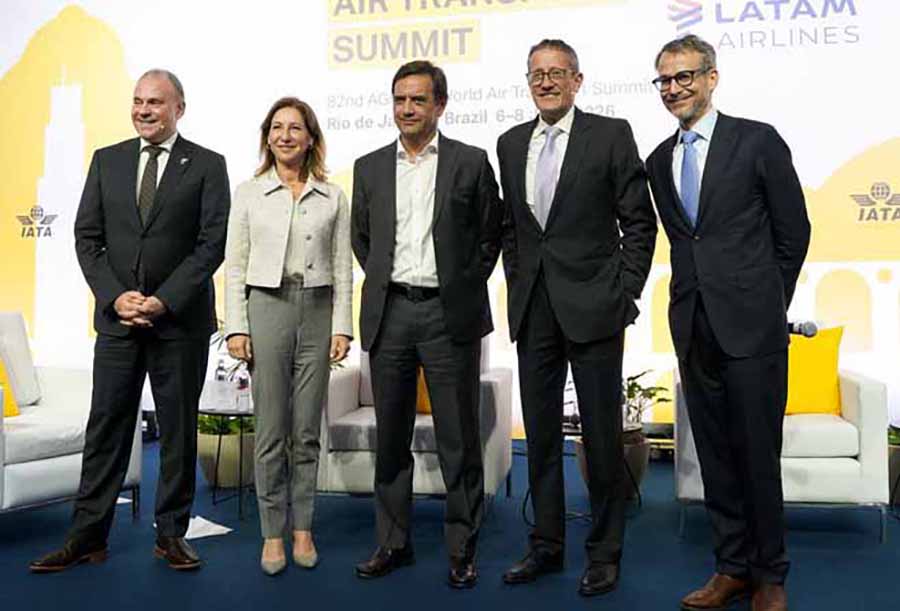
Four aviation CEOs described a resilient recovery in the face of ongoing geopolitical disruptions and elevated fuel costs at the IATA Congress 2026 in Rio de Janeiro.
Con Korfiatis of Oman Air said that he thinks aviation is still in the recovery phase but came back to the word of resilience. “The industry is incredibly resilient. But also the customers have been incredibly resilient as well. So outside of lots of groundings for a period of time and gradually the skies have opened and gradually, actually more than gradually, quite rapidly, the capacity has been coming back. So that shows there is resilience on the airlines part and the confidence to bring that capacity back but also on the customers to support the airlines.The capacity return and the customer resilience has maintained through that it does not fluctuate week to week it has been steady and it has been increasing.
Adrian Neuhauser of Avianca Abra Group described the crisis as a sea change in our business. “And yet if someone had set this scenario up last year and said hey we are going to have a war and fuel is going to be at $90 and how much of a crisis is it going to be versus where we are look we are aggressively passing pricing through. Customers are responding. The booking curve is shorter but customers are showing up. They are buying and we are seeing the planes fill up with higher yields. Those yields are higher than any of us thought. This would be tolerable and we are not seeing softness in demand so certainly a new world and, yet again, resilient. “
Güliz Öztürk of Pegasus Airlines shared that she cannot see any fourth year in aviation which goes well. After four consecutive four years things go positive in the aviation business. tThen the fourth year comes. This is not fearful but we are still here. That is what aviation, very open to crisis but we all navigated through so many challenges like Gulf War crisis, COVID and everything. The airlines, the management teams strengthened their initiatives and are probably navigating more in a more healthier way.
Going into each year we are having our scenarios in hands. We have different business plan.s not only one budget anymore. After COVID we have always alternative plans in our hands. So if anything comes up or you see the signals coming in you implement B plans. It is not easy because fuel price is not under our control you can have some initiatives like hedging. Yu have to manage it with other plans or at the like with capacity management.