- Cloud prediction is probabilistic: Weather models and forecasts frequently misclassify cloud cover levels (e.g., scattered vs. broken vs. overcast). Treat any single forecast category as only a rough probability, not a certainty. Continuously monitor actual sky conditions rather than relying on one model run or app reading.
- Use real-time observation logic: Base decisions on what you can see and measure on-site (or via reliable local webcams, satellite loops, and recent observations). Cross-check multiple sources and update your assessment frequently as the event approaches. A forecast that looked promising hours earlier can change; ground truth always overrides the model.
- Avoid rigid, high-commitment setups until confidence is high: Do not lock into complex, time-consuming arrangements (heavy mounts, multi-telescope arrays, elaborate photography rigs, large group logistics) until sky conditions look reliably favorable. Keep options open so you can adapt quickly.
- Early setup is acceptable only if it stays reversible: Setting up early is fine when the equipment and location can be packed or moved on short notice. If clouds persist or worsen close to the event, be ready to relocate without major delay or loss of opportunity. Prioritize mobility over permanence until the final window.
- Keep totality as the primary focus: The period of totality is brief. Structure the entire experience around maximizing the quality of those minutes. All other activities (photography, social media, conversations, secondary observations) are secondary and should never compromise the ability to watch the sky darken, the corona appear, and the environment change.
- Minimise distractions during the critical phases: Remove or silence anything that pulls attention away from the sky: phones (except for essential timing or safety), unnecessary equipment adjustments, prolonged conversations, or other diversions. Ensure every observer can fully experience the rapid changes in light, temperature, and atmosphere.
- Handle logistics, especially restroom access, well in advance: Plan restroom use approximately 45 minutes (or more) before totality. Approaching the moment itself often brings larger crowds, longer lines, and tighter timing constraints that can cause people to miss key phases. Complete all personal needs early so nothing interferes with the short totality window.
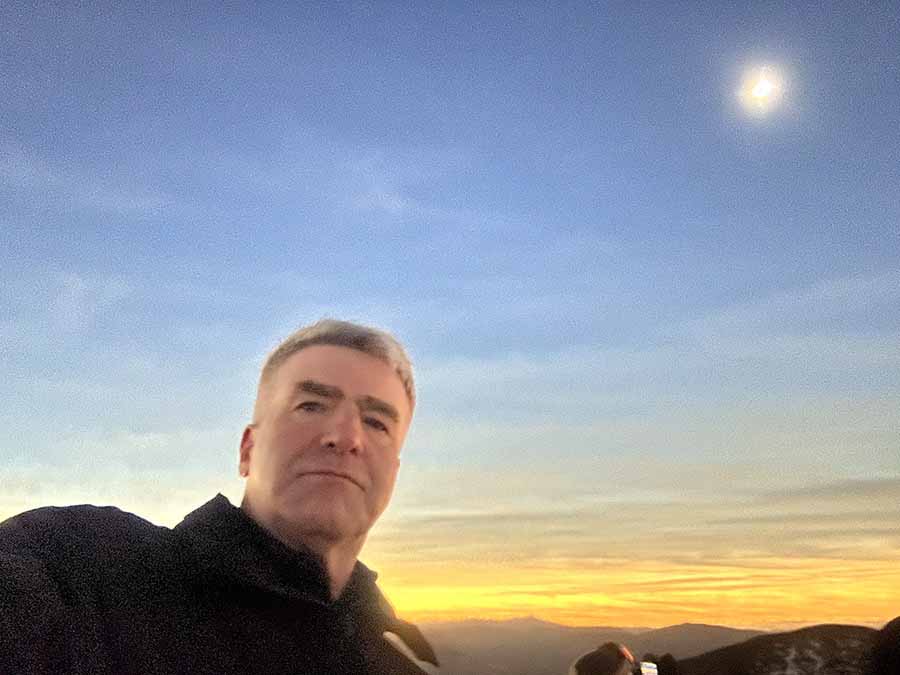
Total solar eclipse Jay peak, Vermont April 8 2024
ECLIPSE – Things to remember as wee prepare to view one of nature’s greatest phenomena
0
Share.