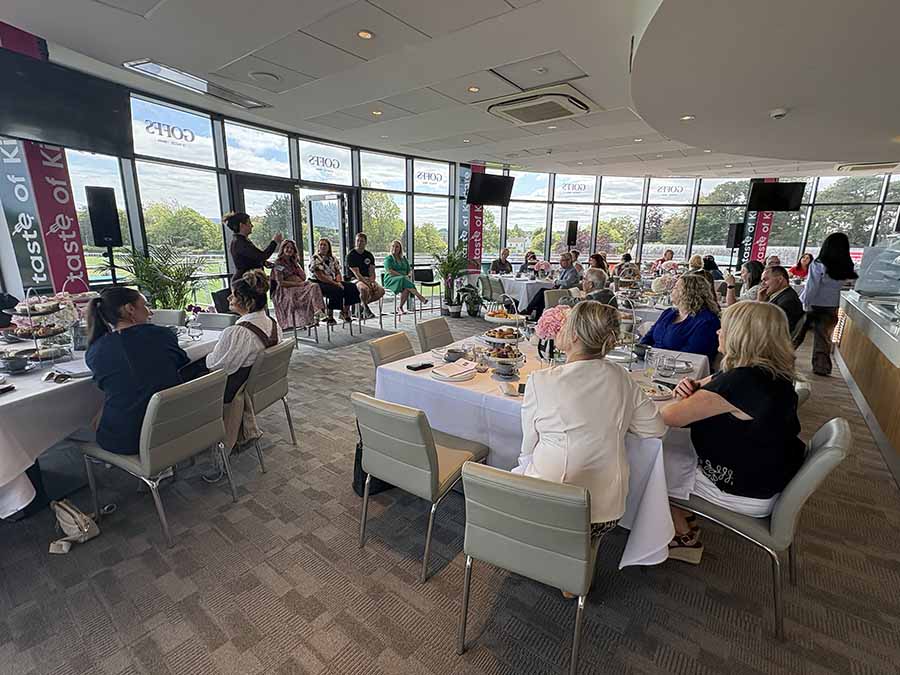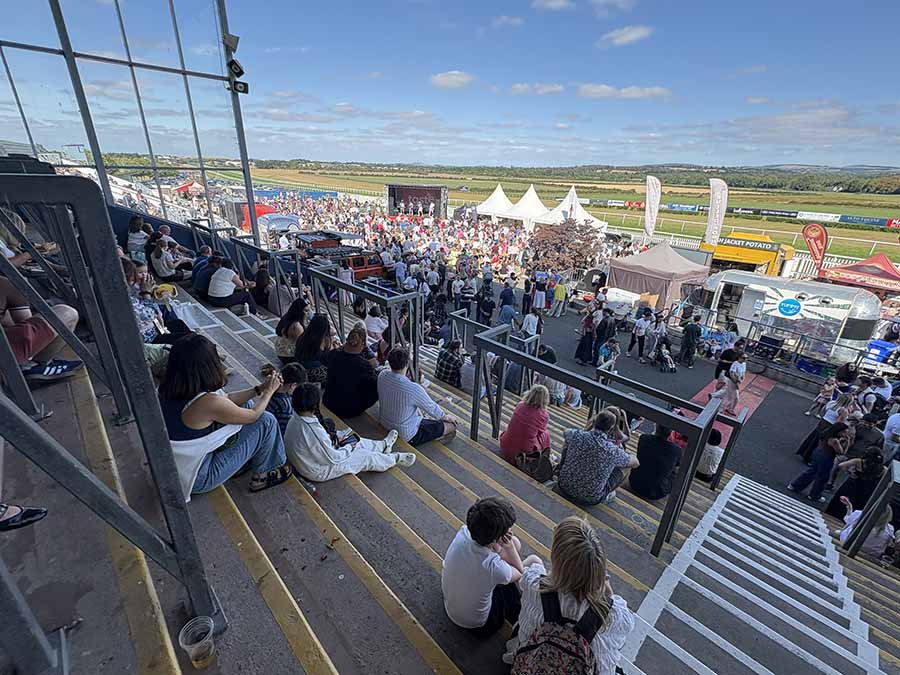
are shuttle buses, food trucks, an expanded children’s play area and the Calor demonstration kitchen, Taste of Kildare’s expanded 2026 offering was a big hit with the consumers who turned out in increased numbers, topping 10,000 over the two days of the festival.
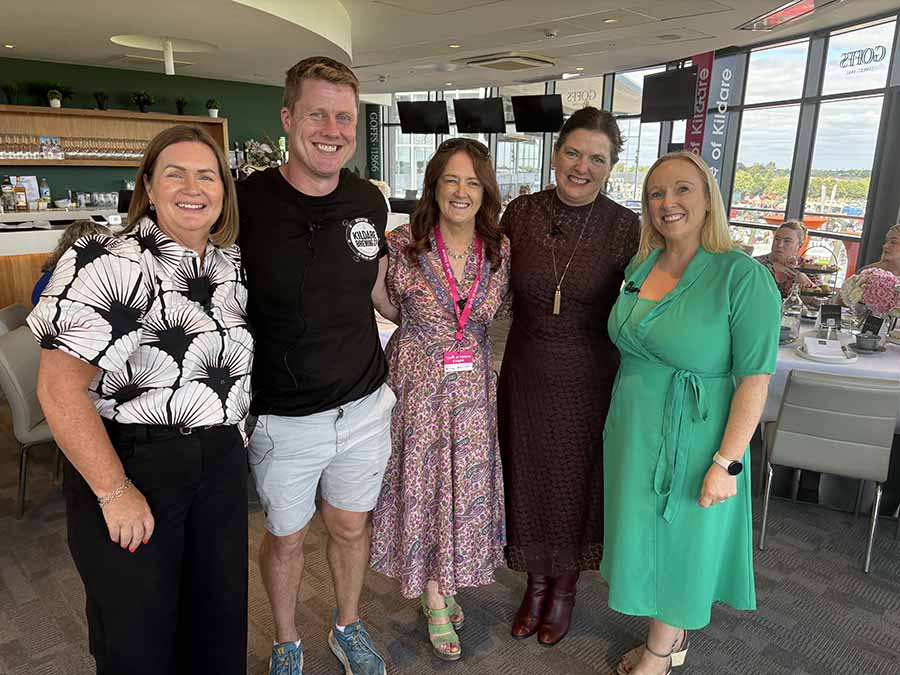
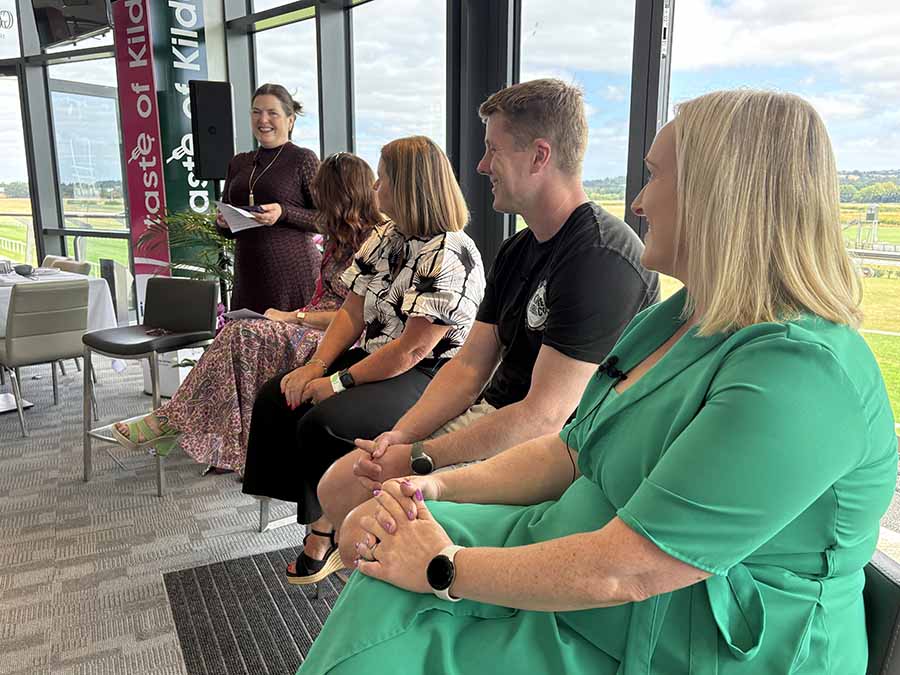
A lively panel discussion explored the rising potential of culinary tourism, timed perfectly with Fáilte Ireland’s new corporate strategy (2026–2029), which prioritises the sector as a key growth area. Moderated by food tourism specialist Santina Kennedy, the conversation brought together Mary Fennin of Clanard Court Hotel in Athy, Barry Flanagan of Lock 13 in Sallins, Jacqui McNabb, Head of Enterprise and Economic Development at Kildare County Council, and Fionnuala Cotter, Head of Innovation at Queally’s Food Group. Their insights painted a clear picture of opportunity rooted in collaboration, storytelling and authentic local produce.
Jacqui McNabb set the strategic tone. “Food tourism is not only about the experience of food; it also celebrates the culture, traditions, placemaking and destination,” she said. “It has the opportunity to stimulate economic development – everything from the actual grower and producer to the transport companies to the retailer. They all benefit as spin-offs.
” Longer visitor stays, job creation and stronger destination identity are natural outcomes, she noted, especially when linked to Kildare’s canals, Blueway, rich agricultural heritage and the story of St Brigid. The county is currently drafting a new four-year tourism strategy in partnership with Fáilte Ireland that will place food firmly at its heart.
Collaboration emerged as the strongest practical takeaway. Mary Fennin described how Clanard Court Hotel, open for 21 years on a former family farm and horse-training site, has thrived through partnerships. “Collaboration has been key to the success of making it a place where people can go and enjoy good food, and good food storytelling is part of that, 100%,” she said. Earlier this year the hotel joined forces with Kilkea Castle, the Shackleton Experience, Burtown House and Gardens, Athy Boat Tours and others to create a “24 Hours in Athy” familiarisation trip for 50 tour operators. “If you join with other people, you have a much better story to tell. People want to come to a location to experience quite a bit – not just one hotel.
”Barry Flanagan offered a powerful on-the-ground model. At Lock 13, a family pub on the Grand Canal since 1995, he opened Kildare’s first brew pub in 2016 with support from the County Council. The concept is simple yet distinctive: “Food from the land matched with a drink made from the land.
” Every dish carries a beer pairing, and staff are trained hands-on in the brewery so they become confident advocates. “You’re not attaching a story to this just for marketing purposes. The story is there. You’re actually telling it to be served,” Flanagan explained. He also grows hops on site, tapping into a historic local tradition. His philosophy of “co-opetition” extends to neighbouring businesses: a longer stay that benefits a nearby hotel or café benefits everyone and keeps visitors off the motorways.
Fionnuala Cotter brought the manufacturing perspective. Queally’s, one of Ireland’s largest privately owned agri-food businesses and a major local employer, sources extensively from Kildare suppliers. “We are at the heart of innovation in the food industry in Ireland,” she said. Consumer demand has shifted decisively: “What consumers want now is all clean, natural. They don’t want ultra-processed foods. They want foods that are good for them, that enrich their lives and that mean something to them.
” This trend aligns perfectly with culinary tourism’s emphasis on provenance and quality.
Supporting infrastructure is already in place. The restored 1856 Model School in Athy, transformed with an €8 million investment, now houses training kitchens, a shared commercial kitchen for start-ups and facilities for upskilling existing hospitality staff. “That is the role of the county council: to facilitate and support food companies… and to create the environment for them to get the start and to grow,” McNabb said.
The panel’s collective message was optimistic and actionable. Fennin urged more networking and mutual promotion. Flanagan called for prioritising local producers over international brands on menus and counters, even when the price is higher, because “it’s the values that you stand by.
” Kennedy herself stressed that even small steps – naming a local farm on a menu or serving seasonal orchard apple juice – can spark curiosity and create ripple effects across the supply chain. As Jacqui McNabb concluded, food is key to regenerating towns, communities and vibrancy. The ingredients are already here; the task now is to tell the story together.