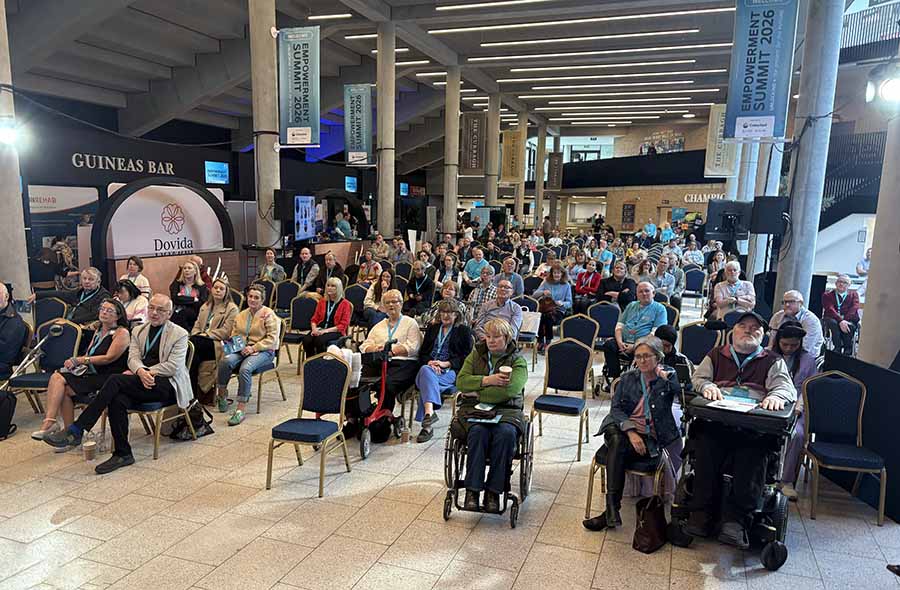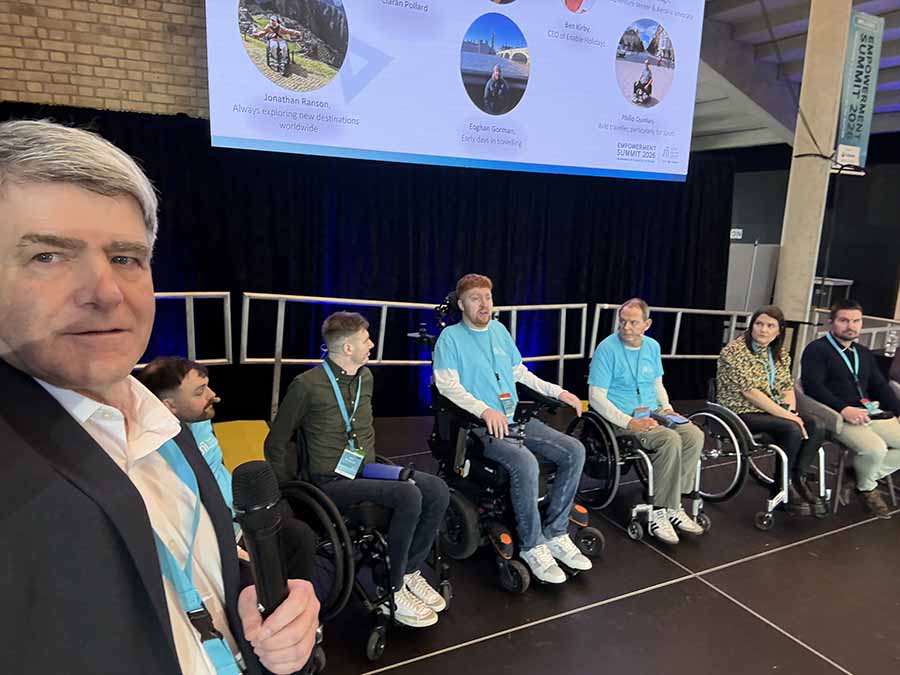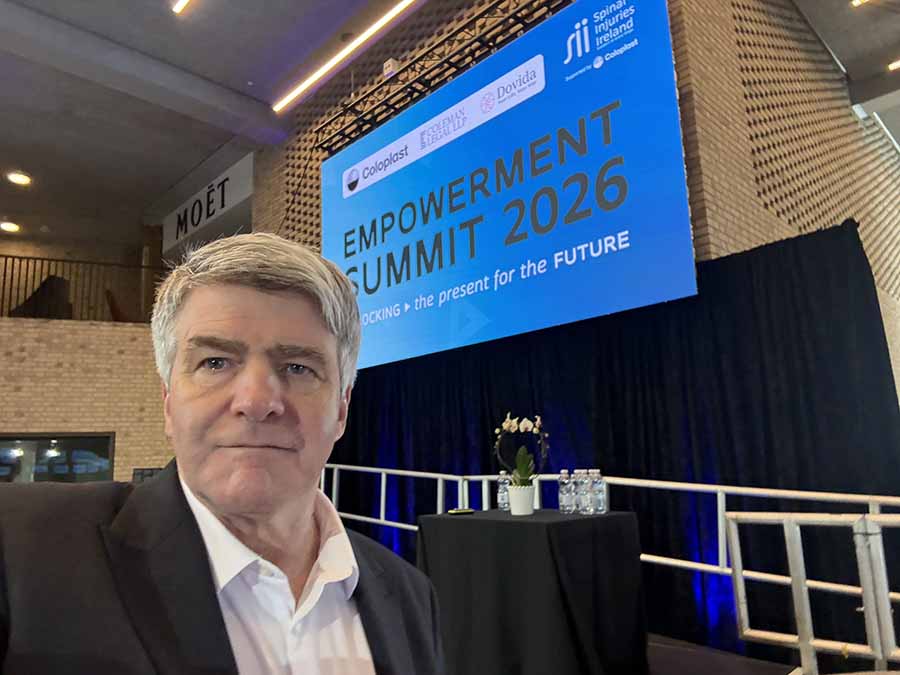
Delegates at the Spinal Injuries empowerment summit at the Curragh county Kildare were given a guided route and helped to navigates to overcome the difficulties of travelling by people in wheelchair.
The forum heard from seven key speakers on a panel moderated by Eoghan Corry:
- Eoghan Gorman who is new to travel in a wheelchair
- Jennifer Hestor who spoke about the annual spinal injuries trip
- Jack Kavanagh founder of the Aerofix lobby group on behalf of wheelchair users
- Ben Kirby of Enable Travel, a tour operator specialising in disability
- Ciaran Pollard who acted as MC for the conference, and who spent two years in a wheelchair himself
- Philip Quinlan a former Olympian who is widely travelled and a frequent visitor to Australia
- Jonathan Ranson a well seasoned traveler whose next trip is to the Gallapagos
The audience heard about the frustrations of wheelchair travel, lost and damaged wheelchairs in transit, inconsistent policies among airlines and even across fleet type within an airline, access to toilets in flight, absence of a universal standard amongst European countries when it comes to hotel rooms, and lack of information which makes planning the journey falloff challenges.
Panellists said the growing demographic of upwardly mobile people with disabilities who travel for pleasure and work is increasing pressure on the aviation sector and felt that louder advocacy from passengers governments and organisations is required to push for standardisation in aviation hotels and transport to make travel equitable.
Adaptive vehicles abroad vary widely with ramp access more reliable in places like the Canary Islands and assistance often available when requested. Countries like the United States benefit from strong legislation such as the Americans with Disabilities Act which mandates hand controls in rental cars. Spain too has advanced though many other European nations lack uniform standards.
Speakers shared practical experiences that revealed persistent barriers in accessible travel for wheelchair users. The discussion confirmed that airline turnaround times create pressure on staff to view assistance for wheelchair passengers as an inconvenience rather than a standard service. This perception contributes to delayed boarding last positions which add to feelings of indignity and make the process feel like an afterthought for those with mobility needs.
Eoghan Gorman shared his recent experiences as someone adjusting to wheelchair use after a spinal cord injury from a mountain biking accident. He described the initial steps into travel and the unexpected obstacles that arise even on short journeys within Ireland. He talked about his experience with Ryanair, an airline whose business model is built on a 25-minute turnaround. “They see you as a problem.”
Jonathan Ranson said that, despite extensive travel to places such as Japan Australia Canada the United States Central America and Europe including recent trips to Cambodia, the overall progress in international aviation accessibility has remained stagnant over the past twelve years. He revealed that while many flights proceed positively passengers must accept potential delays and hassles as part of the schedule to push through barriers.
Ben Kirby from Enable Holidays stressed the importance of thorough audits for hotels and destinations since many properties label themselves accessible without certification or genuine standards. He revealed that issues arise from inconsistent minimum requirements across countries with hotels often missing practical details such as bed heights toilet measurements doorway widths pool access buffet counter heights and broader resort accessibility including promenades and beaches. He stressed that refurbishments frequently overlook functionality because input from wheelchair users with diverse needs is rarely sought leading to wasted efforts. He said most of the problems arose when people designing in so called accessible accommodation do not talk to the right people.
Philip Quinlan a former Olympian spoke about his frequent visits to Australia and other long haul destinations. He said that the main hurdle in long haul travel remains getting mobility equipment to the destination without damage or loss. He revealed experiences where wheelchairs ended up in wrong cities and praised tools like AirTags for tracking. He also noted that onboard aisle chairs present transfer difficulties though some aircraft such as the Emirates A380 offer better configurations and progress appears in accessible toilet designs on certain wide body planes.
Jack Kavanagh founder of the AeroFix Project confirmed that remaining in one’s own wheelchair throughout the aviation journey, a facility that would eliminate transfer risks damage to equipment and loss issues. He revealed the project’s focus on the magic triangle of certified seating solutions simplified booking technology and accessible onboard toilets. He confirmed collaborations with major manufacturers like Airbus and Boeing plus ongoing certification efforts for fold up seat systems that allow wheelchairs to be secured safely in about sixty seconds turning current challenges into efficient dignified experiences for both passengers and airlines. The project now faces a funding dilemma as the initial two year funding, from Declan Ryan’s Irelandia, reaches an end.
Jennifer Hestor recalled the annual group trips organised for people with spinal injuries by Spinal Injuries Ireland provided supportive environments and sorted out all the worries about access in advance, voyages to places such as the Caribbean and Costa Rica where participants achieved activities beyond their expectations: “I I found myself climbing the mast, when I got there I said, oh God, how am I going to get down again.”.
Ciaran Pollard who served as master of ceremonies brought his own background having spent two years using a wheelchair, picking up the points of the speakers adding observations from his time using a wheelchair. He revealed airport issues such as long distances from entrances to gates lack of bins in toilets for disposal needs and queues that fail to prioritise slower walkers.
Audience contributions from the floor confirmed the need for education of airline and hotel staff on proper wheelchair handling including tagging to prevent misrouting and staying on the aircraft until the device arrives: “the moment you are on the airbridge, the airline is no longer responsible for you.”
They stressed the value of self advocacy when dealing with staff and knowing exact equipment details to challenge incorrect decisions. Speakers revealed that soft mattresses in accessible rooms with drawers underneath complicate transfers and hoist use while inconsistent bed heights lead to surprises despite prior checks.
One speaker pointed out that beds with drawers underneath make it impossible for wheel chair users to navigate the business of getting in and out of bed, as they need underbed space to manouver their legs.
Participants at the summit agreed that more training of airline staff, better pre-travel information from airlines and hotels, and greater collaboration between advocacy groups, airlines and tour operators and accommodation providers could address many of these points.
The venue, the Curragh, offers step free entry wheelchair accessible parking and fully equipped restrooms which set a practical example for inclusive facilities.
The Aerofix project
The AeroFix Project was founded by Jack Kavanagh following his own spinal cord injury the initiative seeks to enable wheelchair users to complete their entire aviation journey without leaving their personal assistive device.
This approach addresses long standing frustrations with damaged or lost wheelchairs in cargo holds inconsistent handling by ground staff and the indignity of transferring to narrow aisle chairs for boarding and onboard movement.
The project centres on what advocates describe as the magic triangle of improvements. The first element involves certified seating solutions that allow passengers to roll directly onto the aircraft in their own wheelchair and remain seated safely throughout the flight secured in a dedicated spot. The second focuses on simplified booking technology to reduce uncertainty when reserving accessible seats. The third pushes for aircraft designs that incorporate fully accessible onboard toilets suitable for wheelchair users. Together these changes aim to transform air travel from a source of anxiety into a more independent experience.
In late 2025 the project collaborated with design firm PriestmanGoode and hosted workshops at the RedCabin Aircraft Cabin Innovation Summit in Dublin where industry figures and explored the operational adjustments needed to introduce onboard wheelchair spots.
Support from Declan Ryan’s Irelandia Aviation the group linked to Ryanair has provided resources to advance the campaign over the past eighteen months.
Jack Kavanagh has represented the project at international forums including the All Wheels Up event in Seattle where global stakeholders from airlines regulators and designers discussed accessibility. Collaborations with Airbus through cross industry innovation channels have further built technical understanding.
Parallel efforts elsewhere reinforce the push for onboard wheelchair access. In the United States developments such as the Air4All initiative involving Delta Flight Products and Flying Disabled have progressed toward certification for convertible seats that secure wheelchairs using systems similar to child seat ISOFIX fittings. Regulators continue to define safety criteria for restraint systems in cabins with optimism around approvals.
Some US airlines have committed to providing compliant onboard wheelchairs on new larger aircraft delivered after October 2026 though this differs from the AeroFix goal of allowing personal devices.
The campaign highlights the physical and psychological benefits of remaining in one’s own wheelchair including reduced risk of injury better posture control and greater dignity during travel. Damaged mobility equipment remains a frequent issue with repair costs and temporary replacements burdening users. By keeping wheelchairs in the cabin the project aims to eliminate many of these problems at source.
Kavanagh described the current stats of the AeroFix Project as cruising altitude with active advocacy and partnerships driving forward.