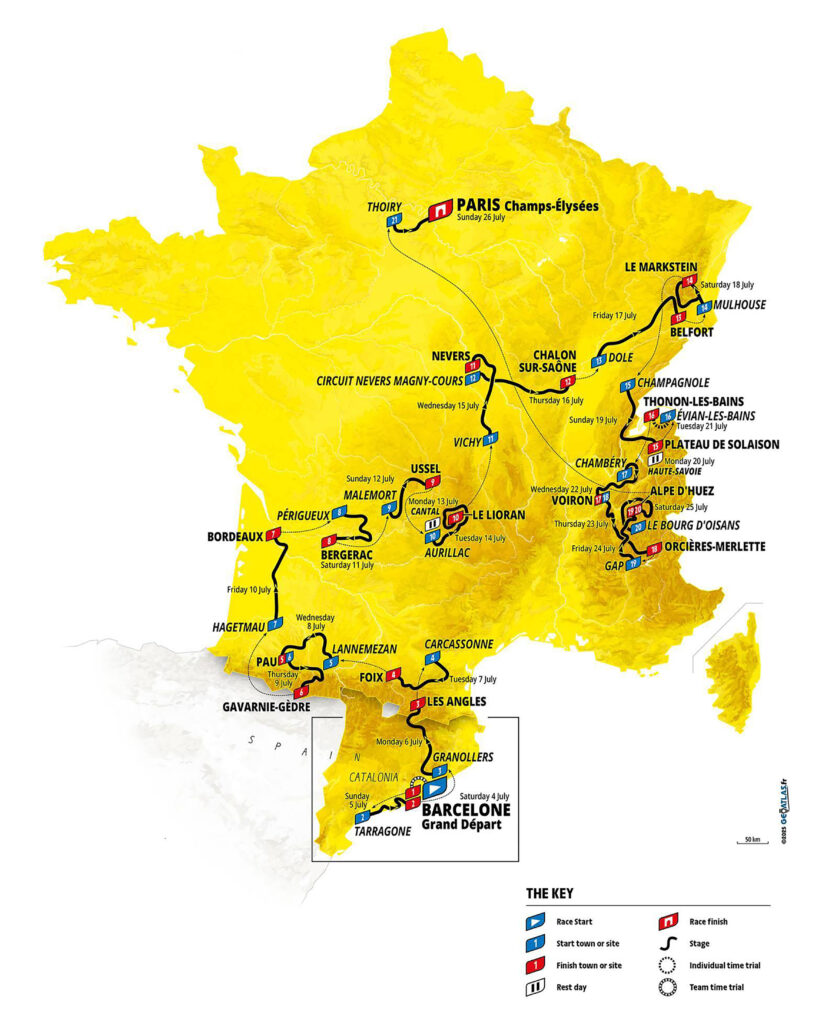
Tour de France 2027 Grand Départ will start in Scotland (Edinburgh) and feature stages through Scotland, England, and Wales (finishing Stage 3 in Cardiff). This brings global attention to the stunning scenery and attractions in these areas.
- Le maillot jaune: How the Tour de France helps secure France’s position as the most visited international tourist destination
- BEAUTY on a bike: the locations in this year’s Tour de France
Scotland (Stage 1 Edinburgh to Carlisle via Scottish Borders
Stage one passes through dramatic hills of the Scottish Borders, rolling countryside, river valleys (Tweed), historic market towns, and the iconic Edinburgh skyline with Arthur’s Seat and castles. Expect green landscapes, abbeys, and quiet roads perfect for cycling.
Key Attractions & What to See:
- Edinburgh: Edinburgh Castle, Royal Mile, Holyrood Palace, Arthur’s Seat (volcanic hill with panoramic views), Calton Hill, and the vibrant Old Town/New Town (UNESCO World Heritage). Great for pre-race atmosphere and team presentations.
- Scottish Borders: Melrose Abbey, the Eildon Hills (Cote de Melrose climb in the race), Tweed Valley (world-class cycling and walking), Abbotsford House (home of Sir Walter Scott), and towns like Hawick and Innerleithen.
- Midlothian & South: Rolling farmland, historic trails, and views toward the Cheviot Hills near the border.
- Dumfries & Galloway en route): Scenic coastal and inland routes with forests and lochs.
- Other Highlights Nearby: Loch Lomond & The Trossachs (short detour), Glasgow (urban contrast, museums, and culture).
The stage will feature excellent roads through the Borders; visit cycling hubs like Tweed Valley for mountain biking and trails.
England (Stage 2 Keswick to Liverpool (223 km)
Stage 2 on Saturday, 3 July 2027 showcases some of England’s most beautiful landscapes. The stage finishes in Liverpool (on The Strand, with views of the Three Graces). The stage offers a stunning mix of landscapes:
- Lake District National Park (early part): Iconic lakes, mountains, and valleys. The route passes alongside Thirlmere, Grasmere, Rydal Water, and Windermere: classic English Lake District views with fells (hills), woodlands, and reflective waters.
- Morecambe Bay coastline: Sweeping estuarine views, tidal flats, and coastal scenery.
- Lancashire countryside & fells: Rolling hills, rural lanes, and the climb at Côte de Jubilee Tower (with Pennine edges). More undulating terrain with four other categorised climbs.
- Final stretch: Flatter approach into the Liverpool City Region through urban and suburban areas.
This is one of the most scenic stages of the Grand Départ, blending dramatic natural beauty with cultural highlights.
Keswick (Start) & Northern Lake District
- Derwentwater Lake: Boat trips, walks, and views of surrounding fells.
- Keswick Town: Charming market town with pencil museum, theatre, and outdoor shops.
- Castlerigg Stone Circle: Ancient monument with epic mountain backdrop (short detour).
- Borrowdale Valley & Watendlath: Picturesque valleys and hamlets.
Central Lake District (Route Highlights)
- Grasmere & Rydal Water: Wordsworth country (Dove Cottage, poet’s former home).
- Ambleside & Windermere: Largest lake in England. Boat cruises, Beatrix Potter attractions (Hill Top farm nearby), and vibrant towns for shops/cafes.
- Thirlmere: Reservoir with forest walks and dramatic reservoir views.
Southern Lakes & Lancashire
- Morecambe Bay: Vast skies, birdwatching, and coastal paths (famous for shrimp and tides).
- Lancaster: Historic city with Lancaster Castle, Ashton Memorial, and university vibe.
- Jubilee Tower (near Beacon Fell or similar): Panoramic viewpoints over the countryside.
- Forest of Bowland or nearby Areas of Outstanding Natural Beauty: Rugged fells and quiet roads.
Liverpool (Stage Finish)
- The Strand & Three Graces (Royal Liver Building, Cunard Building, Port of Liverpool Building): Iconic waterfront finish line views.
- Albert Dock & Waterfront: Museums (Beatles Story, Tate Liverpool, Maritime Museum), shops, and restaurants.
- Beatles Heritage: Cavern Club, Penny Lane, Strawberry Fields: music pilgrimage sites.
- Liverpool Cathedral, Walker Art Gallery, and vibrant city centre.
- Mersey Ferry: Classic river crossing with skyline views.
Tips for Visitors
- Best Experiences: Lake cruises, hill walks/hikes (e.g., around Helvellyn or Scafell Pike nearby), cycling routes mirroring the stage, and Beatles tours in Liverpool.
- Atmosphere: Expect huge crowds in Keswick and Liverpool. Book accommodation and transport early.
- Nearby Extensions: If combining with other stages, easy links to the Lake District’s full offerings or onward to Wales.
This stage perfectly captures the romantic English countryside before heading into urban energy at the finish. The Lake District section will be particularly photogenic for spectators! Let me know if you want hotel recommendations, specific walking/cycling spots, or details on other stages.
Wales (Stage 3 – Welshpool to Cardiff)
Stage three sees a dramatic shift from Mid Wales countryside and national parks to the industrial heritage of the South Wales Valleys, ending in coastal Cardiff. Expect mountains, valleys, castles, and coastal views.
- Bannau Brycheiniog (Brecon Beacons) National Park: Epic mountains, waterfalls (e.g., Sgwd yr Eira), hiking trails, reservoirs, and dark skies for stargazing. Highlights include Pen y Fan (highest peak in southern Britain) and the Usk Valley.
- Mid Wales (near Welshpool / route start): Powis Castle and Gardens (stunning terraces and exotic plants), market towns like Welshpool, Llandrindod Wells, Builth Wells, and Brecon. Rolling hills and rural charm.
- South Wales Valleys: Dramatic post-industrial landscapes (now greening), historic towns, and routes showcasing Wales’ mining heritage (UNESCO sites).
- Cardiff (Stage Finish): Cardiff Castle, Cardiff Bay (modern waterfront with restaurants and the Wales Millennium Centre), Principality Stadium, and vibrant city parks. Perfect for a grand finale celebration.
- Eryri (Snowdonia) National Park (North Wales – worth a side trip): Towering mountains (Yr Wyddfa/Snowdon), scenic railways (Snowdon Mountain Railway), lakes, castles (e.g., Caernarfon), and world-class cycling/MTB trails like Coed y Brenin.
- Cycling Vibe: Challenging climbs in the Beacons, quiet lanes, and dedicated routes like the Brailsford Way in Snowdonia. Excellent for road and mountain biking.
Visiting during and after the 2027 Tour
Best time is July for the event, but spring/autumn offer milder crowds and beautiful scenery.
- Activities: Hiking, cycling (road & MTB), castle tours, coastal paths, and cultural festivals.
- Scenery Highlights: Mix of rugged mountains (Wales), rolling borders (Scotland), historic sites, and coastal elements.
- Getting Around: Trains, rental cars, or join guided cycling tours. Many areas are well-connected.
These regions showcase some of the island’;’s most beautiful and varied landscapes, from Edinburgh’s majestic cityscape to Wales’ mountainous heart.
The Tour will highlight why they’re fantastic for outdoor enthusiasts.