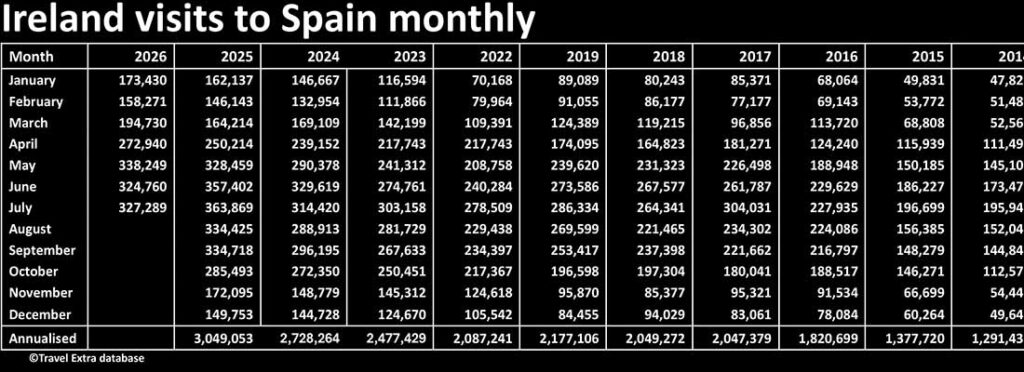
- Spain is projected to host 43m international tourists between June and September
- Summer tourist spending is expected to reach €64bn, up 10pc
- The average hotel room rate has risen 4.9pc to €163.40
- Middle East instability has diverted €4.2bn to Spanish tourism
- Occupancy levels near 90pc are being recorded across major hotel groups
Spanish hotels have been experiencing record-breaking summer demand, driven primarily by international travellers seeking a “safe haven” amid rising global and Middle Eastern geopolitical uncertainties. Spain is projected to host roughly 43m international tourists between June and September, pushing full-year figures toward 100m visitors.
Summer tourist spending is expected to jump 10pc year-on-year, hitting a record €64bn, with the average national hotel room rate reaching €163.40 (a 4.9pc increase) and boosting overall revenue per available room by 5.6pc. Major hotel groups including Sercotel are tracking average summer occupancies close to 90pc, while Palladium Hotel Group is maintaining occupancy near 80pc with average daily rates up 5pc overall and between 8pc and 9pc in July and August.
Heightened geopolitical instability in the Middle East has diverted billions in travel spending toward the safety of the Western Mediterranean, injecting an estimated €4.2bn into the Spanish tourism economy. International visitor spending is outpacing growth in physical arrivals, with Exceltur data showing an 8.2pc surge in Q2 foreign spending heavily favouring four- and five-star luxury accommodations. The August 2026 solar eclipse has caused short-term rental and hotel interest to skyrocket in inland destinations including Zaragoza and Logroño.
A hoteleros statement shared: “Spanish tourism has demonstrated remarkable resilience against global uncertainties, with the country’s safe destination status driving sustained demand across all major markets.”