Analysis from Monasteries.com reveals that Ireland was the fifth largest nationality of pilgrims completing the Via Francigena pilgrimage to Rome, an alternative to the Camino.
The top five nationalities are Italians, French, Americans, Spanish and Irish. Two age groups dominate, with 22pc of people completing the walk being 22-34 year olds and 22pc 55-64 year olds. That’s a fascinating mix of ages.
For travellers who want to experience the history, spirituality and diverse cultures along the route, Monasteries.com has recently published a new online guide to the Via Francigena. A lesser-known but, arguably, even more beautiful, pilgrimage it follows an historic journey from Canterbury to Rome undertaken by Sigeric, Archbishop of Canterbury, in 990AD. In 2022, around 50,000 people completed the route.
Lily Smith, a travel professional from Monasteries.com, says: ‘50% of pilgrims say sharing experiences is the main reason for travelling the Via Francigena, according to Via Francigene website. That’s followed by discovering a new culture (38%) and then tourism and spiritual reasons tie at 35pc each. That’s perhaps a surprisingly low percentage undertaking a pilgrimage for mostly spiritual or religious reasons, highlighting just how diverse a group contemporary pilgrims are. Another popular reason given for walking the Via Francigena is food and wine tourism. Many people are surprised to discover they are able to stay in monasteries and convents along the route. In fact, many monasteries, convents and abbeys that open their doors to paying guests are often more welcoming, encompassing and friendly than an anonymous hotel.
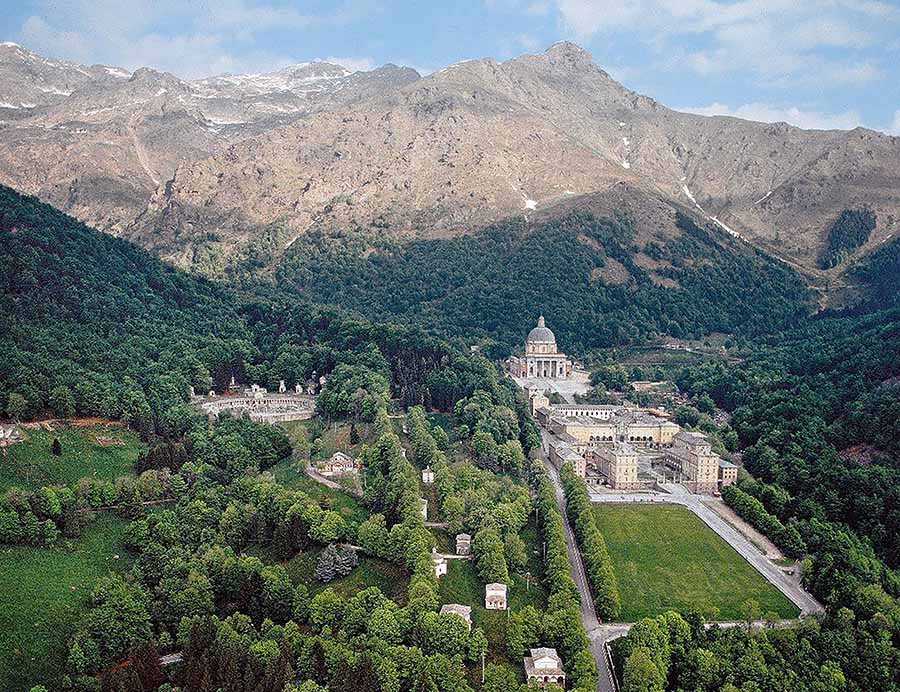
‘As their journey reaches the Alps, latter-day pilgrims are guaranteed to remember staying at the magnificent Santuario di Oropa. An hour’s drive from Pont Saint Martin (the start of Leg 6 of the Via Francigena in Italy), it’s located in a UNESCO World Heritage Site and is part of the Piedmont Special Nature Reserve. Rooms are available from just €75 in July.

‘Casa Diocesana in Lucca, which is the start of leg 28 of the Via Francigena pilgrimage, started life as a Renaissance villa in 1500 and was purchased in 1800 by the Diocese of Lucca. With woodland walks and a library, rooms are available in July from €65 a night.
‘On completing their pilgrimage, weary travellers can head to the atmospheric Casa il Rosarioin the heart of Rome. Owned by the Dominican Sisters of Charity, it’s a tranquil place to recover from their journey. Located near the Roman Forum, Venice Plaza, Trevi Fountain and Colosseum, it features an internal garden and a terrace. Rooms are available from just €50 a night in July.
‘Booking a stay in an abbey or monastery on the route of the Via Francigena is surprisingly easy. The unique accommodation site Monasteries.com provides a booking platform for European religious orders with stays across mainland Europe, Ireland, Scotland and England. There’s much more information about locations along the Via Francigena and how to book at https://www.monasteries.com/en-GB/via-francigena
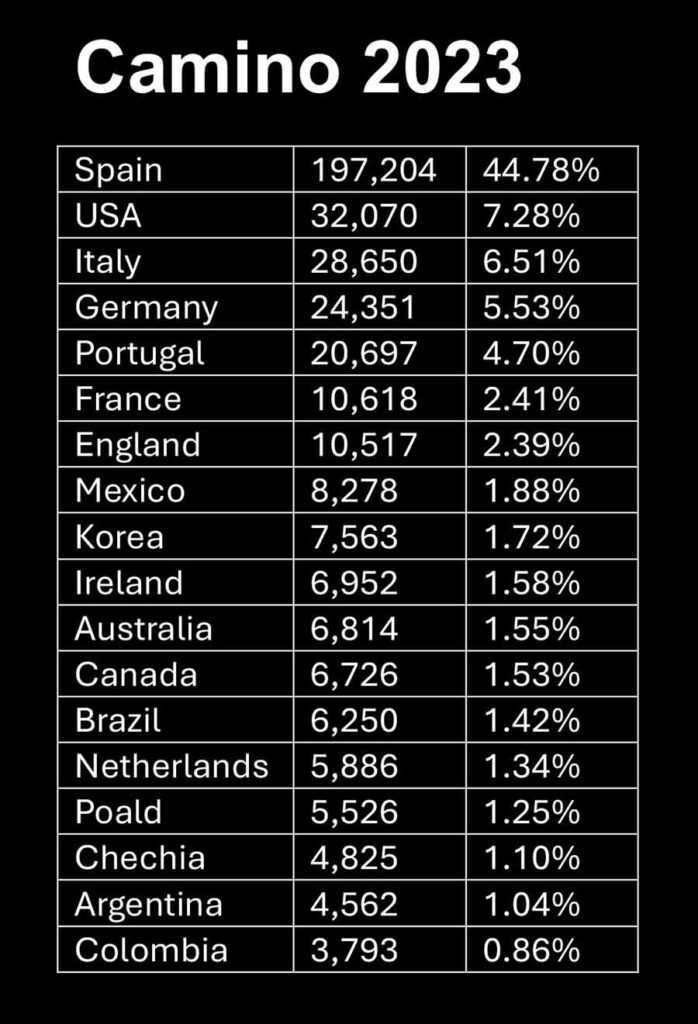
Lily Smith says: ‘In 1972, just 67 people completed Europe’s best-known pilgrimage, the historic Camino de Santiago. Last year, it was 442,073. Just 50 years ago, many pilgrim routes were little more than dusty, forgotten byways. There is little doubt many people have recently become more conscious of the age-old attraction of setting out on a pilgrimage. ‘The typical profile of modern pilgrims is changing. Just a few years ago, most modern pilgrims travelled in large, predominantly male groups. However, last year, female pilgrims outnumbered males completing the Camino de Santiago, according to the National Catholic Register. They were also about half of Via Francigena travellers, a notable increase even on 2022. From a low in 1972 of 67 recorded pilgrims officially completing the Camino de Santiago de Compostela – Europe’s most popular pilgrimage – the number of modern pilgrims finishing the route in 2019 (just before the Covid pandemic) was 347,578. The number fell to 53,905 in 2020, and returned to 438,000 in 2022 and 446,000 in 2023. Last year, even that figure was eclipsed, with a record 442,073 people completing the journey Cementing its popularity, the Camino de Santiago de Compostela has been the subject of The Way, a film starring Martin Sheen, as well as popular books and documentaries.