
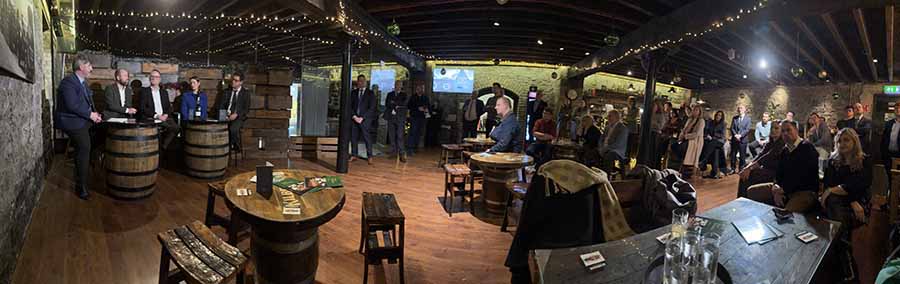
At a well-attended event in Locke’s Distillery in Kilbeggan, the Irish Whiskey Way has been launched as a mechanism for collaborative marketing, enabling smaller distilleries to benefit from a collective identity. It facilitates visitor clusters, allowing tourists to combine multiple whiskey experiences within a day trip from Dublin or a longer regional tour.
This structure assists distilleries in capturing a segment of the tourism market that is both interested in whiskey and demonstrates a readiness to spend.
The Irish Whiskey Way is an initiative connecting 26 distilleries to celebrate a 700-year industry history, aimed at providing an authentic visitor experience across the island. It seeks to leverage the tourism appeal of whiskey to support local communities, suppliers, and the broader distillery sector. The launch preceded by five days the publication of a new national tourism strategy, which included a new emphasis on food for the first time, and served an early indication of renewed government focus on the industry.

Peter Burke, Minister for Tourism
Peter Burke, Minister for Tourism, told the launch of the Irish Whiskey Way at Kilbeggan in County Westmeath that the sector requires particular attention due to external pressures, including trade uncertainty with the United States, a key export market. He cited the statistic of onem visitors to Irish distilleries in the past year as evidence of the opportunity. The minister stated that government policy will aim to grow visitor numbers and revenue sustainably while creating viable career paths for the 46,000 people employed in the sector.
The minister positioned tourism as a core economic concern, noting it supports one in every ten jobs and is now housed within the Department of Enterprise. He emphasised a partnership model with agencies like Fáilte Ireland and Tourism Ireland, with a commitment to setting measurable targets for future performance. This approach is designed to choreograph policy effectively and ensure the sector can grasp significant growth opportunities.
Acknowledging the challenges faced by the agri-food and spirits export sector, of which 90pc of production is sent overseas, the minister assured the industry of government support. The new tourism plan, to be launched imminently, is expected to include capital funding for regional development, building on previous investments in areas like the Hidden Heartlands.
Minister Burke said the government views the Irish Whiskey Way as a strategic component of a broader plan to enhance tourism’s economic contribution through collaboration, targeted investment, and sustainable growth metrics, directly linking the success of businesses to national policy objectives.
Minister Burke shared: “here we have 26 distilleries really celebrating a 700-year history which has been so instrumental right across the landscape,such an authentic brand that we have that really is truly special and I think there’s a huge amount of opportunity in it.”
“We are working in partnership with you. Your success is our success and we’re really focused now over the next number of years on growing revenue sustainably, growing our visitor numbers and critically ensuring that there are going to be viable career paths in our hospitality sector and our tourism sector.”
“We have to put targets on ourselves to ensure that we are going to meet them because if you can’t measure it well then you can’t judge it and you can’t choreograph policy into the future.”
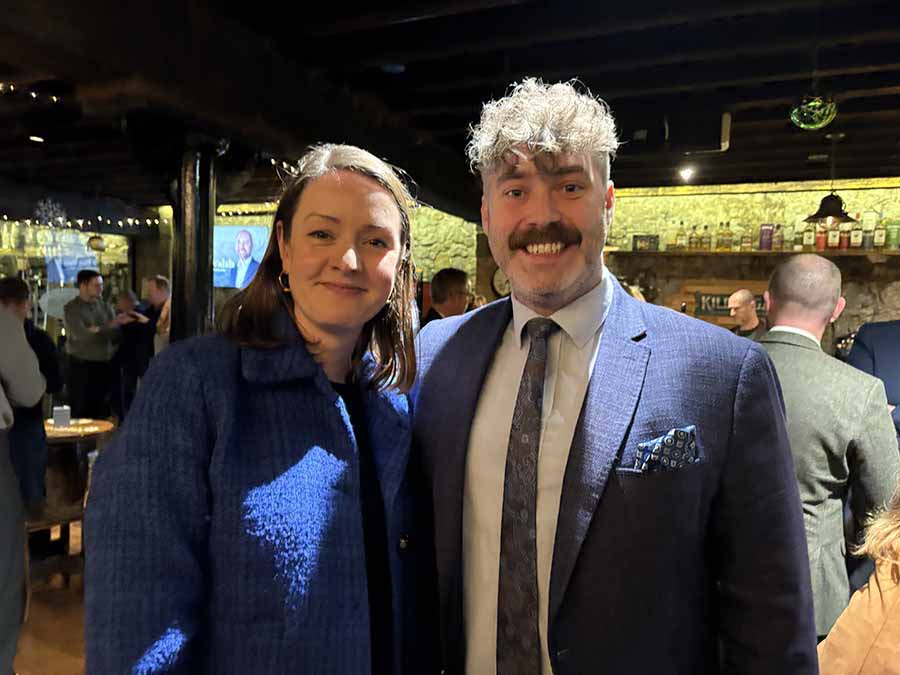
Alice Mansergh
Alice Mansergh, CEO of Tourism Ireland, told the launch of the Irish Whiskey Way at Kilbeggan in County Westmeath that resolving capacity constraints is a priority, citing the removal of the Dublin Airport passenger cap as a key development. She noted a 12pc increase in total seat capacity for the winter, including rises of 17pc from the US and 13pc from Germany. This improved air access is viewed as a positive turnaround, enabling more visitors from the country’s top four overseas markets.
Irish whiskey tourism is demonstrating strong reciprocal growth, with distillery experiences attracting over one million visitors and showing year-on-year increases of over 20pc. This success illustrates how tourism aids the whiskey sector and vice versa, providing an authentic narrative for international marketing. Tourism Ireland leverages this story in overseas campaigns, which have generated millions of views, and integrates distillery representatives into trade events to sell directly to global tour operators.
Ms Mansergh addressed the issue of destination competitiveness, acknowledging government moves such as the retention of the 9pc VAT rate for tourism. She stated that in a climate where international consumers are more cost-conscious, Ireland must prove it is “worth it” as a destination. The strategy involves emphasising unique, memorable experiences, like those on the Irish Whiskey Way, to justify the choice over competing destinations.
Market diversification forms a core part of the strategic response to over-reliance on any single source. Mansergh revealed plans for a strategic air access fund to stimulate demand for new long-haul routes and increased investment in growth markets like Canada, where visitor revenue grew over 30pc from 2023 to 2024. Doubling down on mainland Europe is also a focus, targeting its large population of higher-earning potential visitors.
The CEO expressed confidence in the sector’s foundations, drawing inspiration from innovative small businesses and entrepreneurs creating experiences across rural Ireland. The task ahead is to ensure the necessary structures, particularly air access and competitive pricing, are in place to connect these experiences with the growing number of international visitors seeking authentic and historical cultural engagements.
Alice Mansergh shared: “Tourism has been good for whisky and whisky has been good for tourism… it really helps us sell the island of Ireland overseas when we can all collaborate and come together and write a big story.”
“If we can identify what the issue is and then really come together on problem solving, there are usually ways forward.”
“If you’re not going to be the cheapest destination, you have to be a destination that people really want to come to. So we’re putting a lot of thought into how do we show people that the island of Ireland is worth it.”
Eoghan O’Mara Walsh
Eoghan O’Mara Walsh of the Irish Tourism Industry Confederation told the launch of the Irish Whiskey Way at Kilbeggan in County Westmeath that the air access picture from North America remains a core strength, with double-digit increases expected for the first half of the year. However, he cautioned against over-dependence on this single market, advocating for a strategy to also bolster visitor numbers from Europe, Great Britain, and emerging markets to ensure balanced growth.
He framed tourism as a critical economic livelihood, particularly in rural regions where it can be the predominant industry. The collaborative effort extends beyond businesses to include government agencies pursuing pro-tourism policies, which collectively enable the sector’s performance. He cited the launch of the Irish Whiskey Way as a practical example of distilleries, agencies, and government aligning to create a new visitor proposition.
Tourism operates on a model of industry-wide collaboration, where businesses from aviation to attractions work in unison to sell Ireland as a destination. The sector is the largest indigenous industry and primary regional employer, often acting as the principal economic driver in areas like the Wild Atlantic Way. Initiatives such as the Irish Whiskey Way demonstrate this cooperative approach, elevating the role of tourism in local economies.
While positive about the continued flow of North American visitors, O’Mara Walsh acknowledged the broader context of macroeconomic and geopolitical uncertainty. The importance of air and sea access was underscored as fundamental for an island nation, with no alternative land connections for international visitors. The confederation’s role is to represent this diverse industry and advocate for conditions that support its sustainable development.
The four person panel discussion at the launch, moderated by Eoin Ó Catháin, highlighted tourism’s reliance on collaboration and infrastructure, its vital economic role in regional Ireland, and the need to strategically diversify source markets while capitalising on current strengths. The sector’s future growth is seen as dependent on continued partnership between industry and government to navigate external challenge.
Eoghan O’Mara Walsh shared: “Tourism is the largest indigenous industry in the country it’s the biggest regional employer.”
“There’s an element of danger that we’re becoming a little bit over dependent or too dependent on the North American market. So I think we’d all like to see, you know, to deepen and defend and grow that North American business, but let’s also bolster European business or GB business or new emerging markets.”
“I’m still quite positive about the North American market next year. And I think that’s very good for Irish tourism.”
Paddy Andrews
Paddy Andrews of Fáilte Ireland told the launch of the Irish Whiskey Way at Kilbeggan in County Westmeath that distilleries act as a catalyst for regeneration in rural towns. He cited examples in Lanesborough and Drumshanbo, where distilleries have led economic renewal, providing a boost to community morale and stimulating ancillary businesses. Andrews noted that distilleries are among the region’s most important privately owned attractions, as they possess a more sustainable revenue model from product sales, with tourism serving as a valuable add-on.
Andrews highlighted specific innovations emerging from the Irish Whiskey Way, such as The Shed Distillery’s bundled experience with Electric Bike Escapes, known as the Jackalope Trail. This type of collaboration between distilleries and other tourism businesses is building out the destination from the ground up. The goal is to disrupt the perception of the midlands as merely a place to pass through by creating compelling clusters of visitor experiences.
The director emphasised the regenerative impact of tourism, particularly through community-based and publicly owned enterprises, which form the bulk of the region’s attractions. Distilleries provide a unique anchor, bringing visitors and revenue into rural communities that may have experienced decline. This influx can then stimulate further local economic activity and development.
The Hidden Heartlands strategy centres on local collaboration and leveraging distilleries as economic and regenerative anchors. The approach aims to transform the regional tourism model by creating integrated experiences that encourage longer stays and greater visitor spending, thereby fostering sustainable growth for rural communities.
The Hidden Heartlands is a tourism brand for 11 counties in the midlands, developed to establish the region as a destination rather than a transit route. It leverages core assets of culture, food, drink, and landscape to build a sustainable industry, with injections of funding such as Just Transition aiding development. The model emphasises collaboration between local businesses and communities to cross-promote and create a credible visitor offering.
Paddy Andrews of Fáilte Ireland shared “Traditionally it’s been a place where people probably pass through on their way to the holidays to the west but we’re trying to disrupt that and trying to change that.”
“I can’t underestimate the importance of distilleries for tourism in areas like Hidden Heartlands because most of our visitor attractions are either community-based tourism enterprises… or they’re publicly owned. The most important privately owned visitor attractions we have are actually distilleries.”
“It gives a boost to the community and it gives us a renewed sense of belief within a local rural community that might have been in decline for a number of years and then is beginning to come out of that.”
Irish Tourism Industry Confederation, tourism industry collaboration Ireland, ITIC representative body, air access Ireland tourism, North American visitors Ireland, indigenous Irish tourism industry, regional employment tourism, Wild Atlantic Way economy, Irish Whiskey Way launch, tourism policy government, staycation market Ireland, tourism sector economic impact
Michael Clancy
Michael Clancy of Lough Ree Distillery in County Longford told the launch of the Irish Whiskey Way at Kilbeggan in County Westmeath that the business leverages its central location in the Hidden Heartlands, arguing it is not “off the beaten track” but a convenient detour for routes between major cities. The distillery organically attracts international visitors seeking authenticity, who often arrive unannounced. Clancy cited an example of a tour operator from Hawaii who returned with a group for a full-day experience integrating the distillery with local heritage sites and pubs, which was valued for its genuine character.
Mr Clancy identified whiskey tourists as a pre-qualified audience with disposable income, contrasting them with more challenging consumer markets in Europe. He noted that every bottle of whiskey sold internationally functions as an advertisement, drawing future visitors to the distillery and its region. The removal of airport restrictions on liquids in hand luggage was cited as a practical factor that could positively influence direct sales to departing tourists.
The distillery’s current visitor experience is described as modest, with acknowledged need for further investment. However, customer demand is demonstrated through organic arrivals from global locations including Singapore, Tasmania, and multiple US states. This traffic is attributed to growing interest in whiskey, awareness generated by the Irish Whiskey Way, and positive word-of-mouth.
The presentation framed the distillery’s model as a dual operation: a production business whose product markets a tourism destination, and a tourism business that capitalises on a central location and authentic local partnerships. The key enablers for growth are seen as collaborative regional marketing, the intrinsic appeal of whiskey tourism, and logistical improvements like the change in airport security rules.
“For us, yeah it’s hugely important because what it does for us is it creates a kind of a common brand and allows us as a small producer to benefit from the kind of joint marketing that we get. We’re in the very heart of Ireland… we’re actually on the beaten track, not off the beaten track, we’re very central and it’s kind of one of the points we’re quite central when people are traversing the country. The authenticity was what they really loved and that’s what Hidden Heartlands really captures and what Hidden Heartlands is all about.”