- Antrim Round Tower (The Steeple): Standing in Antrim town, this well-preserved 10th-century round tower is a remnant of an early monastic settlement, possibly linked to St Patrick’s influence in the area. Round towers served as bell towers, refuges, and landmarks for pilgrims, and this site evokes the spread of Celtic Christianity in Antrim, drawing visitors interested in early Irish monastic heritage.
- Ballynaglogh Standing Stones, near Ballycastle: A group of three Neolithic menhirs (standing stones) on the north Antrim coast, dating to the prehistoric period. These megaliths reflect pre-Christian ritual or ceremonial use of the landscape, possibly for astronomical observation, burial, or seasonal rites. They offer a glimpse into Ireland’s ancient pagan reverence for marked stones and natural features.
- Bonamargy Friary, Ballycastle: The ruins of a Franciscan friary founded in 1485, but situated in a landscape with earlier Christian and possibly pre-Christian significance near the Glens. It served as a place of pilgrimage and contemplation in medieval times, with its peaceful graveyard and coastal proximity attracting those exploring Antrim’s layered religious history.
- Cranfield Stones at St Olcan’s Well complex feature ancient standing stones or bullauns, blending pre-Christian sacred elements with Christian devotion.
- Holy Well, Holywell Townland (near Antrim town): An ancient holy well in Holywell townland, tied to local early Christian traditions and possibly pre-Christian water veneration. Though less documented today, such sites in Antrim often served as places of healing and prayer, reflecting the continuity of sacred springs in the county’s spiritual geography.
- Sacred trees, particularly lone hawthorns (fairy trees), dot Antrim’s rural landscapes and often mark holy wells or ancient sites. These are revered for their protective and healing qualities, with folklore warning against disturbance, preserving echoes of pre-Christian nature cults.
- Saint Olcan’s Well (Tobar Naomh Olcáin), Cranfield: Located on the shores of Lough Neagh near Churchtown Point, this renowned holy well is dedicated to St Olcan (or Olcán), a disciple and contemporary of St Patrick who founded a church here. Pilgrims historically performed “rounds” over three days, circumambulating the ruined church and well, with the waters believed to aid childbirth, protect against drowning, and offer cures (using gypsum “amber pebbles”). An outdoor Mass is held annually near St Olcan’s feast day (29 June), making it a focal point for local devotion.
- Slemish Mountain: This prominent volcanic plug is traditionally where the young St Patrick, enslaved as a shepherd from around age 16 to 22, tended flocks and prayed. The mountain’s slopes and summit, with panoramic views over the Antrim Hills and beyond, draw thousands of pilgrims each year, especially on St Patrick’s Day (17 March), for a steep but rewarding climb symbolising the saint’s spiritual awakening and Ireland’s patron saint’s enduring legacy.
- St Brigid’s Well, Ballycastle: Dedicated to St Brigid, one of Ireland’s patron saints, this holy well in the northern Glens area ties into her widespread veneration, with possible pre-Christian roots in goddess traditions of healing and fertility. Visitors seek blessings here, especially around her feast day (1 February), in a setting that blends early Christian devotion with the county’s folk traditions.
- St Olcan’s Well (also known as Cranfield or St Olcán’s Well, near Cranfield Church) is a renowned holy well dedicated to St Olcán, an early disciple of St Patrick credited with founding churches in the region. This site draws pilgrims seeking healing, with rituals echoing ancient water veneration that predates Christianity. A notable rag tree (often a hawthorn) stands nearby, adorned with cloth offerings left by visitors for prayers and cures—a custom rooted in pre-Christian tree worship and continued at many holy wells.
- St Patrick’s Well, Glenariff: A holy well associated with St Patrick in the scenic Glens of Antrim, this site reflects the saint’s missionary journeys through the region. Known in local tradition for blessings and healing, it attracts devotees for quiet prayer and rounds, exemplifying how Patrician sites overlaid earlier sacred springs in the county’s glens.
County Antrim:
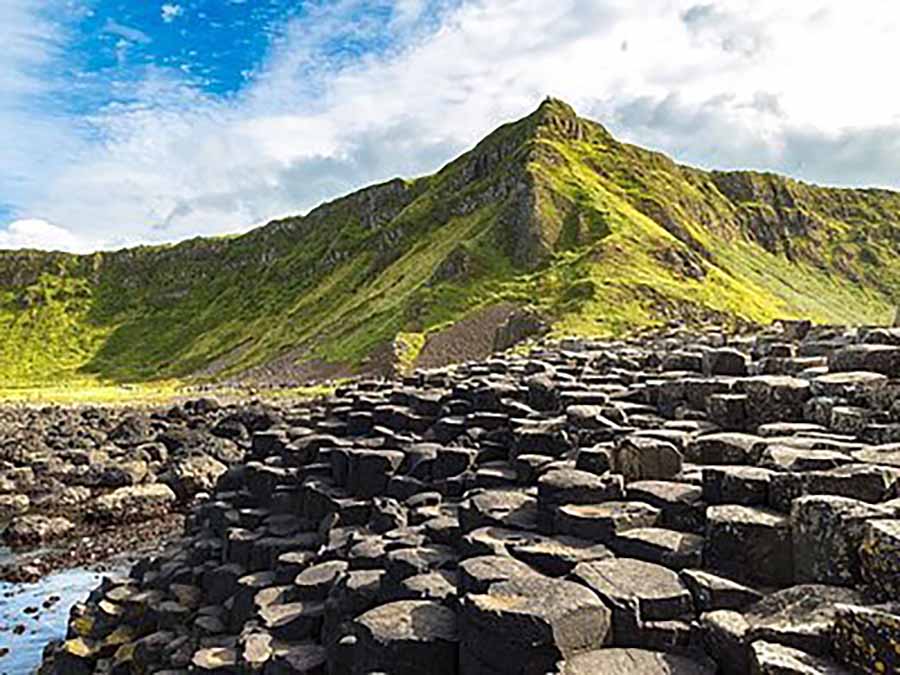
Ireland’s County Antrim offers a stunning blend of coastal beauty and historic sites, with the Giant’s Causeway, a UNESCO World Heritage Site, showcasing unique basalt columns along the rugged shore. Carrickfergus Castle provides a glimpse into medieval history, while the Glens of Antrim offer scenic drives through rolling hills. Other attractions include the Belfast Botanic Gardens and coastal. Antrim is Ireland’s ninth largest county by size (3,046 square km) and second largest by population (651,321). In terms of hospitality, Antrim is Ireland’s fifth most visited tourist county with around 525,000 international visitors per year.
Introduction – Adventure – Anthem – Archaeology – Attractions – Awards – Birdwatching – Camping – Castles – Churches – Contact list – Cycling – Dining – Equestrian – Festivals – Fishing – Folklore – Gardens – Golf – Graveyards – Happening – Haunted – Highest – Hiking – History – Holy Wells – Hotels – Hotels8 – Instagrammable – Itineraries – Largest town – Luxury – MICE – Movies –Musicians – Name – New – Novelists – Off the beaten track – Poets – Pubs – Quotes – Random facts – Restaurant Awards – Sacred Places – Saints – Spas – Sports – Sunsets– Sustainable – Things to do – Towns – Video – Villages – Walking – Wanderlist – Weddings – Wild swimming – Writers – 1837 – 1846 – 1852 – 1909 – 1955 – 1980 –
Sacred Places
Antrim – Armagh – Carlow – Cavan – Clare – Cork – Derry – Donegal – Down – Dublin – Fermanagh – Galway – Kerry – Kildare – Kilkenny – Laois – Leitrim – Limerick – Longford – Louth – Mayo – Meath – Monaghan – Offaly – Roscommon – Sligo – Tipperary – Tyrone – Waterford – Westmeath – Wexford – Wicklow