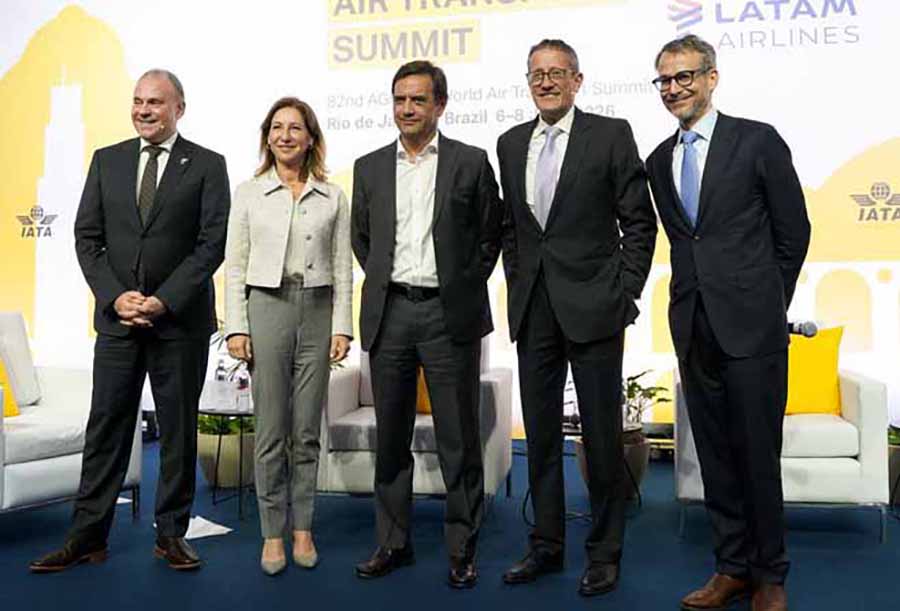
The scale of the OEM crisis emerged at a CEO panel at the IATA congress in Rio, with aircraft and engine manufacturers delivered behind schedule with some operators reporting aircraft on ground status due to technical problems. Compensation negotiations focused on spare engine support and maintenance cost adjustments rather than legal action.
Speaking at the IATA 2026 congress in Rio de Janeiro Adrian Neuhauser, CEO of Abra Group, who has a young fleet, noted that only two aircraft remained affected after resolution efforts. Widebody operations recovered while talks with original equipment manufacturers continued on performance and cost issues.
Airlines described the duopoly in manufacturing as limiting options and emphasised partnership over confrontation to maintain ecosystem function. Management time devoted to supplier coordination increased substantially.
Modern fleet operators invested in densification and efficiency measures while addressing maintenance cost rises on new engines. Spare parts and support formed central elements of discussions.
Willie Walsh shared: “WIt’s very disappointing to see the delays and it’s principally an issue of being able to replace older aircraft that have continued in operation. So, as I mentioned, we’ve seen the average age of aircraft increase to 15.2 years against the long-term average of 13.7. And that has led to additional and much higher maintenance costs. It’s led to higher fuel burn and it’s also created an environment where leasing costs for aircraft have significantly increased, it’s adding a very significant financial burden.
I think to be fair to the airframe manufacturers I think we’re seeing some progress there but the pinch point continues to be the supply of engines and it’s not just engines for new aircraft. It’s ensuring that we have engines for aircraft that have been delivered that are now sitting on the ground because a lot of new aircraft that were delivered in very recent times are waiting for engine replacement and parts and clearly that’s unacceptable.
It’s adding to our fuel bill. It’s adding to our maintenance bill. It’s adding to our lease costs. It’s adding to operational disruption. And as I mentioned earlier, we estimated that the financial impact of that was about 11 billion US last year. And in an environment where fuel costs are higher this year than last year by about 70pc. Even if we make some progress on some of the other issues, it’s still going to represent a very significant financial penalty on the industry next year.
And our message is very simple. The engine OEMs need to get their act together. They need to sort this problem out. We’ve gone beyond the point where we’re being patient with them. We’ve lost patience. They need to get their repairs done. They need to get their performance improved and the fact that they continue to make very significant levels of profitability — like I’m talking about levels of profitability that we’ve never seen in this industry, many of them 20pc plus operating margins, double-digit growth versus last year — they’re doing financially extremely well while inflicting significant financial pain on the industry and it’s just unacceptable that that continues.
So they need to get their act together and they need to do it quickly.“