Ryanair’s results presentation for the April to June quarter of 2027 says that the airline has widened its lead as Europe’s lowest fare airline with record traffic and strong financial positionRyanair has reinforced its position as Europe’s lowest cost and lowest fare airline, with the gap over rivals continuing to widen, according to its latest results presentation.
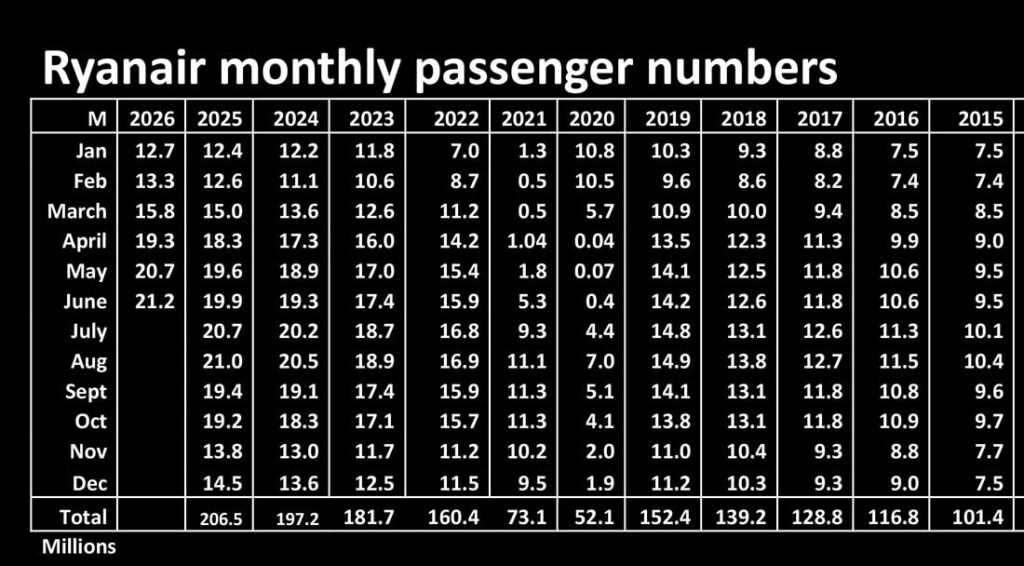
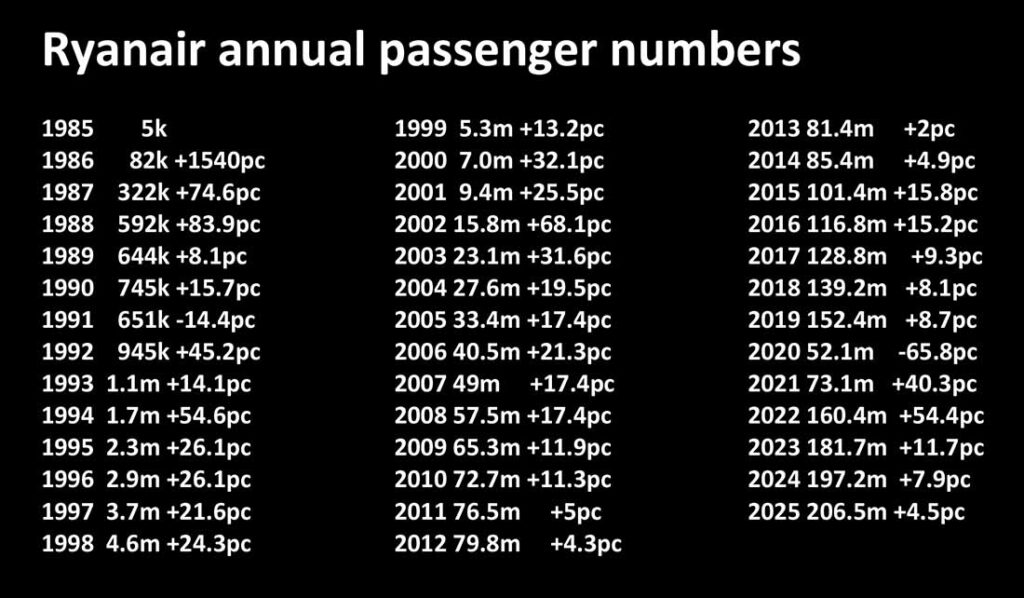
The airline carried a record 216m passengers in the full year, representing fourpc growth, while achieving number one on time performance and a record customer satisfaction rating of 91pc. It also ranked as the number one global large cap ESG airline according to S’alytics ratings.
Ryanair highlighted its order for 300 Boeing MAX 10 aircraft, which will support a decade of growth from 2027 onwards. The combination of financial strength and lowest costs positions the group as the long term winner in European aviation, it said.
Europe’s leading network and scale
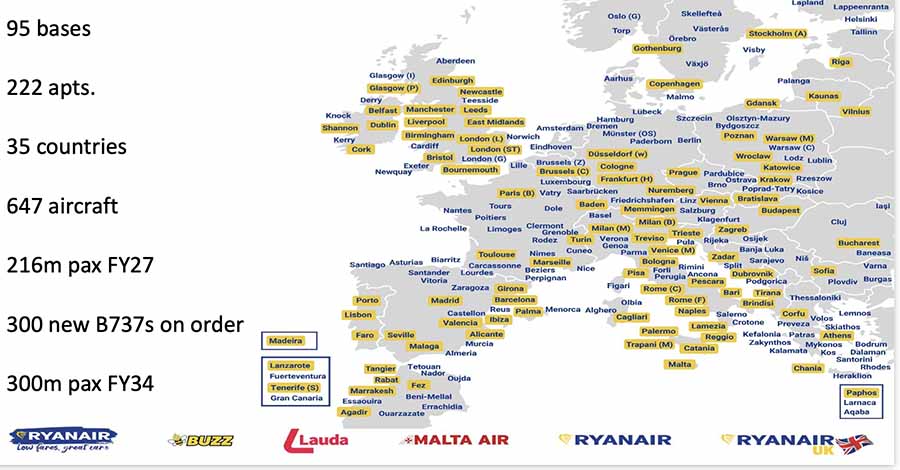
The carrier operates from 95 bases and serves 222 airports across 35 countries with a fleet of 647 aircraft. It expects to carry 216m passengers in financial year 2027, rising to 300m per annum by financial year 2034, supported by 300 new Boeing 737 aircraft on order. Unit costs remain Europe’s lowest
Ryanair maintained the lowest unit costs ex fuel in Europe, significantly ahead of competitors including Wizz Air, easyJet, Lufthansa Group, IAG, and Air France KLM. The gap has widened since 2019 pre Covid levels, with Ryanair’s costs showing far greater efficiency in areas such as staff, airport handling, route charges, ownership, maintenance, sales and marketing, and net finance. Q1 FY27 results show resilience
In the first quarter of financial year 2027, Ryanair carried 61.3m guests, up sixpc on the prior year. Load factor remained at 94pc, while average fare fell sixpc to 48 euros. Total revenue rose onepc to 4.38bn euros, with total costs increasing 11pc to 3.81bn euros. Profit after tax stood at 538m euros, down 34pc year on year. The group maintains a fortress balance sheet with strong liquidity.
As of June 2026, total assets were 18.2bn euros, including 2.8bn euros in cash. Shareholder funds stood at 9.5bn euros, with the group holding a BBB+ credit rating from Fitch and S&P, an unencumbered Boeing 737 fleet, and net cash of 2.7bn euros. The final 1.2bn euro bond was repaid in May 2026, leaving Ryanair debt free. Current outlook and hedging
Summer 2026 volumes are strong, though second quarter fares are trending modestly lower year on year. Full year traffic is guided at 216m passengers, with first half growth of sixpc and second half at twopc. Ryanair has hedged 80pc of jet fuel for financial year 2027 at 67 dollars per barrel and 15pc for financial year 2028 at 85 dollars per barrel. Boeing MAX 10 programme on track
647 aircraft
The fleet stood at 647 aircraft (including 210 GameChangers) at the end of June. Boeing expects MAX 10 certification in late summer 2026, with the first 15 aircraft arriving on schedule in spring 2027. The 300 MAX 10 order will deliver 20pc more seats and 20pc less fuel burn, enabling lower costs and fares while supporting growth to 300m passengers annually by financial year 2034. ESG leadership and environmental efficiency
Ryanair continues to lead on environmental performance among large European airlines, recording the lowest CO2 per passenger kilometre. It maintains strong ESG ratings and high customer satisfaction while investing in more fuel efficient aircraft.
The presentation emphasised Ryanair’s structural advantages, including scarce capacity shifts towards airports and states cutting taxes and fees, positioning the airline for continued profitable low fare growth in the years ahead. All forward looking statements remain subject to risks including fuel prices, macroeconomic conditions, and geopolitical factors.