Aragon is set to enrich its visitor experience in 2026 through innovative promotional strategies, enhanced accessibility, and a focus on sustainable, high-quality tourism. While major new hotel openings specific to the region appear limited compared to coastal areas, the emphasis lies on immersive promotion, inclusive tourism, and leveraging existing strengths in nature, heritage, and gastronomy.
Ongoing investments continue in boutique and rural accommodations, particularly in scenic areas like the Pyrenees and Teruel’s villages, aligning with a push for quality over quantity. No prominent luxury chain openings (such as those from Accor or others announced for Spain in 2026) have been tied specifically to Aragon , though the destination benefits indirectly from increased international interest in inland Spain.
Visitor Attractions, Experiences, and Enhancements
Aragon ‘s 2026 offerings centre on innovative presentation and thematic experiences rather than entirely new physical attractions.
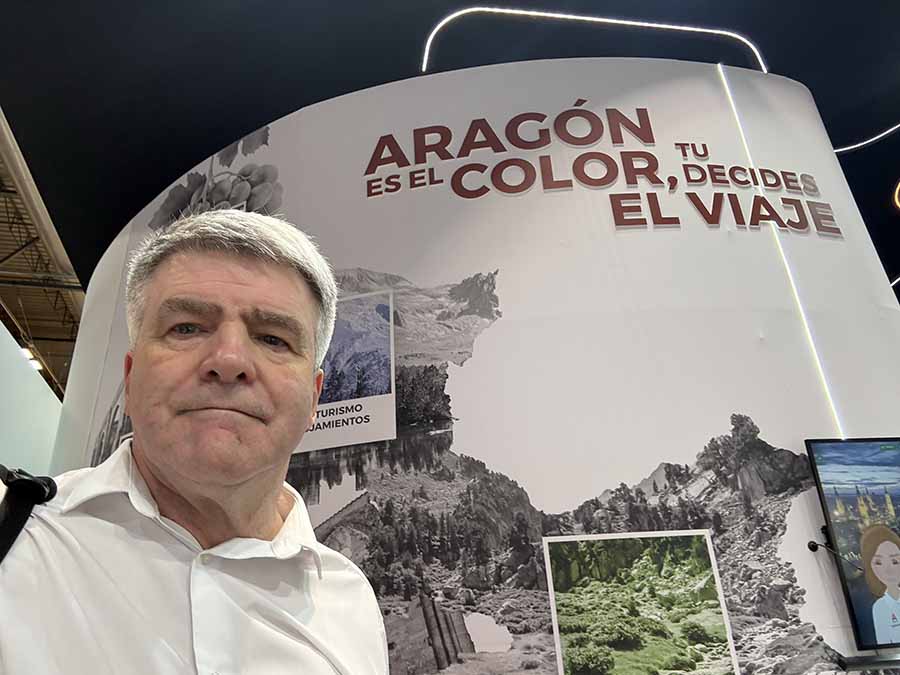
Aragon brought its most ambitious stand to date: a 746-square-metre, two-storey immersive space with 236 square metres of LED screens, a central plaza for 100 people, an AI-powered 3D virtual assistant, synchronised aromas with videos, and multi-sensory elements.
The stand is themed “Aragon es el color, tu decides el viaje” (Aragon is the colour, you decide the trip), divided into five thematic nodes: green (Nature and Adventure), violet (Spirituality, Culture-Heritage), blue (Astrotourism, Accommodation-Hospitality), golden (EnoGastronomy and Experiences), and a central Aragon node representing the three provinces and capitals (Zaragoza, Huesca, Teruel). This setup aims to deliver an unprecedented audiovisual and sensory journey, showcasing the region’s diversity and inviting personalised travel planning.
Additional events at the fair include the launch of Aragon Turismo Accesible, a new website promoting inclusive tourism with detailed information on accessible attractions, accommodations, and routes across the region.
The province is strengthening its calendar with six new official fairs added for 2026, bringing the total to 122 events, many focused on local products, culture, and gastronomy (such as the Feria de la Cer√°mica y el Grabado in Matarraea and the Feria del Queso). These bolster experiential tourism and community engagement.
Zaragoza positions itself as a dynamic urban destination, highlighting its 2026 agenda of major cultural, artistic, and sporting events, including festivals like Vive Latino, Zaragoza Luce, Zaragoza Florece, the International Garnacha Festival, and the Goyescas Fiestas, alongside the 25th anniversary of Mud√©jar art’s UNESCO World Heritage status.
The Pyrenees remain a core focus for growth in adventure, nature, and astrotourism.
Manuel Blasco, Consejero de Medio Ambiente y Turismo, has emphasised the region’s commitment to innovative promotion, stating in relation to the FITUR stand and broader strategy that it represents a renewed, content-focused approach to showcase Aragon ‘s essence through immersive experiences.
Jorge Azc√≥n, Presidente del Gobierno de Aragon , has highlighted tourism’s role in regional development, noting the strong community involvement in events like the Bodas de Isabel in Teruel (celebrating its 30th edition as a Fiesta de Inter√©s Turistico Internacional) and linking it to economic and social benefits.
These initiatives position Aragon in 2026 as a destination for thoughtful, multi-sensory travel, building on its natural landscapes, historic sites, and cultural depth while promoting sustainability and inclusivity. Visitor numbers continue to rise, with early 2025 data showing over 3.8 million travellers and more than 8.4 million overnight stays in the first 11 months, setting a positive trajectory.