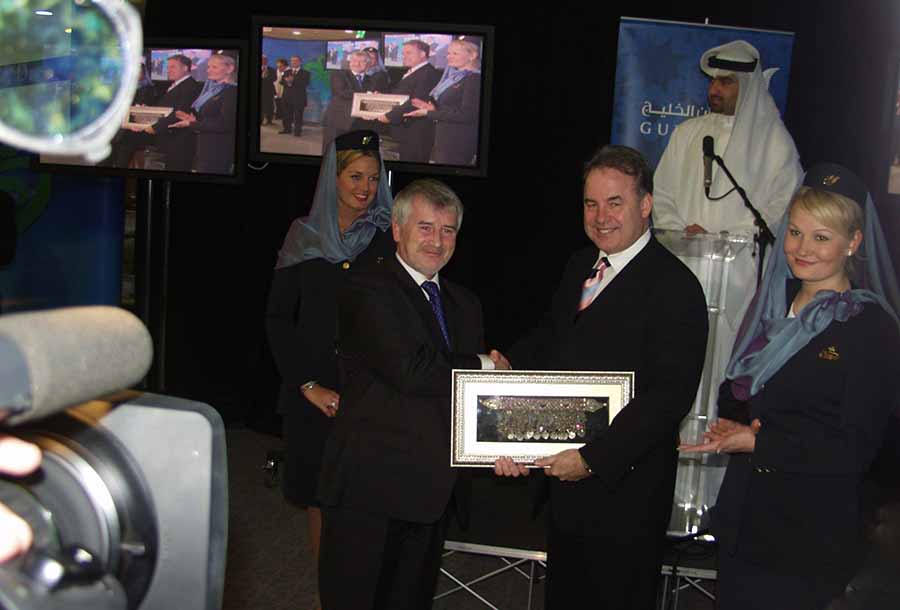
Twenty-one years ago in in December 2005, a suave Australian, and a third generation Corkman to boot, arrived on flight GF023 to Dublin airport. James Hogan was then CEO of Gulf Air, and he was ushering in a new era for Irish aviation, the first flight to what we sometimes precociously refer to as the Middle East. Inaugural flight GF024 to Bahrain followed (I was a happy passenger), and the cycle was complete.
Gulf Air expanded too fast and ran out of runway, but Hogan was back in 2007, this time as CEO of Etihad, to start a new Dublin service to Abu Dhabi. Chair of Emirates, Tim Clark, who has a house in Lismore, county Waterford, followed in 2015 with the first flight to Dubai with Emirates. Lionel Ritchie performed at the lavish launch. Qatar flights to Doha followed two years later.
In the years since, Irish people have come to depend on those three airports for almost all of their eastwards connections. Freed from our dependence on Heathrow, we turned east in increasing numbers, up to eight flights daily pre-pandemic.
Our extraordinarily high passenger numbers to Australia, 100,000 outbound (for short-term trips, more when work visas are considered) and 125,000 inbound, would be unthinkable without one-stop connections. Philippines-bound nurses and Indian doctors are regulars on the five daily flights that traverse the skies to and from the desert cities. Irish business needs the 25 tonnes of cargo space below to export our most fragile and time sensitive produce. Horses, camels, and fresh oysters have flown below the passengers as they indulge the largest seat back screens in the sky.
Other European countries were turning east too as the airlines opened to secondary cities across the continent. Their airports have become some of the most connected in the world. Dubai has surpassed Atlanta as the world’s busiest airport with nearly 100m passengers annually. The gift of travel.
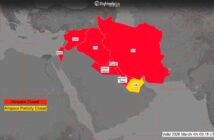
When the gift was taken away at noon on Saturday, the shock was enormous. Aviation will always err on the side of safety. In recent year, a single unconfirmed sighting of a recreational drone was enough to close down Gatwick, Amsterdam and Dublin. Military drones raining in from a wounded state paralysed the worlds most important cluster of aviation hubs.
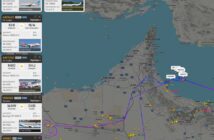
Three airports operating 2,500 flights, 1,200 of them through Dubai alone, were shut for five days. Reopening has been stop-start. The departure of flight EK162 from Dublin was announced at short notice on Wednesday and the gathering of passengers for flight EK163 from Dubai to Dublin, as less tidy than it might have been. Two flights, and a repatriation flight from nearby Oman organised by the government, are but a sandhill in the desert of the stranded.
Passengers who tried to find alternative routes found the handful of available seats filled up fast. Passengers were quoted €8,000 for economy flights through China or USA. Some in Dubai booked multiple flights in vain. Oddly the system accepted booking for flights on Tuesday and Wednesday that were certain not to fly, only to get more notifications of cancellations.
On Monday, the UAE government, rather helpfully, told the stranded they would pay for their hotel bills. Qatar came in with a similar reassurance on Tuesday. All very well, but the hotels continued to merrily charge their overstaying guests. The directive to the hotel apparently told them they would cover the costs IF THE GUESTS COULD NOT PAY. There was no onus to tell the guests.
What to do? Sit tight. The aviation industry is good at recovery. Through ash clouds, pandemics, strikes, storms, floods (as we had in Dubai), they can get it back together with surprising speed and lack of fuss. The protocol is that they contact the passengers, not, as some are advising, the other way round. You cannot get through on the phone to an airline. The first to be ushered out were told to be quiet about it, not to provoke jealousy or a rush on the airport, aviation’s equivalent of the Irish goodbye.
The authorities have decided to push ahead with a new policy of protecting the aircraft rather than the peacetime policy of protecting the entire airspace. The corridors that have been opened are designed to allow 48 aircraft an hour, almost enough to allow normal operations but not enough to clear the backlog. But the nature of these airports, where most passengers are connecting, means that most of the stranded will get to where they are supposed to be in a few days.
The story does not end there. Many of us are looking at our smartphone bookings to Melburne and Manilla, wondering if we can get to fly. The governments of the Gulf region have spent decades building their reputation as the hub of the world’s aviation.
The infrastructure was hard built, and the trust of the travelling public, were hard won. They know this too well. They are not going to give that up lightly.
The problem is that the Iranians know this too.