Begin your tour at the Colosseum, the iconic symbol of ancient Rome and one of the most recognisable landmarks in the world. Construction of this enormous amphitheatre began in AD 72 under Emperor Vespasian and was completed in AD 80 under his son Titus. Originally known as the Flavian Amphitheatre, it could hold up to 80,000 spectators who gathered to watch gladiatorial contests, animal hunts, and mock naval battles. The Colosseum remained in use for nearly 500 years until the early medieval period. Severely damaged by earthquakes and stone-robbers over the centuries, it stands today as a powerful reminder of the engineering prowess and public entertainment culture of the Roman Empire.
From the Colosseum, walk five minutes along the Via dei Fori Imperiali to the Roman Forum, the political, religious, and commercial heart of ancient Rome. This sprawling site includes ruins of temples, basilicas, and government buildings dating from the Republican era (509–27 BC) through to the Imperial period. Key structures include the Temple of Saturn (built around 497 BC), the Arch of Septimius Severus (erected in AD 203 to celebrate the emperor’s victories), and the House of the Vestal Virgins. The Forum witnessed pivotal moments in Roman history, including the funeral of Julius Caesar in 44 BC and countless Senate debates that shaped the destiny of the Mediterranean world. Allow twenty-five minutes to explore the main paths and imagine the bustling activity that once filled this area.
Continue your walk for another ten minutes uphill to the Palatine Hill, the most aristocratic of Rome’s seven hills and the legendary birthplace of the city. According to tradition, Romulus founded Rome here in 753 BC after killing his twin brother Remus. The hill later became the site of grand imperial palaces, including the vast Domus Augustana built by Emperor Domitian in AD 81–92. Many subsequent emperors expanded their residences here, turning the Palatine into a luxurious imperial complex. Spend twenty minutes wandering among the ruins, enjoying the views over the Forum and Circus Maximus below.
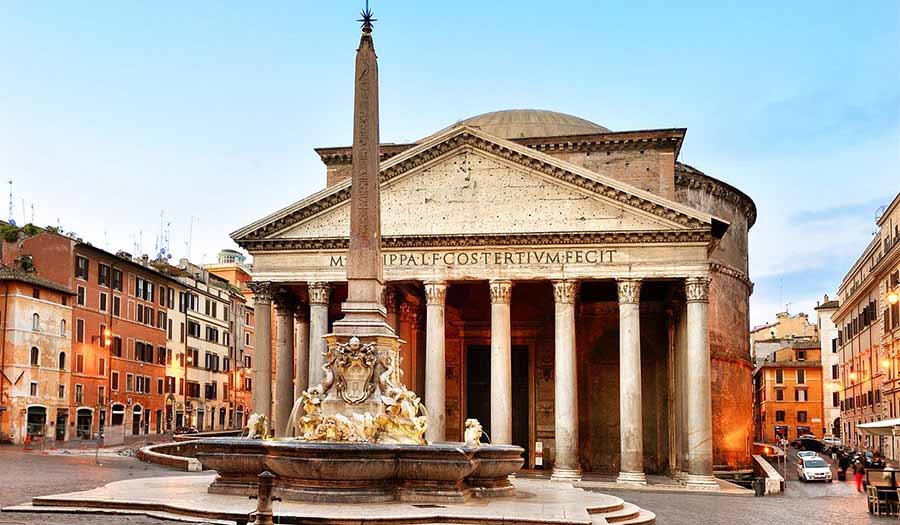
From the Palatine Hill, descend and walk fifteen minutes through the charming streets of the historic centre to the Pantheon. This remarkably well-preserved temple, dedicated to all the gods, was originally built by Marcus Agrippa around 27 BC and completely rebuilt by Emperor Hadrian between AD 118 and 125. Its massive concrete dome, with an oculus at the centre, remains the largest unreinforced concrete dome in the world and has inspired architects for centuries. The Pantheon also serves as the burial place of notable figures including the artist Raphael (1483–1520) and the first two kings of unified Italy. Take fifteen minutes inside to admire the engineering genius and the play of light through the oculus.
Next, stroll ten minutes west to Piazza Navona, one of Rome’s most beautiful Baroque squares. Built on the site of the ancient Stadium of Domitian (constructed in AD 86), the piazza retains the elongated shape of the original racecourse. The centrepiece is the Fountain of the Four Rivers, designed by Gian Lorenzo Bernini in 1651, which represents the major rivers of the four known continents at the time: the Nile, Danube, Ganges, and Río de la Plata. The square has been a place of public entertainment since Roman times and today features cafés, street artists, and the impressive Church of Sant’Agnese in Agone. Allow twenty minutes here to soak in the lively atmosphere and admire the surrounding palaces and fountains.
Finally, walk fifteen minutes north along the Via del Corso, passing elegant shops and historic buildings, to conclude your tour at the Trevi Fountain. This spectacular Baroque fountain, designed by Nicola Salvi and completed in 1762, marks the endpoint of the ancient Aqua Virgo aqueduct that supplied water to Rome since 19 BC. The fountain’s dramatic sculptures depict Oceanus and various mythological figures. Tradition holds that tossing a coin into the fountain ensures a return to Rome. Spend the final fifteen minutes enjoying the fountain and reflecting on Rome’s extraordinary journey from a small settlement founded in 753 BC, through republic and empire, to its enduring legacy as the Eternal City.
This relaxed two-and-a-half-hour walking tour covers approximately five kilometres and blends the grandeur of ancient Rome with the artistic splendour of the Renaissance and Baroque periods. The route is mostly flat once you descend from the Palatine Hill, with several opportunities to rest on benches or at cafés along the way.