- Ardmore Monastic Site (St Declan’s Monastery): This coastal monastic complex is Ireland’s oldest Christian settlement, founded by St Declan around 416 AD—predating St Patrick’s arrival. The site includes a round tower, cathedral ruins with Romanesque features, St Declan’s oratory (a tiny early church), and his grave shrine. It draws pilgrims honouring Declan’s role as an early evangelist of the Déisi people, with a dramatic seaside setting evoking timeless devotion.
- St Declan’s Holy Well, Ardmore: Perched above Ardmore Bay at the start of the Cliff Walk, this renowned holy well was a place of healing in pre-Christian times before St Declan used it as a baptistery for early converts. Revered for curative powers (especially for limbs and injuries), it remains a vibrant pilgrimage spot where devotees perform rounds, leave offerings, and gather on the saint’s feast day (24 July) or the nearest Sunday, blending ancient water veneration with Christian tradition.
- Lismore (with St Carthage’s associations and monastic heritage): An ancient ecclesiastical centre founded by St Carthage (Mochuda) in the 7th century, Lismore was a major seat of learning and pilgrimage in early medieval Ireland. The site includes cathedral ruins (now part of the modern cathedral) and links to pre-Christian sacred landscapes in the Blackwater Valley. It attracts visitors exploring the saint’s legacy amid a historic town with enduring spiritual significance.
- St Carthage’s Well, Lismore: Dedicated to St Carthage, this holy well in the Lismore area reflects the saint’s foundational role in the region’s Christianity. Known for blessings and healing in local tradition, it serves as a quiet place of devotion where pilgrims seek spiritual renewal, tying into broader patterns of early Irish saints Christianising sacred springs.
- Mothel (Tobar Chuain / St Cuan’s Well and church ruins): An early medieval monastic site with church ruins and a holy well associated with St Cuan (or similar early figure). The location exemplifies the spread of Celtic monasticism in Waterford, with the well drawing visitors for its serene rural setting and traditions of prayer and healing rooted in the county’s early Christian heritage.
- Kilrossanty (St Brigid’s Holy Wells): This rural area features multiple holy wells dedicated to St Brigid, set in the scenic Comeragh Mountains. Reflecting Brigid’s widespread veneration (with possible pre-Christian goddess links to fertility and healing), these wells attract pilgrims for blessings, especially in a landscape of quiet natural reverence and devotional practice.
- Ardmore Cliff Walk and Pilgrim Path: The dramatic coastal path from St Declan’s Well leads past monastic ruins, oratories, and sacred spots tied to St Declan. Part of St Declan’s Way (a long-distance pilgrim route from Cashel to Ardmore), it offers a meditative journey evoking the saint’s travels and the Christianisation of earlier coastal sacred places, with panoramic views enhancing its spiritual appeal.
- St Bartholomew’s Well (or similar local wells in the county): One of several lesser-known but significant holy wells in Waterford, often linked to early saints or Marian devotion. Such sites highlight the continuity of sacred water traditions from pre-Christian times through medieval patterns, where visitors perform rounds and prayers in peaceful, out-of-the-way locations tied to folk healing and local piety
County Waterford:
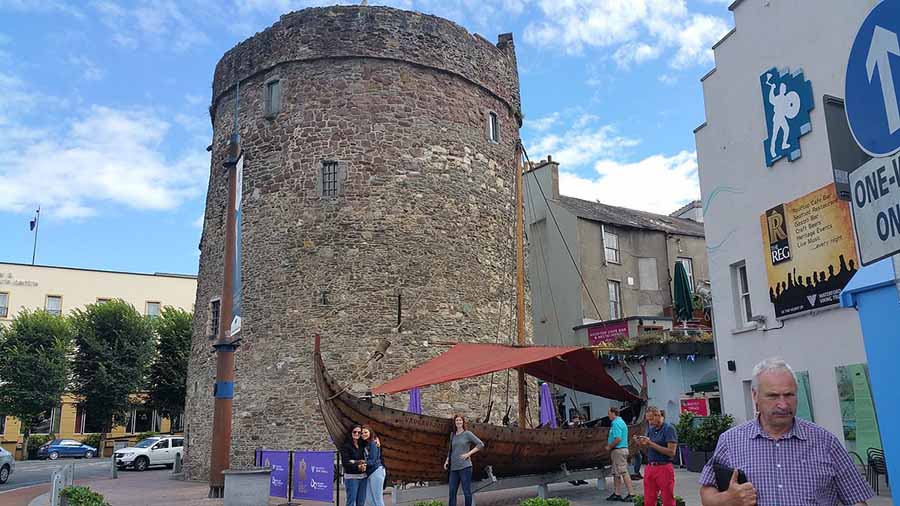
Ireland’s county Waterford is steeped in Viking and medieval history, with Waterford City’s Reginald’s Tower and Viking Triangle showcasing ancient artefacts. The Copper Coast, a UNESCO Geopark, offers dramatic coastal walks, while the Lismore Castle gardens provide serene beauty. Other attractions include the beaches of Tramore and historic Dunmore East. Waterford is Ireland’s 21st largest county by size (1,838 square km) and 20th largest by population (127,363). Population peaked at 196,187 in 1841 and reached its lowest point, 71,439 in 1961. In terms of hospitality, Waterford is Ireland’s ninth most visited tourist county with around 225,000 international visitors per year.
Introduction – Adventure – Anthem – Archaeology – Attractions – Awards – Birdwatching –– Camping –Castles – Churches – Contact list – Cycling – Dining – Equestrian – Festivals – Fishing – Folklore – Gardens – Golf – Graveyards – Happening – Haunted – Highest – Hiking – History – Holy Wells – Hotels – Hotels8 – Instagrammable – Itineraries – Largest town – Luxury – MICE – Movies – Musicians – Name – New – Novelists – Off the beaten track – Poets – Pubs – Quotes – Random Facts – Restaurant Awards – Sacred Places – Saints – Spas – Sports – Sunsets– Sustainable – Things to do – Towns – Video – Villages – Walking – Wanderlist – Weddings – Wild swimming – Writers – 1837 – 1846– 1852 – 1909 – 1955 – 1980 –