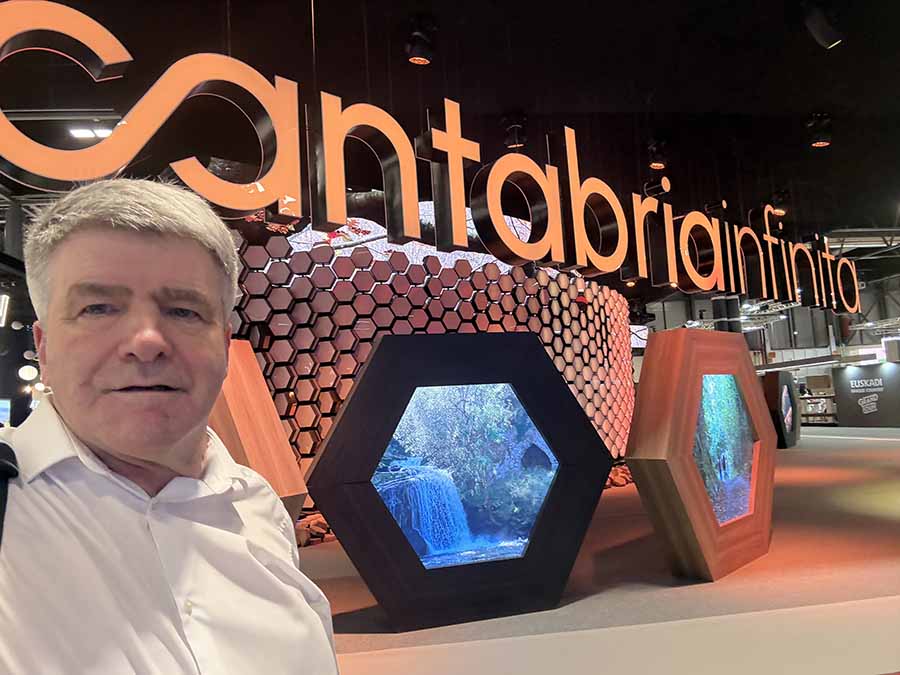
At FITUR 2026 in Madrid, Cantabria presents a renewed stand with updated audiovisuals, highlighting its transformation into a cultural reference and four-season destination. The stand serves as a strategic meeting point for the sector, featuring presentations, tastings, and immersive showcases of the region’s diverse contrasts.
Cantabria, the green northern Spanish region renowned for its dramatic coastline, Picos de Europa mountains, prehistoric caves, and cultural heritage, is advancing its visitor experience in 2026 with a strong emphasis on cultural tourism, year-round appeal, and sustainable development. The region positions itself as “Cantabria Infinita” – small yet infinite in contrasts and offerings – aiming to become a leading European reference for cultural tourism while promoting deseasonalised travel.
Major new hotel openings in Cantabria for 2026 remain limited, as the region’s hotel pipeline focuses more on quality refurbishments and repositioning rather than large-scale new builds (with Spain’s broader boom in openings concentrated in southern and coastal areas). Key enhancements include:
Hotel Áliva (Picos de Europa National Park): A comprehensive refurbishment of this historic mountain hotel, managed by the public company Cantur, is on track for completion in 2026 following the recent awarding of the municipal licence. The project involves a full integral renovation to modernise facilities while preserving its unique location in the heart of the national park, enhancing comfort for visitors exploring hiking trails, wildlife, and alpine scenery.
The sector benefits from steady growth in rural and boutique accommodations, supported by investments in existing properties across coastal towns like Santander, Comillas, and Noja, as well as inland valleys. Broader trends include participation in national programmes for accessible and sustainable stays, though no prominent luxury chain debuts are announced specifically for the region in 2026.
2026 marks a significant cultural milestone for Cantabria, with major museum developments in Santander forming a world-class “cultural triangle” in the Bay of Santander. These projects elevate the region’s appeal for art, history, and heritage enthusiasts:
Faro Santander (Santander Lighthouse): The transformation of Banco Santander’s historic headquarters into a cultural centre housing its renowned art collection is nearing completion, with full operations expected in 2026. Positioned opposite the Botin Centre, it creates a premier hub for contemporary and modern art.
Centro Asociado del Museo Reina Sofia – Archivo Lafuente (Santander): The former Banco de Espa√±a building will open as the first associated centre of Madrid’s Reina Sofia Museum outside the capital, featuring the Lafuente Archive – one of the most comprehensive collections of modern and contemporary art documentation. This is slated for inauguration in 2026, adding substantial depth to Santander’s cultural offerings.
New headquarters for the Museo de Prehistoria y Arqueologia de Cantabria (MUPAC): Part of the same cultural cluster, this enhanced facility will showcase the region’s exceptional prehistoric heritage, including links to Altamira Cave and other UNESCO sites.
These developments complement existing attractions like the Botin Centre (contemporary art) and reinforce Cantabria’s bid to become a European benchmark for cultural tourism. The strategy prioritises sustainable, high-quality experiences tied to heritage, nature, and knowledge, with year-round programming to attract visitors beyond summer peaks.
Luis Martinez Abad, Consejero de Cultura, Turismo y Deporte, has described the 2026 edition of FITUR as “una edici√≥n especial,” emphasising the region’s progress: “Cantabria exhibe en Fitur su transformaci√≥n para convertirse en referente europeo del turismo cultural y su apuesta como destino para todo el a√±o.” He has reaffirmed the commitment to a “sostenible y de calidad vinculado a la cultura, el patrimonio y el conocimiento” model, noting exceptional results in 2025 (over 2.1 million travellers) and the role of new cultural infrastructure in driving deseasonalised, high-value tourism.
Maria Saiz, Directora General de Turismo y Hosteleria, has highlighted promotional goals: “Queremos potenciar en FITUR la imagen de Cantabria como destino para todo el a√±o, somos un territorio que acoge y que tiene opciones adaptadas a cada √©poca.”
These initiatives position Cantabria in 2026 as a compelling, multifaceted destination blending breathtaking natural landscapes with emerging cultural excellence, offering immersive, responsible experiences across all seasons.