Like the fall of Constantinople in 1453, it was sucessful at the fifth attempt. The Irish led takeover of EasyJet faces further regulatory obstacles before it will get across the line, including a major question of ownership, but it is most of the way there. Strong funding, undervalued shares, the irretrievable damage of Brexit, this uneven siege was going to have one result.
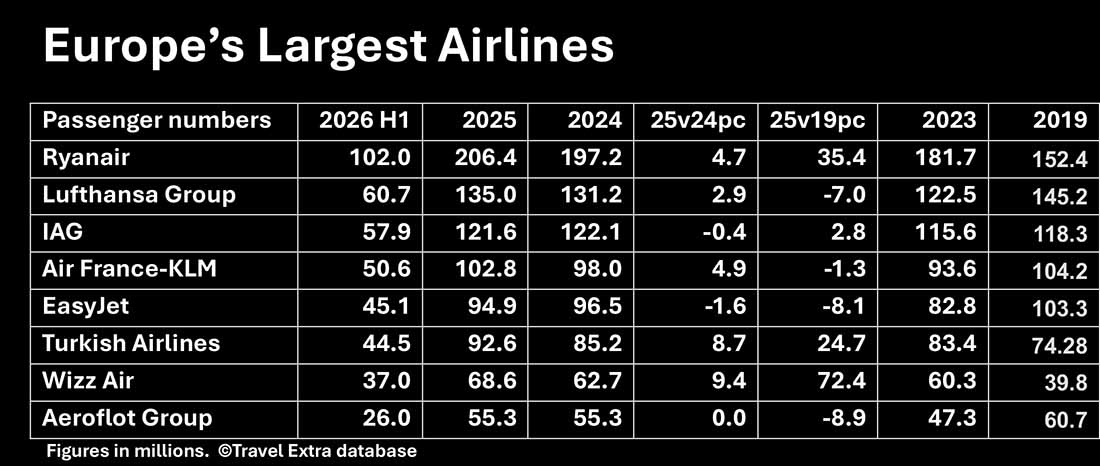
It has been a torrid time for airlines. A few weeks after the USA”s sixth largest airline failed, Europe’s sixth largest (fifth largest in 2025) has been the subject of a predatory takeover, as it to confirm the old adage “never waste a crisis.”
EasyJet confirmed the agreement in principle with Castlelake at €6.42 billion on a fully diluted basis after the US investment firm raised its offer to €6.90 per share. The latest proposal came after four previous rejections by the EasyJet board. Castlelake increased its bids in quick succession during June and early July 2026 as it gained access to limited commercial data. The structure includes a partial equity alternative that aims to satisfy European Union ownership rules. Castlelake confirmed it would hold 49 per cent of the bidding vehicle with the remainder held by two EU nationals.
Peter Bellew and Mark Breen play central roles in the takeover structure. Bellew famously served as EasyJet chief operating officer from 2019 to 2022 after previous positions at Ryanair and Riyadh Air. His deep knowledge of the airline and European aviation regulations positions him as a key figure in efforts to secure approvals. Breen brings senior industry experience that supports the bid’s governance framework. The involvement of these executives helps address concerns over control and compliance with EU requirements that demand majority ownership and control by EU nationals.
EasyJet shares revealed a 10 per cent rise in early trading on 6 July 2026 after the news broke. The airline trades at a discount to peers because of several structural challenges. Brexit inflicted lasting damage on EasyJet operations. The loss of seamless access to the European single market forced the carrier to establish new bases and restructure routes. This process increased costs and limited growth opportunities across the continent. The airline struggled to recover fully from the Covid-19 pandemic with job cuts and fleet adjustments that slowed expansion.
EasyJet failed to match the growth trajectory of Ryanair. Ryanair continued to expand its passenger numbers towards 300 million by 2034 while EasyJet dealt with higher fuel prices and margin pressure linked to the Iran conflict. Ryanair maintained a cost advantage and larger scale that allowed it to absorb shocks more effectively. EasyJet operates 355 aircraft across more than 1200 routes but found it difficult to achieve similar efficiencies in the post-Brexit environment. The undervaluation stems in part from these competitive pressures and the perception that independent operation limits future upside.
Stelios Haji-Ioannou founded EasyJet in 1995 with flights from London Luton to Glasgow and Edinburgh. He challenged established carriers with low fares and built the airline into a major player. Stelios left the board in 2010 but retains a roughly 15 per cent stake alongside his family. His entrepreneurial vision shaped the low-cost model that transformed European aviation. The founder oversaw key acquisitions such as Go Fly in 2002 and GB Airways in 2007. Between 2011 and 2013 EasyJet purchased 135 Airbus aircraft to modernise its fleet. These moves established the carrier as a significant force but recent years exposed vulnerabilities.
IAG commented on regulatory obstacles that prevented previous takeover attempts in the sector. The group cited complex EU ownership rules and national interests as barriers to consolidation. Similar concerns apply to the EasyJet proposal. Aviation analysts questioned how Castlelake and the EasyJet board would meet ownership requirements while maintaining operational control. The bid requires formal regulatory clearances across multiple jurisdictions. Castlelake must formalise its offer by 3 August 2026 under British takeover rules or withdraw.
The damage from Brexit revealed itself in several ways. EasyJet lost automatic rights to operate freely within the EU. This led to the establishment of additional bases in continental Europe and adjustments to crew licensing. Route planning became more complicated with new customs and border procedures. The airline faced higher administrative costs and reduced flexibility compared with pre-2016 operations. These factors contributed to slower recovery and made the company appear undervalued to private equity investors.
Peter Bellew returned to a prominent role through the Castlelake structure. His experience at EasyJet and Ryanair gives him insight into both airlines. The court battle between Michael O’Leary of Ryanair and Bellew remains part of industry lore. Bellew’s involvement in the EasyJet bid adds an intriguing layer to the Irish aviation narrative. Mark Breen complements the team with his executive background. Together they support the bid’s credibility with regulators and investors.
EasyJet rejected Castlelake’s initial proposals as opportunistic. The board raised concerns over governance and valuation. Castlelake responded by increasing its offers and demonstrating commitment to EU compliance. The final agreement in principle at €6.90 per share represents a 73 per cent premium to the closing price on 29 May 2026 when Castlelake first disclosed its interest. The bid also stands at a 24 per cent premium to the share price on 3 July 2026.
The airline operates in a challenging environment. Fuel prices rose sharply and margin pressure increased. Competition with Ryanair remains intense on many routes. EasyJet built a strong package holidays business and maintained an efficient Airbus fleet as positive elements. These strengths attracted the interest of Castlelake which specialises in aviation investments and leases aircraft to around 200 airlines.
The takeover process exposed EasyJet’s vulnerabilities after years of independent operation. The founder Stelios Haji-Ioannou built the airline from a start-up to a listed company with substantial market presence. His departure from the board did not diminish his influence as a major shareholder. The current situation places his stake at the centre of future ownership discussions.
Regulatory bodies in the UK and EU will examine the deal closely. Ownership and control questions require detailed scrutiny to ensure compliance with aviation regulations. The partial equity alternative forms part of the strategy to meet these standards. Success depends on approvals from competition authorities and transport regulators across Europe.
EasyJet confirmed it granted Castlelake limited access to commercial data in late June 2026 to facilitate higher bids. This step followed the rejection of a €5.79 billion proposal. The process moved quickly from that point with Castlelake submitting improved offers. The airline set a deadline of 5 July 2026 for a formal proposal which led to the agreement in principle.
The role of private equity in European aviation grows as listed companies face valuation pressures. Castlelake brings aviation expertise and financial resources. Its position as a major lender to airlines informs its approach to the EasyJet acquisition. The firm confirmed it would work towards regulatory clearances with best endeavours.
EasyJet operates routes in 38 European countries. The network includes valuable landing slots at London Gatwick, Paris and Geneva. These assets make the airline an attractive target. The takeover reflects broader trends in the sector where scale and capital strength determine competitive success. Ryanair maintains its position as Europe’s largest airline by passenger numbers. EasyJet seeks to secure its future through this transaction.
Stelios Haji-Ioannou launched EasyJet with a clear vision of low-fare travel. The airline challenged British Airways and other legacy carriers from the outset. Acquisitions and fleet investment supported expansion. The Covid-19 period tested the business model with job losses and capacity reductions. Recovery proved uneven because of Brexit complications. The current valuation reflects these accumulated challenges.
Peter Bellew and Mark Breen form part of the EU national ownership structure. Their appointments help navigate regulatory requirements. Bellew knows the EasyJet operation from his time as chief operating officer. This knowledge assists in transition planning should the deal complete. The executives contribute to the bid’s technical and operational credibility.
The EasyJet board accepted the latest proposal after months of negotiations. The premium offered recognises the airline’s underlying value while acknowledging current market conditions. Investors reacted positively with the share price increase on 6 July 2026. The market anticipates further developments as the formal offer period advances.
One of the great theatrical stand-offs in recent Irish aviation history was a court battle between Michael O’Leary and Peter Bellew. Should the EasyJet takeover succeed, that battle has not moved six miles upwards. The stand-off between two of Ireland’s leading aviators will be fascinating to watch.