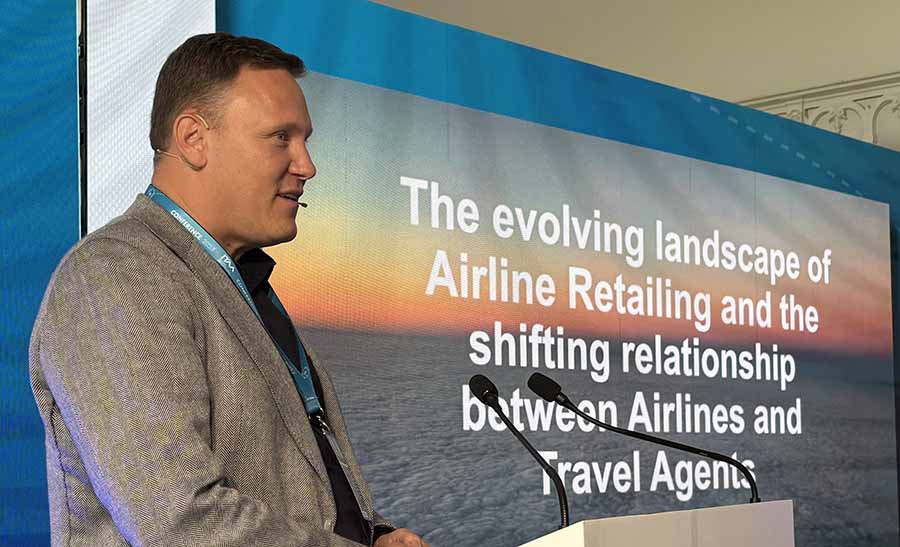
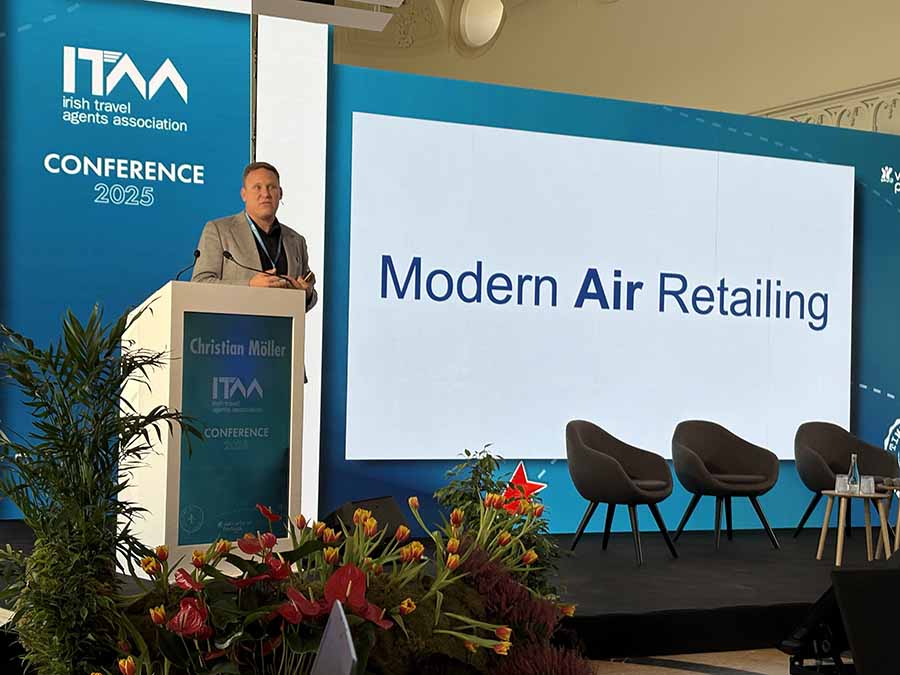
Christian Moller
A presentation by Christian Moller detailed the evolution of airline distribution from legacy Global Distribution Systems (GDS) to the current push for modern airline retailing, built on the foundation of IATA’s New Distribution Capability (NDC) standard. It traced a timeline from the first GDS in 1964 to the launch of NDC in 2012 and the recent formation of an airline consortium aiming for a critical mass of indirect sales via modern retailing by 2028. The core driver for airlines was identified as a desire for greater control over pricing, customer data, and product differentiation in the indirect channel to combat the commoditisation of air travel.
Christian Moller of ECTAA told the annual conference of the Irish Travel Agents Association in Alcobaca in Portugal that the industry must prepare for this change and not assume its adoption will be as slow as NDC’s has been. He noted that while only 21pc of global tickets are currently sold via NDC, the modern airline retailing project represents a more collaborative approach aimed at completely rethinking the retail process. This new model is based on three pillars: retailing with personalised offers, delivering with a single ‘order’ record, and implementing a traveller-managed digital identity.
Moller acknowledged the initial frustrations with NDC, including a lack of consultation, aggressive content withdrawal, and underperforming tools that damaged trust. However, he stated that NDC is now an established reality, with all major GDS heavily invested in it. He urged travel intermediaries to engage proactively with airlines and technology providers to understand their roadmaps and ensure their needs for servicing and functionality are met in the new hybrid distribution environment.
The speaker emphasised the continued value of travel intermediaries, who still fill half of all airline seats globally and possess deep customer knowledge beyond a single transaction. He argued that agents must confidently assert this expertise in discussions with airlines, framing themselves as essential retail partners rather than passive distributors. Their role will evolve, but their core functions of consultation, curation, and servicing remain vital for both customers and suppliers.
Moller concluded by urging agents to define their future role, engage with local airline forums, and utilise available resources to understand modern airline retailing. He recommended specific materials from IATA and a webinar produced with Amadeus, warning that ignoring this shift was not a viable option for a future-proof business. The ambitious industry timeline targets 2026 for the first live processing of interline ‘offers and orders’ and aims to decommission legacy standards by 2030.
Christian Moller shared: “We should not take the lesson from NDC and its slow adoption to impact our idea of what we expect for the future of modern airline retailing. It’s really important to be prepared for this ambitious timeline.”
“My message: use your expertise. I feel sometimes that travel intermediaries… are not as convinced of what they actually do as they could be, because they have a massive expertise. That’s the reason why these multi-billion airlines want to work with you.”
“Please don’t let the NDC experience make you think that modern airline retailing will progress at the slow speed that we have seen in NDC for the last 13 years… Let’s be prepared.”