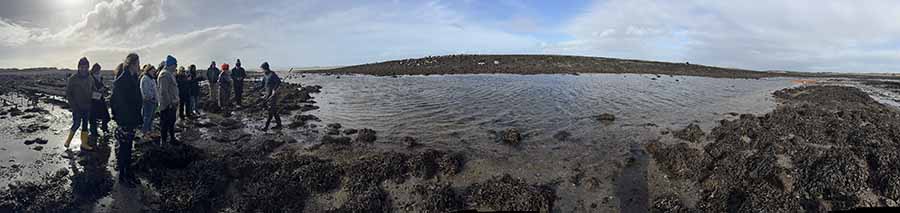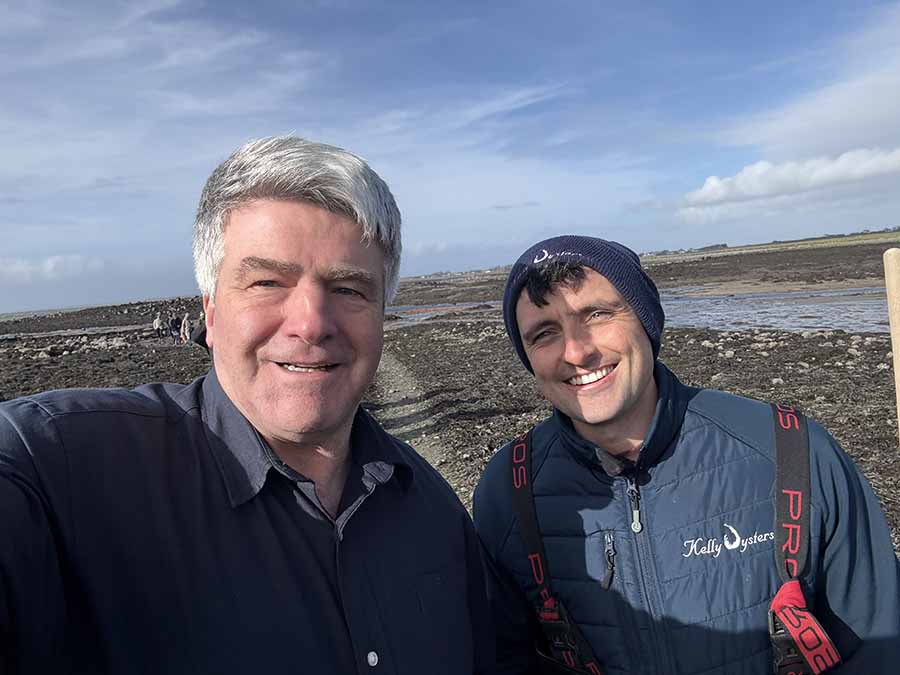
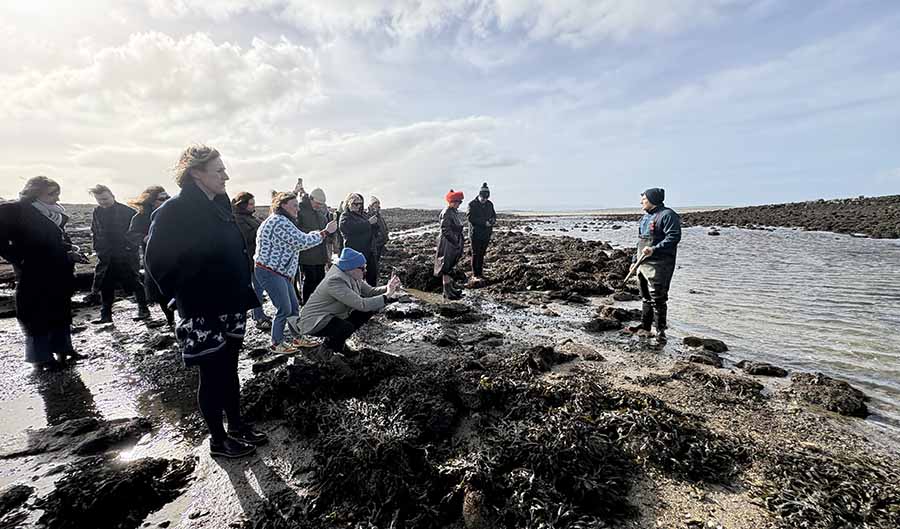
It is February on the West Coast of Ireland, an inlet of Galway bay, so the landscape and the sky does not need a description. Michael Kelly is in waders, the tide is low, and at Killeenaran Pier he is guiding a group of Irish journalists through his oyster farm. The scene will not have changed much since Michael’s grandfather started Kelly’s oysters in the 1950s. All his brothers had emigrated. There was nothing that the beautiful but barren farmland could yield, and Michael’s eyes turned to the sea. Kelly’s oysters is now not just a supplier of delicious product to customers in Europe and as far as Dubai, it is now one of the best offerings in experiential tourism that the region can provide.
For three generations, the Kellys have tended these beds in Galway Bay, where oysters have shaped the local community for thousands of years. He speaks of his grandfather’s decision to farm the sea when the land offered little, turning a necessity into a tradition that now draws people from across the world.
Visitors hear how the native flat oysters, known for their deep, briny flavour, differ from the more common Pacific types, and how the bay’s cold, nutrient-rich waters create a unique terroir. This historical thread runs through the entire visit, connecting each participant to a lineage of coastal resilience and ingenuity.
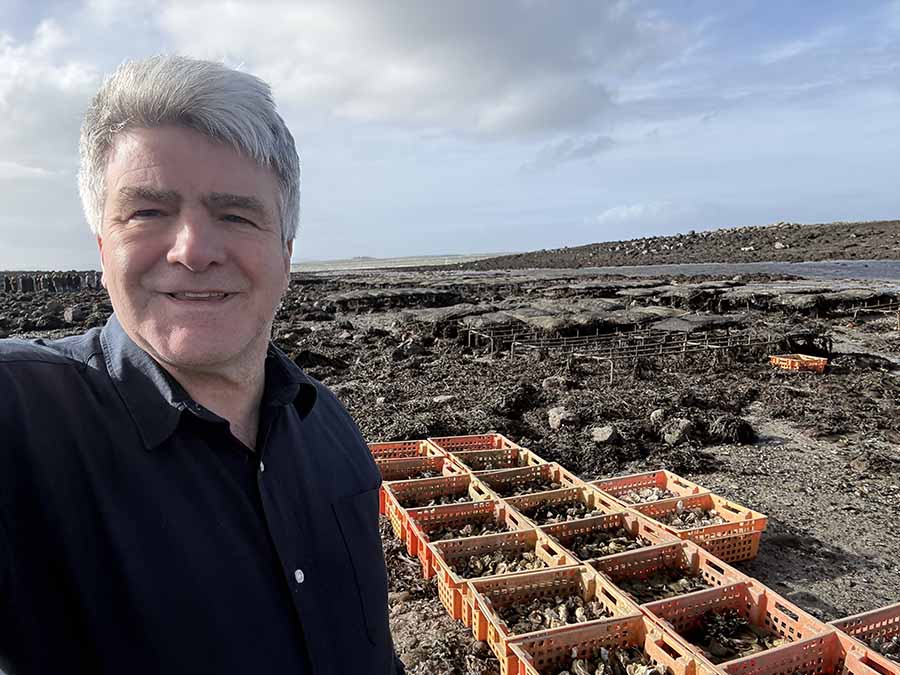
Michael leads the way across the rugged shoreline, providing waders for everyone to step into the shallows. The air carries the salt of the Atlantic, and underfoot, the ground shifts from pier stones to seaweed-strewn rocks. Here, at low tide, the beds reveal themselves rows of mesh bags anchored in the bay, where the oysters grow undisturbed.
Harvest tours
Participants learn to spot the clusters, and in the private harvest tours, which last two hours and accommodate up to eight people.. Public tasting sessions, running for one hour and twenty minutes with groups of up to sixteen, focus more on observation, but both options immerse guests in the rhythm of the tide.
Michael points out how the bags are turned regularly to ensure even growth, preventing the shells from fusing to one another. This hands-on element transforms a simple outing into a direct encounter with the sea’s bounty, where the chill of the water and the pull of the current remind everyone of nature’s unyielding force.
Back near the pier, Michael explains the process from seed to harvest. Tiny spat, no larger than grains of sand, arrive from hatcheries and spend months in protected nurseries before transfer to the bay. Over two to three years, they mature, filtered through the bay’s clean waters that the Kellys monitor closely for quality. Visitors discover the distinctions between farmed and wild oysters, with the former offering consistency in size and taste, while the latter remain rarer and more unpredictable.
Farm to feast
Michael reveals the grading system, where oysters are sorted by weight and shape in the packing house, ready for export or local tables. This knowledge dispels myths, such as the idea that oysters are only safe in months with an ‘r’, as modern practices ensure year-round purity. For those on the tour, priced at €60 per person, this segment provides a clear understanding of sustainable methods, including how the farm contributes to the bay’s ecosystem by filtering water and supporting marine life.
Shucking is a skill that Michael demonstrates with practised ease. On the 200-year-old pier, a pop-up bar appears, complete with tools and a spread of accompaniments. He shows how to hold the oyster flat, insert the knife at the hinge, and twist to reveal the plump flesh inside, all while stressing safety to avoid slips. Participants try their hand, often with laughter as the shells resist at first.
This act bridges the gap between farm and feast, turning novices into confident shuckers. Michael shares tips on pairings, like a dash of lemon or shallot vinegar, to enhance the natural minerality. In the private experiences, this moment feels intimate, while public groups share the communal joy of success. The demonstration confirms the care that goes into each oyster, from bed to blade.
Tasting on the pier
Our tour culminated in the tasting session, where the senses converge. Ours was held on the windy pier, with bottles from Galway Hooker craft brewery, and lots more chat. Freshly shucked oysters rest on ice, their liquor shimmering in the shells. Guests slurp them down, savouring the burst of sea essence, followed by sips of local craft beer and bites of traditional brown bread. The pier offers views of the bay, where waves lap against the stones, and the group reflects on the journey.
The finale ties together the history, the walk, the education, and the skill, leaving a lasting impression of authenticity. For families, including children as young as six, it becomes an adventure; for couples or friends, a shared discovery. Available from March to October to align with tides and weather, these tours reveal the essence of Ireland’s west coast, where the sea provides not just sustenance but a profound connection.
In an era when travel often prioritises speed over substance, Kelly’s oysters stands as a counterpoint. The experience fosters appreciation for slow, deliberate work, much like the oysters’ own growth. Michael’s guidance ensures every visitor leaves with stories to tell, whether of harvesting their first mollusc or mastering the shuck. The farm’s role in the community extends beyond tourism, supporting local economies through exports and partnerships, such as stops at nearby Moran’s Oyster Cottage.
It remains rooted in seashore simplicity: the tide, the beds, the taste. For anyone seeking to understand Ireland’s coastal heritage, this ranks among the finest ways to do so. The Wild Atlantic Way comes alive here, in the brine and the banter, proving that some traditions endure because they must. “time and tide” says Michael, “it is true what the proverb says.”
As the group departs on a bus being precariously turned on the narrow pier, the tide begins its return, covering the beds once more. Michael waves farewell, his waders still damp, ready for the next low water. In Galway Bay, the cycle continues, inviting more to partake in this timeless ritual. Time and tide, indeed.