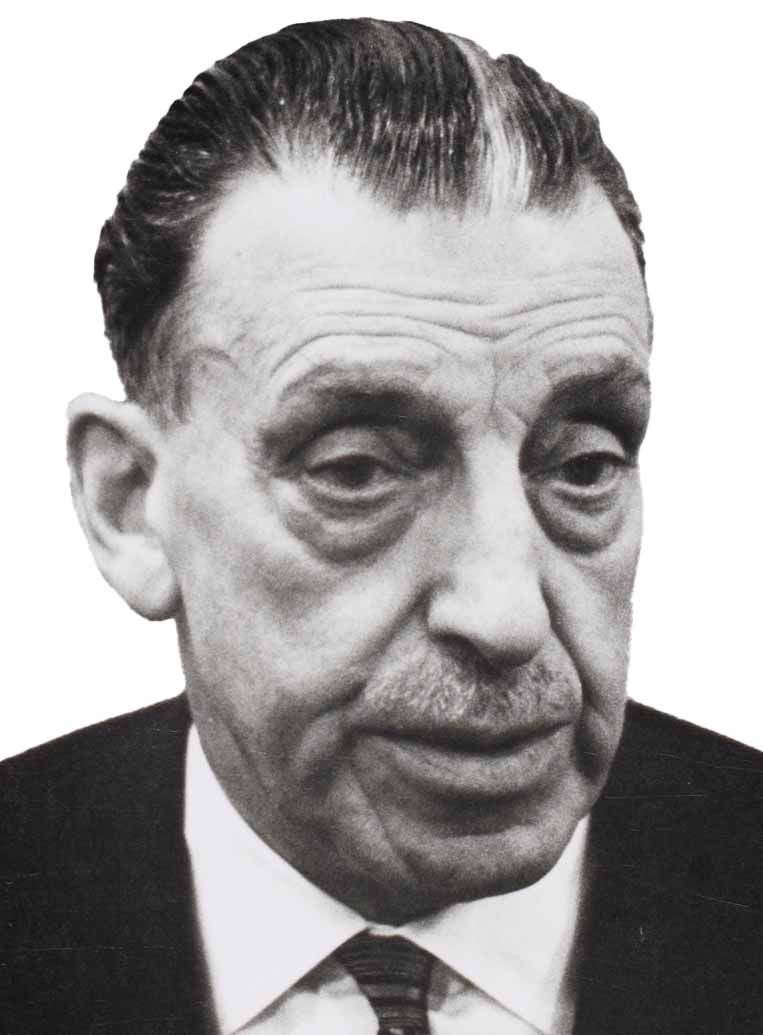
“My enthusiasm to render the State still further service remains undaunted, and my energies became directed towards the establishment and development of commercial aviation linking Ireland with the Continent. My old friend and service comrade, Colonel Charles Russell, came to my assistance in this matter to which we devoted our full attention. Our efforts were, however, fruitless as the Government of the day showed not the slightest interest. Bitterly I came to the conclusion that our stay-at-home compatriots lacked the high qualities of enterprise and endeavour which stood their brothers in such good stead in their activities abroad. Ireland seemed to me to be a land in which only the gombeen man could make good. I felt, somehow, I had had enough.” – Autobiography of Colonel James FitzMaurice, Irish aviation hero.
That was 1928, and Cumann na Gaedheal, the predecessors of Fine Gael, were in power. A committee appointed by Patrick McGilligan, the Minister for Industry and Commerce, had in fact reported in 1928 that a nationally-operated air service would require financial assistance in its early years, and the Government had decided to take no action. Fitzmaurice resigned his Air Corps commission in disgust.
Six years later, a new Fianna Fáil government was in power and Ireland was looking outwards again. The new government was perusing offers for a startup airline from private companies, but all of them were looking for money.
Firstly, there was solicitor Arthur Cox, who had formed the short-lived Irish Airways Limited “with a view to commencing, with the assistance of a government subsidy, a civil aviation service between Ireland and England and also within Ireland.” Cox’s son, also Arthur, became Ryanair’s legal advisors.
This was followed by Iona National Airways, which in 1932 conducted demonstration flights with a Fox Moth, EI-APP, with the intention of establishing a Dublin–London–Berlin route with feeder services to Cork and Galway.
Neither lasted long enough to launch commercial flights. Instead, a Scottish company, Midland and Scottish Air Ferries, were to claim the distinction of operating the first commercial passenger services between Ireland and Britain. Midland and Scottish were represented in Ireland by Captain H. J. Hosie of Athy, a director of Industrial Vehicles (Ireland) and distributor for de Havilland aircraft. Operations commenced on Monday, 13 August 1933 with a flight from Hooton, near Liverpool, to Baldonnel via Speke, and continued on a daily basis, Sundays excepted. The service lasted for just six weeks before it ceased on 30 September on account of poor loads, but also because the Department had informed Hosie that he would have to form an Irish company to continue to operate the service, and to include in any such company a representative of the Great Southern Railways, still the major privately or publicly owner transport interest in the country.
* * * * *
They had a name, but a service was still two years away. Aer Lingus was officially founded on 15 April 1936, to little fanfare. It is common to read (Wikipedia et al) that the usual name, not found in Dineeen or indeed any Irish language dictionary, was proposed by Cork county surveyor Richard F O’Connor.
O’Connor.had a major part to play. It was he who decided that the name of his new company should be in the Irish language, in which he was not fluent, and he enlisted the assistance of some Irish language scholars, Mícheál Ó Cuill of Comhaltas Oideachas Gairme Beatha (the Vocational Education Committee) in Cork. In May 1934, he forwarded a list of suggestions: Aer Raoin Teoranta; Aer Roda Teoranta; Aer Raid Éireann; Aer Bhóithre Éireann; Aer Réim Éireann; Aerdacht Éireann; Aereamhlacht Éireann. Ó Cuill also put forward the names of a couple of other people who might be able to help should none of these prove acceptable.
The name they chose was an anomaly, Aerlingus Éireann Teoranta, confirmed at a meeting on 6 June, 1934. The name was the exact equivalent of Aeroflot, derived from Aer, air and loingeas, a fleet. It was likely Seán Ó hUadhaigh who changed the word loingeas to the more immediately accessible lingus, a word not found in the Irish dictionary (the closest is lingeach, springy). Seán Ó hUadhaigh who appeared on the first Aer Lingus letterhead with the explanatory qualification “formerly John K Woods”, and who gave his address as Gleann Caorthainn, Dalkey. If the name is familiar, it is because of his son, the famous and oft-quoted legal controversialist Justice hUadhaigh.
O’Connor’s also proposed a design for an insignia for the airline, spread wings bearing in the centre a harp and the letters, in Gaelic script, AE. When the official logo was approved, the harp was replaced by a shamrock. It was left to Ryanair in 1986 to revive the flying harp.
Richard wanted a Cork airport to be built at Little Island, and this was to prove his entrée into the debate about Ireland’s national airline.
While Lemass did not agree with O’Connor’s core proposal that flying should commence from Baldonnel in 1935 pending completion of “The Great Airport of Cork”. The scheme did not win the approval of Sean Lemass, minister in charge of the scheme, or Sean Ó Huadhaigh, the solicitor appointed by Lemass to oversee the plans. Instead, O’Connor was given the task of bringing the rival aviation ehtusiasts together to agree on a new national airline.
On 24 May 1934 Ó hUadhaigh had written to O’Connor to tell him that he had been asked by the Minister for Industry and Commerce to use his good offices to try to bring together the two groups “who are trying to start a Saorstát air transport Company, with a view to avoiding dissipation of strength and energy on the promotion of rival schemes.”
That same day Seán Lemass told the Dáil: “The question of a Free State Air Navigation Company is being dealt with. We hope to have brought matters to the point that these services can be inaugurated at the beginning of next year.”
He was out by just under two years, but the engine was revving.
* * * * *
The correspondence shows that Ireland’s strategic interests were a prime consideration of Lemass. He regarded it as essential for the sovereignty of the country that it should have an independent airline.
“No one in Ireland was interested in having a proper Irish airline. The State had to put up the money,” recalled Tim O’Driscoll of the Department of Industry and Commerce and the leading champion of Irish aviation within the civil service:
Lemass wrote on the occasion of the 21st anniversary of Aer Lingus in 1957: “the decision to enter the field of civil aviation was one of the many difficult decisions which have had to be made by the State in the course of the past quarter century.”
Effectively the accidental midwife to the new airline, O’Connor was introduced to Charles Russell, whose own proposal for the formation of a public company, Irish Air Transport Limited has been submitted to the government, TJ Kenny of Galway, Chairman of the Irish Tourist Association, and a board seat was also reserved for a nominee of the Great Southern Railways.
Seán Lemass opined that, of the various schemes for air services, private chartering facilities and aerodrome development that had been submitted for the approval of the Government in the past few years, none had been sufficiently complete or satisfactory in every respect to command the fullest confidence.
“The object is the establishment of a first-class undertaking, capable of operating services up to the best European standard, and designed to enter substantially into the business of (a) air transport connections for mails, passengers, and the more valuable merchandise, between transatlantic steamer and — later — air services, on the one hand and European centres of population (including London) and the trunk European air services based on them, on the other hand; (b) services between Dublin and the six counties and Britain; (c) services wholly within the Saorstát. Certain co-operation might also be possible between the new Company and Pan American Airways in regard to transatlantic air services.”
The operation of services to and from other countries by the proposed Company involved reciprocal facilities for air transport services of the other countries. As it was desirable to reduce competition to a minimum, the possibility of co-operating with foreign companies in the ownership and control of subsidiary joint operating companies seemed to be worth investigating. Certain progress had already been made in tentative negotiations for a joint operating company for cross-channel services with England.”
O’Connor’s private correspondence reveals something of the egos involved: “I regret to say my experience was most disheartening. There are more petty jealousies among aviators than among ballet girls.”
In July 1934 O’Connor authored a prospectus of his proposed airline company proposing the issue of £56,000 in five-shilling (25p) shares out of a nominal capital of £100,000. He said: “it will be noted that Bulgaria and Ireland are at present the only countries [of Europe]which do not possess their own National Airline Company. It will also be noted that each Country’s Airline Company is given a distinctive name in the language of the country.”
In a first mention of what would become a core market for the modern Aer Lingus, O’Connor suggested that the principal object in establishing the airline, was to secure for an airline company, controlled and eventually manned by Irishmen, a share of the most paying portion of transatlantic transport by taking advantage of the geographical position and political circumstances of Ireland. This summer Aer Lingus will open their 24th trans-Atlantic direct route to Pittsburgh.
* * * * *
The cost translates to €10 million today, regarded as a tad excessive for a single aircraft service to a temporary facility in the middle of nowhere, especially in the straitened circumstances of the economic blocade of Irish produce being enforced by England. The government set about attempting to find a private investor, as was the case with the new quasi-national airline in Sweden, AB Aerotransport (ABA) as the frugal secretary of the Department of Finance, JJ McElligott had joyfully pointed out. As it happened, ABA was nationalised just as the plans for the new Aer Lingus were being drawn up and was later integrated into the foundation of SAS Scandinavian in 1946.
They explored a joint working arrangement with English and Isle of Man interests, Alan Cobham and Gordon Olley, Cyril Cunliffe-Owen and JWS Comber. That agreement came unstuck by late 1935 as the financial demands by the investors grew by too much for Lemass’s nerves.
When early the following year, the legislation to establish the airline began to wind itself through Dáil and Seanad, the Air Navigation and Transport Bill 1936, which enshrined the position of the State as owner and sole international carrier, was eschewing private partners and instead looking to European developments. KLM had been set up in 1919, Lufthansa in April 1926 and Air France in 1933, all of them state entities that benefited from official restriction of competition.
The aim of the legislation was to establish a national company “to centralise the administration of all future aerial development in or through the Irish Free State”.
It was authored by TJ O’Driscoll, who said he was fortunate in that a similar bill had just gone through the House of Commons in London: “I must say I took large chunks out of the debates.”
When the second reading took place in the Dáil on 8 July 1936. Seán Lemass was ill, and only two members of the Government party, Fianna Fáil, out of a possible seventy-six listened to Thomas Derrig, substituting for him, describe air transport “as the special expression of the spirit of the age, the spirit of practical achievement”.
Mr Derrig told the Dáil “We feel that it is absolutely essential at this stage that we should utilise any opportunities we have to the very fullest in developing our geographical position and putting this country on the map as a really international centre to which different countries would send their ships [and that we should establish the enterprise in such a way that this country would be well regarded on the Continent of Europe as one which has definitely taken up the air attitude.”
* * * * *
On Tuesday, 19 May 1936 a new radio station, to be known officially as DUBLIN AERADIO and unofficially as “the little tower,” opened at Baldonnel Aerodrome with the W/T (wireless telegraphy) callsign LIJ. It was operated by the Department of Posts and Telegraphs for the new Marine and Civil Aviation section of Industry and Commerce on a frequency of 348 kilocycles and was to be in service from 08:45 to 16:45 daily.
“We had to build up a radio communications service and the Chief Engineer of the Post Office did a fantastic job,” Tim O’Driscoll recalled.
Three days later, on 22 May 1936, Aer Lingus Teoranta was formally incorporated “to carry on and foster the business and pursuit of aviation in all its forms, both within and without Saorstát Éireann to make, build, assemble, buy, hire or otherwise acquire, and to equip and furnish, work and use, and to improve, repair, maintain, tend, cleanse, store and warehouse, and to supply, sell, let, lend or otherwise dispose of, and generally to deal in aircraft of every description.”
The first board meeting of the new company was held on Monday, 25 May at 11:00 a.m. at 57 Upper O’Connell Street, Dublin. The directors present were Seán Ó hUadhaigh, solicitor, in the chair; Augustus P. Reynolds, accountant; John O’Leary, company director; William H. Morton, Manager, Great Southern Railways; and Thomas J. Flynn, civil servant. The Board decided upon the name “Irish Sea Airways” for the new service.
On Wednesday, 27 May at 09:00 a De Havilland DH.84 Dragon carrying the registration EI-ABA and the name Iolar (Eagle) took off with five passengers from Baldonnel bound for Bristol.
The Irish Times editorial, together with the main news columns of all the Dublin newspapers that day, ignored the inaugural flght. Instead it was devoted to the maiden voyage from Southampton, England, of the new luxury liner Queen Mary.
The inaugural flight of the new airline took place on Wednesday, 27 May 1936.
But sin scéal eile.