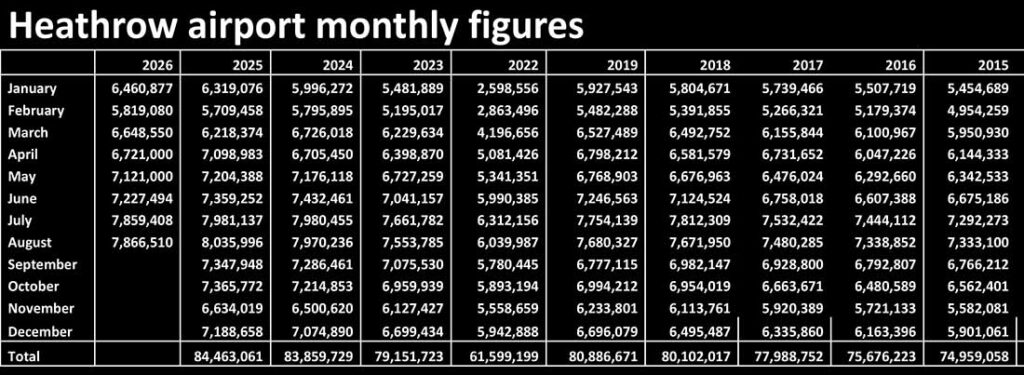
- Heathrow handled 18.9m passengers in the first three months of the year.
- This total showed a 3.7pc year-on-year increase.
- Airspace closures after 28 February affected air travel patterns.
- First-quarter revenue reached £844m after a 2.3pc rise.
- Adjusted operating costs increased by 6.5pc due to several factors.
Heathrow airport has warned that it expects its passenger numbers for the rest of the year to face effects from the situation in the Middle East. Some 18.9m people passed through its four terminals during the first three months of the year.
This figure represented a year-on-year increase of 3.7pc, as the west London airport temporarily absorbed demand from elsewhere.
Airspace closures followed the outbreak of the war in the Middle East on 28 February and they had a major impact on air travel. Much of the region’s airspace has since reopened, but many people have avoided flying there because of the war. In a trading update, Heathrow revealed that passenger numbers for the rest of the year are likely to experience impact while uncertainty remains in the Middle East.
Heathrow’s first-quarter revenue increased by 2.3pc from a year ago to £844m amid rises in passenger numbers, food and beverage sales and uptake of premium services. Its adjusted operating costs rose by 6.5pc, driven by increases in wages and national insurance payments, IT investments and the number of passengers requiring support. Sally Ding, Heathrow’s chief financial officer, shared that the airport is ready to proceed with its plan to build a third runway with the right regulatory framework and Government policy in place.
Sally Ding shared “the airport is ready to go ahead with its plan to build a third runway with the right regulatory framework and Government policy in place”.