The final day of ITB Berlin 2026, the world’s leading travel trade show marking its 60th anniversary, wrapped up with a strong emphasis on transforming responsibility into tangible action within the tourism industry. Deals struck during the event are estimated at €47bn.
Amid discussions on resilience, regeneration, and future-proof business models, experts and stakeholders gathered to share insights that could reshape the sector’s approach to global challenges. Drawing from various sessions across the convention’s tracks, including the Responsible Tourism Track, Hospitality Track, ITB Deep Dives Transformation Playground, eTravel Track, and Travel Tech Track, several pivotal themes emerged that highlight the industry’s path forward.
One prominent takeaway was the urgent need to shift from mere sustainability pledges to regenerative tourism practices that actively restore ecosystems and communities. Anna Pollock, founder of Conscious Travel and a key speaker in the Responsible Tourism Track, argued that tourism must view itself as part of a living system, warning that superficial efforts like doing more good would fall short in addressing deeper systemic issues. Her session underscored how regenerative models could lead to healthier destinations, urging operators to rethink their language and worldview for long-term viability.
Another critical insight focused on the escalating impacts of climate change, particularly in vulnerable regions. Donna Regis-Prosper, chief executive of the Caribbean Tourism Organisation, spoke on the convention stage about the region’s recovery from Hurricane Melissa, emphasising that adaptation to harsher storms is no longer optional but essential. She highlighted how climate risks are forcing tourism economies to invest in resilient infrastructure, with costs potentially running into billions of euros, and called for global collaboration to secure financing for such preparations.
The role of artificial intelligence in revolutionising travel also stood out, but not without caveats. Fevzi Okumus, a professor and AI expert, participated in a panel discussion warning that AI-driven processes could disadvantage marginalised travellers and reduce visibility for local providers. Drawing on recent studies, he stressed the importance of ethical implementation to ensure inclusivity, a point that resonated across the Travel Tech Track sessions exploring AI’s influence on booking behaviours and customer interactions.
In the realm of emerging trends, Nathan Blecharczyk, co-founder and chief strategy officer at Airbnb, the convention’s co-host, delivered insights into how nature tourism and short-term rentals are poised to define the next era of travel. His exclusive talk revealed strategies for balancing growth with environmental stewardship, suggesting that investments in eco-friendly accommodations could yield significant returns, potentially boosting sector revenues by integrating technology with sustainable offerings.
Resilience amid polycrises (the word feataued repeatedly in panel discussions) has emerged as a foundational theme, with speakers across tracks advocating for data-driven early warning systems to navigate geopolitical tensions and economic uncertainties. This takeaway built on the convention’s overarching motto of leading tourism into balance, where panellists like former German foreign minister Joschka Fischer’s earlier inputs were referenced, reinforcing how the industry must assert itself in an unstable world to maintain stability.
Innovation in hospitality operations was another highlight, particularly from the Hospitality Track. Discussions revealed that decision speed is becoming a competitive edge for hotels, with new tools shortening response times to guest inquiries and demand shifts. Experts noted that such advancements could enhance efficiency, potentially saving operators millions of euros in lost revenue by optimising revenue management and service delivery.
The push for real transformation in responsible tourism practices was evident in sessions that moved beyond intentions to measurable impacts. Speakers in the ITB Deep Dives Transformation Playground encouraged participants to develop key performance indicators for data collection, fostering collaborative efforts to evaluate and improve sustainable initiatives effectively.
The eTravel and Travel Tech Tracks provided forward-looking perspectives on business models, emphasising seamless digital experiences to bridge the gap between premium and mass markets. Panellists discussed how overtourism demands innovative destination management, with trust-building communication strategies seen as vital for engaging price-sensitive travellers who are increasingly opting for all-inclusive packages valued at over €43bn in recent sales figures.
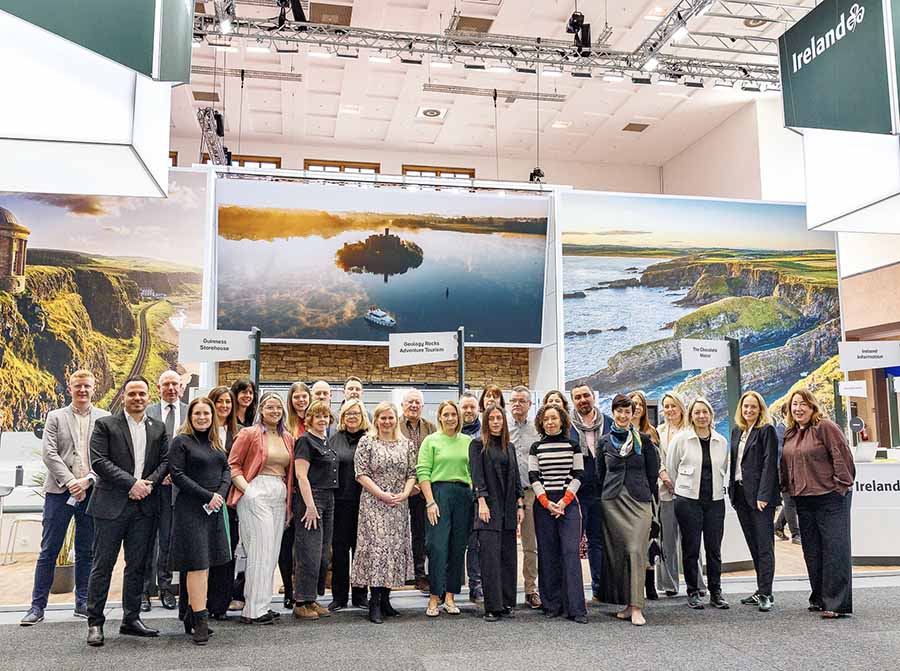
Irish tourism enterprises exhibiting at the event include: 60 Travel Design, AC Group, Aer Lingus, Chocolate Manor, Cróga Tours, Excursions Ireland, Experience Gaelic Games, Geology Rocks Adventure, Guinness Storehouse, Irish Ferries, Killary Fjord Boat Tours, Kleemann Tours, National Trust, Mussenden Temple and Downhill Demesne, O’Callaghan Collection, O’Donoghue Ring Collection, Pearse Lyons Distillery, The Clare Collection, The Gleneagle Group,, Tour Partner Group Ireland, Westport House Caravan & Camping Park, White Hotel Group and Tours
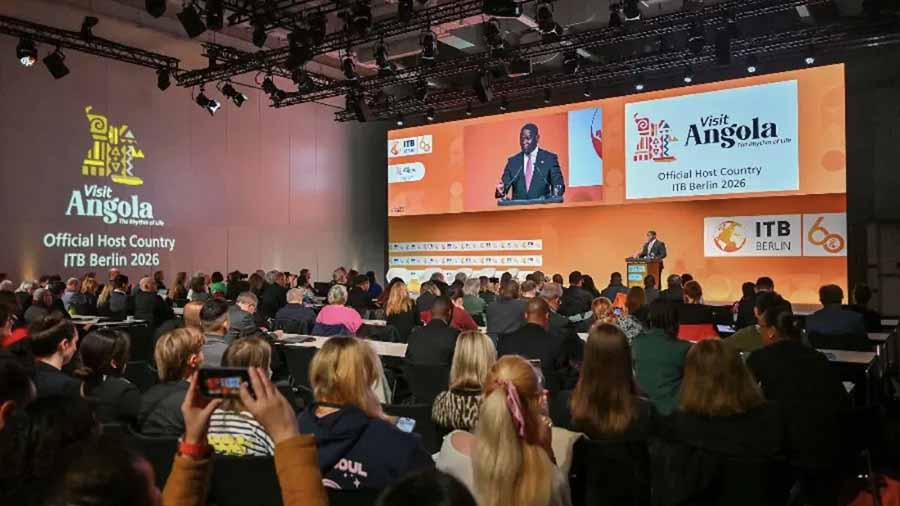
Márcio de Jesus Lopes Daniel, Minister of Tourism, Angola. shared “The country’s tourism strategy, highlighting economic resilience, social inclusion and environmental responsibility. With a young population, Angola aims to create employment across hospitality, culture, services and the creative industries. Community-based tourism, local value creation and entrepreneurship were central to the country’s approach. Under the theme The Rhythm of Life, Angola showcased its culture, music, dance and natural beauty, positioning itself as an authentic and emerging destination for international travellers and investors,”
Siobhan McManamy, Tourism Ireland’s Director of Markets & Partnerships, shared: “Germany is our largest tourism market in Mainland Europe, with German visitors contributing over €464 million in 2024, and ITB plays a vital role in growing our share of this important market for tourism. This week we will be showcasing ease of access and great places to stay, as well as the rich culture, history and outdoor experiences that make our destination so appealing to German visitors.”
“We are delighted to be at ITB Berlin this week, one of the world’s leading travel trade fairs, joined by 21 tourism businesses from across Ireland. ITB provides an invaluable platform to showcase what Ireland has to offer and to strengthen relationships with influential international tour operators and travel agents.